Skin Care
Discover how vitamin E serum can support hydration, antioxidant protection, skin barrier care and healthier-looking skin.
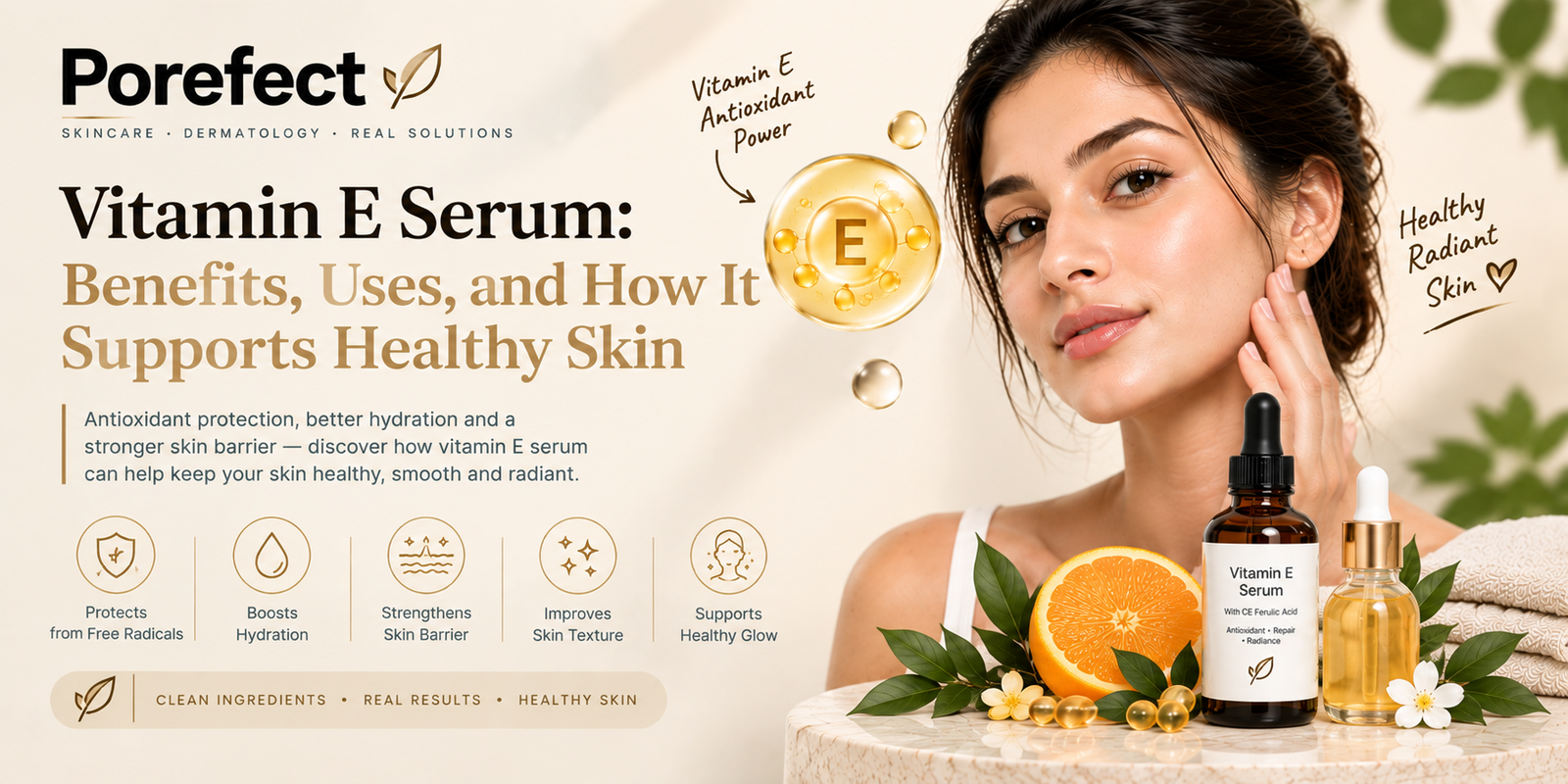
Vitamin E Serum: Benefits, Uses, and How It Supports Healthy Skin
Vitamin E serum can be a useful addition to a daily skincare routine when the goal is to support hydration, strengthen the skin barrier, and provide antioxidant protection. Vitamin E is a well-known fat-soluble antioxidant that helps protect the skin from oxidative stress while supporting moisture retention.
Many people also use vitamin E oil for skin because of its rich, moisturizing texture. However, a serum may provide a lighter application and can combine Vitamin E with other complementary skincare ingredients.
One such antioxidant combination is CE Ferulic Acid, which brings together Vitamin C, Vitamin E, and Ferulic Acid. In this guide, we will look at the benefits of vitamin E serum, how vitamin E oil compares with serum formulations, how to use vitamin E, and why combining antioxidants can be useful for maintaining healthier-looking skin.
What Is Vitamin E Serum?
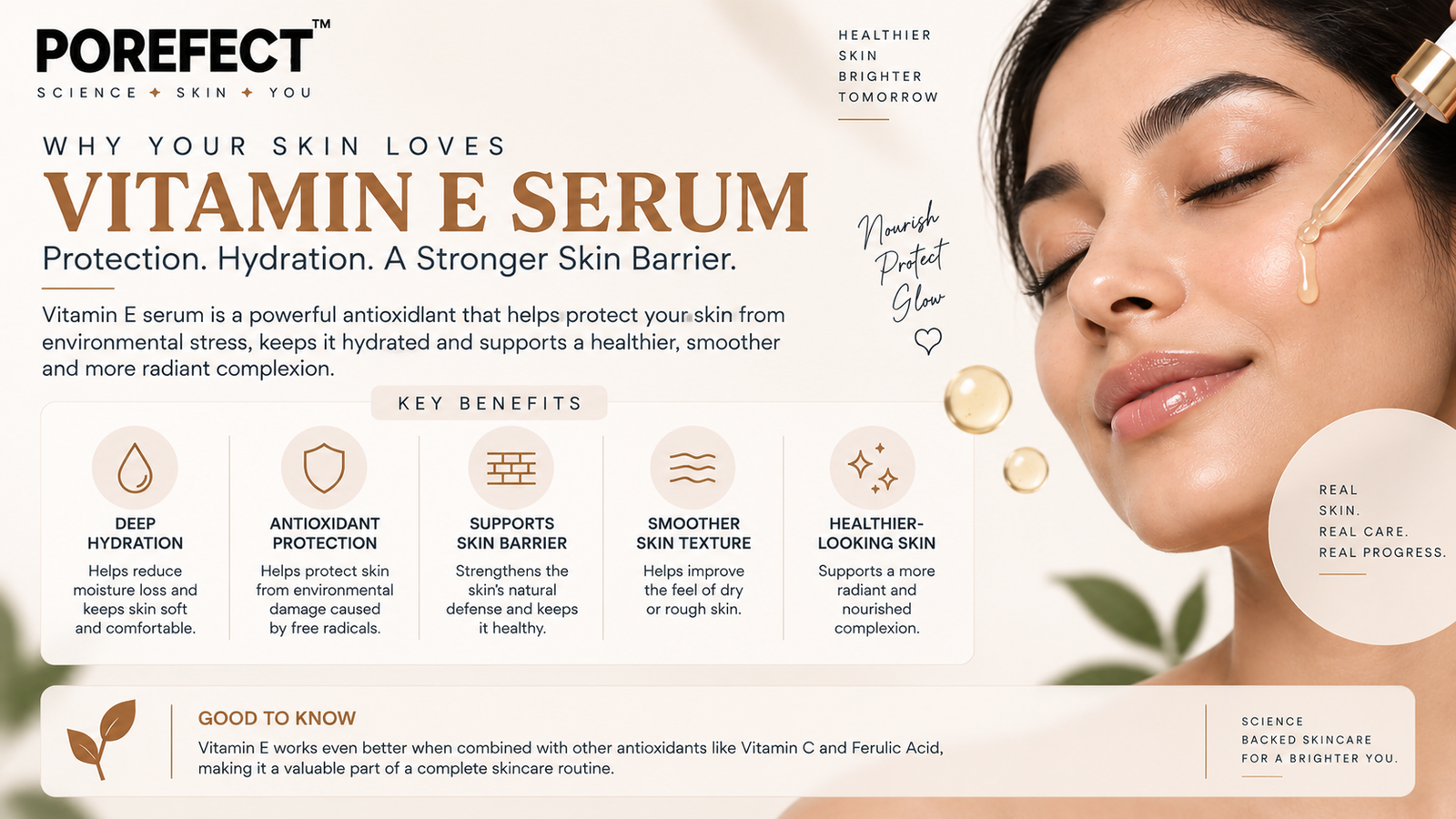
A vitamin E serum is a skincare formulation containing Vitamin E, an antioxidant that helps protect the skin from oxidative stress caused by free radicals. Vitamin E also supports the skin barrier and helps reduce moisture loss, which can be particularly helpful when the skin feels dry or rough.
Compared with standalone vitamin E oil, a serum generally has a lighter texture and may contain additional ingredients designed to support specific skin concerns.
Quick Answer: What Does Vitamin E Serum Do?
Vitamin E serum is an antioxidant skincare product that can help support the skin barrier, maintain moisture, improve the feel of dry skin, and provide protection against environmental oxidative stress. Depending on its formulation, it can also complement other ingredients used for brighter and more even-looking skin.
Benefits of Vitamin E Serum for Skin
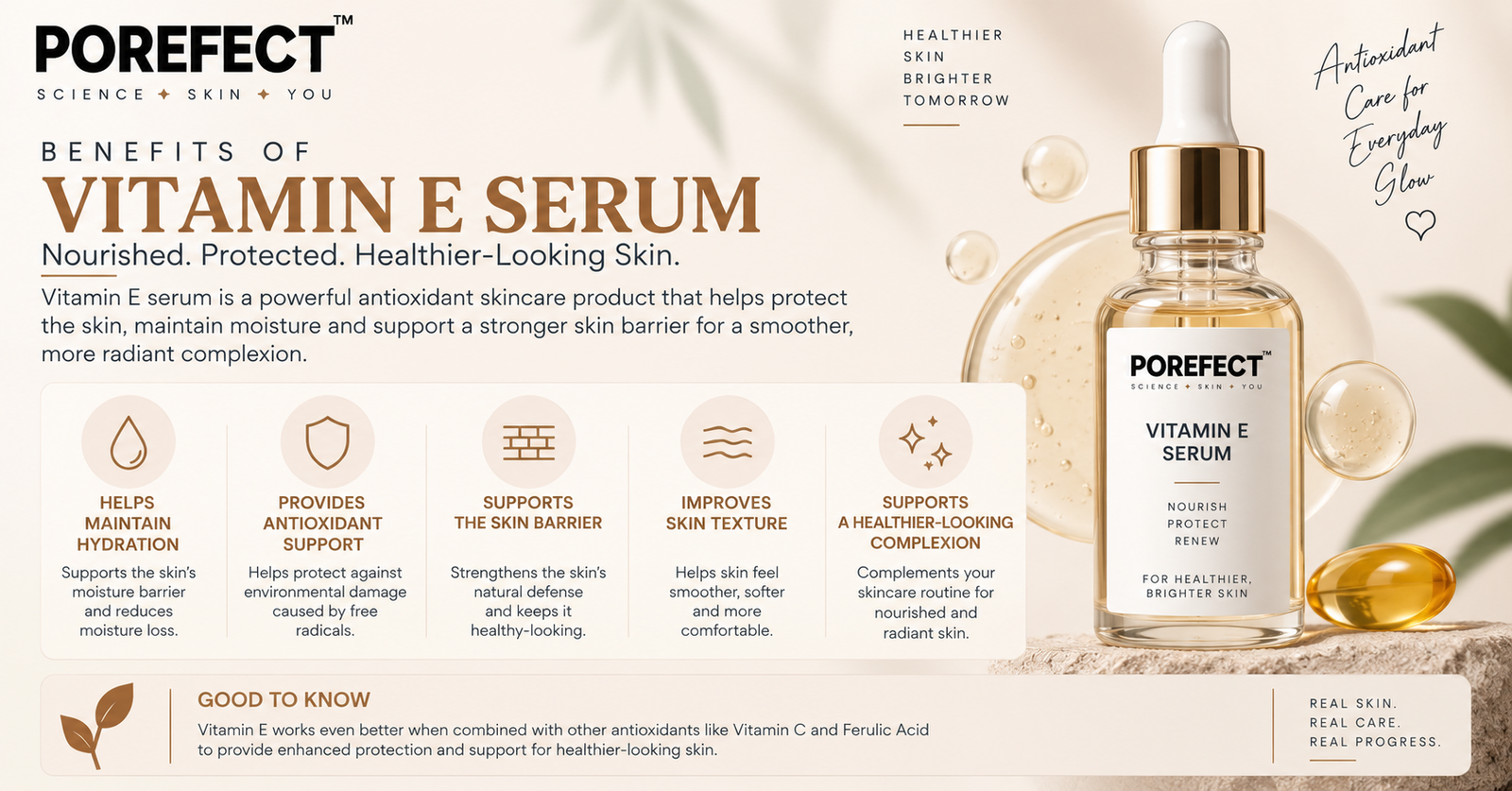
Adding Vitamin E to a skincare routine can provide several benefits, particularly when it is included in a well-formulated product.
1. Helps Maintain Skin Hydration
One of the reasons people choose a vitamin E serum is its ability to support the skin's moisture barrier. Vitamin E can help reduce moisture loss, leaving the skin feeling softer and more comfortable.
This may make Vitamin E useful for people experiencing dryness or skin that feels tight after cleansing.
2. Provides Antioxidant Support
The skin is regularly exposed to environmental factors such as UV radiation and pollution. These factors can contribute to oxidative stress and the formation of free radicals.
Vitamin E acts as an antioxidant and helps protect skin components from oxidative damage. For this reason, it is commonly included in antioxidant-focused skincare formulations.
3. Supports the Skin Barrier
The skin barrier helps keep moisture inside the skin while providing protection against external irritants. When the barrier becomes compromised, the skin may feel dry, rough, or uncomfortable.
A vitamin E serum can support the skin's natural protective barrier and complement other barrier-supporting ingredients in a skincare routine.
4. Helps Improve the Feel of Skin Texture
Consistent hydration and barrier support can make the skin feel smoother and softer. A suitable vitamin E serum may therefore be useful for people who want to improve the overall feel and appearance of dry or rough skin.
5. Supports Healthier-Looking Skin
Vitamin E is often included in skincare designed to support the skin's natural recovery and antioxidant defenses. It is not a treatment for every type of mark or pigmentation concern, but it can be part of a broader routine focused on maintaining healthy-looking skin.
Vitamin E Oil for Skin vs Vitamin E Serum
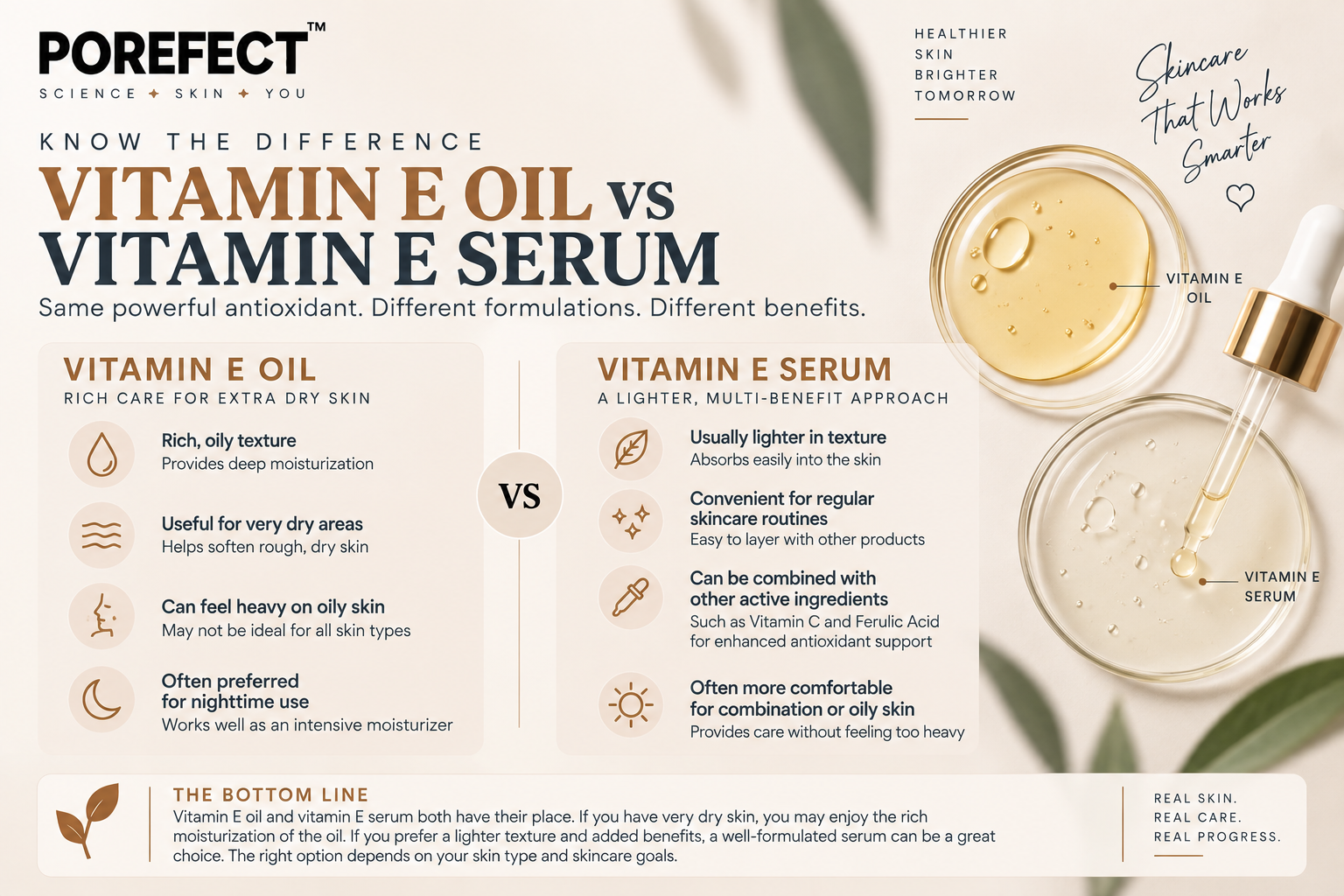
Vitamin E oil for skin is popular because it provides rich emollient properties and can help soften dry areas. However, its heavier texture may not feel comfortable for everyone.
A serum generally offers a lighter alternative and may combine Vitamin E with several other active ingredients in one formulation.
Vitamin E Oil
- Rich, oily texture
- Useful for very dry areas
- Can feel heavy on oily skin
- May primarily focus on moisturization
- Often preferred for nighttime use
Vitamin E Serum
- Usually lighter in texture
- Convenient for regular skincare routines
- Often more comfortable for combination or oily skin
- Can combine Vitamin E with other active ingredients
- Can be used according to the product's directions
The more suitable option depends on your skin type, product formulation, and skincare goals. People with very dry skin may prefer the richness of vitamin E oil for skin, while those looking for a lightweight antioxidant product may prefer a serum.
What Is CE Ferulic Acid?
CE Ferulic Acid refers to an antioxidant combination built around three well-known skincare ingredients:
- Vitamin C
- Vitamin E
- Ferulic Acid
Each ingredient contributes different properties to an antioxidant skincare routine. Vitamin C is widely used for antioxidant support and brighter-looking skin, Vitamin E helps support antioxidant activity and the skin barrier, while Ferulic Acid is used to help stabilize and complement antioxidant formulations.
The combination has become popular in skincare because antioxidants can work together when they are appropriately formulated.
Why Combine Vitamin E with Vitamin C and Ferulic Acid?
Using several complementary antioxidants can provide broader antioxidant support than relying on a single ingredient.
Vitamin C is commonly used to support a brighter and more even-looking complexion. Vitamin E provides additional antioxidant and barrier-supporting properties, while Ferulic Acid can help improve the stability of an antioxidant formulation.
This is one reason CE Ferulic Acid formulations are frequently used in morning skincare routines.
Potential Benefits of CE Ferulic Acid
A well-formulated antioxidant combination may help:
- Support protection against oxidative stress
- Improve the appearance of dull-looking skin
- Promote a more even-looking complexion
- Support healthier-looking skin over time
- Complement a daily sunscreen routine
Antioxidant skincare does not replace sunscreen. During the daytime, broad-spectrum sunscreen remains an important part of protecting the skin from UV exposure.
How to Use Vitamin E Serum Correctly
Using a vitamin E serum can be a straightforward part of a daily skincare routine.
Step 1: Cleanse
Start with a gentle cleanser to remove dirt, excess oil, sunscreen, and other surface impurities.
Step 2: Apply Your Serum
Apply the recommended amount of vitamin E serum to clean skin. If the product contains additional active ingredients, follow its specific usage instructions.
Step 3: Moisturize
Apply a moisturizer suited to your skin type. This helps support hydration and the skin barrier.
Step 4: Use Sunscreen in the Morning
If you are using your serum during the day, finish with a broad-spectrum sunscreen. This is particularly important when your skincare routine focuses on antioxidant and brightening ingredients.
How Often Should You Use Vitamin E Serum?
The ideal frequency depends on the specific formulation and your skin's tolerance. Some products are designed for daily use, while others may have different directions.
When introducing a new vitamin E serum, follow the manufacturer's instructions and consider patch-testing it first, particularly if your skin is sensitive.
Who Can Use Vitamin E Serum?
A vitamin E serum can be suitable for a variety of skin types, including:
- Dry skin
- Normal skin
- Combination skin
- Mature-looking skin
- Skin exposed to environmental stress
- Skin that feels dry or lacks moisture
People with oily or acne-prone skin may prefer lightweight, non-comedogenic formulations rather than thick oils.
Product formulation matters as much as the ingredient itself, so consider the complete ingredient list and texture when choosing a serum.
Can Vitamin E Serum Help With Dark Spots?
Vitamin E is primarily valued for its antioxidant and skin-conditioning properties. A vitamin E serum should not be considered a standalone solution for every pigmentation or dark-spot concern.
For a more targeted approach to uneven-looking skin tone, formulations containing ingredients such as Vitamin C may be incorporated into a broader skincare routine. Consistent sunscreen use is also important because UV exposure can contribute to the appearance of pigmentation.
If pigmentation persists or changes significantly, professional dermatological advice can help determine an appropriate approach.
Can You Use Vitamin E with Other Skincare Ingredients?
Yes. Vitamin E can be incorporated into routines containing several commonly used skincare ingredients.
Vitamin C
Vitamin E and Vitamin C are frequently paired in antioxidant formulations. This combination is also central to CE Ferulic Acid products.
Hyaluronic Acid
Hyaluronic Acid is a hydrating ingredient that can complement Vitamin E by helping support skin moisture.
Ceramides
Ceramides help support the skin barrier and can work well alongside Vitamin E in routines focused on dryness and barrier care.
Niacinamide
Niacinamide can support the skin barrier and help improve the appearance of uneven skin tone, making it another ingredient that can complement a Vitamin E-focused routine.
Ferulic Acid
Ferulic Acid is commonly combined with Vitamin C and Vitamin E in antioxidant formulations because of its role in supporting antioxidant stability and performance.
Common Vitamin E Skincare Mistakes to Avoid
Even beneficial skincare ingredients can be misused. Avoid these common mistakes when using Vitamin E products:
- Applying more serum than recommended
- Using a heavy oil when your skin prefers lightweight products
- Introducing several new active ingredients at the same time
- Skipping sunscreen during the daytime
- Using products past their recommended shelf life
- Ignoring signs of irritation
- Not patch-testing a new product when you have sensitive skin
More product does not necessarily mean better results. Consistent use of an appropriately formulated product is generally more useful than applying excessive amounts.
Frequently Asked Questions About Vitamin E Serum
Is vitamin E serum good for daily use?
Many vitamin E serums are designed for regular use, but the recommended frequency depends on the product formulation. Follow the instructions provided with your specific serum and adjust if your skin becomes irritated.
Can I use vitamin E oil for skin overnight?
Yes. Vitamin E oil for skin may be used as an overnight moisturizing product, particularly on areas that are very dry. However, its rich texture may not suit everyone, especially people with oily or acne-prone skin.
Is vitamin E serum suitable for oily skin?
It can be, provided you choose a lightweight, non-comedogenic formulation. Heavy Vitamin E oils may feel greasy, whereas a well-formulated vitamin E serum may be more comfortable.
Can vitamin E serum make skin brighter?
Vitamin E itself is mainly known for antioxidant and skin-conditioning benefits. For brighter-looking skin, Vitamin C and other targeted ingredients may be more directly relevant. Antioxidants can complement a routine designed to improve overall skin appearance.
What is the benefit of CE Ferulic Acid?
CE Ferulic Acid combines Vitamin C, Vitamin E, and Ferulic Acid in an antioxidant-focused formulation. These ingredients are commonly paired to provide complementary antioxidant support and help maintain healthier-looking skin.
Can I use vitamin E serum with sunscreen?
Yes. Vitamin E serum can generally be used before moisturizer and sunscreen in a morning routine. Sunscreen should remain the final skincare step before makeup.
Final Thoughts
A vitamin E serum can be a useful addition to a skincare routine when your goals include supporting hydration, maintaining the skin barrier, and providing antioxidant protection. Its lightweight format can also make it easier to incorporate into everyday skincare compared with heavier vitamin E oil for skin.
For people interested in broader antioxidant care, CE Ferulic Acid combines Vitamin C, Vitamin E, and Ferulic Acid in one formulation. This combination can complement a routine focused on protecting the skin from environmental oxidative stress and maintaining a brighter, healthier-looking complexion.
The key is to choose a formulation suited to your skin type, introduce new products gradually, and use sunscreen consistently during the day. If you have persistent pigmentation, irritation, or another ongoing skin concern, consider speaking with a dermatologist for personalized advice.