Skin Care
Uneven Skin Tone Treatment: Causes, Ingredients and What Helps
Learn about uneven skin tone treatment, common causes of pigmentation, effective skincare ingredients, sunscreen, and when to see a dermatologist.
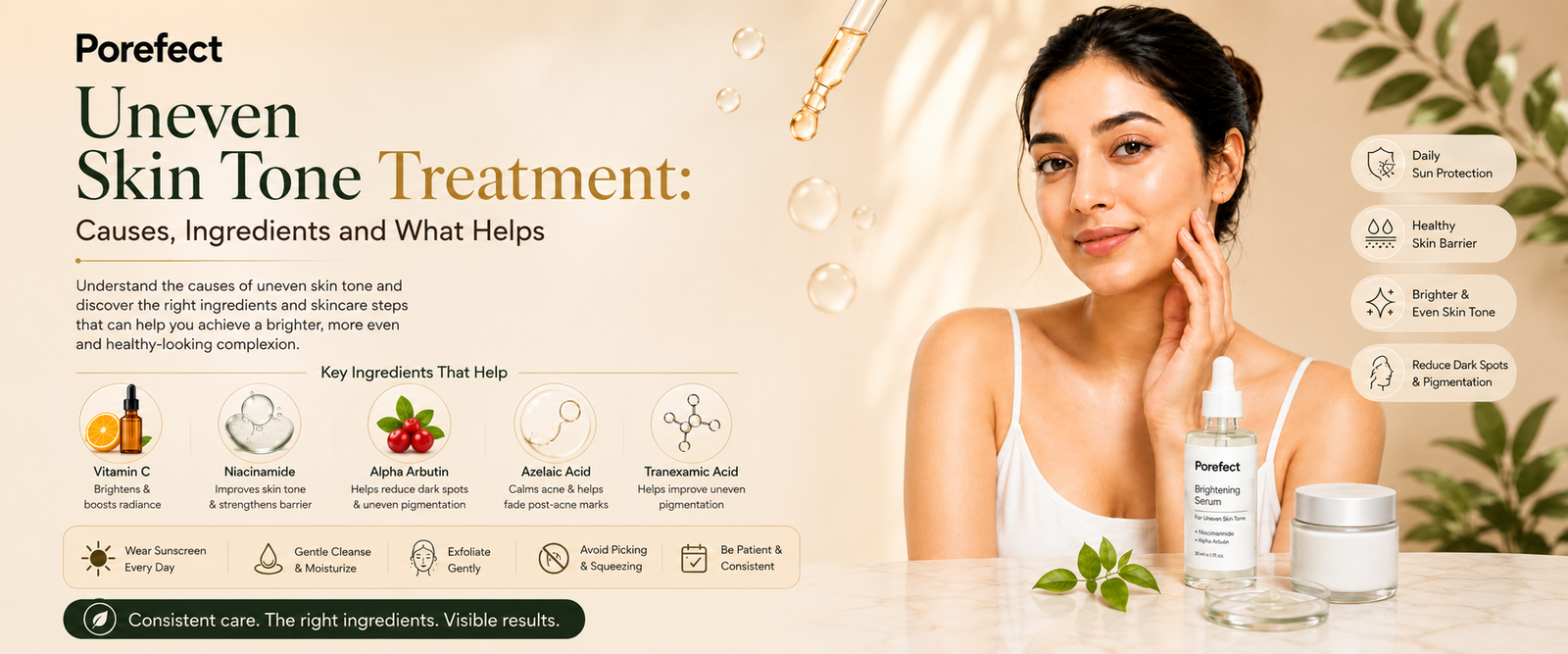
Uneven Skin Tone Treatment: Causes, Ingredients and What Helps
Uneven skin tone is a common concern. You may notice dark spots after acne, tanning after spending time outdoors, patchy pigmentation on the cheeks, or simply areas of your face that look darker than others.
If you’re searching for an uneven skin tone treatment, the first step is understanding what is causing the change. Pigmentation can have several causes, and the right approach depends on your skin type, the pattern of pigmentation, and how long it has been present.
For many people, a sensible routine starts with daily sunscreen, gentle skincare, and one or two targeted ingredients rather than a shelf full of brightening products.
A consistent uneven skin tone treatment routine can help address pigmentation while supporting healthier-looking skin.
What Causes Uneven Skin Tone on the Face?
An uneven skin tone face can result from several factors. Common causes include:
- Sun exposure and tanning
- Post-acne pigmentation
- Post-inflammatory hyperpigmentation
- Melasma
- Hormonal changes
- Skin irritation or inflammation
- Over-exfoliation
- Certain skin conditions
A dark mark left after a pimple is different from widespread tanning. Similarly, persistent patches on the cheeks, forehead, or upper lip can have causes such as melasma.
This is why there is no single best treatment for uneven skin tone for everyone. The treatment should match the underlying cause.
Start With Sunscreen and Skin Barrier Care
Before adding several brightening ingredients, get the basics right.
Use Broad-Spectrum Sunscreen Every Day
If pigmentation is your main concern, sunscreen is one of the most important steps in your routine.
UV exposure can contribute to tanning and may worsen existing pigmentation. Apply a broad-spectrum sunscreen during the day and reapply when appropriate based on your sun exposure and the product’s instructions.
Sunscreen will not instantly remove existing pigmentation, but consistent protection can help prevent further UV-related darkening and support your overall uneven skin tone treatment plan.
Daily sunscreen should remain a foundation of any uneven skin tone treatment routine because UV exposure can worsen pigmentation.
Keep Your Skin Barrier Healthy
Irritated skin needs care, not more aggressive products.
Use a gentle cleanser and a moisturizer suited to your skin type. Avoid harsh scrubbing and excessive exfoliation. If your face regularly feels tight, burns, or peels, adding more active ingredients may make the problem worse.
A healthy skin barrier can also make active ingredients easier to tolerate.
Which Ingredients Can Help With Uneven Skin Tone?
Once your basic routine is working well, you can consider targeted ingredients.
The most suitable uneven skin tone treatment depends on the cause of pigmentation and how well your skin tolerates the chosen ingredients.
Vitamin C
Vitamin C is an antioxidant commonly used for dullness and uneven-looking skin.
It can support a brighter-looking complexion while helping protect the skin from oxidative stress.
A well-formulated Vitamin C product can be useful, but higher concentration does not automatically mean better results.
Niacinamide
Niacinamide, a form of Vitamin B3, is a versatile skincare ingredient. It helps support the skin barrier and may improve the appearance of uneven pigmentation.
It can also be useful for people concerned about excess oil or blemish-prone skin.
Alpha Arbutin
Alpha arbutin is commonly used in brightening formulations designed to improve the appearance of dark spots and uneven pigmentation.
It can be a practical option when pigmentation is the main concern, provided the product is well tolerated.
Azelaic Acid
Azelaic acid can be particularly useful when uneven pigmentation occurs alongside acne or inflammation.
It has anti-inflammatory properties and is commonly used for acne-related concerns and post-inflammatory pigmentation. Some people may experience mild irritation when first introducing it.
Tranexamic Acid
Tranexamic acid is another ingredient used in topical skincare products formulated for pigmentation concerns.
It may be included in routines designed to improve the appearance of uneven pigmentation. However, persistent or recurrent pigmentation should not simply be treated by adding more brightening products.
How to Choose Skincare for Uneven Skin Tone
Good skincare for uneven skin tone does not mean using every brightening ingredient at once.
Choose according to your main concern:
- Dullness: Consider an antioxidant such as Vitamin C.
- Acne and post-acne marks: Niacinamide or azelaic acid may be useful.
- Dark spots: Ingredients such as alpha arbutin, Vitamin C, azelaic acid, or tranexamic acid may be considered.
- Sensitive skin: Start with one active ingredient and introduce it gradually.
You do not need to use Vitamin C, niacinamide, alpha arbutin, azelaic acid, and tranexamic acid together.
Starting with one suitable active makes it easier to understand how your skin responds and reduces the chance of unnecessary irritation.
How to Even Out Skin Tone on Face Without Irritating It
If your goal is to even out skin tone on face, patience is important.
Pigmentation usually develops over time, so trying to correct it quickly with strong products can sometimes cause irritation.
A practical approach is to:
- Wear broad-spectrum sunscreen every day.
- Avoid picking or squeezing acne.
- Use gentle cleansers and moisturizers.
- Introduce active ingredients slowly.
- Avoid excessive exfoliation.
- Keep your skin hydrated.
- Give your routine enough time to work.
If you are using a Porefect pigmentation-focused product, it can naturally fit into the targeted-treatment step of your routine. Choose the product according to its actual ingredients and intended use rather than assuming every pigmentation product is suitable for every type of pigmentation.
Are Home Remedies Safe for Pigmentation?
Many DIY remedies are promoted online for brighter skin, but natural does not always mean gentle.
Avoid applying ingredients such as lemon juice, baking soda, toothpaste, or undiluted vinegar to your face. These can irritate the skin and may make pigmentation more noticeable.
When dealing with pigmentation, a gentle and consistent routine is usually a better approach than repeatedly irritating the skin.
What Is the Best Treatment for Uneven Skin Tone?
There is no universal best treatment for uneven skin tone.
For mild uneven pigmentation, consistent sunscreen, moisturizer, and suitable topical ingredients may help improve the appearance over time.
Persistent pigmentation, melasma, significant post-acne marks, or pigmentation that continues to worsen may require professional assessment. Depending on the diagnosis, a dermatologist may consider prescription treatments, chemical peels, or selected laser-based procedures.
These treatments are not appropriate for everyone. The choice depends on the type of pigmentation, skin type, medical history, and risk of post-inflammatory hyperpigmentation.
Common Mistakes to Avoid
Over-Exfoliating
Using scrubs or exfoliating acids too frequently can irritate the skin.
Skipping Sunscreen
Continued UV exposure can make tanning and pigmentation harder to manage.
Picking Acne
Squeezing pimples can increase the risk of post-inflammatory pigmentation.
Using Too Many Actives
More products do not necessarily mean faster improvement. Combining several active ingredients can increase irritation.
Expecting Instant Results
Pigmentation generally takes time to improve. Consistency is more useful than changing products every few days.
When Should You See a Dermatologist?
Not every dark patch is simply a skincare concern. Consider seeing a dermatologist if pigmentation is:
- Sudden or unexplained
- Rapidly changing
- Becoming darker or more widespread
- Persistent despite appropriate skincare
- Associated with significant inflammation or other symptoms
A professional assessment can help determine whether the concern is related to post-acne pigmentation, melasma, tanning, or another skin condition.
Frequently Asked Questions
What is the most effective uneven skin tone treatment?
The appropriate treatment depends on the cause. Sunscreen, gentle skincare, and targeted ingredients may help mild pigmentation, while persistent or unexplained pigmentation may require professional assessment.
How can I improve uneven skin tone on my face?
Start with daily sunscreen, gentle cleansing, moisturizer, and one suitable active ingredient such as Vitamin C, niacinamide, alpha arbutin, azelaic acid, or tranexamic acid.
What is a good even skin tone treatment for dark spots?
Several ingredients may help improve the appearance of dark spots, including Vitamin C, niacinamide, alpha arbutin, azelaic acid, and tranexamic acid. The right choice depends on your skin and the cause of the pigmentation.
Can sunscreen help with uneven skin tone?
Sunscreen does not erase existing pigmentation, but it helps protect against UV exposure that can contribute to tanning and worsening pigmentation. It is an important part of pigmentation management.
How long does it take to even out skin tone?
The timeline varies according to the cause, depth, and severity of pigmentation. Some mild marks gradually become less noticeable, while conditions such as melasma may require longer-term management.
Can I use several pigmentation ingredients together?
Sometimes, but it is not always necessary. Introducing one active at a time can reduce irritation and makes it easier to understand how your skin responds.
A Simple Approach to More Even-Looking Skin
An uneven complexion does not always need an aggressive treatment.
Start with daily sun protection, maintain a healthy skin barrier, and identify what may be causing the pigmentation. Then choose targeted ingredients according to your skin’s needs and tolerance.
Consistency matters more than using multiple products at once when following an uneven skin tone treatment plan.
Whether you’re researching an uneven skin tone treatment, looking for an even skin tone treatment, or trying to even out skin tone on face, the goal should be a routine that is gentle, consistent, and appropriate for your skin.
If pigmentation is sudden, persistent, worsening, or difficult to understand, a dermatologist can help identify the cause and recommend the most appropriate treatment.