Skin Care
Learn about under eye treatment for dark circles, pigmentation and tired-looking skin, including skincare ingredients, home care and dermatologist-guided options.
Under Eye Treatment: How to Reduce Dark Circles and Improve Under-Eye Skin
Dark circles are a common concern that can make the face look tired even when you are well rested. They may appear as brown, grey, blue, or purple shadows beneath the eyes, and the cause is not always lack of sleep.
If you are looking for an effective under eye treatment, it is important to understand why your dark circles are present. Genetics, pigmentation, visible blood vessels, thin under-eye skin, allergies, rubbing, dehydration, and age-related changes can all contribute. Because the causes differ, there is no single best treatment for dark circles for everyone.
What Causes Dark Circles Under the Eyes?
The skin around the eyes is thinner and more delicate than much of the facial skin. This can make underlying structures and pigmentation more visible.
Common contributors include:
- Genetics: Some people naturally have darker or more prominent under-eye areas.
- Pigmentation: Increased melanin can cause brown or darker discoloration.
- Visible blood vessels: Thin skin can make underlying vessels appear blue or purple.
- Ageing: Loss of collagen, skin thinning, and changes in facial volume can make shadows more noticeable.
- Allergies and rubbing: Frequent rubbing or irritation may worsen discoloration.
- Fatigue: Poor sleep can make existing dark circles appear more prominent, although it is not always the underlying cause.
Understanding the cause is the first step toward choosing an appropriate dark circle treatment.
Under Eye Treatment: What Can Actually Help?
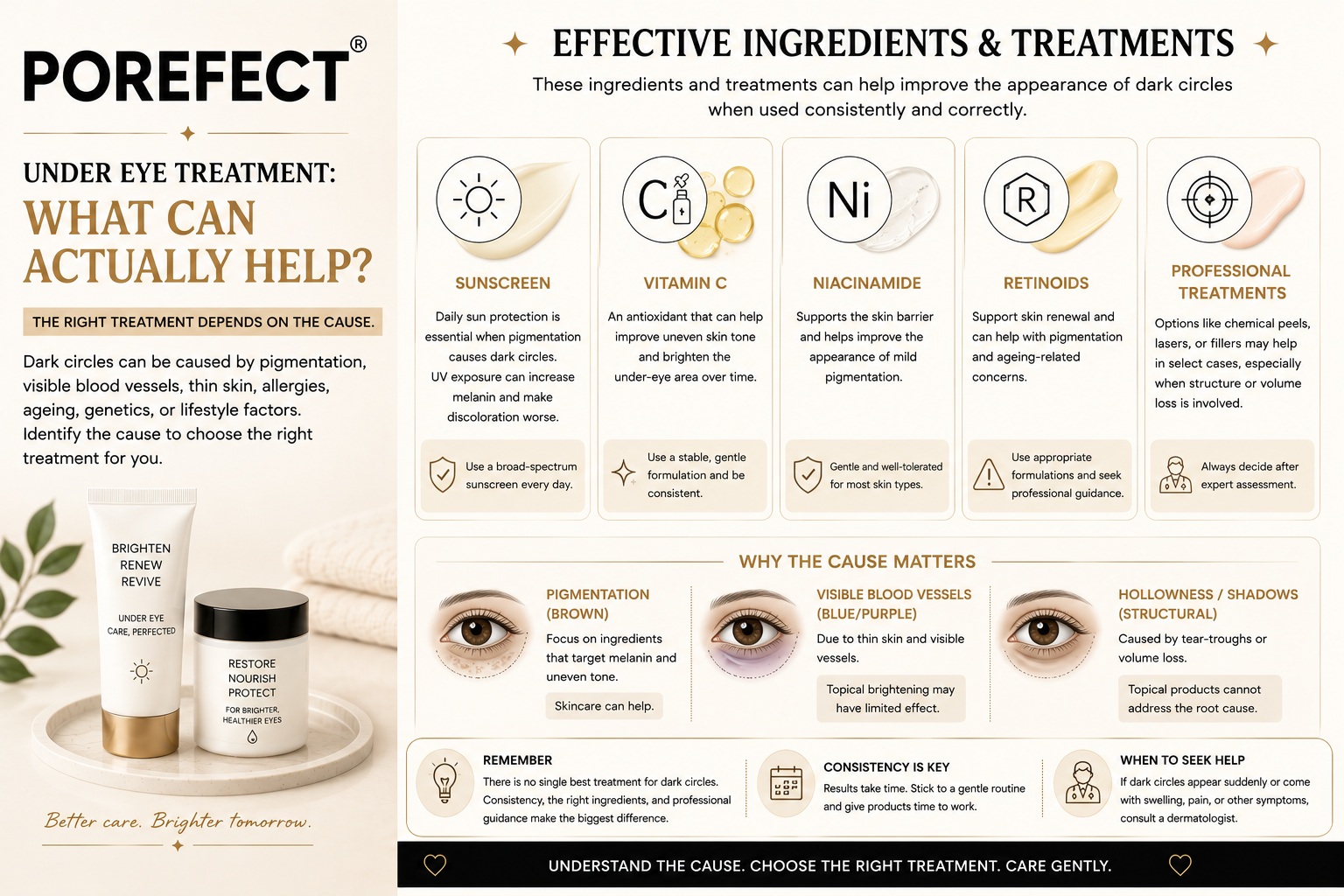
The right under eye treatment depends on whether the main issue is pigmentation, thin skin, vascular visibility, or shadowing.
Sunscreen
Daily sun protection is important when pigmentation contributes to dark circles. UV exposure can stimulate melanin production and may make discoloration more noticeable.
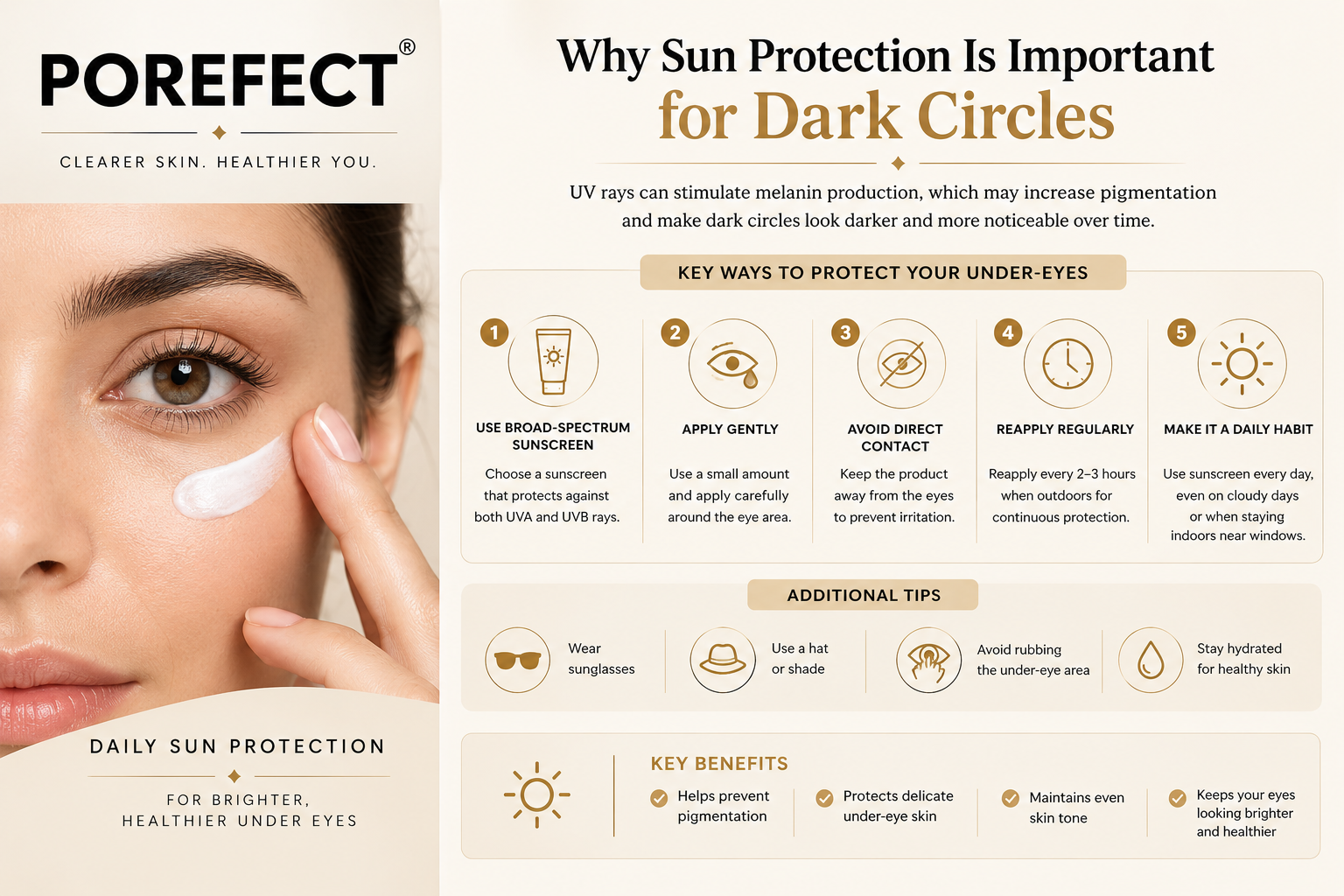
Use a broad-spectrum sunscreen during the day and apply it carefully around the eye area according to the product's directions. Sunglasses and physical shade can provide additional protection.
Vitamin C
Vitamin C is an antioxidant commonly used in skincare for uneven skin tone. A suitably formulated product may help improve the appearance of pigmentation over time.
The under-eye area can be sensitive, so products should be introduced gradually and discontinued if they cause persistent irritation.
Niacinamide
Niacinamide can support the skin barrier and is commonly used in products targeting uneven skin tone. It may be an option for people whose under-eye concern includes mild pigmentation.
Gentle formulations are generally preferable around the eyes because irritation can make discoloration appear more noticeable.
Retinoids
Retinoids can support skin renewal and are sometimes used as part of pigmentation and ageing-related skincare. However, the eye area can be particularly sensitive to retinoids.
If considering a retinoid for under-eye concerns, use an appropriate formulation and follow professional guidance, especially if you have sensitive skin. Retinoids are generally avoided during pregnancy unless specifically advised otherwise by a healthcare professional.
Dark Circles Under Eyes Treatment Depends on the Cause
Not all dark eye circles are pigmentation.
If the discoloration is primarily brown, pigmentation-focused skincare may be useful. If the area appears blue or purple because of visible blood vessels or thin skin, brightening products may have limited benefit.
Some people also have tear-trough hollows or changes in facial volume that create shadows beneath the eyes. In these cases, topical skincare cannot address the underlying structural cause.
This is why choosing a dark eye circle treatment based only on appearance can be disappointing. A dermatologist can help determine what is contributing to the problem.
How to Treat Dark Circles Under Eyes at Home
A simple routine is often a better starting point than using multiple strong products.
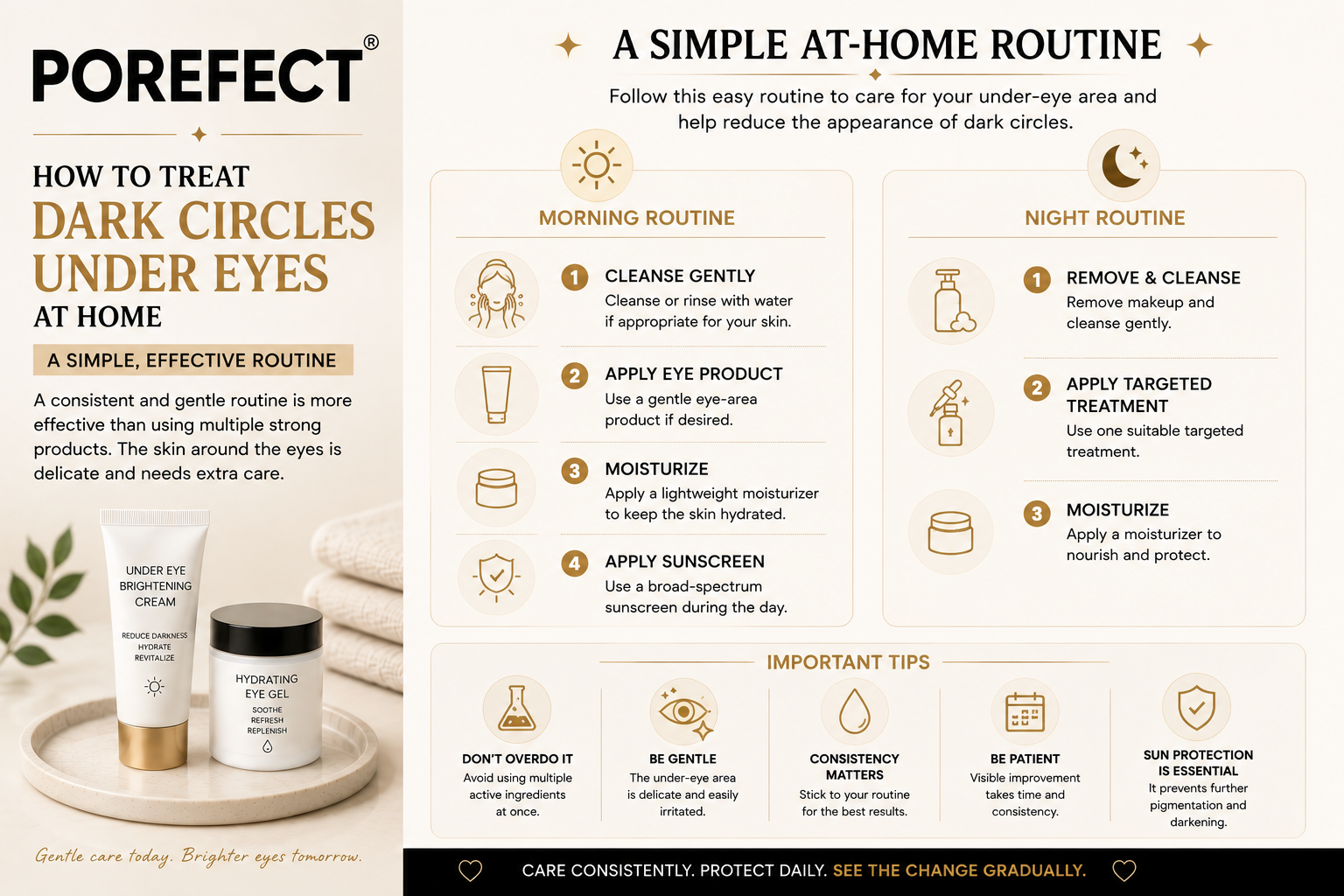
Morning
- Cleanse gently or rinse with water if appropriate for your skin.
- Apply a gentle eye-area product if desired.
- Moisturize.
- Apply broad-spectrum sunscreen.
Night
- Remove makeup and cleanse gently.
- Apply one suitable targeted treatment.
- Moisturize.
Avoid introducing several active ingredients at once. The skin around the eyes is easily irritated, and excessive use of acids, retinoids, or fragranced products may worsen discomfort.
How to Reduce Dark Circles Under Eyes Naturally
Lifestyle habits cannot eliminate every type of dark circle, particularly when genetics or facial anatomy plays a major role. However, several habits can help reduce factors that make the area look worse.
- Maintain a consistent sleep schedule.
- Avoid repeatedly rubbing or scratching the eye area.
- Manage known allergy triggers with appropriate medical advice.
- Stay adequately hydrated.
- Protect the skin from excessive sun exposure.
- Remove eye makeup gently rather than rubbing the skin.
These measures are supportive rather than a substitute for targeted treatment when pigmentation or another underlying cause is significant.
Under Eye Treatment for Pigmentation
If pigmentation is the main concern, ingredients such as niacinamide, vitamin C, and carefully selected pigment-targeting products may be considered.
When choosing an under eye treatment for pigmentation, prioritize gentle formulations designed for the delicate eye area. A product that is effective elsewhere on the face may still be too irritating around the eyes.
Avoid applying harsh DIY remedies such as lemon juice, baking soda, or undiluted active ingredients to the under-eye area. Irritation can lead to more discoloration and damage the skin barrier.
When Should You See a Dermatologist?
Consider professional assessment if dark circles are persistent, worsening, associated with significant irritation, or difficult to identify.
A dermatologist can distinguish pigmentation from vascular changes, shadows, dermatitis, or other causes. Depending on the diagnosis, dark circles under eyes treatment may involve prescription skincare or procedures such as chemical peels, lasers, or other dermatological treatments. These are not suitable for everyone, particularly around the eyes, and should be selected after proper assessment.
Frequently Asked Questions
What is the best under eye treatment for dark circles?
There is no universal best treatment. The appropriate option depends on whether the dark circles are caused mainly by pigmentation, visible blood vessels, skin thinning, allergies, or facial shadows.
Can I remove dark circles under my eyes permanently?
There is no reliable treatment that permanently removes every type of dark circle. Some causes can be improved considerably, while genetic or structural factors may remain.
How long does it take to improve dark circles?
The timeline varies according to the cause, severity, treatment, and consistency. Pigmentation generally requires ongoing skincare and sun protection rather than expecting immediate changes.
Does lack of sleep cause dark circles?
Poor sleep can make existing dark circles look more noticeable, but it is not the only cause. Genetics, pigmentation, thin skin, allergies, and facial anatomy can also contribute.
Conclusion
Effective under eye treatment begins with identifying why the area looks darker rather than searching for a quick fix. Sunscreen, gentle skincare, appropriate pigmentation-focused ingredients, and good daily habits can help improve the appearance of some types of dark circles.
If you are trying to remove dark circles under eyes but see little improvement, professional assessment can help identify whether pigmentation, vascular visibility, skin thinning, or facial structure is the main factor. A targeted approach is usually more useful than repeatedly changing products.