Skin Care
Learn about sunburn treatment, home care, soothing options, facial sunburn relief, recovery time and ways to protect your skin from further UV damage.
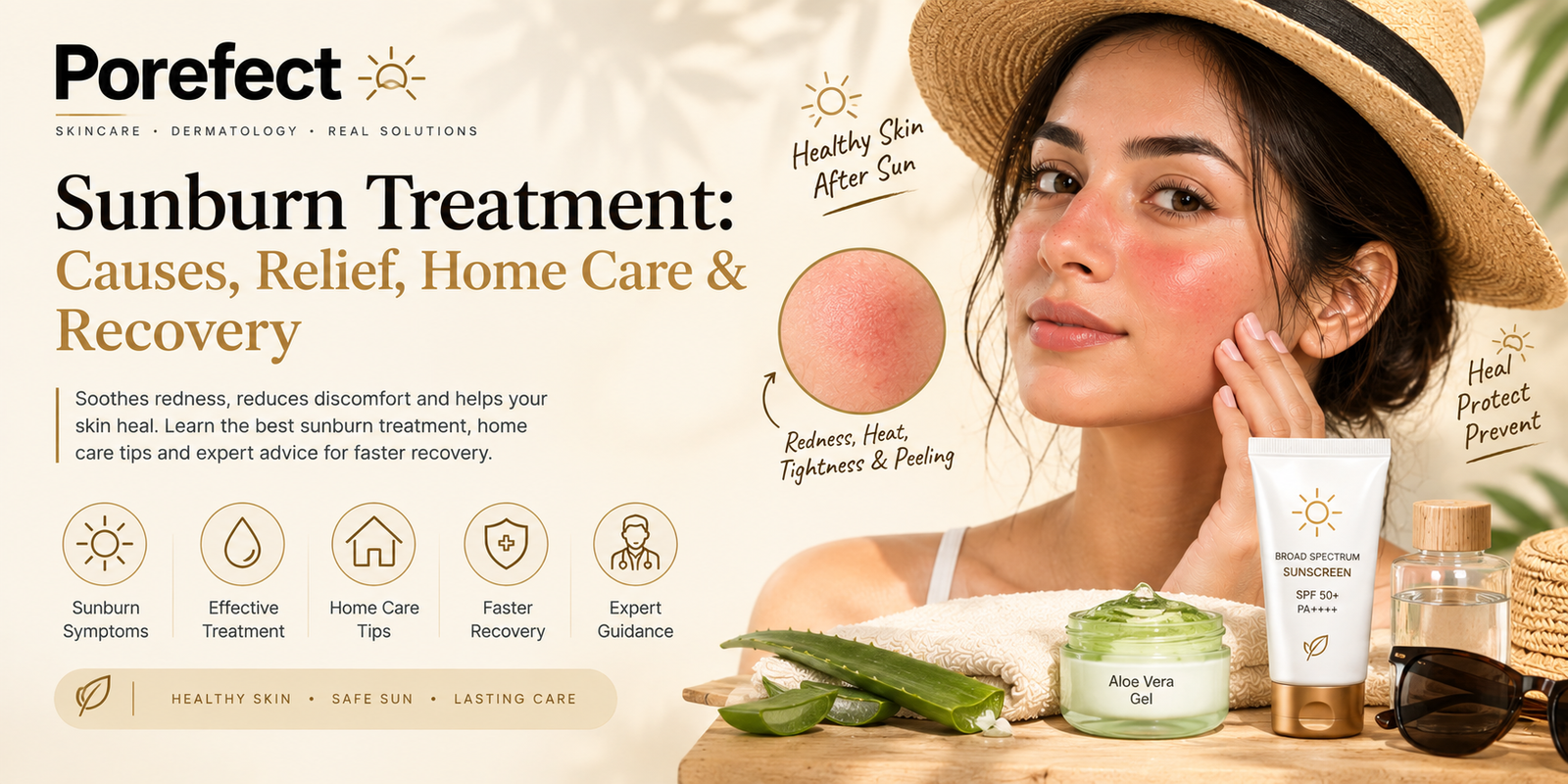
Sunburn Treatment: Causes, Relief, Home Care & Recovery
Sunburn treatment focuses on cooling damaged skin, reducing discomfort, maintaining hydration, and protecting the skin from further ultraviolet (UV) exposure while it heals. Sunburn happens when the skin is damaged by excessive UV radiation from the sun and commonly causes redness, warmth, tenderness, dryness, and sometimes swelling or peeling. Mild sunburn usually improves on its own, but the right sunburn treatment can make the recovery period more comfortable. Severe or blistering sunburn may require medical attention.
What Is Sunburn?
Sunburn is an inflammatory response caused by excessive UV exposure, particularly UVB radiation. It can occur after spending time outdoors without adequate sun protection, especially during peak sunlight hours.
Sunburn may develop within a few hours of exposure, while redness and discomfort can become more noticeable over the following day. The severity depends on factors such as UV intensity, exposure duration, skin type, and whether sunscreen or protective clothing was used.
Repeated sunburns can contribute to premature skin aging and increase the long-term risk of skin cancer, making sun protection an important part of everyday skincare.
Common Symptoms of Sunburn
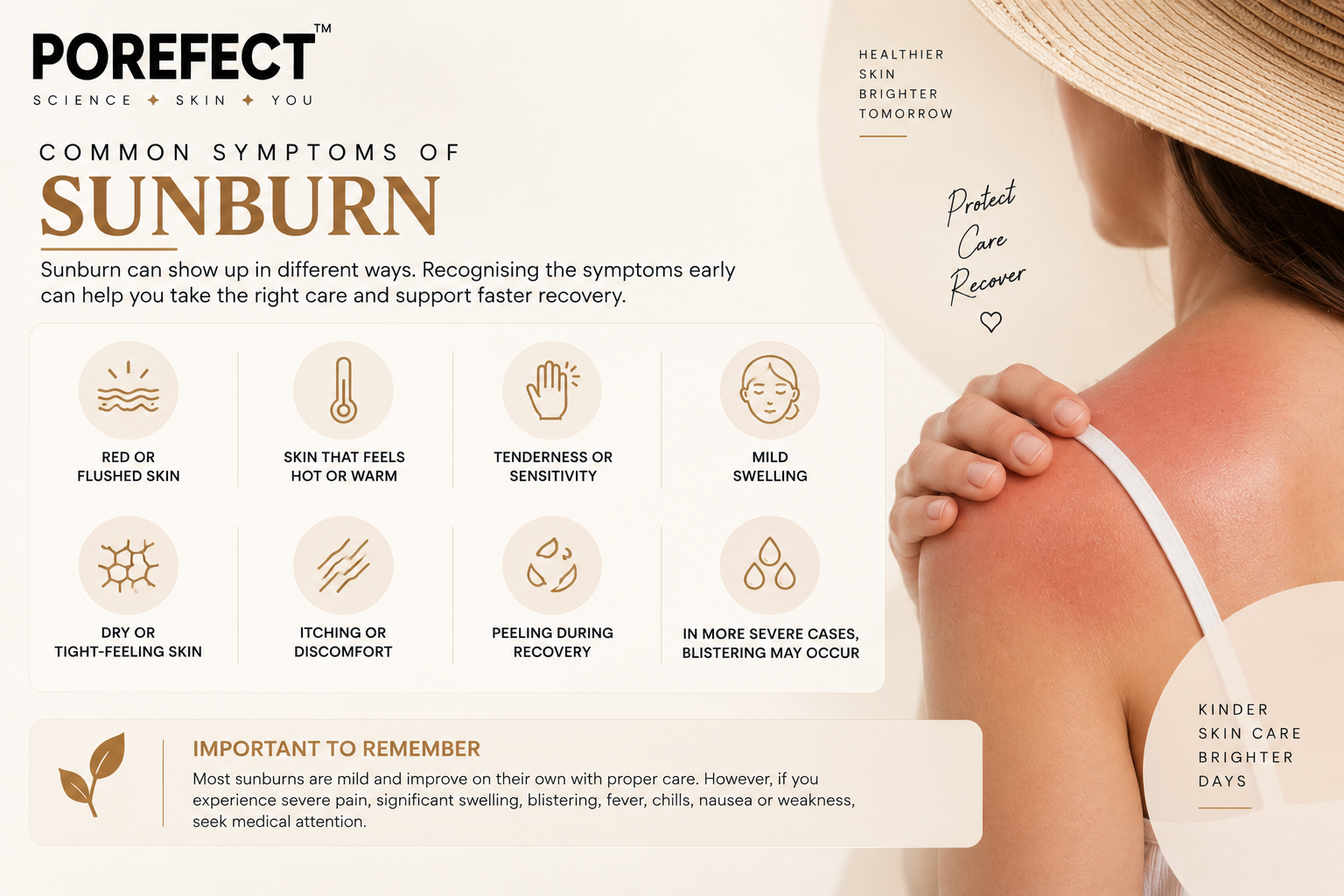
Typical symptoms of sunburn include:
- Red or flushed skin
- Skin that feels hot or warm
- Tenderness or sensitivity
- Mild swelling
- Dry or tight-feeling skin
- Itching or discomfort
- Peeling during recovery
More severe sunburn may cause significant swelling, extensive blistering, severe pain, headache, fever, chills, nausea, or weakness.
Sunburn Treatment: What Helps?
The main goal of sunburn treatment is to cool the skin, reduce discomfort, prevent dehydration, and protect the damaged skin while it heals.
1. Cool the Skin
Take a cool or lukewarm shower or apply a clean, cool, damp cloth to the affected area for short periods. Avoid applying ice directly to sunburned skin because extreme cold can further irritate already damaged tissue.
2. Moisturize Regularly
After cooling the skin, apply a gentle moisturizer to help reduce dryness and tightness. Products containing ingredients such as aloe vera or soy may provide soothing moisture.
A lightweight sunburn lotion can be useful when the skin feels dry or uncomfortable. Avoid products containing alcohol or strong fragrances if the skin is sensitive or irritated.
3. Stay Hydrated
Sunburn can contribute to fluid loss, particularly after prolonged heat and sun exposure. Drink enough water and fluids throughout the day, especially if you have been outdoors for an extended period.
4. Protect the Skin From More Sun
Further UV exposure can worsen inflammation and delay sunburn recovery. Stay out of direct sunlight while the skin is healing. When going outside, use protective clothing, seek shade, and apply a broad-spectrum sunscreen to exposed skin that is not severely damaged.
Sunburn Treatment at Home
For mild sunburn, simple sunburn treatment at home can often provide relief. The aim is to keep the skin cool, moisturized, hydrated, and protected while natural healing takes place.
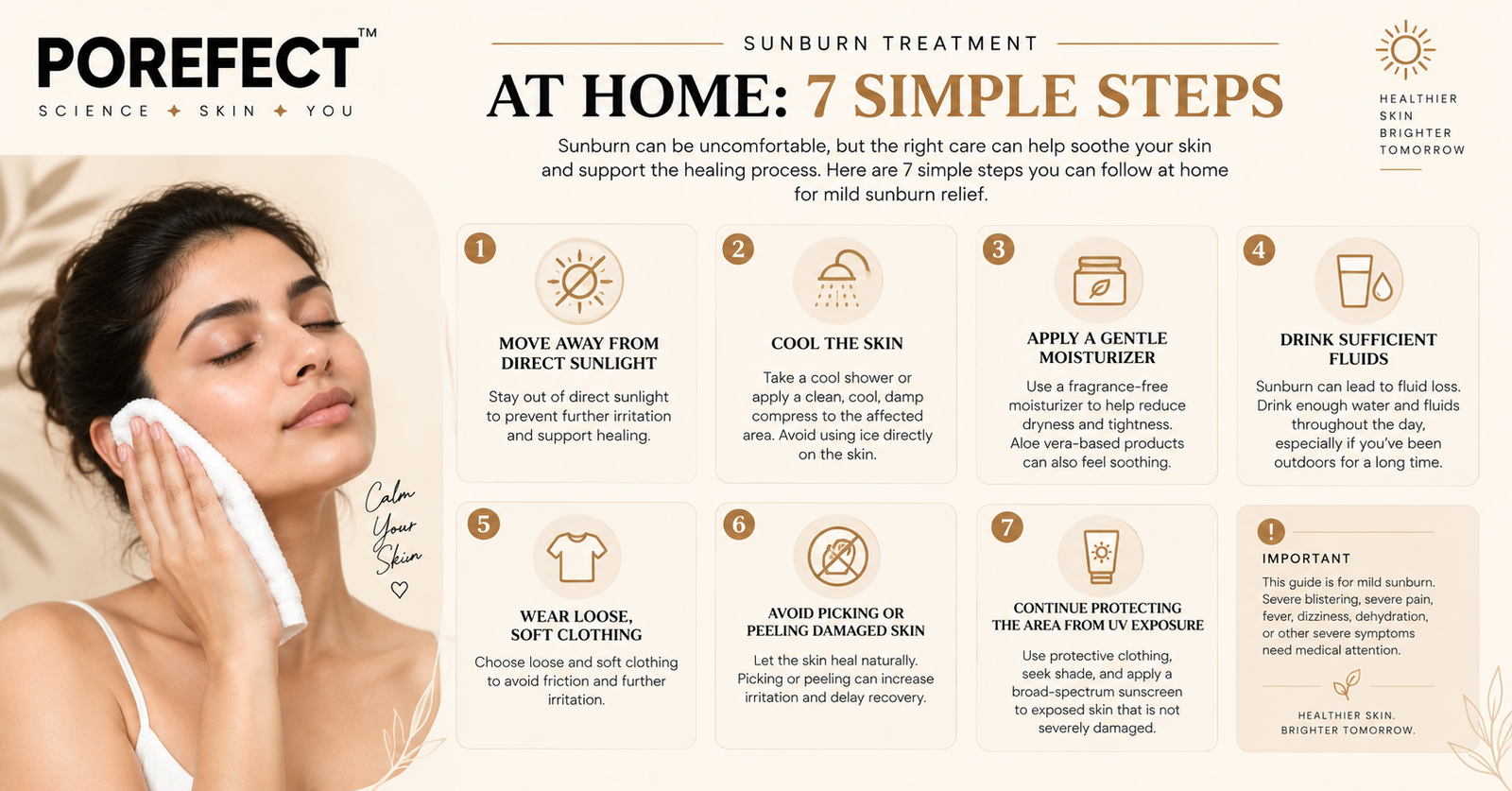
A practical approach includes:
- Move away from direct sunlight.
- Cool the affected skin with a cool shower or damp compress.
- Apply a gentle, fragrance-free moisturizer.
- Drink sufficient fluids.
- Wear loose, soft clothing.
- Avoid picking or peeling damaged skin.
- Continue protecting the area from UV exposure.
These measures do not instantly remove sunburn, but they can make the healing period more comfortable.
What to Apply on Sunburn?
If you are wondering what to apply on sunburn, focus on gentle, non-irritating products.
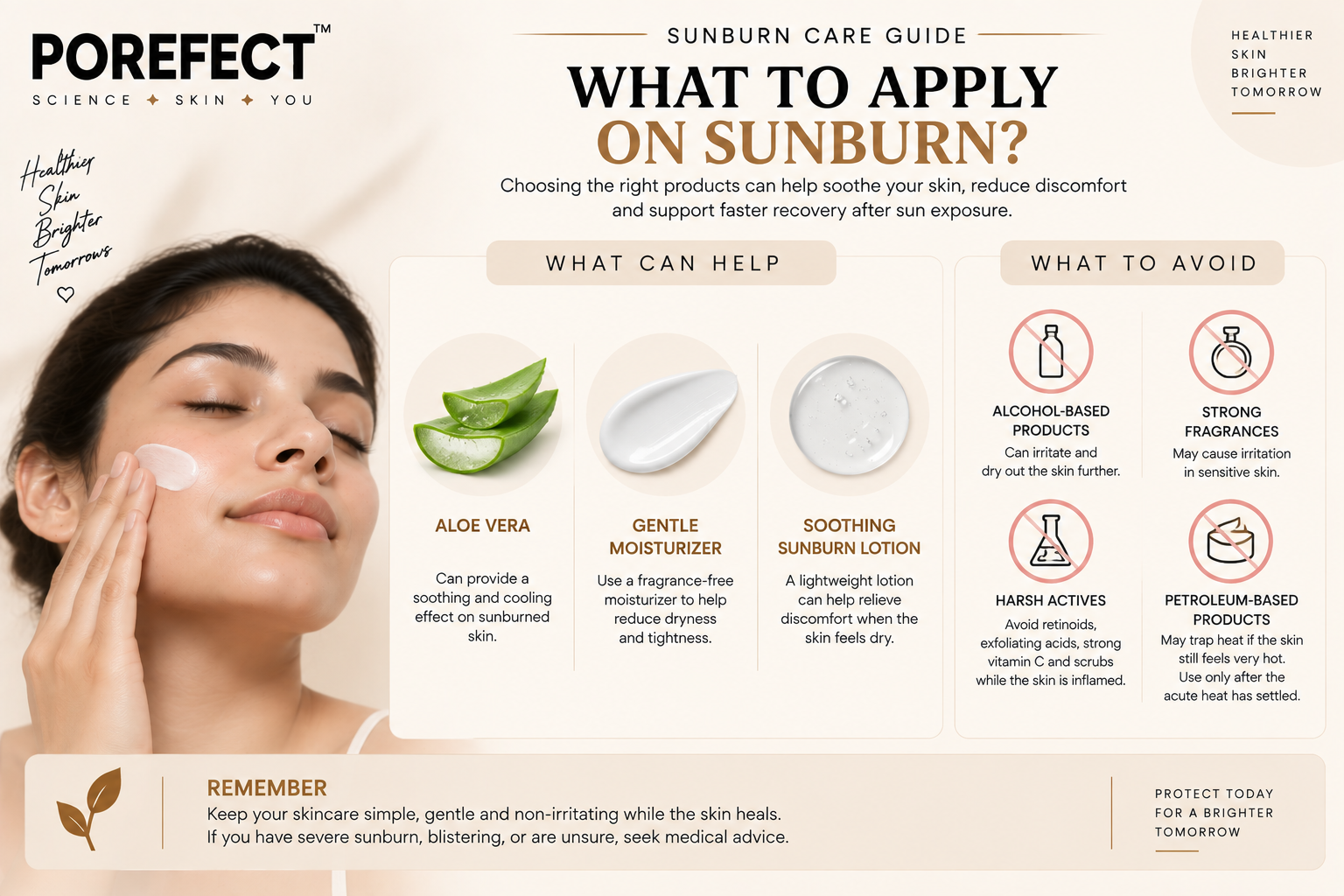
A fragrance-free moisturizer or soothing sunburn cream may help relieve dryness and discomfort. Aloe vera-based products can also feel soothing for some people.
Avoid applying irritating skincare ingredients such as retinoids, exfoliating acids, strong vitamin C products, scrubs, or other potentially irritating actives while the skin is acutely inflamed.
Do not use petroleum-based products immediately if the skin feels very hot, as they may trap heat. Once the acute heat has settled, an appropriate moisturizer can help reduce dryness.
How to Treat Sunburn on Face
Face sunburn treatment requires extra care because facial skin can be sensitive and is frequently exposed to skincare products.
If you are wondering how to treat sunburn on face safely, keep the routine simple:
Morning
- Gentle cleanser or lukewarm water
- Fragrance-free moisturizer
- Broad-spectrum sunscreen if the skin can tolerate it
Evening
- Gentle cleansing
- Soothing moisturizer
- Avoid exfoliation and active treatments until irritation settles
Do not scrub peeling facial skin or try to physically remove the damaged layer. Let the skin shed naturally.
If the face develops significant swelling, extensive blistering, severe pain, or symptoms around the eyes, medical evaluation is appropriate.
How to Reduce Sunburn Redness
There is no instant way to remove the redness caused by sunburn because the redness reflects inflammation and skin injury.
To understand how to reduce sunburn redness, focus on cooling the skin, avoiding additional UV exposure, moisturizing, and allowing the inflammatory response to settle.
Using multiple active skincare products in an attempt to make the redness disappear faster can actually increase irritation and prolong recovery.
Gentle sunburn treatment is generally more appropriate than aggressive exfoliation or strong skincare products while the skin is inflamed.
How Long Does Sunburn Take to Heal?
Mild sunburn often begins improving within several days. Peeling may occur as damaged skin is shed, and more significant burns can take longer to recover.
The exact duration depends on the severity of the burn. Avoid picking peeling skin because this can increase irritation and potentially contribute to infection or prolonged discoloration.
If redness or irritation persists, becomes worse, or is accompanied by significant pain or other systemic symptoms, consult a healthcare professional.
What Not to Do During Sunburn Recovery
Some common remedies can make irritated skin worse. During sunburn recovery, avoid:
- Scrubbing or exfoliating the skin
- Picking peeling skin
- Popping blisters
- Applying undiluted essential oils
- Using harsh alcohol-based products
- Applying strong active ingredients to inflamed skin
- Returning to prolonged sun exposure
- Using tanning beds
“Natural” does not automatically mean safe for damaged skin. Lemon juice, baking soda, toothpaste, and other DIY sunburn remedies can irritate the skin and should be avoided.
When Should You See a Doctor?
Most mild sunburns can be managed with supportive care and appropriate sunburn treatment. However, medical attention may be needed for severe sunburn.
Seek professional care if you experience:
- Extensive or severe blistering
- Severe swelling
- Intense or worsening pain
- Fever or chills
- Dizziness or fainting
- Nausea or vomiting
- Confusion or significant weakness
- Signs of dehydration
- Signs of infection
Children, older adults, and people with significant medical conditions may also require earlier assessment when sunburn is severe.
How to Prevent Sunburn
Prevention is more effective than treating repeated sun damage. Use a broad-spectrum sunscreen with adequate SPF, apply enough product, and reapply as recommended, particularly after swimming or sweating.
Also consider:
- Seeking shade during intense sunlight
- Wearing a wide-brimmed hat
- Using UV-protective clothing
- Wearing sunglasses
- Avoiding intentional tanning
- Reapplying sunscreen during prolonged outdoor activity
Consistent sun protection also helps reduce cumulative UV damage that contributes to premature skin aging and pigmentation.
FAQs About Sunburn Treatment
What is the best treatment for sunburn?
The best sunburn treatment depends on its severity, but mild burns usually benefit from cooling the skin, gentle moisturizing, hydration, and strict avoidance of additional sun exposure.
What is the best cream for sunburn?
The best cream for sunburn is generally a gentle, fragrance-free moisturizer that supports comfort without irritating damaged skin. Aloe vera-containing products may also feel soothing for some people.
How can I get rid of sunburn fast?
There is no safe method to instantly get rid of sunburn. The skin needs time to repair itself. Cooling, moisturizing, hydration, and avoiding further UV exposure can support recovery.
Can I exfoliate sunburned skin?
No. Exfoliating or scrubbing sunburned skin can increase irritation and interfere with recovery. Allow peeling skin to shed naturally and resume exfoliation only after the skin has completely recovered.
Conclusion
Effective sunburn treatment is mainly about supporting the skin while it heals rather than trying to remove the burn immediately. Cooling the skin, using a gentle moisturizer, staying hydrated, avoiding irritating skincare products, and preventing further UV exposure can provide sunburn relief and support recovery.
If the burn is severe, blistering, widespread, or accompanied by symptoms such as fever, dizziness, or dehydration, professional medical care is important. Most importantly, consistent sunscreen use and sun-protective habits can help prevent future sunburn and reduce cumulative UV-related skin damage.