Skin Care
Learn about skin texture treatment, common causes of uneven skin texture, skincare routines, exfoliation, hydration and dermatologist treatment options.
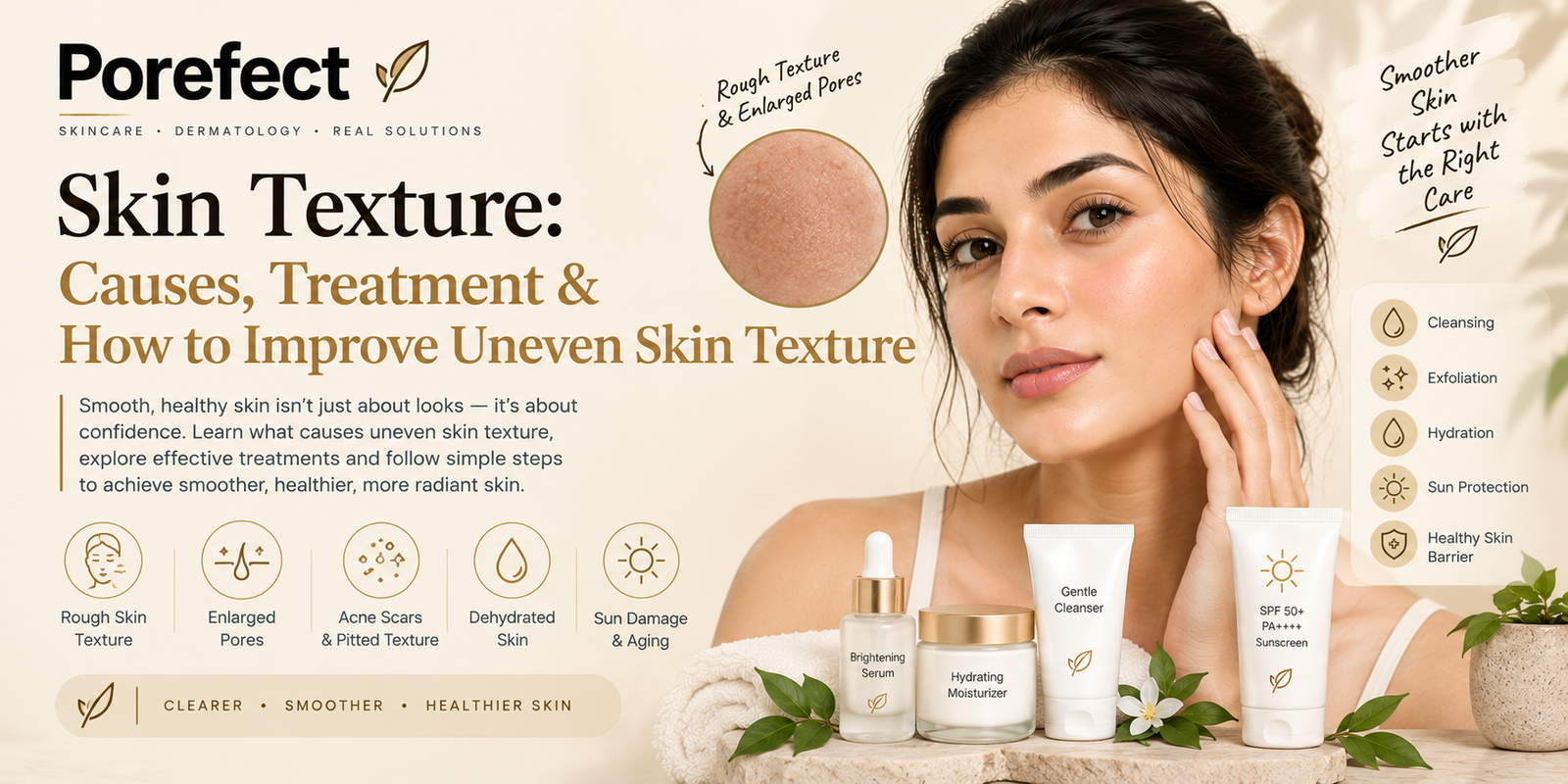
Skin Texture: Causes, Treatment & How to Improve Uneven Skin Texture
Skin texture treatment can help improve roughness, bumps, clogged pores, dryness, and uneven-looking skin. Skin texture refers to how smooth and even your skin feels and looks. Healthy skin naturally has pores, fine lines, and some variation, but concerns such as roughness, bumps, clogged pores, acne scars, dryness, and uneven cell turnover can make the surface appear less smooth. The right skin texture treatment depends on the underlying cause and may include a consistent skincare routine, targeted ingredients, and professional treatments when needed.
If you are wondering how to improve skin texture on face, the most important steps are gentle cleansing, regular moisturization, daily sunscreen, and carefully selected active ingredients. Understanding the cause of your texture concerns can help you choose a suitable skin texture treatment without unnecessarily irritating the skin.
What Causes Uneven Skin Texture?
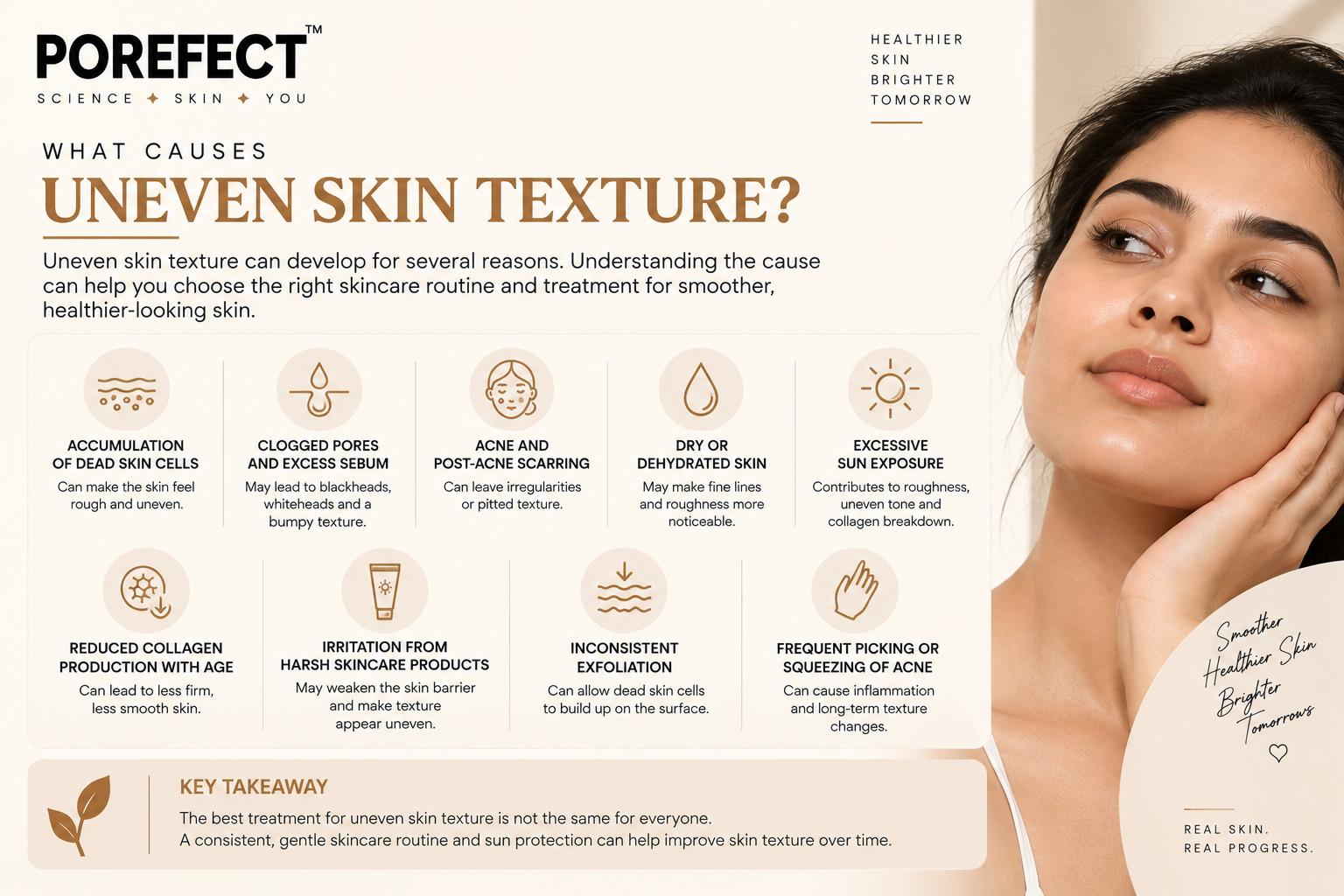
Uneven skin texture can develop for several reasons. Common causes include:
- Accumulation of dead skin cells
- Clogged pores and excess sebum
- Acne and post-acne scarring
- Dry or dehydrated skin
- Excessive sun exposure
- Reduced collagen production with age
- Irritation from harsh skincare products
- Inconsistent exfoliation
- Frequent picking or squeezing of acne and clogged pores
Understanding the underlying cause is important because the best skin texture treatment is not the same for everyone. A routine that works for oily, congested skin may not be appropriate for dry or sensitive skin.
Common Types of Skin Texture Problems
Texture can appear differently depending on the underlying concern. Identifying the type of texture problem can make skin texture treatment more targeted and effective.
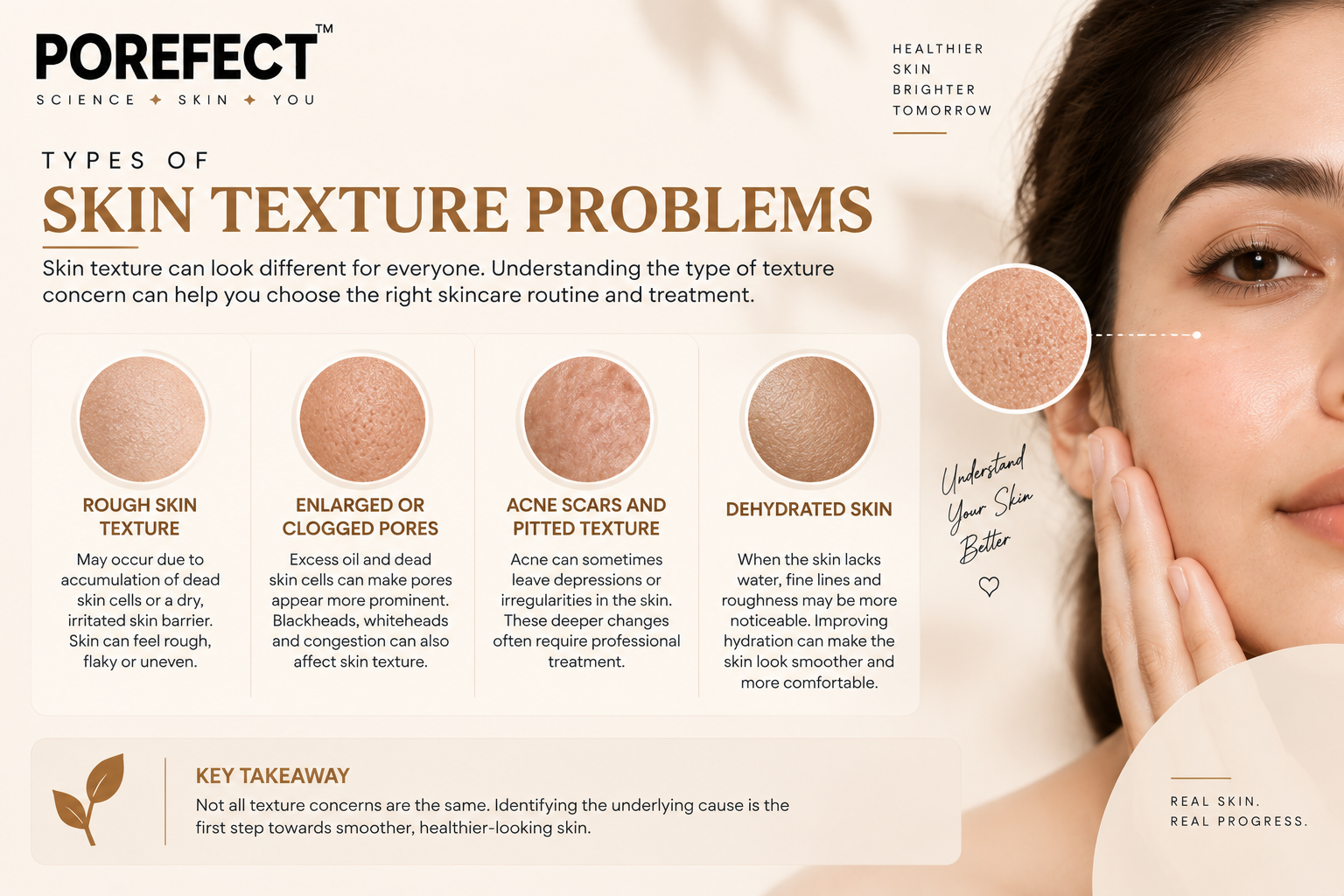
Rough Skin Texture
Rough skin texture may occur when dead skin cells accumulate on the surface or when the skin barrier becomes dry and irritated. The skin may feel rough, flaky, tight, or uneven.
A suitable skin texture treatment should focus on restoring hydration and supporting the skin barrier before introducing strong exfoliation.
Enlarged or Clogged Pores
Excess oil and dead skin cells can make pores appear more prominent. Blackheads, whiteheads, and congestion can also contribute to uneven skin texture on the face.
When clogged pores are the main concern, ingredients such as salicylic acid may be useful as part of a targeted skin texture treatment routine.
Acne Scars and Pitted Texture
Acne can sometimes leave depressions or irregularities in the skin. These deeper changes generally cannot be corrected with a basic skincare routine alone and may require professional treatment.
Depending on the type and depth of acne scars, a dermatologist may recommend procedures such as microneedling, chemical peels, or fractional laser treatment.
Dehydrated Skin
When the skin lacks water, fine lines and roughness may become more noticeable. Improving hydration can make the surface temporarily look smoother and more comfortable.
Using a gentle cleanser and moisturizer containing hydrating ingredients can support the skin barrier and complement your overall skin texture treatment routine.
How to Improve Skin Texture
If you want to know how to improve skin texture, start with a simple routine rather than using multiple strong products at once. A consistent skin texture treatment plan is usually more useful than aggressive exfoliation.
1. Use a Gentle Cleanser
Cleanse your face with a gentle cleanser suited to your skin type. Over-cleansing or using harsh soaps can damage the skin barrier and make roughness more noticeable.
For oily or congested skin, a cleanser containing salicylic acid may be useful for some people because salicylic acid helps exfoliate inside pores.
2. Exfoliate Carefully
Exfoliation can help remove excess dead skin cells and support smoother-looking skin. Ingredients such as salicylic acid, glycolic acid, or lactic acid may be used depending on your skin type and concern.
However, more exfoliation does not necessarily mean better results. Excessive use of acids, scrubs, or exfoliating tools can cause irritation and worsen uneven skin texture.
A gentle approach is an important part of effective skin texture treatment, especially for sensitive or easily irritated skin.
3. Consider a Retinoid
Retinoids can help regulate skin cell turnover and are commonly used for acne, clogged pores, fine lines, and overall skin texture improvement.
Start gradually if a retinoid is appropriate for your skin, and use moisturizer to reduce dryness and irritation. Retinoids should generally be avoided during pregnancy unless specifically advised by a healthcare professional.
4. Keep the Skin Hydrated
A healthy skin barrier is essential for a smoother appearance. Use a moisturizer suited to your skin type and look for hydrating ingredients such as glycerin, hyaluronic acid, or ceramides.
If your rough skin on face is caused partly by dehydration, improving hydration may noticeably improve how the skin feels.
5. Never Skip Sunscreen
Daily broad-spectrum sunscreen is one of the most important steps for long-term skin texture treatment and prevention.
UV exposure contributes to collagen breakdown, uneven pigmentation, roughness, and premature skin aging. Apply sunscreen every morning and reapply during prolonged outdoor exposure.
Skincare Routine for Uneven Skin Texture
A consistent skincare routine for uneven skin texture can be kept relatively simple. Your skin texture treatment routine should address your main concern without overwhelming the skin with too many active ingredients.
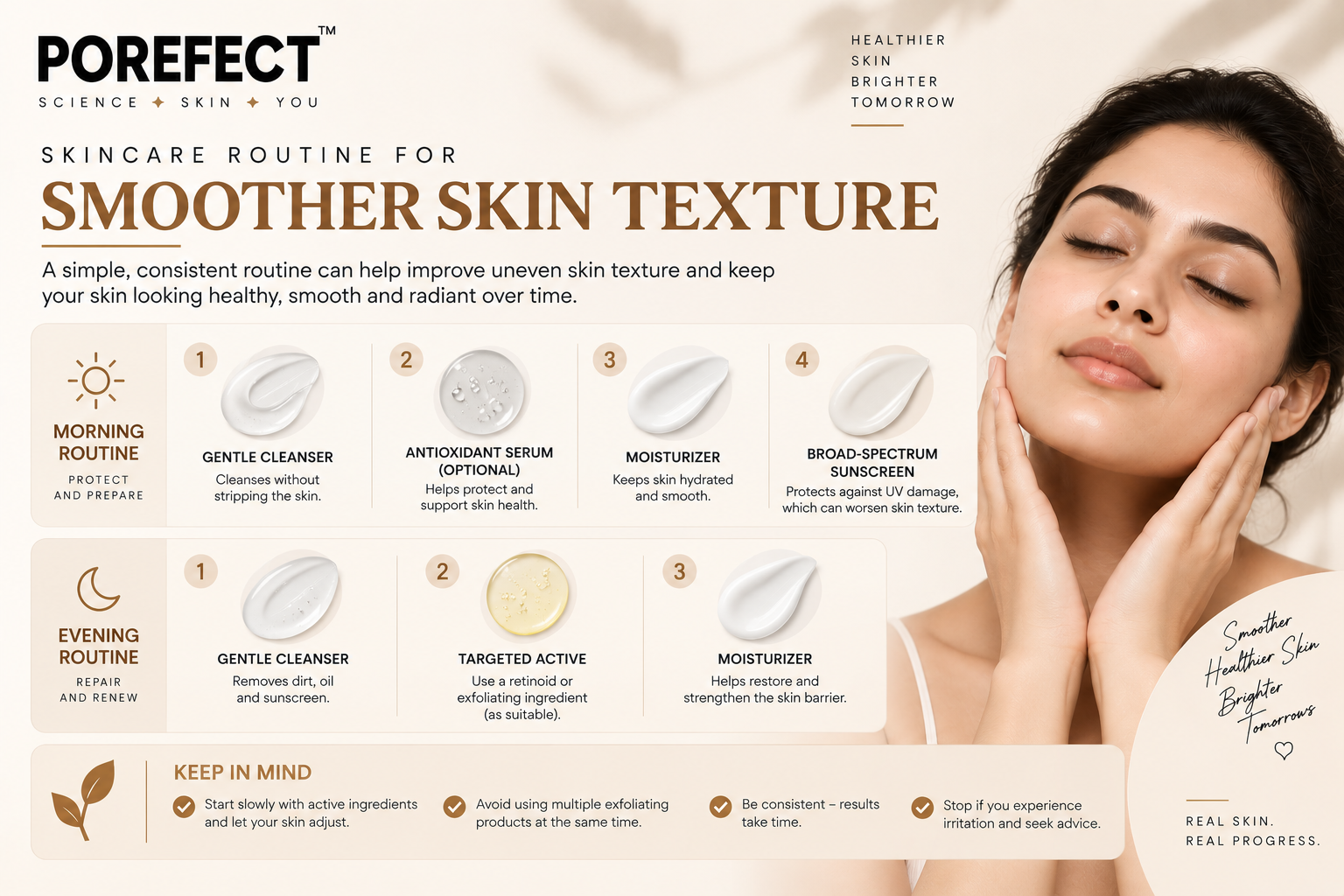
Morning
- Gentle cleanser
- Hydrating or antioxidant serum, if suitable
- Moisturizer
- Broad-spectrum sunscreen
Evening
- Gentle cleanser
- One targeted active, such as a retinoid or exfoliating ingredient
- Moisturizer
Avoid introducing several exfoliating or active products simultaneously. Give your skin time to adjust and stop or reduce an active if persistent burning, significant redness, or irritation develops.
How to Get Smooth Skin Texture
If your goal is how to get smooth skin texture, focus on consistency rather than aggressive treatments. A well-planned skin texture treatment routine can gradually improve the appearance and feel of the skin.
A smoother appearance usually comes from combining:
- Gentle cleansing
- Appropriate exfoliation
- Adequate hydration
- Pore and acne management
- Retinoid use when appropriate
- Consistent sunscreen
- Avoiding picking and harsh scrubbing
Results are gradual. Skincare can improve surface roughness and mild congestion, but deeper acne scars and significant textural changes often require professional treatment.
How to Fix Uneven Skin Texture
The answer to how to fix uneven skin texture depends on its cause. The most effective skin texture treatment should address the specific problem rather than treating every type of texture in the same way.
For clogged pores, salicylic acid may help. For rough or dry skin, moisturization and barrier support are more important. For signs of photoaging, sunscreen and retinoids may be useful. For acne scars, professional procedures may provide more meaningful improvement.
Trying to treat every type of texture with strong exfoliation can backfire by causing irritation and inflammation.
Dermatologist Treatment for Uneven Skin Texture
When skincare is not enough, a dermatologist can assess the cause and recommend a suitable professional skin texture treatment.
Depending on the concern, professional options may include:
- Chemical peels
- Microneedling
- Fractional laser treatments
- Acne treatment
- Professional extraction for selected clogged pores
- Treatments targeting acne scars
The appropriate procedure depends on skin type, pigmentation risk, the depth of scarring, and the underlying condition. Stronger treatment is not automatically better, particularly for sensitive or pigmentation-prone skin.
Common Mistakes That Can Worsen Skin Texture
Some habits can make texture more noticeable:
- Scrubbing the face aggressively
- Using too many exfoliating products
- Picking blackheads or pimples
- Skipping moisturizer because of oily skin
- Not using sunscreen
- Frequently changing skincare products
- Using harsh or highly fragranced products on sensitive skin
A consistent, uncomplicated routine is often more useful than a complicated routine filled with multiple active ingredients. This is also important when following a skin texture treatment plan.
When Should You See a Dermatologist?
Consider professional evaluation if uneven texture persists despite a consistent skincare routine, if you have significant acne scarring, or if your skin develops persistent redness, scaling, itching, or irritation.
A dermatologist can assess whether the problem is related to acne, clogged pores, dryness, dermatitis, photoaging, scarring, or another skin condition and can recommend an appropriate skin texture treatment.
FAQs About Skin Texture Treatment
What is skin texture treatment?
Skin texture treatment refers to skincare and professional procedures used to improve concerns such as roughness, clogged pores, bumps, acne scars, dryness, and uneven skin surface. The appropriate treatment depends on the cause of the texture problem.
How can I improve skin texture on my face?
To improve skin texture on face, use a gentle cleanser, moisturizer, daily sunscreen, and appropriate active ingredients such as salicylic acid, AHAs, or retinoids depending on your skin concern. Introduce active ingredients gradually to avoid irritation.
How can I get rid of rough skin on my face?
To get rid of rough skin on face, focus on hydration, gentle cleansing, appropriate exfoliation, and sunscreen. If roughness persists or is associated with redness, itching, or scaling, a dermatologist can help identify the cause and recommend suitable skin texture treatment.
What is the best skincare for textured skin?
The best skincare for textured skin depends on the cause. Salicylic acid may help clogged pores, while moisturizers support dry or dehydrated skin and retinoids can help with cell turnover, acne, and some signs of photoaging.
Can skin texture be permanently removed?
Normal skin texture cannot and does not need to be completely removed. Skincare and professional treatments can improve roughness, congestion, acne scars, and other irregularities, but the goal should be healthier and smoother-looking skin rather than completely poreless skin.
Conclusion
Effective skin texture treatment takes consistency and the right approach for the underlying cause. Gentle cleansing, hydration, controlled exfoliation, appropriate active ingredients, and daily sunscreen form the foundation of a good routine.
If you have persistent uneven skin texture, significant acne scarring, or roughness that does not improve with basic skincare, professional assessment can help determine the most appropriate treatment. Avoid aggressive scrubbing and excessive exfoliation, as these can damage the skin barrier and make texture problems more noticeable.