Skin Care
Learn skin care for oily skin with a simple daily routine covering cleansing, serum, moisturizer, sunscreen, targeted treatments, and product selection.
Skin Care for Oily Skin: A Simple Daily Routine
Introduction
Oily skin is common, but managing it does not mean removing every trace of oil. Sebum helps protect the skin. The goal of good skin care for oily skin is to control excess shine and congestion while keeping the skin barrier comfortable. A simple, consistent approach is usually more useful than a long list of products.
What Causes Oily Skin?
Oily skin occurs when sebaceous glands produce more sebum than the skin needs. Genetics and hormonal changes can strongly influence oil production. Heat, humidity, stress, and unsuitable skincare can also make oiliness more noticeable. Excess sebum may contribute to clogged pores, blackheads, whiteheads, and acne.
Skin Care Routine for Oily Skin
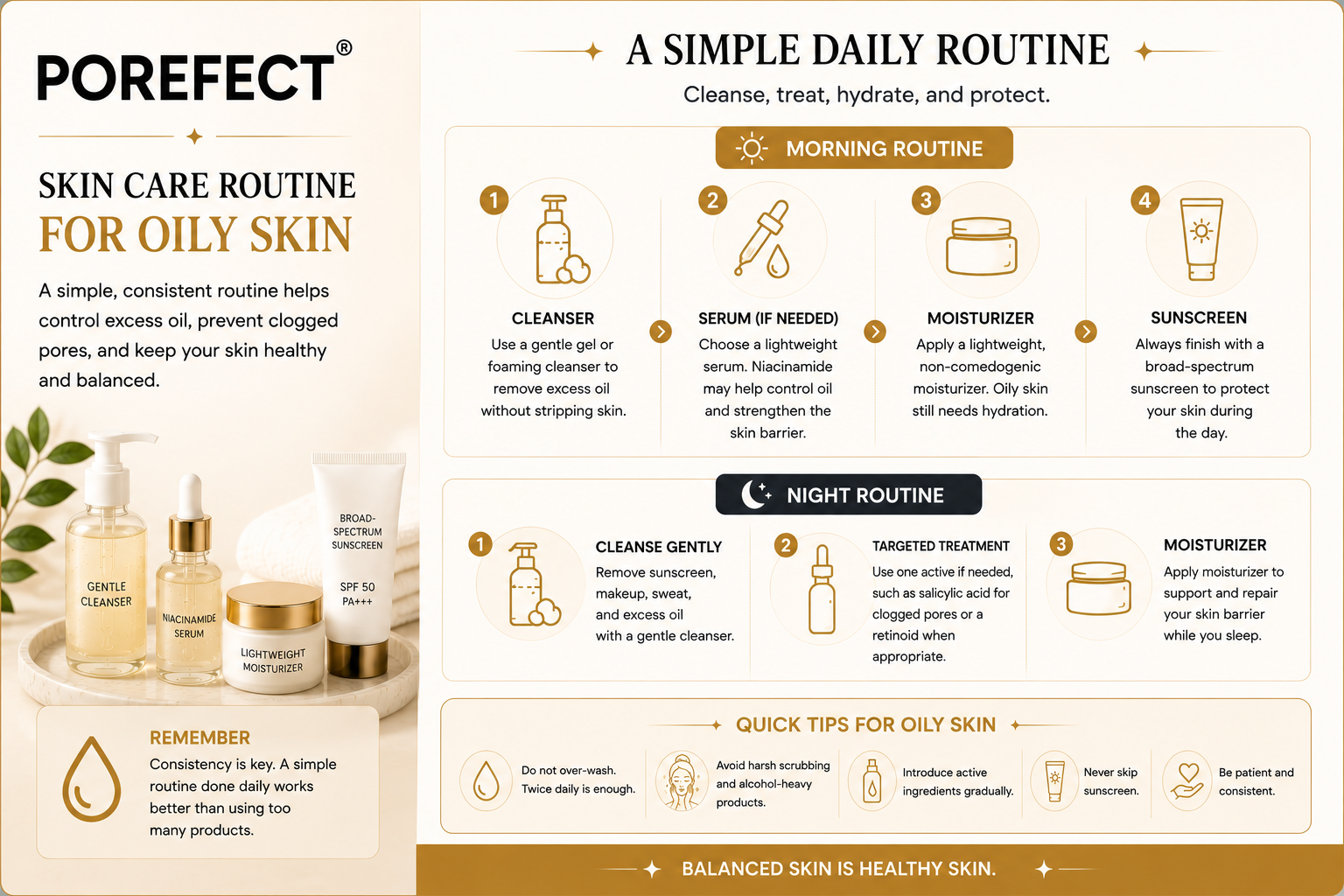
A practical skin care routine for oily skin can be built around four steps: cleansing, targeted treatment when needed, moisturising, and daytime sun protection.
Morning Routine
- Cleanser: Use a gentle gel or foaming cleanser to remove excess oil without leaving the skin tight or irritated.
- Serum: If needed, choose a lightweight serum suited to your concern. Niacinamide may support oil control and the skin barrier.
- Moisturizer: Apply a lightweight, non-comedogenic moisturizer. Oily skin still needs hydration.
- Sunscreen: Finish with a broad-spectrum sunscreen during the day.
Night Routine
- Cleanse gently to remove sunscreen, makeup, sweat, and excess sebum.
- Use one targeted active if required, such as salicylic acid for clogged pores or a retinoid when appropriate.
- Apply moisturizer to support the skin barrier.
How to Choose the Best Products for Oily Skin
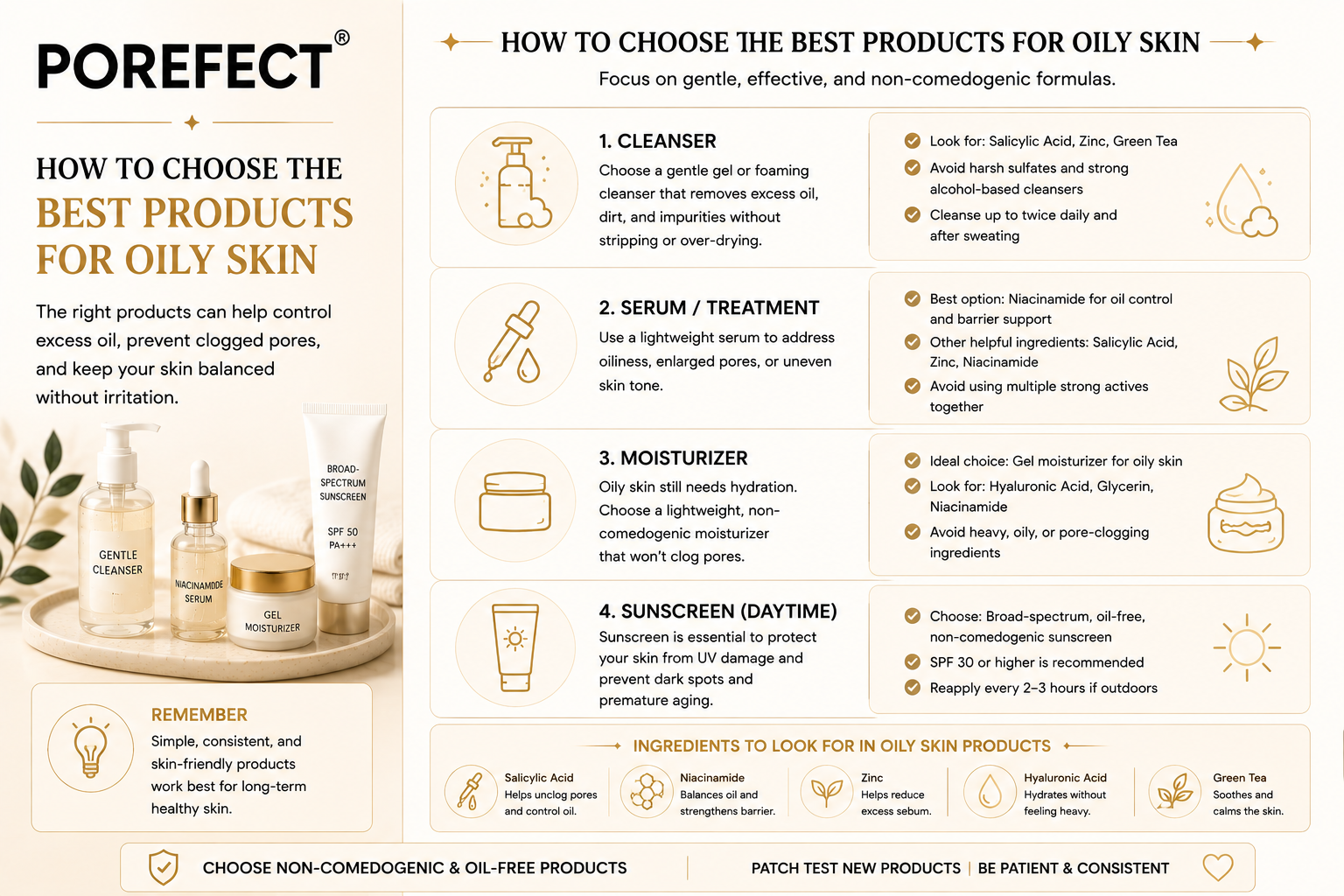
The best skincare for oily skin depends on your needs. Look for oil-free or non-comedogenic formulations when clogging is a concern. A cleanser should remove excess sebum without excessive dryness. A gel moisturizer for oily skin can be comfortable for people who dislike heavy textures.
For effective skin care for oily skin, choose products based on your specific concern rather than using several strong actives at once. If acne, pigmentation, or persistent congestion is present, a targeted product may be more appropriate.
Best Cleanser for Oily Skin
A good cleanser for oily skin should leave the face clean but not stripped. Salicylic acid can be useful when oily skin is accompanied by clogged pores or acne, but it may cause dryness or irritation in some people.
If that happens, reduce frequency or switch to a gentler cleanser. Excessive washing is not a better strategy; dermatologists commonly recommend cleansing up to twice daily and after sweating.
As part of a balanced skin care routine for oily skin, the cleanser should remove excess oil without leaving the skin persistently tight or uncomfortable.
Moisturizer for Oily Skin
Skipping moisturizer can leave oily skin dehydrated and uncomfortable. Choose a lightweight, non-comedogenic formula. A gel moisturizer for oily skin may suit those who prefer a light texture, while a richer formula may be appropriate if the skin is irritated or using drying acne treatments.
The right moisturizer should support hydration without feeling excessively greasy. Moisturization is an important part of skin care for oily skin because oily skin can still become dehydrated.
Oily Skin Treatment and Common Mistakes
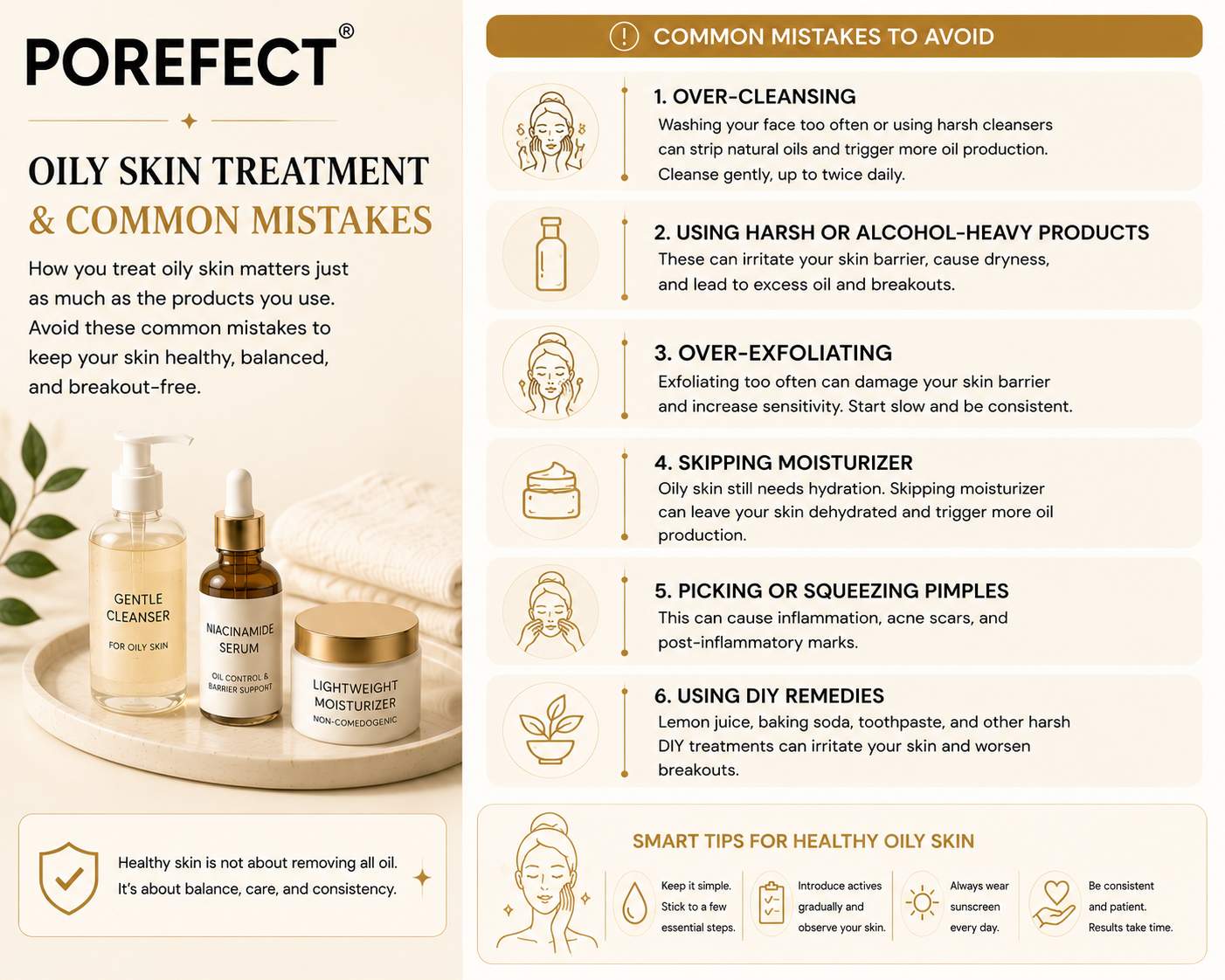
Avoid harsh scrubbing, repeated washing, alcohol-heavy products, and attempts to dry the skin out completely. These habits can irritate the skin barrier.
Introduce active ingredients gradually and reduce a product if it causes persistent burning, redness, or peeling. Avoid lemon juice, baking soda, toothpaste, and abrasive DIY remedies on the face.
Good skin care for oily skin focuses on balance rather than trying to remove all natural oil from the face.
When to See a Dermatologist
Consider professional assessment for persistent or painful acne, cysts, significant inflammation, scarring, sudden changes in oiliness, or symptoms that do not improve with a consistent routine.
A dermatologist can distinguish simple oily skin from acne or another skin condition and tailor treatment accordingly.
Frequently Asked Questions
What is the best skincare for oily skin?
A simple routine with a gentle cleanser, lightweight non-comedogenic moisturizer, appropriate targeted treatment, and daily sunscreen is a practical foundation for skin care for oily skin.
What is the best cleanser for oily skin?
Choose a gentle gel or foaming cleanser. Salicylic acid may help when clogged pores or acne are present, provided your skin tolerates it.
What is the best moisturizer for oily skin?
Look for a lightweight, non-comedogenic moisturizer. Gel textures can be comfortable, but the best formula is one that hydrates without irritating or clogging your skin.
Can men follow the same oily skin routine?
Yes. The basic principles of skin care for men with oily skin are the same: gentle cleansing, suitable treatment, moisturization, and sunscreen.
Conclusion
Good skin care for oily skin is about balance rather than stripping the skin. Build your routine around gentle cleansing, appropriate active ingredients, lightweight hydration, and daily sun protection.
If oiliness is accompanied by persistent acne or irritation, professional guidance can help you choose the appropriate treatment.