Skin Care
Discover effective skin brightening ingredients, products, routines, sunscreen tips, and treatments for a healthier, more even-looking complexion.
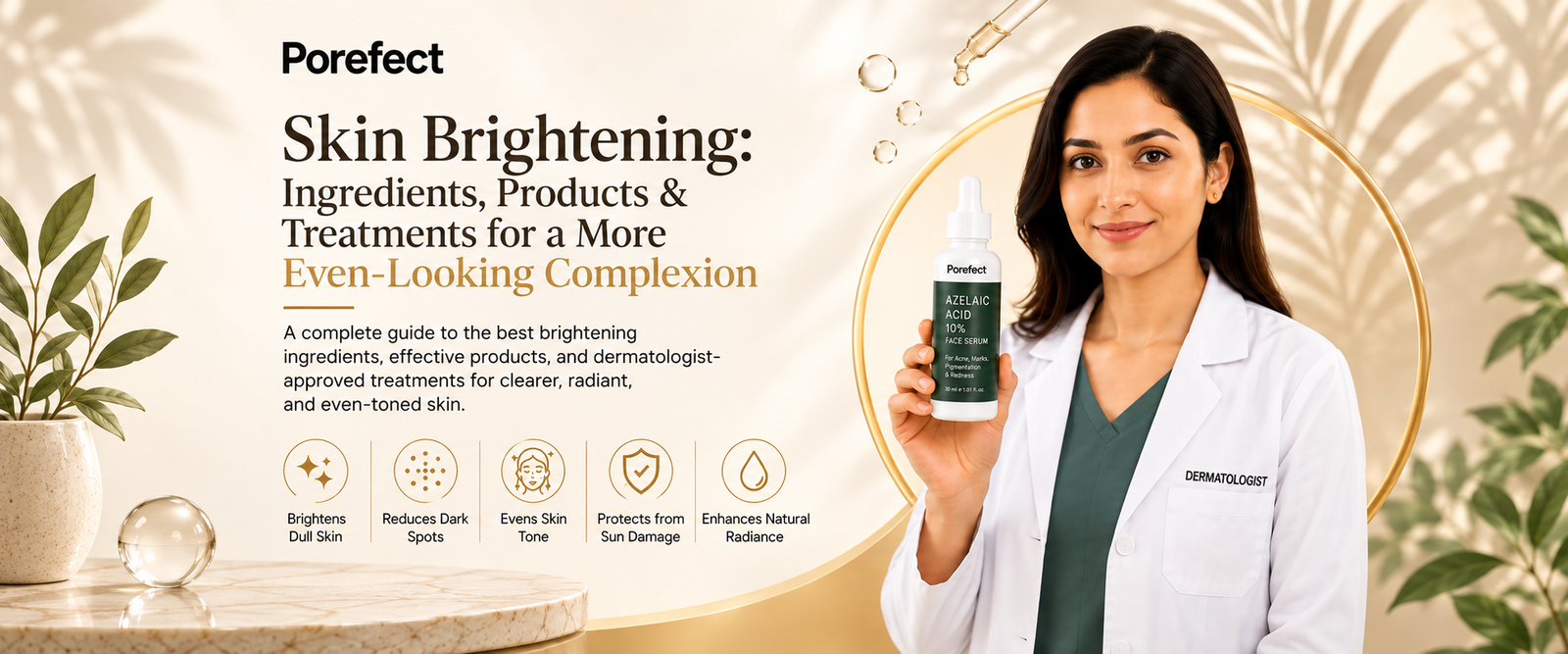
Skin Brightening: Ingredients, Products & Treatments for a More Even-Looking Complexion
Dullness, uneven skin tone, tanning, and dark patches can make the complexion look tired even when the skin is otherwise healthy. This is why skin brightening has become a common skincare goal. But brightening should not mean trying to make your natural skin colour lighter. The realistic goal is to improve uneven tone, reduce the appearance of pigmentation, and support healthier-looking skin.
The right approach depends on what is causing the dull or uneven appearance. Sun exposure, dehydration, acne marks, accumulated dead skin cells, irritation, and pigmentation conditions can all play a role. Instead of searching for the strongest brightening product, it is better to choose ingredients that suit your skin and use them consistently.
What Does Skin Brightening Actually Mean?
Skin brightening refers to improving the appearance of dullness and uneven pigmentation so the complexion looks clearer and more uniform.
It is different from skin bleaching or trying to permanently change your natural skin tone. A good skincare routine should support the skin barrier while addressing factors that contribute to uneven appearance.
If your concern is mainly pigmentation, persistent dark spots, or melasma, skincare alone may not always be enough. Identifying the underlying cause is an important part of choosing the right skin brightening treatment.
Which Skin Brightening Products Can Help?
When choosing skin brightening products, look beyond words such as “glow” or “radiance.” Pay attention to the active ingredients, formulation, and how well the product suits your skin.
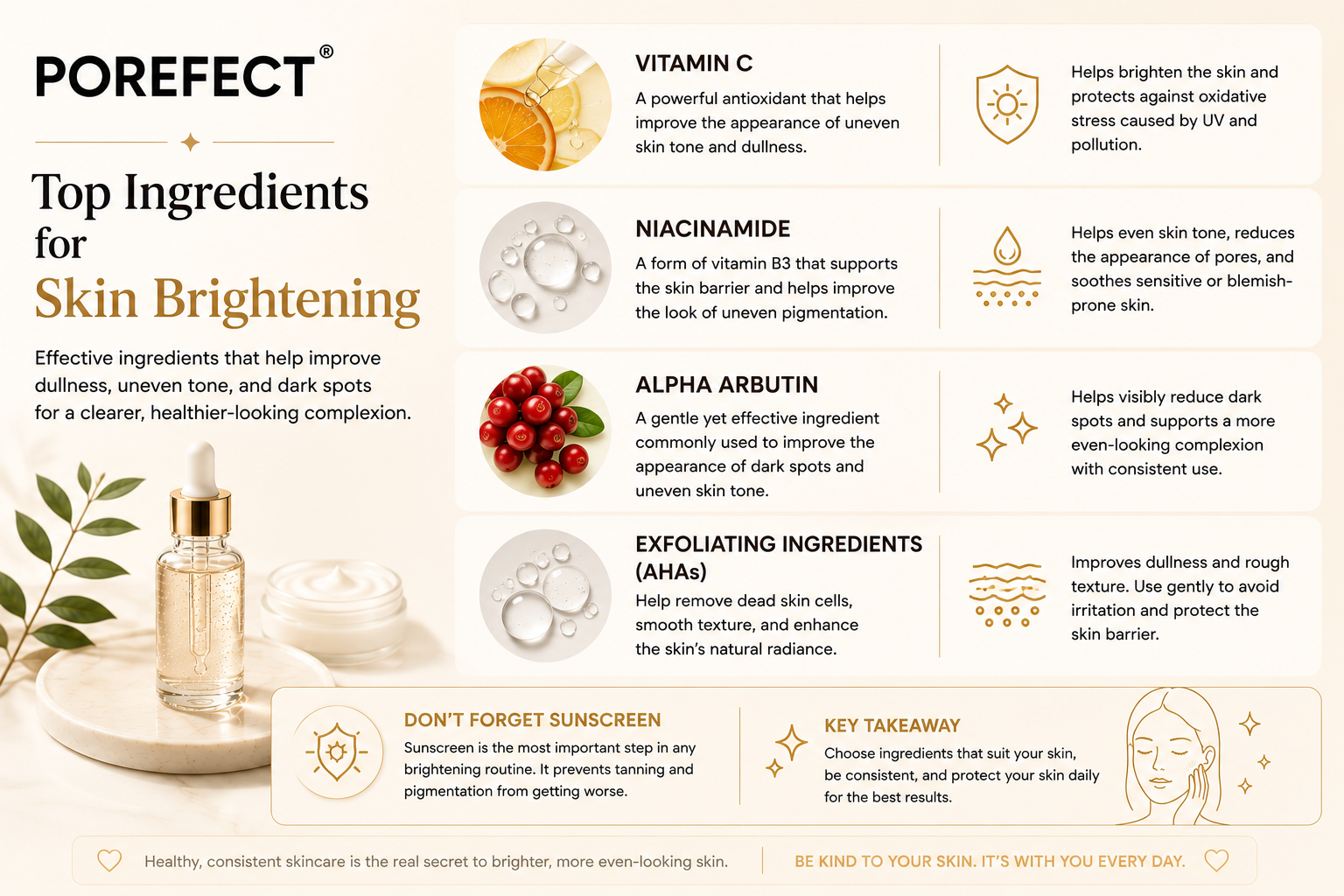
Vitamin C
Vitamin C is a popular antioxidant used to improve the appearance of uneven skin tone and dullness. It can also help protect the skin from oxidative stress caused by environmental exposure.
A well-formulated vitamin C product can be useful in a morning routine, particularly when paired with sunscreen. However, concentration and formulation matter, and some people may experience irritation with stronger products.
Niacinamide
Niacinamide, or vitamin B3, is a versatile ingredient that supports the skin barrier and can help improve the appearance of uneven pigmentation.
It may be particularly practical for people with oily, blemish-prone, or sensitive skin because it can fit into a relatively simple routine. It should not be viewed as a universal solution for every pigmentation condition.
Alpha Arbutin
Alpha arbutin is commonly included in pigmentation-focused skincare. It is used to help improve the appearance of dark spots and uneven skin tone.
It may be considered when pigmentation is the main concern, but consistent use and adequate sun protection remain important.
Exfoliating Ingredients
Ingredients such as alpha hydroxy acids (AHAs) can help remove accumulated dead skin cells and improve the appearance of rough or dull skin.
However, over-exfoliation can damage the skin barrier and cause irritation. If your skin is sensitive or already inflamed, using fewer active ingredients may be more appropriate.
Is a Skin Brightening Cream Right for You?
A skin brightening cream can be useful when its ingredients match your concern and your skin can tolerate the formulation.
For dry or sensitive skin, look for products that combine brightening ingredients with barrier-supportive moisturizers. Oily or acne-prone skin may feel more comfortable with lightweight, non-comedogenic formulations.
The term brightening cream does not tell you whether a product will be suitable. Check the ingredient list and avoid products that promise dramatic whitening, permanent colour changes, or overnight results.
If your main concern is pigmentation rather than general dullness, a targeted product may be more appropriate than a general-purpose cream.
What About Vitamin C Cream for Face?
People often search for a vitamin C cream for face because vitamin C is widely associated with brighter-looking skin.
A vitamin C cream can be an option for people who prefer a cream-based formulation instead of a serum. Its usefulness depends on the form and stability of vitamin C, the overall formulation, and your skin's tolerance.
If you are already using another active pigmentation ingredient, introducing vitamin C at the same time may not be necessary. A simpler routine is often easier to tolerate and maintain.
Sunscreen Is Essential for Brightening
No skin brightening treatment should be considered complete without appropriate sun protection.
UV exposure can increase melanin production, contribute to tanning, and make existing pigmentation more noticeable. This can work against the results you are trying to achieve with other skincare products.
Use a broad-spectrum sunscreen every morning and reapply according to your exposure and the product directions. If pigmentation is a major concern, consistent sunscreen use is one of the most important habits to maintain.
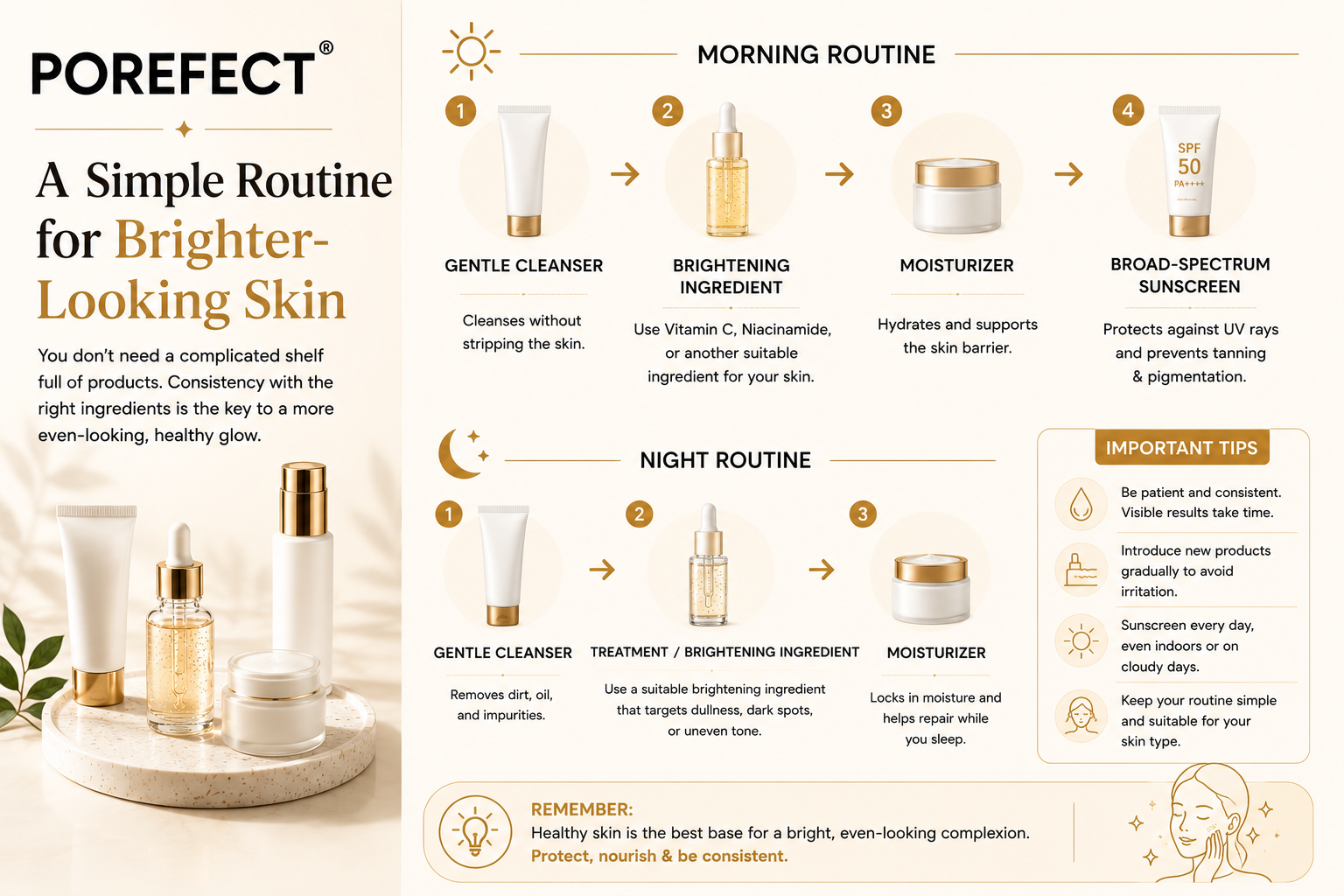
A Simple Routine for Brighter-Looking Skin
You do not need a complicated shelf full of products.
Morning
- Gentle cleanser
- Vitamin C, niacinamide, or another suitable brightening ingredient
- Moisturizer
- Broad-spectrum sunscreen
Night
- Gentle cleanser
- One targeted active, if appropriate
- Moisturizer
Introduce new products gradually. Avoid starting several strong actives at once, as irritation can make the skin look duller and may worsen pigmentation in some people.
If your skin becomes persistently red, burning, excessively dry, or uncomfortable, reduce active ingredients and focus on restoring the skin barrier.
Common Mistakes to Avoid
Some habits can make skin dullness and pigmentation harder to manage.
- Aggressive scrubbing
- Over-exfoliating
- Using several strong actives together
- Skipping sunscreen
- Picking acne or irritating the skin
- Using lemon juice, baking soda, toothpaste, or other harsh DIY remedies
- Expecting a brightening product to transform the skin overnight
More products do not necessarily mean better results. Consistency and tolerability matter more.
When Should You Consider Professional Treatment?
If your skin looks persistently uneven, pigmentation keeps returning, or you are unsure what is causing the change, a dermatologist can assess the concern.
Depending on the underlying condition, professional treatment may include prescription medicines, chemical peels, or selected laser-based procedures. These treatments are not appropriate for everyone. Skin type, sensitivity, pigmentation pattern, and the risk of post-treatment pigmentation should all be considered.
Professional assessment is especially important when pigmentation appears suddenly, changes rapidly, spreads, or remains unexplained.
Frequently Asked Questions
What is the best skin brightening product?
There is no single best product for everyone. Vitamin C, niacinamide, alpha arbutin, and other ingredients may be useful depending on your skin concern and tolerance. Sunscreen is essential.
Does a skin brightening cream lighten natural skin colour?
A suitable brightening product should focus on improving dullness and uneven pigmentation rather than changing your natural skin colour.
Is vitamin C cream for face effective for pigmentation?
Vitamin C may help improve the appearance of uneven tone and pigmentation, but results depend on the formulation, consistency, cause of pigmentation, and sun protection.
How long does skin brightening take?
Improvement varies from person to person. Consistent skincare over time is more realistic than expecting immediate changes.
Final Thoughts
Effective skin brightening is about achieving a healthier, more even-looking complexion—not changing your natural skin colour. Choose skin brightening products according to your actual concern, use active ingredients thoughtfully, support your skin barrier, and make sunscreen part of your daily routine.
Whether you choose a skin brightening cream, a vitamin C cream for face, or another targeted product, the best routine is one your skin can tolerate and you can maintain consistently. For persistent or unexplained pigmentation, professional assessment can help determine the most appropriate treatment.