Skin Care
Learn how to repair a damaged skin barrier, recognize common symptoms, simplify your skincare routine, and choose barrier-supporting ingredients.
Skin Barrier Repair: Causes, Symptoms, Routine & How to Fix Damage
Skin barrier repair is important when your skin barrier becomes weakened. Your skin barrier is the outer protective layer of the skin. It helps retain moisture while protecting the skin from irritants and environmental stressors. When this barrier is weakened, skin may become dry, tight, rough, red, or unusually sensitive.
A damaged skin barrier can develop after over-exfoliation, harsh cleansing, excessive use of active ingredients, weather changes, or unsuitable skincare products. With a simple, consistent routine, mild barrier disruption can often improve.
What Is a Damaged Skin Barrier?
The skin barrier is closely associated with the outermost layer of the epidermis, including the stratum corneum and its protective lipids. These structures help regulate water loss and support the skin's defenses.
When barrier function is impaired, the skin can lose moisture more easily and become more reactive. Products that previously felt comfortable may suddenly sting or cause redness.
Skin Barrier Damage Symptoms
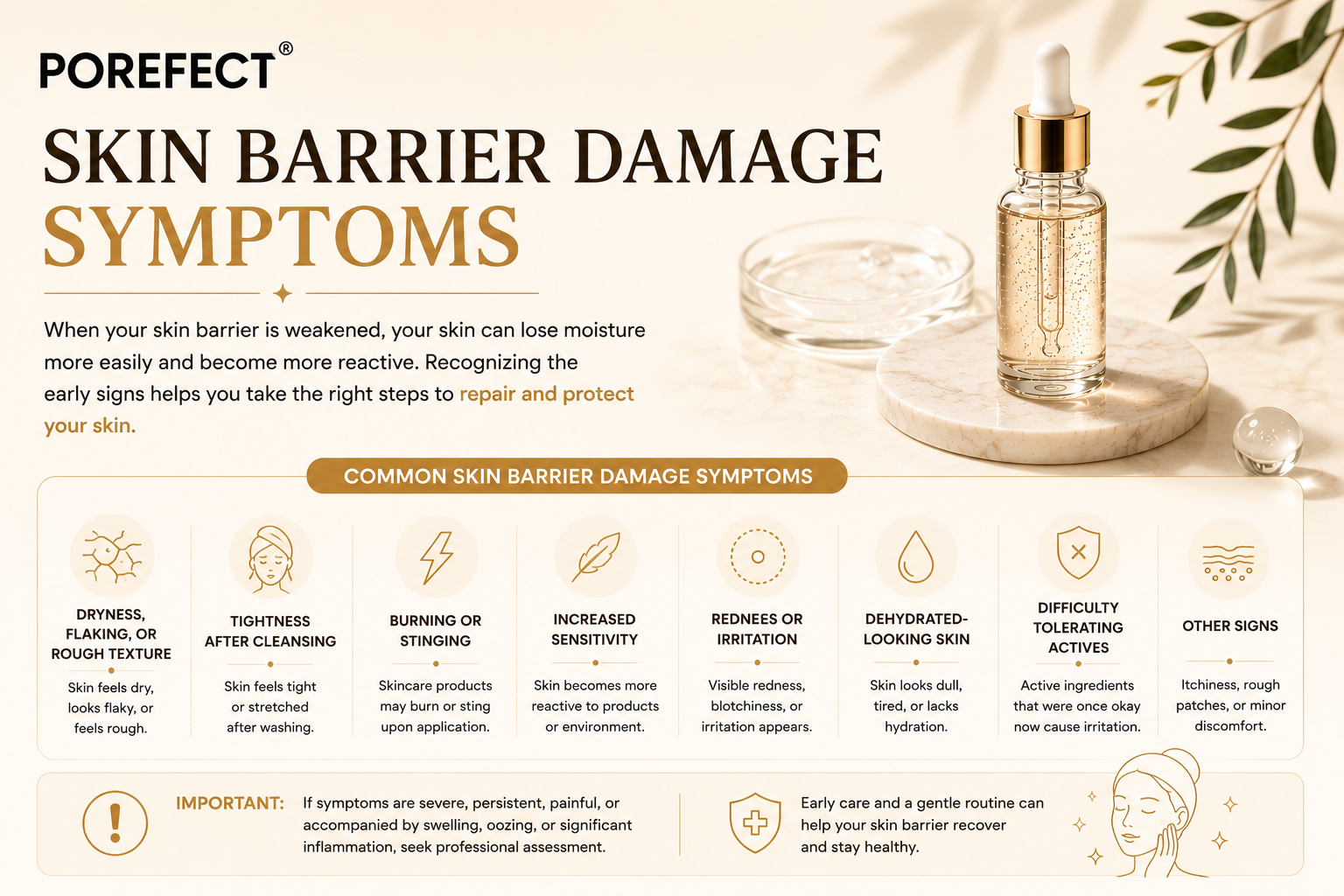
Common skin barrier damage symptoms include:
- Dryness, flaking, or rough texture
- Tightness after cleansing
- Burning or stinging when applying skincare
- Increased sensitivity
- Redness or irritation
- Dehydrated-looking skin
- Difficulty tolerating active ingredients
If symptoms are severe, persistent, painful, or accompanied by swelling, oozing, or significant inflammation, professional assessment is appropriate.
Common Causes of Skin Barrier Damage
Several habits can weaken the barrier:
- Over-cleansing or using harsh cleansers
- Frequent exfoliation with acids or physical scrubs
- Introducing multiple active ingredients at once
- Excessive use of potentially irritating treatments
- Very hot water
- Cold, dry, or windy weather
- Picking, scratching, or repeatedly irritating the skin
One common mistake is trying to treat irritation by adding more products. When the barrier is compromised, simplifying the routine is often more useful.
How to Repair Skin Barrier
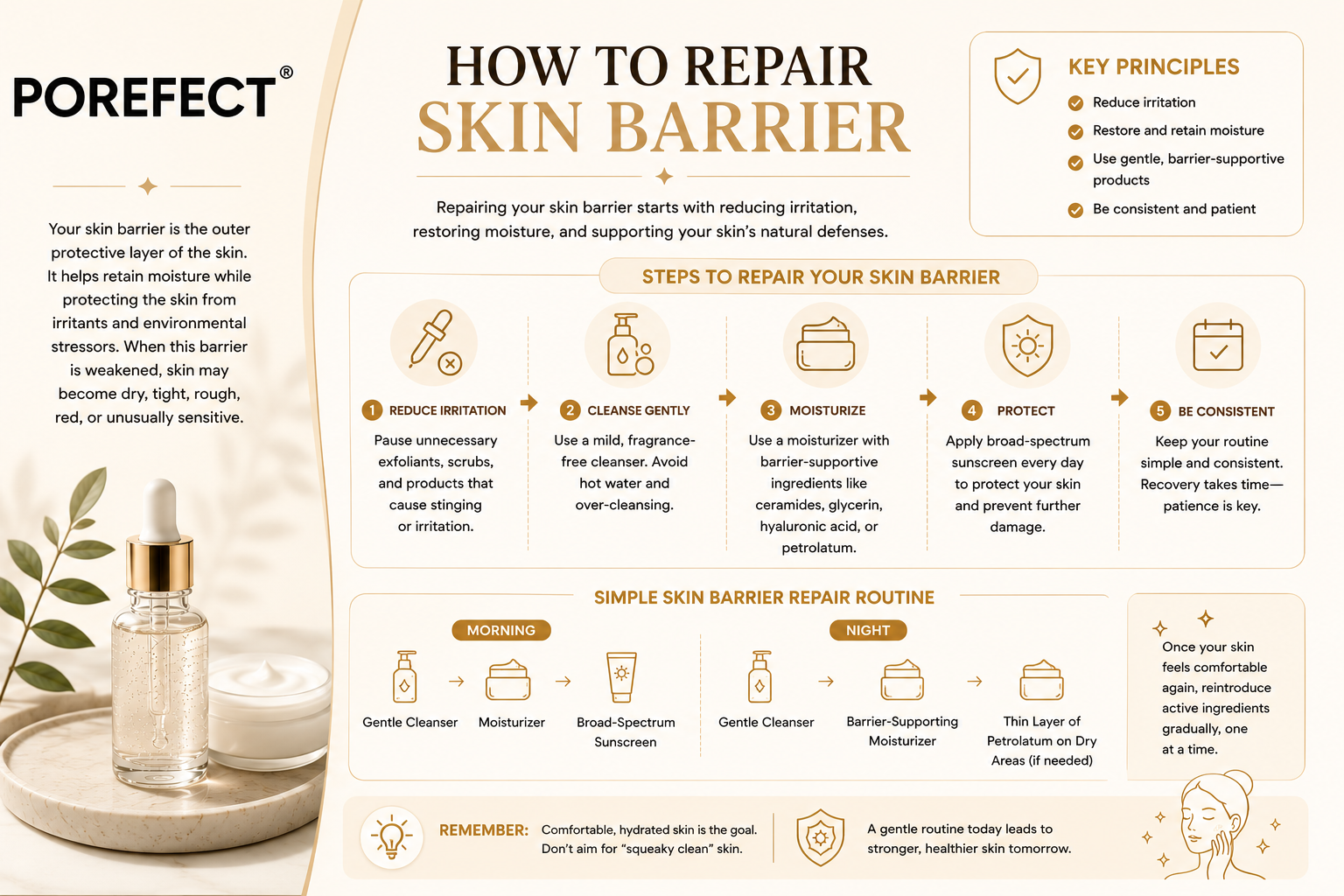
The first step in how to repair skin barrier function is to reduce the source of irritation. Temporarily pause unnecessary exfoliants, scrubs, and products that cause stinging.
Use a gentle cleanser, a well-tolerated moisturizer, and sunscreen during the day. Moisturizers containing ingredients such as ceramides, glycerin, hyaluronic acid, or petrolatum can support hydration and reduce moisture loss.
Do not aim for a “squeaky clean” feeling. Comfortable, hydrated skin is a better goal than removing every trace of oil.
Skin Barrier Repair Routine
A practical skin barrier repair routine can be simple.
Morning
- Gentle cleanser, or rinse with water if cleansing is unnecessary
- Moisturizer
- Broad-spectrum sunscreen
Night
- Gentle cleanser
- Barrier-supporting moisturizer
- A thin layer of petrolatum on particularly dry areas, if appropriate
Keep the routine consistent rather than introducing several new products. Once your skin feels comfortable again, active ingredients can be reintroduced gradually, one at a time.
Skin Barrier Repair for Sensitive Skin
Skin barrier repair for sensitive skin requires extra attention to product tolerance. Choose simple formulations and avoid unnecessary fragrance, harsh exfoliation, and frequent product switching.
If a product repeatedly burns or causes redness, stop using it rather than trying to push through the reaction.
For persistent sensitivity, eczema-like symptoms, or recurrent irritation, a dermatologist can help determine whether another underlying skin condition is contributing.
How to Fix Damaged Skin Barrier: What to Avoid
During skin barrier repair, avoid aggressive scrubbing, frequent peeling, very hot showers, and layering several strong active ingredients.
Lemon juice, baking soda, toothpaste, and other harsh DIY remedies should not be used for barrier repair because they can increase irritation.
Also avoid repeatedly changing products. Recovery is not always immediate, and skin comfort is a more useful indicator than expecting overnight improvement.
When Should You See a Dermatologist?
If your skin remains irritated despite simplifying your routine, or you develop significant redness, swelling, cracking, pain, rash, or persistent itching, consult a dermatologist.
Professional assessment is particularly useful when symptoms keep returning. Conditions such as eczema, contact dermatitis, rosacea, or acne can sometimes resemble simple barrier damage and may require specific treatment.
Frequently Asked Questions
How long does skin barrier repair take?
Recovery varies according to the cause and severity of irritation. Mild dryness may improve relatively quickly, while more persistent irritation can take longer.
What is the best moisturizer for a damaged skin barrier?
Look for a well-tolerated moisturizer that supports hydration and contains barrier-supportive ingredients such as ceramides, glycerin, or petrolatum. The best choice depends on your skin type and tolerance.
Can I use active ingredients during skin barrier repair?
If an active product stings or worsens irritation, pause it. Once your skin is comfortable, reintroduce actives gradually rather than restarting everything at once.
How do I know if my skin barrier is improving?
Less tightness, reduced stinging, less flaking, and improved comfort are practical signs that barrier function is recovering.
Conclusion
Effective skin barrier repair is usually less about adding more products and more about removing unnecessary irritation. A gentle cleanser, appropriate moisturizer, daily sunscreen, and a consistent routine can provide a better foundation for healthy skin.
If you are wondering how to fix a damaged skin barrier, start by simplifying your routine and supporting hydration. If symptoms persist or seem more significant than simple irritation, seek professional advice to identify the underlying cause.