Skin Care
Learn about skin allergy causes, symptoms, treatment options, home care and ways to prevent recurring allergic skin reactions.
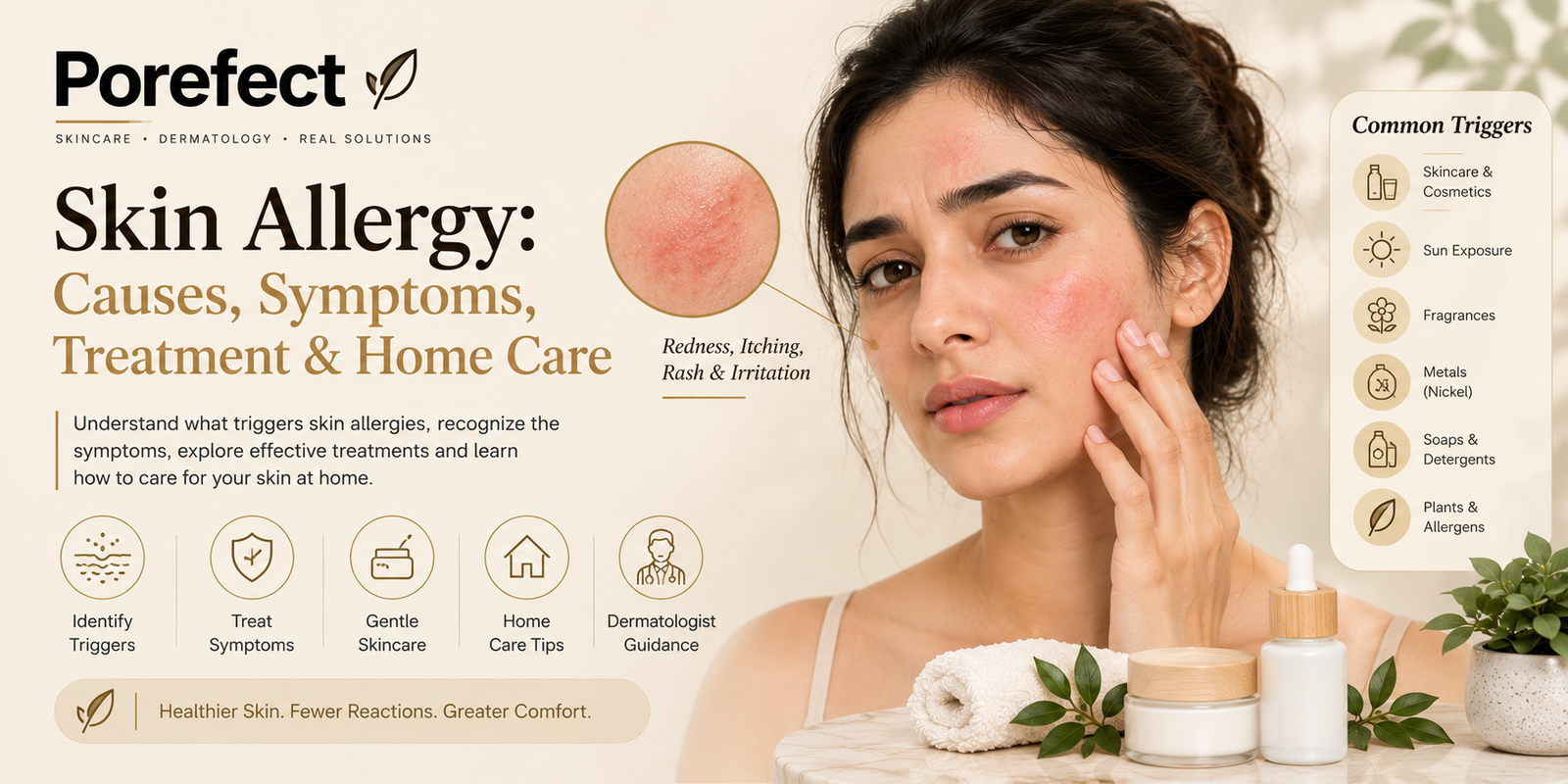
Skin Allergy: Causes, Symptoms, Treatment & Home Care
Skin allergy treatment depends on identifying the trigger and calming the irritated skin. A skin allergy can cause itching, redness, swelling, dryness, bumps, or a rash after the skin comes into contact with an allergen. Skin allergies can affect any part of the body, but skin allergy on face is particularly common because facial skin is frequently exposed to skincare products, cosmetics, fragrances, and environmental irritants. Understanding the trigger is an important part of effective skin allergy treatment. While mild reactions may improve after avoiding the suspected trigger and using gentle skincare, persistent or severe symptoms may require evaluation and treatment by a dermatologist.
What Causes Skin Allergy?
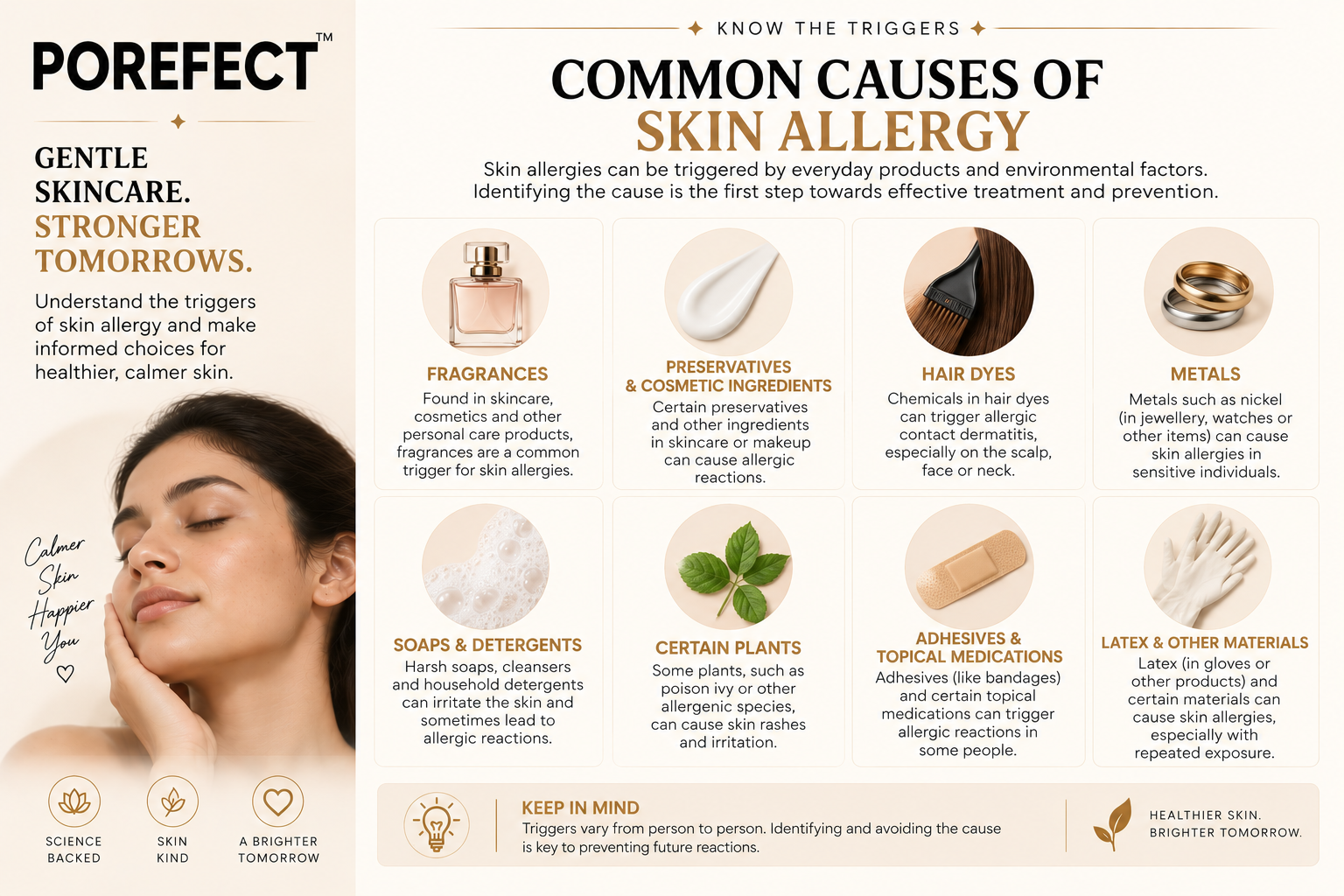
There are many possible skin allergy causes, and the specific trigger varies from person to person.
Common triggers include:
- Fragrances in skincare and cosmetic products
- Preservatives or other cosmetic ingredients
- Hair dyes
- Metals such as nickel
- Soaps and detergents
- Certain plants
- Adhesives and topical medications
- Latex and other materials
One common type of allergic reaction is allergic contact dermatitis, which develops when the skin becomes sensitized to a particular substance.
It is also important to distinguish an allergy from simple irritation. For example, a strong exfoliant may irritate the skin without causing a true allergic reaction. Both can produce redness and discomfort, but their causes and management can differ.
Skin Allergy Symptoms
Skin allergy symptoms can appear shortly after exposure or may take longer to develop, depending on the type of reaction.
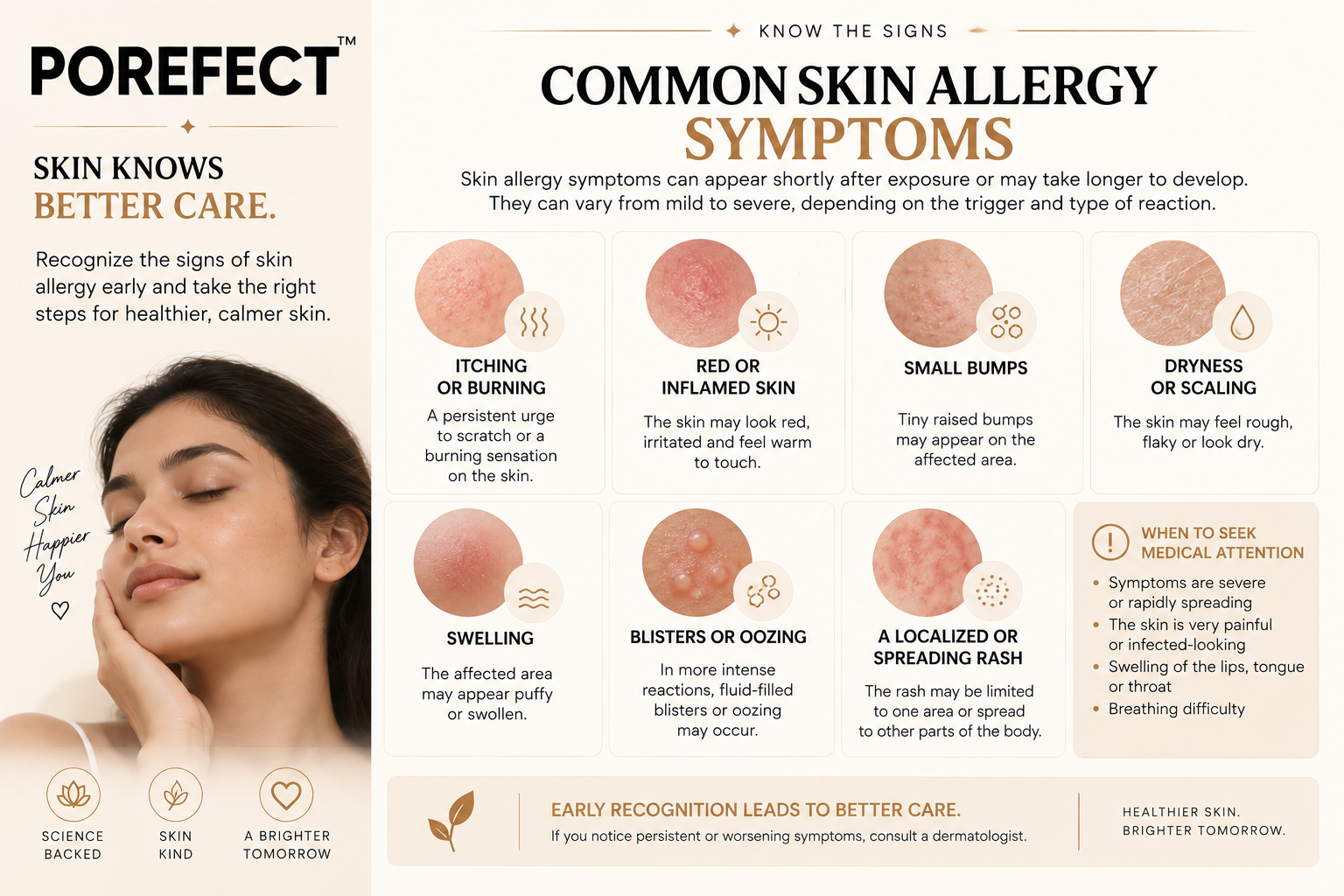
Common symptoms include:
- Itching or burning
- Red or inflamed skin
- Small bumps
- Dryness or scaling
- Swelling
- Blisters or oozing in more intense reactions
- A localized or spreading rash
An itchy skin allergy can be particularly uncomfortable and may lead to repeated scratching. Scratching can damage the skin and increase inflammation, potentially making the rash worse.
If symptoms are severe, rapidly spreading, painful, infected-looking, or associated with breathing difficulty or swelling of the lips, tongue, or throat, seek urgent medical attention.
Skin Allergy on Face: Why Does It Happen?
The face is exposed to many products every day, making facial allergic reactions relatively common.
A skin allergy on face may be triggered by:
- New moisturizers or serums
- Sunscreen
- Makeup
- Fragrance
- Hair products that come into contact with the face
- Shaving or grooming products
- Face masks or adhesives
If a rash develops after introducing a new skincare product, stop using the suspected product rather than continuing it to “test” the reaction.
However, not every facial rash is an allergy. Acne, eczema, rosacea, fungal infections, irritation, and other skin conditions can look similar. Persistent facial rashes should therefore be properly assessed rather than treated based only on appearance.
Skin Allergy Treatment
The most important step in skin allergy treatment is identifying and avoiding the substance responsible for the reaction.
Depending on the severity and cause, treatment may involve:
Remove the Suspected Trigger
Stop using the product or substance suspected of causing the reaction. If the trigger is known, avoiding future exposure is one of the most effective ways to prevent recurrence.
Keep Skincare Simple
Use a gentle cleanser and a bland, fragrance-free moisturizer while the skin is recovering. Avoid introducing multiple new products during this period.
Relieve Itching and Inflammation
A dermatologist may recommend appropriate topical or oral medication depending on the type and severity of the reaction. Some treatments that are useful for one condition may be inappropriate for another, so avoid using prescription-strength creams without medical guidance.
Patch Testing
If allergic contact dermatitis is suspected and the trigger is unclear, a dermatologist may recommend patch testing. This can help identify specific substances responsible for the allergy.
Skin Allergy Treatment at Home
For mild reactions, skin allergy treatment at home mainly focuses on reducing exposure and supporting the skin while it settles.
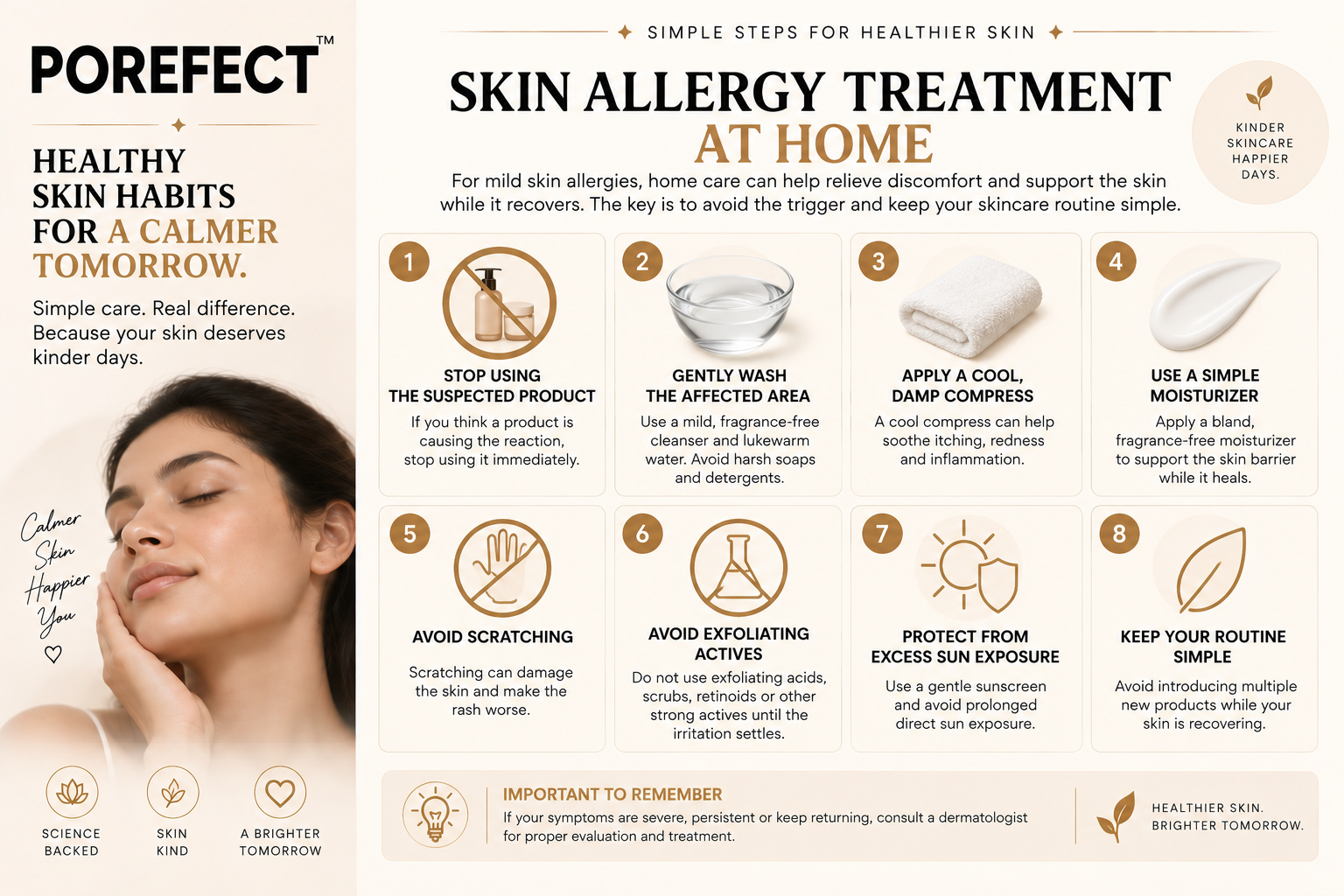
You can:
- Stop using the suspected product
- Gently wash the affected area
- Apply a cool, damp compress
- Use a simple fragrance-free moisturizer
- Avoid scratching
- Avoid exfoliating acids, scrubs, and retinoids until irritation settles
- Protect the skin from excessive sun exposure
Avoid home remedies such as lemon juice, baking soda, essential oils, or undiluted apple cider vinegar. These can further irritate already inflamed skin.
If the reaction continues to worsen or does not improve after removing the suspected trigger, professional evaluation is advisable.
Face Allergy Treatment: What Should You Avoid?
When looking for skin allergy treatment for the face, avoid adding more active products to the routine in an attempt to make the rash disappear faster.
During an active reaction, it is generally better to avoid:
- Physical scrubs
- Strong exfoliating acids
- Retinoids
- Fragranced skincare
- Essential oils
- Alcohol-heavy products
- Picking or scratching the rash
- Multiple new skincare products
Once the skin has recovered, products can be reintroduced gradually. Testing new products on a small area first may help identify potential reactions, although this does not completely eliminate the risk of allergy.
Skin Rash Treatment: Allergy or Something Else?
A rash does not automatically mean you have an allergy.
Similar-looking symptoms can occur with:
- Eczema
- Irritant contact dermatitis
- Acne
- Rosacea
- Fungal infections
- Bacterial infections
- Heat rash
- Psoriasis
- Medication-related reactions
This is why skin rash treatment should be based on the underlying cause. Using the wrong cream—particularly strong steroid or combination creams without medical advice—can sometimes mask symptoms or worsen certain skin conditions.
When Should You See a Dermatologist?
You should see a dermatologist for professional skin allergy treatment if the rash:
- Keeps coming back
- Is spreading
- Is severe or very itchy
- Causes significant swelling
- Develops blisters, crusting, or discharge
- Does not improve after avoiding a suspected trigger
- Appears repeatedly after using different products
A dermatologist can examine the rash and determine whether it is an allergy, irritation, infection, or another skin condition. If a contact allergy is suspected, patch testing may help identify the responsible allergen.
How Can You Prevent Skin Allergies?
Prevention starts with identifying your triggers. A few practical habits can help reduce the need for repeated skin allergy treatment and lower the chance of another reaction.
- Read ingredient labels carefully.
- Choose fragrance-free products if your skin is allergy-prone.
- Introduce one new skincare product at a time.
- Avoid unnecessary product layering.
- Do not use products that have previously caused a reaction.
- Keep your skincare routine simple when your skin is irritated.
- Follow professional advice if patch testing identifies a specific allergen.
Remember that “natural” does not automatically mean allergy-free. Botanical extracts and essential oils can also trigger allergic reactions in some people.
FAQs
What is the most common cause of skin allergy?
Allergic contact dermatitis can result from exposure to substances such as fragrances, preservatives, metals, hair dyes, and other ingredients. The exact trigger differs between individuals.
How can I treat a skin allergy at home?
For a mild reaction, basic skin allergy treatment at home includes stopping the suspected trigger, cleansing gently, using a fragrance-free moisturizer, applying cool compresses, and avoiding scratching or irritating products. Seek medical advice if symptoms persist or worsen.
How long does a skin allergy take to go away?
The duration depends on the trigger and severity of the reaction. Once exposure stops, mild reactions may gradually improve, while more significant reactions can take longer and may require treatment.
Can skin allergies happen from skincare products?
Yes. Cosmetics, fragrances, preservatives, hair products, sunscreens, and other topical products can trigger allergic or irritant reactions in some people.
Conclusion
A skin allergy can cause itching, redness, swelling, and uncomfortable rashes, but identifying the trigger is often the most important step toward improvement. Skin allergy treatment may involve avoiding the allergen, simplifying your skincare routine, supporting the skin barrier, and using appropriate medical treatment when necessary.
For skin allergy on face, avoid experimenting with multiple active ingredients or harsh home remedies. If symptoms persist, recur, or become severe, a dermatologist can help determine the underlying cause and recommend appropriate face allergy treatment.