Skin Care
Learn how to choose a serum for sun-damaged skin, including ingredients for dark spots, dullness, fine lines and uneven texture, plus a simple skincare routine.
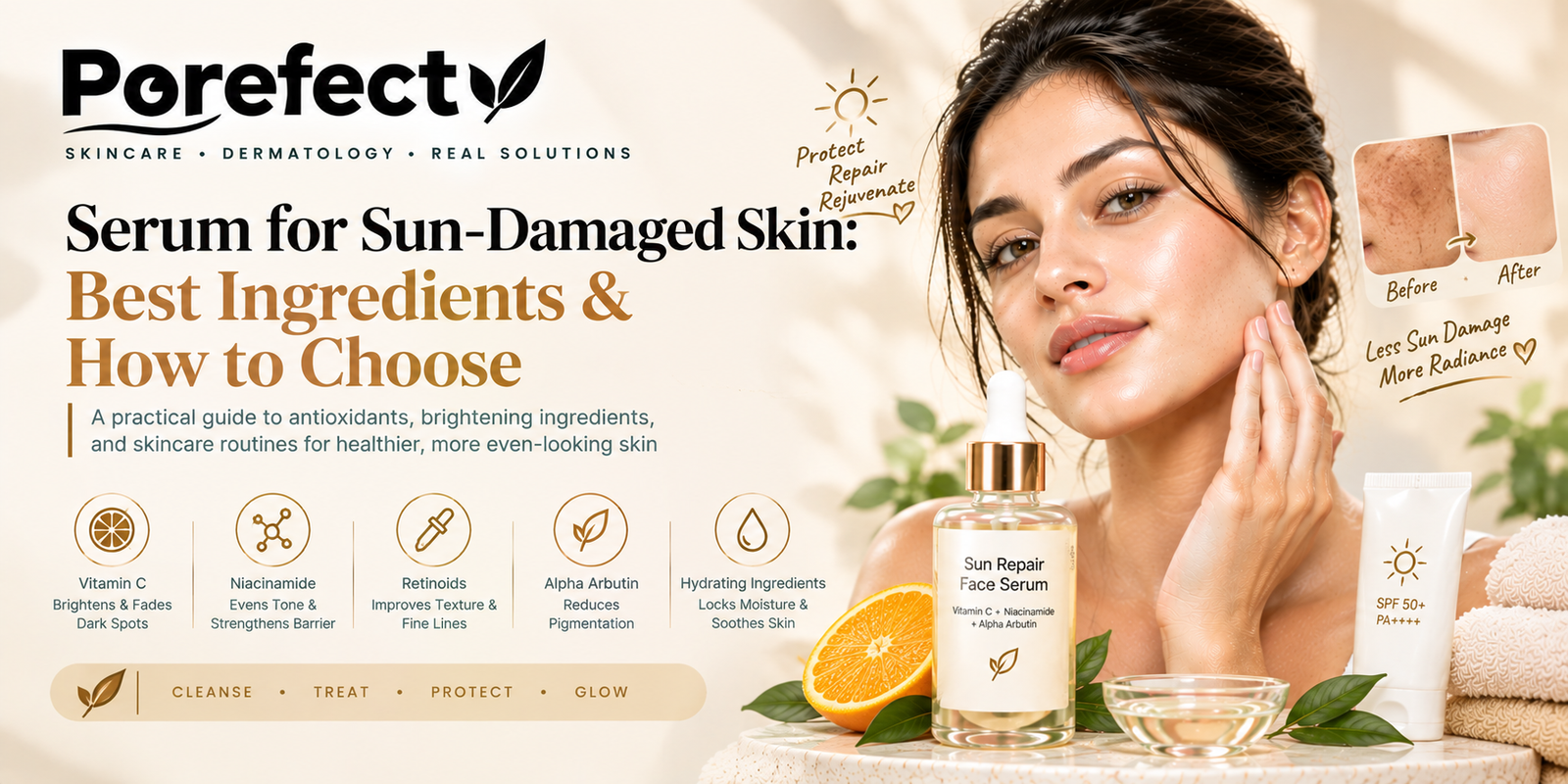
Serum for Sun-Damaged Skin: Best Ingredients & How to Choose
Serum for sun-damaged skin may help improve the appearance of dark spots, uneven skin tone, fine lines, and dullness caused by repeated sun exposure. The best serum for sun-damaged skin depends on your skin type and the concern you want to address. Ingredients such as vitamin C, niacinamide, and alpha arbutin may help improve the appearance of uneven pigmentation, while retinoids may support smoother-looking skin over time.
Although skincare can improve some visible signs of sun damage, no cosmetic serum can reverse every effect of ultraviolet exposure. A suitable serum, gentle cleansing, moisturizer, and daily broad-spectrum sunscreen work best as part of a consistent skincare routine.
What Does Sun Damage Look Like?
Sun damage develops when repeated ultraviolet (UV) exposure affects the skin. Changes may appear gradually, even if you do not experience sunburn.
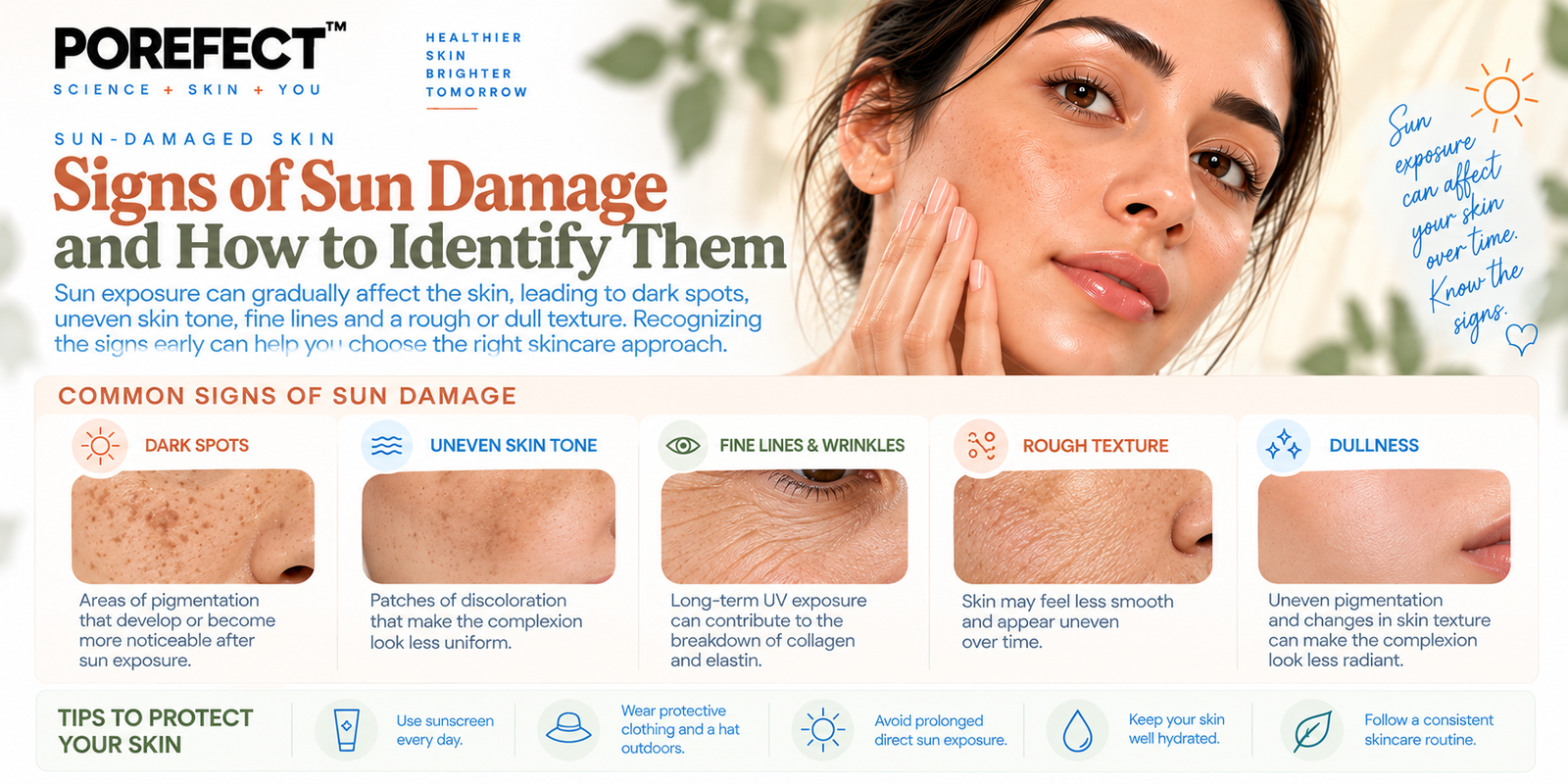
- Dark spots: Areas of pigmentation that become more noticeable after sun exposure.
- Uneven skin tone: Patches of discoloration that make the complexion look less uniform.
- Fine lines and wrinkles: Long-term UV exposure can contribute to collagen and elastin breakdown.
- Rough texture: Skin may appear less smooth over time.
- Dullness: Uneven pigmentation and changes in skin texture can make the complexion look less radiant.
Not every dark spot or texture change is caused by the sun. If a spot is new, changing, bleeding, or noticeably different from others, seek assessment from a healthcare professional instead of treating it with a cosmetic serum.
Can Face Serum Help With Sun Damage?
A suitable serum for sun-damaged skin may help improve the appearance of certain concerns, particularly dullness and uneven pigmentation. Results depend on the ingredients, formulation, consistency of use, and nature of the skin concern.
A serum for sun damage on the face may contain antioxidants, pigmentation-focused ingredients, or hydrating components. Vitamin C is commonly used for antioxidant support and brightening, while niacinamide may help support the skin barrier and improve the appearance of uneven tone.
However, no cosmetic serum can replace sun protection or guarantee complete removal of sun spots. Deeper wrinkles, significant photoaging, and some pigmentation conditions may require professional treatment.
Best Ingredients in a Serum for Sun Damage
When choosing the best serum for sun-damaged skin, focus on the specific concern you want to address rather than selecting a product based only on marketing claims.
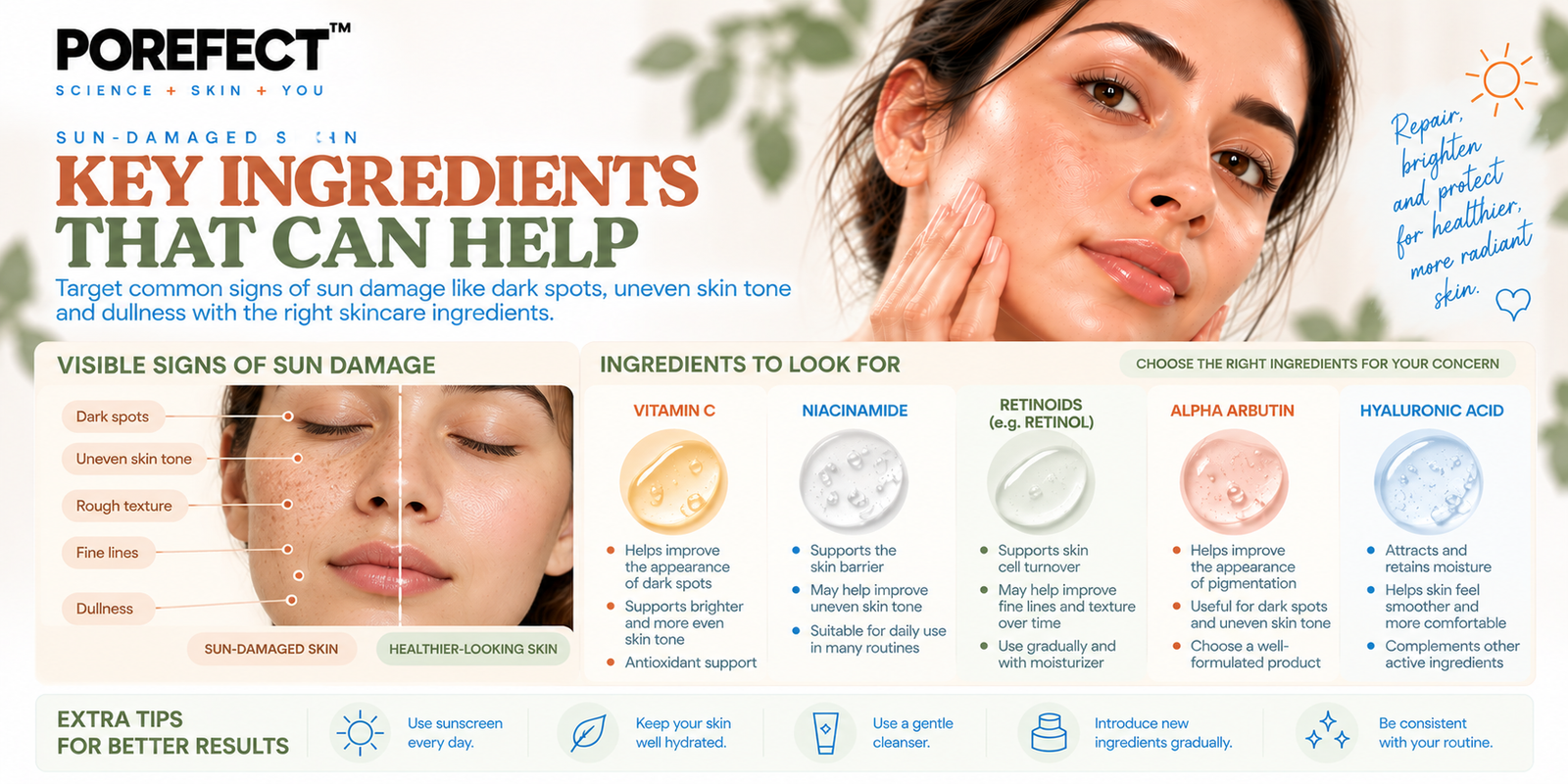
1. Vitamin C
Vitamin C is an antioxidant widely used in skincare formulated for dullness and uneven pigmentation. It may help improve the appearance of some dark spots and support a brighter-looking complexion.
A vitamin C serum for sun damage may be useful if pigmentation and dullness are your main concerns. Formulations vary in stability, concentration, and tolerability, so choose one suited to your skin type. If you have sensitive skin, introduce vitamin C gradually.
2. Niacinamide
Niacinamide, a form of vitamin B3, supports the skin barrier and may help improve the appearance of uneven skin tone. It is often included in products designed for oily skin, visible pores, and pigmentation-related concerns.
A niacinamide serum for sun damage may complement a brightening routine, especially if you want an ingredient that also supports skin comfort. It does not erase sun damage, but it may help improve the overall appearance of the complexion with consistent use.
3. Retinoids
Retinoids, including retinol in cosmetic skincare, may help improve certain signs of photoaging, such as uneven texture and fine lines, over time. They influence skin cell turnover and are used in routines targeting visible signs of ageing.
Retinoids may cause dryness, peeling, or irritation, particularly when introduced too quickly. Start gradually, use moisturizer, and maintain daily sun protection. Avoid topical retinoids during pregnancy unless specifically advised by a qualified healthcare professional; many clinicians recommend avoiding them.
4. Alpha Arbutin
Alpha arbutin is used in cosmetic formulations designed to improve the appearance of dark spots and uneven pigmentation. It may be relevant if your main concern is discoloration rather than fine lines or rough texture.
Results vary by formulation and skin concern. For persistent or widespread pigmentation, professional advice can help identify the most appropriate treatment.
5. Hydrating Ingredients
Ingredients such as glycerin, hyaluronic acid, and panthenol help attract or retain moisture. They do not directly reverse UV-related damage, but better hydration can make the skin feel softer and appear smoother.
A hydrating formula may be particularly helpful if your skin feels dry or tight after sun exposure. If you have an actual sunburn, prioritize gentle skincare and cooling measures rather than applying potentially irritating active ingredients to inflamed skin.
Best Serum for Sun-Damaged Skin: Which One Should You Choose?
The best serum for sun-damaged skin depends on your main concern.
- Dark spots and uneven pigmentation: Consider a suitable vitamin C or alpha arbutin formula.
- Dullness: Vitamin C may help improve the appearance of a less radiant complexion.
- Fine lines and uneven texture: A retinoid may be an option if your skin tolerates it.
- Skin barrier support: Niacinamide may be useful alongside a suitable moisturizer.
- Dryness: Look for hydrating ingredients such as glycerin or hyaluronic acid.
There is no single best face serum for sun damage for everyone. Avoid combining several potent active ingredients immediately, particularly if your skin is sensitive or already irritated.
Serum for Sun Spots on Face and Sun-Induced Pigmentation
Sun spots and other forms of pigmentation can look similar, but they may have different causes. A serum for sun spots on the face may help improve the appearance of certain superficial dark spots, depending on the ingredient and formulation.
A serum for sun-induced pigmentation may contain vitamin C, niacinamide, alpha arbutin, or other ingredients used in pigmentation-focused skincare. However, not all brown patches are ordinary sun spots. Melasma, post-inflammatory hyperpigmentation, and other skin conditions can require different approaches.
If you are looking for a serum for dark spots caused by the sun, combine a suitable product with daily sun protection. Some spots may fade slowly, and deeper or persistent pigmentation may not respond adequately to over-the-counter skincare.
How to Choose a Serum for Sun-Damaged Skin
If you are wondering how to choose a serum for sun-damaged skin, use these practical guidelines:
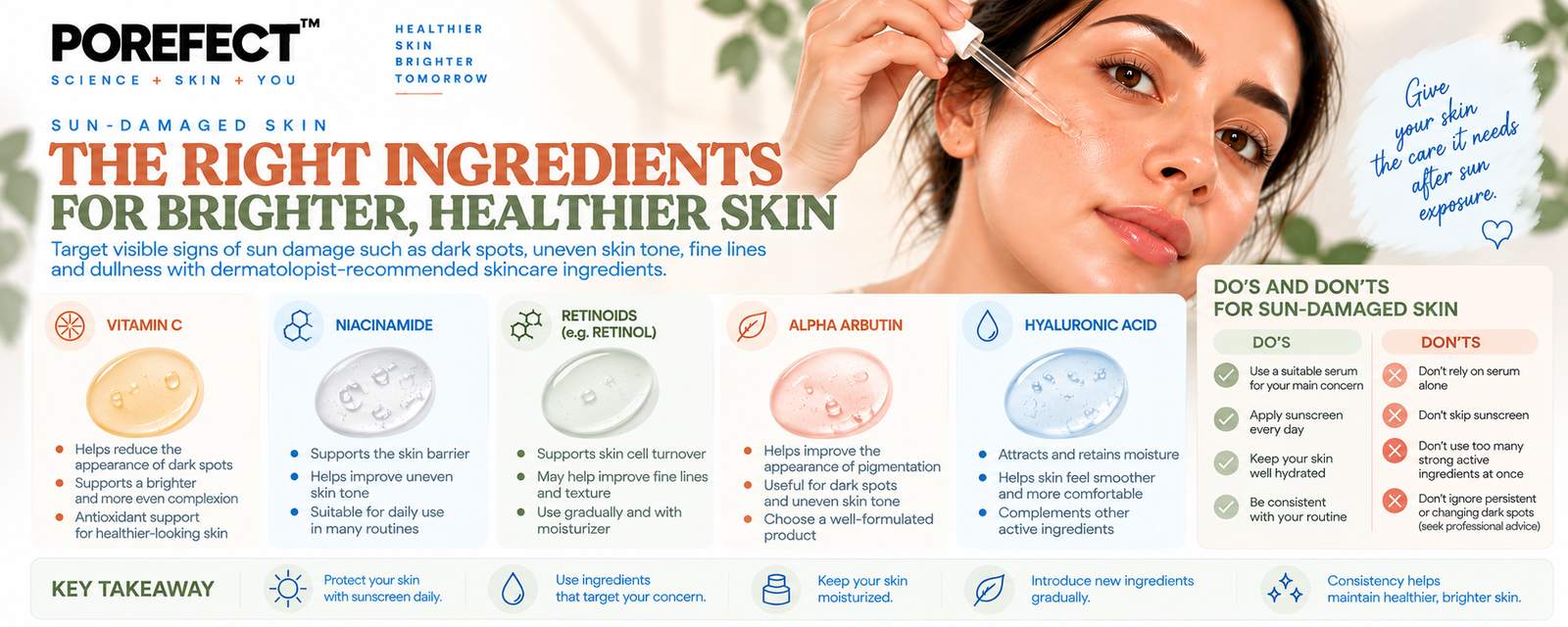
- Identify your main concern: Decide whether pigmentation, fine lines, roughness, or dullness is your priority.
- Choose relevant ingredients: Vitamin C may suit a brightening-focused routine, while retinoids may help with certain signs of photoaging.
- Consider your skin type: Dry or sensitive skin may need a simpler, more hydrating formulation.
- Introduce one active ingredient at a time: This makes it easier to identify irritation and assess tolerability.
- Check the product directions: Follow the recommended frequency and discontinue use if significant irritation develops.
A skincare serum for sun-damaged skin should fit into your overall routine rather than replace basic skincare or sun protection.
How to Improve Sun-Damaged Skin With Skincare
A consistent routine can help manage visible signs of sun damage and prevent additional UV-related harm.
Morning Routine
- Cleanse with a gentle face wash.
- Apply a suitable antioxidant or brightening serum if your skin tolerates it.
- Use a moisturizer appropriate for your skin type.
- Apply broad-spectrum sunscreen with SPF 30 or higher.
Reapply sunscreen as directed, especially after swimming, sweating, or spending extended periods outdoors. Protective clothing, shade, and avoiding intense midday sun can provide additional protection.
Evening Routine
- Remove sunscreen and makeup, then cleanse gently.
- Apply your selected treatment serum according to its directions.
- Use moisturizer to help maintain skin hydration.
Introduce retinoids or exfoliating ingredients gradually rather than using several strong products at once. If your skin becomes persistently red, itchy, or flaky, reduce or stop the active product and reassess your routine.
Common Mistakes to Avoid
- Expecting a serum to reverse all sun damage.
- Skipping sunscreen while using brightening ingredients.
- Applying several strong active ingredients at the same time.
- Using harsh scrubs or aggressive DIY remedies to remove dark spots.
- Applying active serums to freshly sunburned or irritated skin.
- Ignoring spots that change in size, shape, or colour.
A cosmetic routine can improve some visible concerns, but it is not a substitute for skin checks or medical assessment when a lesion looks unusual.
Frequently Asked Questions
Which serum is best for sun damage on the face?
The best serum for sun-damaged skin depends on the concern. Vitamin C may help with dullness and the appearance of some dark spots, niacinamide may support the skin barrier and more even-looking tone, and retinoids may help with certain signs of photoaging. Daily sunscreen remains essential.
Can face serum help with sun damage?
Yes, some serums may improve the appearance of pigmentation, dullness, and uneven texture. They cannot reverse every form of sun damage, and results vary depending on the formulation and skin concern.
What is the best serum for sun spots?
A suitable serum containing vitamin C, niacinamide, or alpha arbutin may help improve the appearance of some dark spots. New or changing spots should be assessed by a healthcare professional before you attempt to treat them cosmetically.
Can I use vitamin C and niacinamide together?
Many people can use vitamin C and niacinamide in the same routine, provided the formulations suit their skin. If you have sensitive skin, introduce one product at a time to monitor tolerance.
How long does a serum take to improve sun-damaged skin?
The timeline depends on the ingredient and the concern. Hydration may improve the skin's feel sooner, while visible changes in pigmentation or texture may take several weeks or longer. Consistent use and sun protection are important.
Conclusion
Choosing the right serum for sun-damaged skin starts with identifying the visible concern you want to address. Vitamin C and niacinamide may help improve the appearance of dullness and uneven pigmentation, while retinoids may be useful for certain signs of photoaging. Hydrating ingredients can support skin comfort and a smoother-looking complexion.
For a practical routine, use a suitable serum, moisturize consistently, and apply broad-spectrum sunscreen every morning. Avoid aggressive treatments and unrealistic promises of complete or permanent sun-damage removal. If you notice a new or changing spot, seek professional assessment rather than relying on skincare alone.