Skin Care
Discover how to choose a serum for oily skin based on excess oil, pores, acne, pigmentation, dehydration and your individual skincare needs.
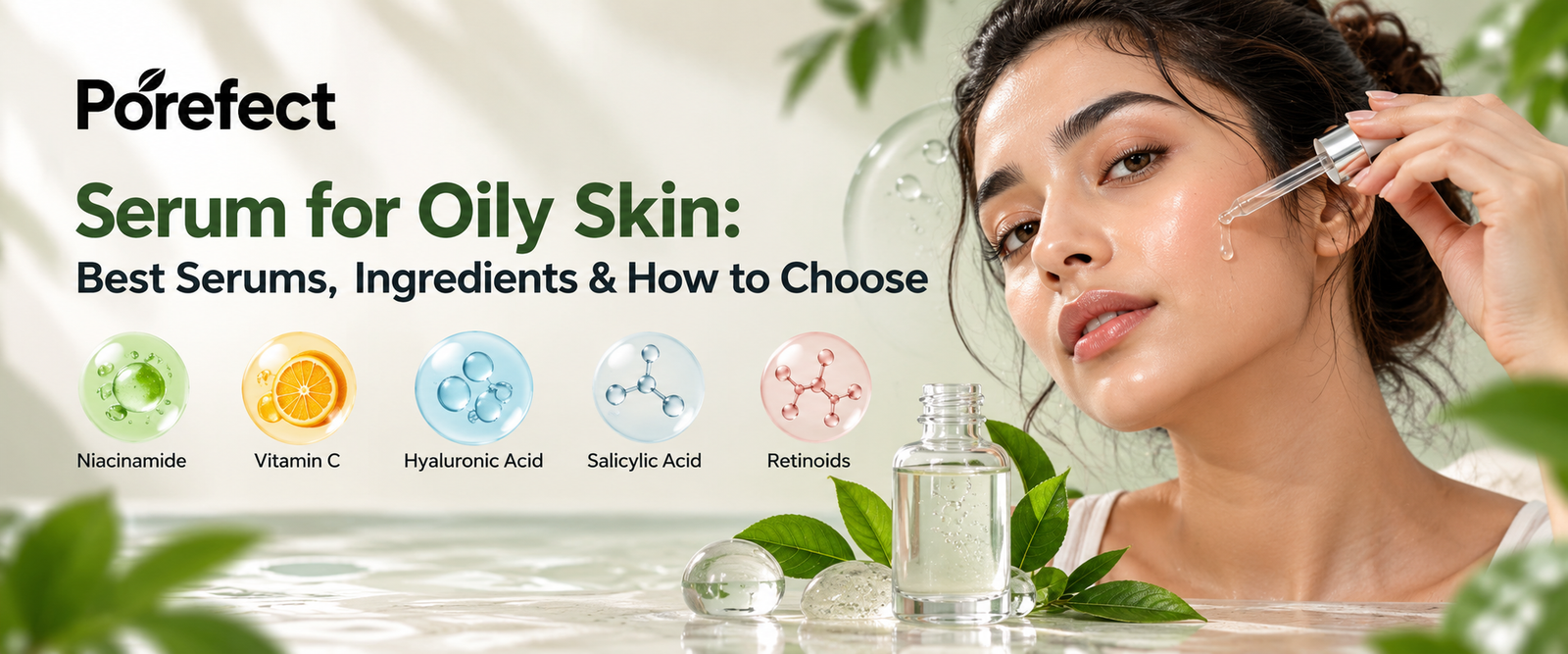
Serum for Oily Skin: Best Serums, Ingredients & How to Choose
Finding the right serum for oily skin can make a noticeable difference in how your skin looks and feels. Oily skin often produces excess sebum, which can contribute to shine, clogged pores, blackheads, and acne. At the same time, oily skin can still become dehydrated, irritated, or uneven in tone.
The right formula should address your specific concern without making the skin feel excessively greasy or overloaded. Ingredients such as niacinamide, vitamin C, hyaluronic acid, salicylic acid, and retinoids can each have a role depending on your skin type and goals.
What Should You Look for in a Serum for Oily Skin?
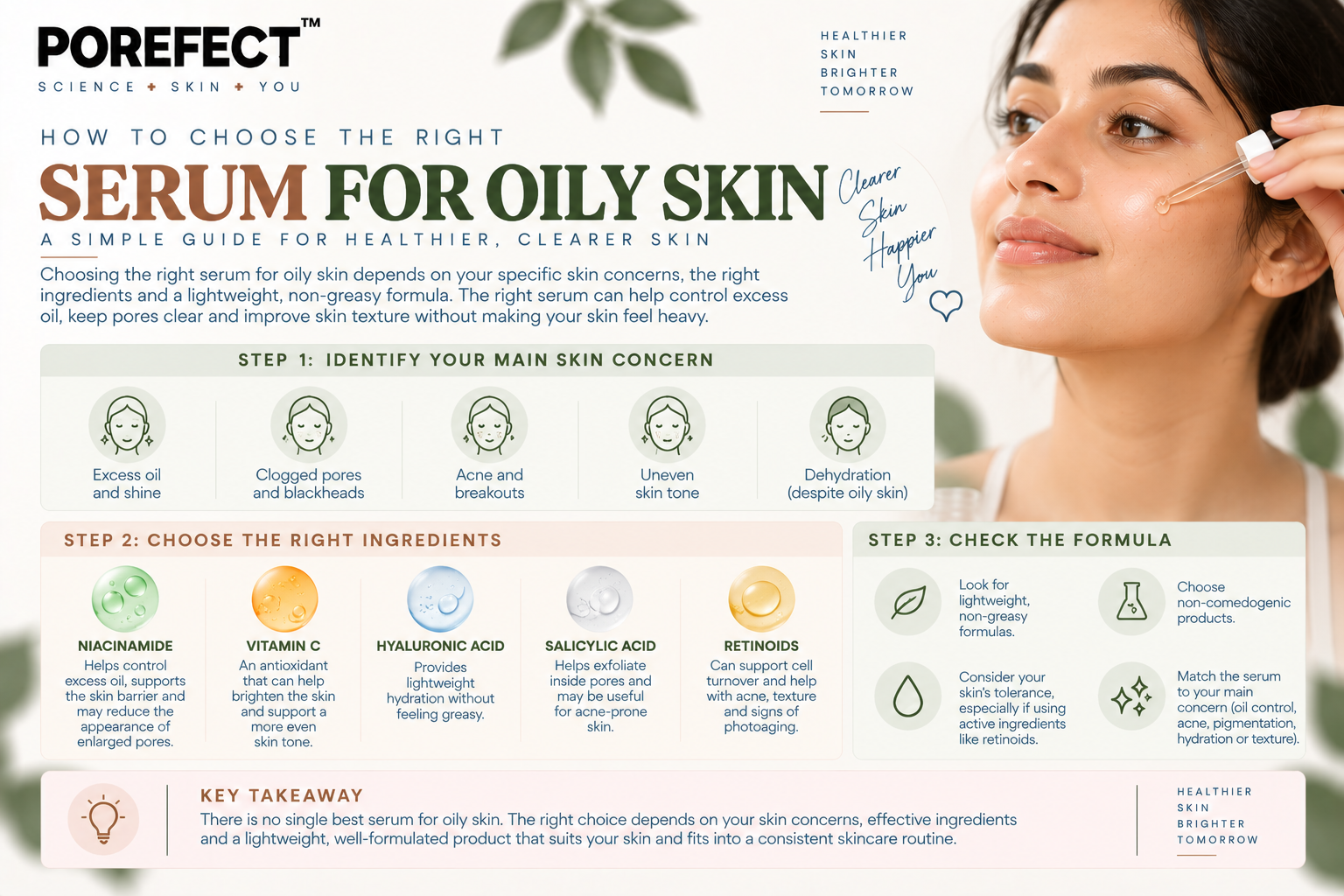
When choosing a face serum for oily skin, look for lightweight, non-greasy formulas that complement your existing skincare routine.
The most useful ingredients depend on your concern:
- Niacinamide: Can help support the skin barrier and improve the appearance of excess oil and enlarged pores.
- Vitamin C: An antioxidant that can help brighten the appearance of skin and support protection against environmental oxidative stress.
- Hyaluronic acid: Helps attract and retain water, making it useful for dehydrated oily skin.
- Salicylic acid: Helps exfoliate inside pores and may be useful for oily, acne-prone skin.
- Retinoids: Can support cell turnover and are commonly used for acne, texture, and signs of photoaging.
- Gentle cleanser
- Treatment serum suited to your concern
- Lightweight moisturizer
- Using multiple strong actives together
- Choosing products only because they have a high percentage of an ingredient
- Skipping moisturizer because your skin is oily
- Using harsh cleansers to remove every trace of oil
- Expecting a serum to permanently shrink pores
- Skipping sunscreen while treating pigmentation
- Introducing retinol too frequently
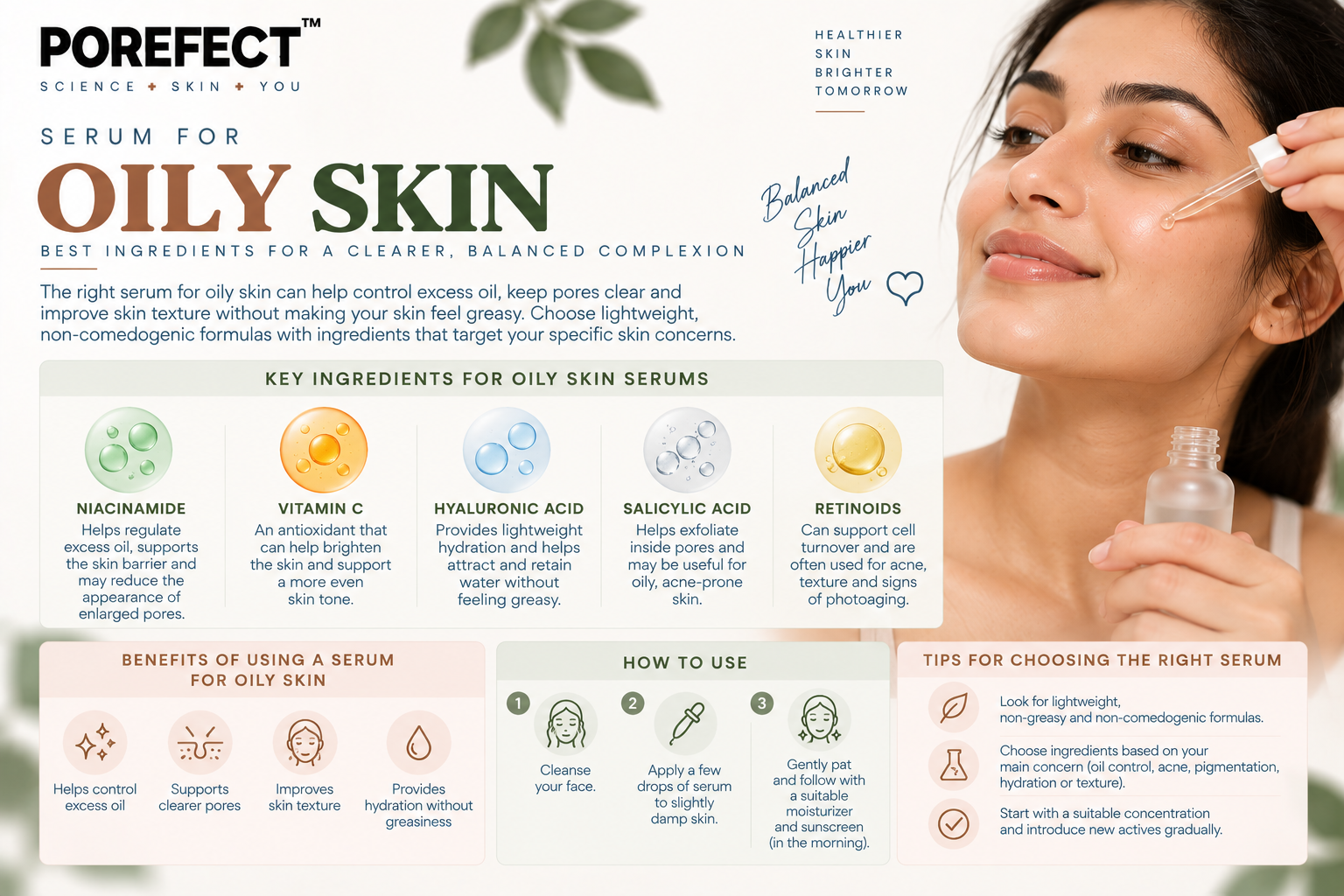
Rather than choosing a product simply because it is marketed as the best serum for oily skin, match the active ingredient to your actual skin concern.
Best Niacinamide Serum for Oily Skin
Niacinamide is one of the most versatile ingredients for oily and combination skin. A best niacinamide serum for oily skin does not necessarily need the highest concentration. A well-formulated product with a suitable concentration may be easier to tolerate than a very strong formula.
Niacinamide can help support the skin barrier and may reduce the appearance of excess oil and enlarged pores over time. It can also be useful when oily skin is accompanied by post-acne marks or uneven-looking skin.
If you are new to niacinamide, start with a moderate-strength product rather than immediately choosing a highly concentrated formula.
Vitamin C Serum for Oily Skin
A vitamin C serum for oily skin can be useful when your main concerns include dullness, uneven skin tone, or post-acne pigmentation.
Vitamin C is an antioxidant and can complement daily sunscreen use. However, the formulation matters. Oily skin may feel more comfortable with a lightweight, fast-absorbing serum rather than a heavy or oily product.
When choosing the best vitamin C serum for oily skin, consider the type and concentration of vitamin C, the overall formulation, packaging, and how well your skin tolerates it.
Vitamin C should not be viewed as a replacement for sunscreen. Daily broad-spectrum sunscreen remains an important part of managing pigmentation and preventing further sun-related skin changes.
Hydrating Serum for Oily Skin
Oily skin does not automatically mean well-hydrated skin. You can have excess oil on the surface while the skin still lacks adequate water.
A hydrating serum for oily skin can therefore be useful, particularly if your skin feels tight after cleansing or becomes irritated from acne treatments.
Hyaluronic Acid Serum for Oily Skin
A hyaluronic acid serum for oily skin can provide lightweight hydration without necessarily adding the heaviness associated with some richer moisturizers.
Apply it to slightly damp skin if the product instructions recommend it, followed by a suitable moisturizer. Hydration is particularly important if you use ingredients such as salicylic acid or retinoids, which can sometimes cause dryness or irritation.
Best Serum for Combination Skin
Combination skin typically has areas that are oily and areas that are normal or dry. This means the best serum for combination skin may need to provide hydration without feeling excessively rich.
Niacinamide and lightweight hydrating ingredients are often practical choices. If different areas of your face have different concerns, you may also adjust how much product you use rather than applying several active serums everywhere.
A serum for combination skin should be selected according to the dominant concern, such as excess oil, dehydration, pigmentation, acne, or uneven texture.
Best Retinol Serum for Oily Skin
Retinoids can be useful for people concerned about acne, uneven texture, fine lines, and post-acne changes. However, there is no universally best retinol serum for oily skin.
Retinol can cause dryness, irritation, peeling, or increased sensitivity, especially when first introduced. Start gradually and avoid combining multiple strong active ingredients at the same time unless advised by a professional.
Retinoids are also not appropriate during pregnancy, and anyone who is pregnant or planning pregnancy should discuss skincare treatments with their healthcare professional.
Night Serum for Oily Skin
A night serum for oily skin should complement your evening routine rather than making it unnecessarily complicated.
A simple routine could include:
If using retinol, introduce it gradually and avoid immediately layering several potentially irritating active ingredients.
Pigmentation Serum for Oily Skin
For oily skin with dark spots or post-acne marks, a pigmentation serum for oily skin may contain ingredients such as vitamin C, niacinamide, azelaic acid, or other pigment-targeting ingredients.
The important point is to identify why pigmentation is occurring. Post-inflammatory hyperpigmentation after acne is different from melasma or primarily sun-related pigmentation, so treatment should be matched to the underlying concern.
Sunscreen is essential. Without consistent sun protection, pigmentation can persist or become more noticeable despite using a serum.
Best Serum for Open Pores and Oily Skin
Pores cannot be permanently closed or removed. However, their appearance can sometimes be reduced by managing excess oil, congestion, and uneven skin texture.
For someone looking for the best serum for open pores and oily skin, niacinamide may be useful for supporting the appearance of pores, while salicylic acid can help with congestion in suitable skin types.
Avoid aggressive scrubbing or repeatedly squeezing pores. These habits can irritate the skin and make redness and texture more noticeable.
How to Use a Serum for Oily Skin
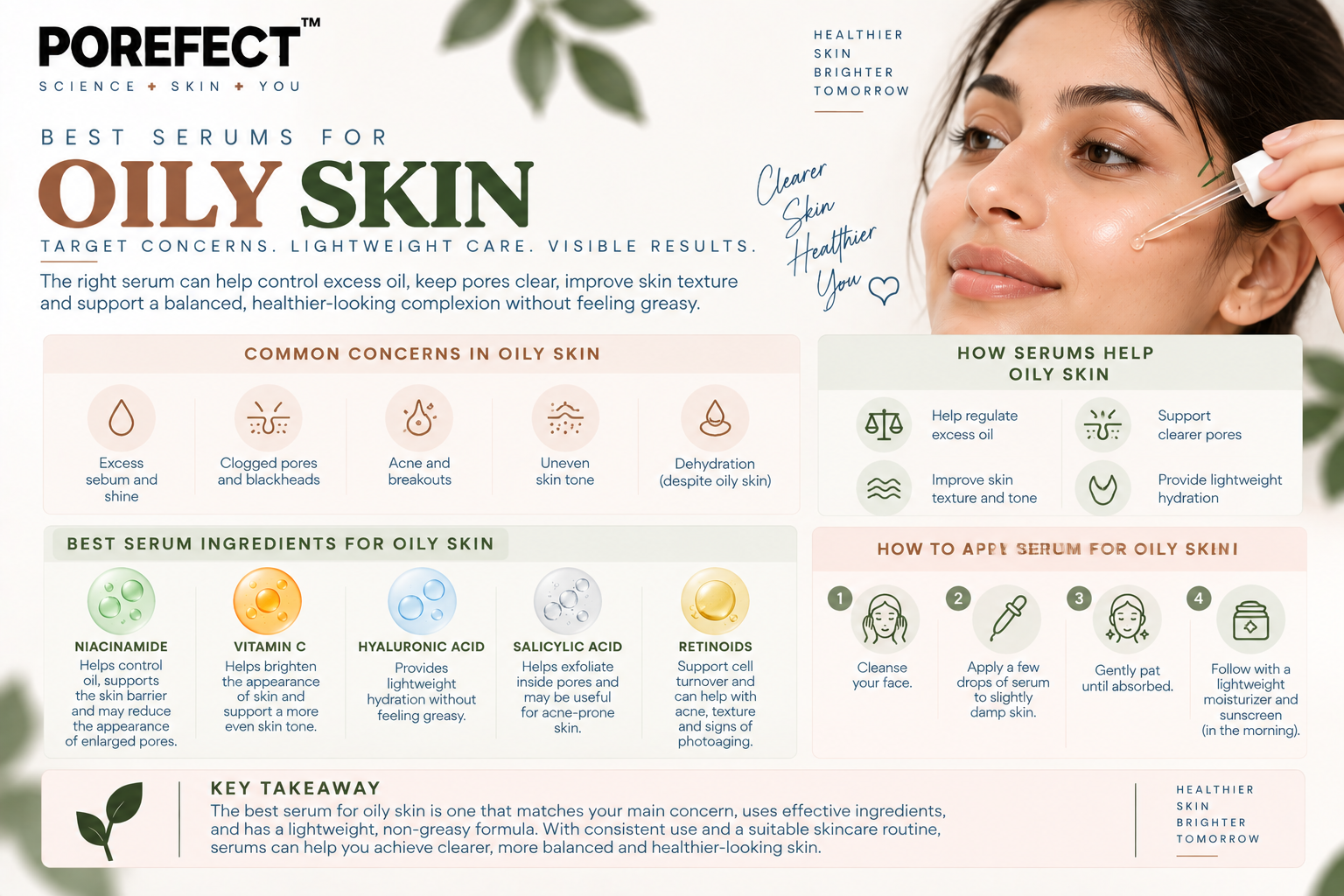
Using too many serums at once is a common mistake. A basic approach is:
Morning: Cleanser → antioxidant or niacinamide serum → lightweight moisturizer → sunscreen
Night: Cleanser → treatment serum such as niacinamide or retinol → moisturizer
You do not need every active ingredient in the same routine. Introduce one new active at a time so you can identify irritation and determine whether the product suits your skin.
Common Mistakes to Avoid
When choosing a serum for oily skin, avoid:
More active ingredients do not automatically mean better results.
Frequently Asked Questions
Which Serum Is Best for Oily Skin?
The right serum depends on the concern. Niacinamide may suit excess oil and visible pores, vitamin C may suit dullness and pigmentation, hyaluronic acid can support hydration, and retinoids may help with acne, texture, and photoaging.
Can Oily Skin Use Hyaluronic Acid Serum?
Yes. A lightweight hyaluronic acid serum can provide hydration without necessarily making oily skin more greasy.
Is Vitamin C Serum Good for Oily Skin?
Vitamin C can be suitable for oily skin, particularly when dullness or uneven pigmentation is a concern. Choose a formulation your skin tolerates well and continue using sunscreen.
Can Serum Reduce Open Pores?
A serum cannot permanently remove or close pores. However, ingredients such as niacinamide and salicylic acid may help improve the appearance of pores by addressing oiliness and congestion.
Should I Use Serum Every Day if I Have Oily Skin?
Not necessarily. Some hydrating or gentle serums can be used daily, while stronger active ingredients may need gradual introduction. Follow the product directions and adjust according to your skin's tolerance.
Conclusion
The right serum for oily skin should be chosen according to your specific skin concern rather than simply looking for the product with the strongest formula. Niacinamide can be useful for oiliness and visible pores, vitamin C for antioxidant support and uneven tone, hyaluronic acid for hydration, and retinoids for selected acne, texture, and aging concerns.
Keep your routine simple, introduce active ingredients gradually, moisturize even if your skin is oily, and use sunscreen consistently. If you have persistent acne, significant pigmentation, or severe irritation, professional evaluation can help identify the most appropriate treatment.