Skin Care
Sensitive skin can react with burning, stinging, redness, dryness or itching. Learn the common causes, symptoms, skincare routine, product choices and practical tips to support a comfortable skin barrier.
Sensitive Skin: Causes, Symptoms, Care Routine & Best Skincare
Sensitive skin is a common concern in which the skin reacts more easily than expected to skincare products, environmental factors, or everyday triggers. People may experience stinging, burning, redness, dryness, itching, or discomfort, particularly after using certain products.
This does not always represent a medical diagnosis. Increased skin reactivity can occur on its own or alongside conditions such as eczema, rosacea, or contact dermatitis. A gentle approach focuses on reducing unnecessary irritation, supporting the skin barrier, and choosing products that are comfortable to use consistently.
If your skin frequently reacts to products, understanding the possible triggers can help you build a simpler and more suitable routine.
What Is Sensitive Skin?
The term sensitive skin generally describes skin that reacts more easily than expected to products or environmental factors.
Someone with facial sensitivity may notice burning or stinging after applying a cleanser, moisturizer, serum, or sunscreen. Cold weather, heat, wind, pollution, shaving, excessive cleansing, and certain cosmetic ingredients may also trigger discomfort.
Reactivity can vary considerably from person to person. A product that works well for one individual may cause irritation in another.
What Causes Skin Sensitivity?
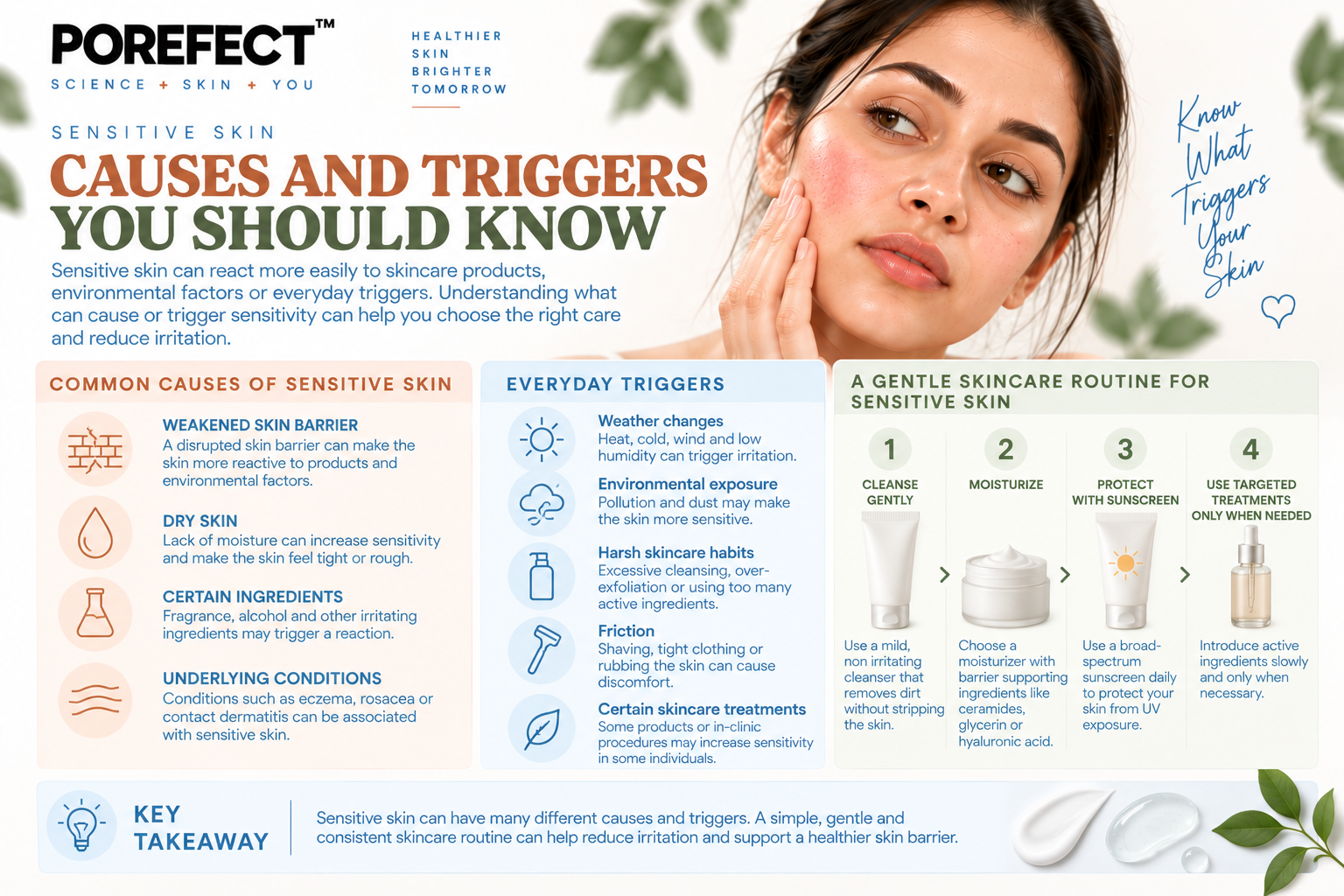
There is no single cause of increased skin sensitivity. Possible contributing factors include:
- A weakened or disrupted skin barrier
- Excessive cleansing or exfoliation
- Dryness
- Fragrance or irritating cosmetic ingredients
- Environmental exposure
- Hot or cold weather
- Certain skincare treatments
- Shaving or friction
- Underlying conditions such as eczema or rosacea
If your skin suddenly becomes much more reactive than usual, a recent change in your routine or an underlying condition may be responsible.
Symptoms of Sensitive Skin
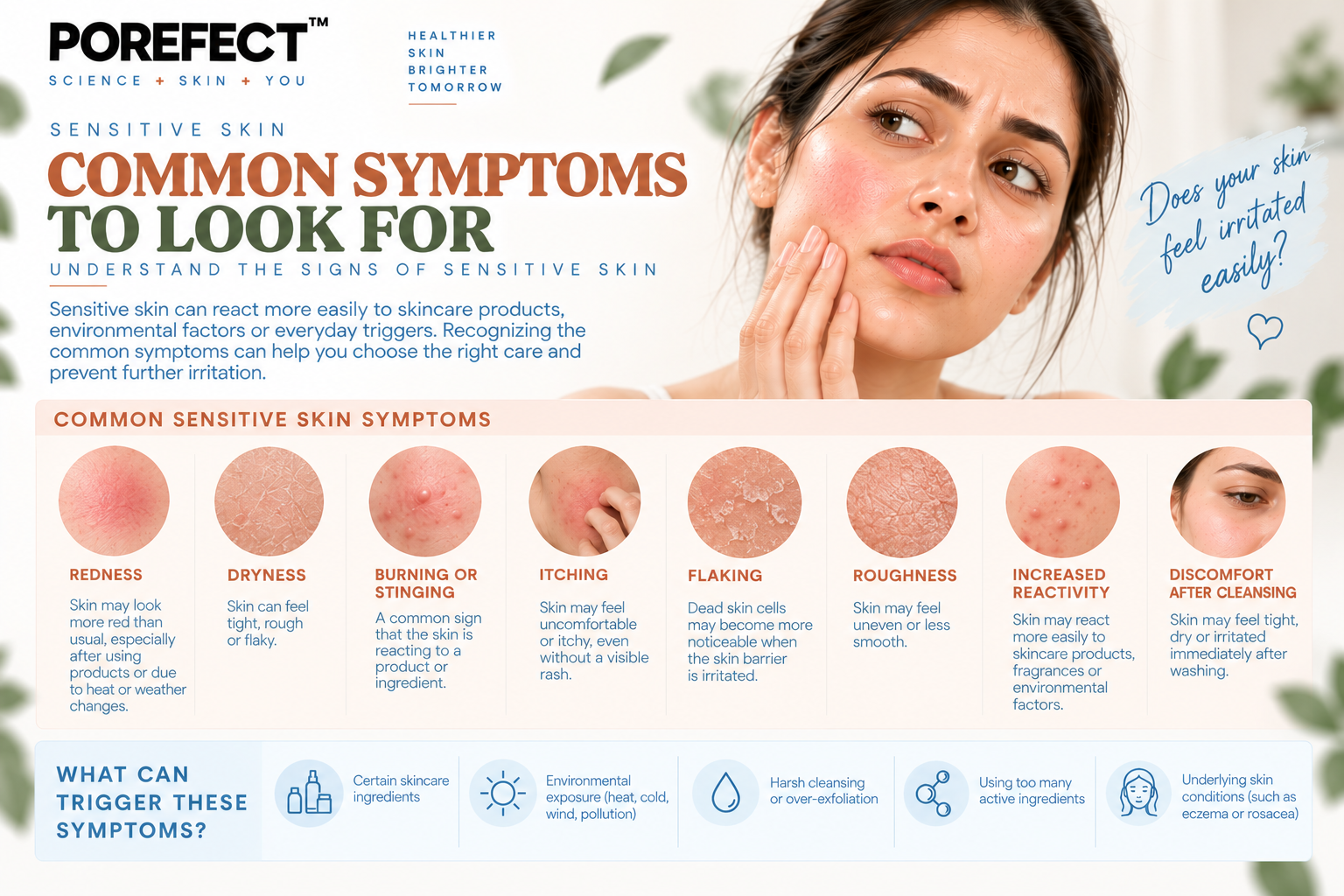
Common signs of increased skin reactivity include:
- Burning or stinging
- Redness
- Itching
- Dryness or tightness
- Flaking
- Roughness
- Increased reaction to skincare products
- Discomfort after cleansing
Some people experience these symptoms only occasionally, while others may notice them more frequently.
Persistent redness, itching, swelling, or irritation should not automatically be attributed to sensitivity because other skin conditions can cause similar symptoms.
Sensitive Skin vs. Skin Conditions
Increased reactivity can occur without an underlying disease, but persistent symptoms may sometimes indicate another condition.
For example, eczema can cause dryness, itching, inflammation, and impaired barrier function. Rosacea can cause facial redness, flushing, burning, and increased reactivity. Contact dermatitis may develop after exposure to a particular ingredient or substance.
If symptoms are persistent, severe, or repeatedly triggered by products, a dermatologist can help determine the underlying cause.
Best Skincare for Sensitive Skin
The best skincare for sensitive skin is usually simple, gentle, and consistent.
A basic routine can include:
- Gentle cleanser
- Suitable moisturizer
- Broad-spectrum sunscreen
- Targeted treatment only when necessary
You do not need a large number of products to maintain healthy-looking skin. Using too many active ingredients can make reactive skin more difficult to manage.
Choosing a Gentle Cleanser
A cleanser should remove dirt, sunscreen, makeup, and excess oil without leaving the face feeling excessively tight or stripped.
Look for a formula that is:
- Gentle
- Suitable for your skin type
- Free from ingredients that you already know cause reactions
- Easy to rinse
- Not excessively drying
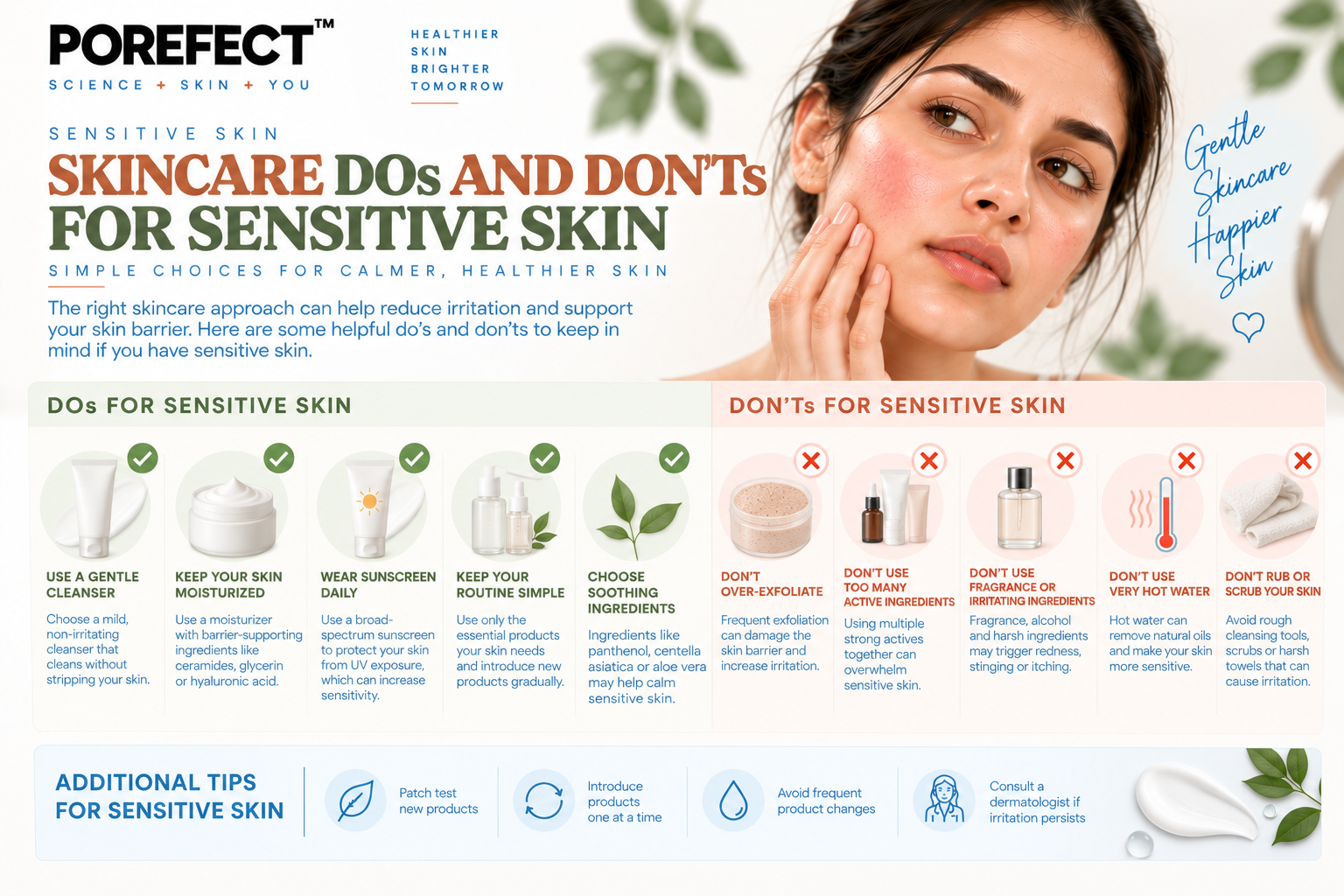
Avoid aggressive scrubbing, rough cleansing tools, and very hot water.
If your face feels tight or uncomfortable immediately after cleansing, the cleanser or cleansing routine may be too harsh.
Choosing a Suitable Moisturizer
A moisturizer can help reduce dryness and support the skin barrier.
Depending on the formulation, useful moisturizing ingredients may include:
- Ceramides
- Glycerin
- Hyaluronic acid
- Panthenol
- Other skin-conditioning ingredients
There is no single ingredient that works for everyone. Choose a formulation that feels comfortable and does not trigger irritation.
For very dry skin, a richer cream may feel more comfortable than a lightweight lotion.
A Simple Sensitive Skin Care Routine
Morning Routine
- Cleanse gently: Use a mild cleanser if needed. Some people with dry or reactive skin may prefer simply rinsing with water in the morning.
- Moisturize: Apply a moisturizer suited to your skin type.
- Sunscreen: Use broad-spectrum sunscreen and reapply according to your exposure and the product directions.
Evening Routine
- Cleanse: Remove sunscreen, makeup, dirt, and excess oil with a gentle cleanser.
- Treatment, if needed: Use only a suitable treatment product and introduce active ingredients gradually.
- Moisturize: Finish with a moisturizer to support comfortable, hydrated skin.
How to Care for Reactive Skin
If you are wondering how to care for easily irritated skin, consistency is often more useful than constantly changing products.
Try to:
- Introduce new products one at a time.
- Avoid excessive exfoliation.
- Do not scrub irritated areas.
- Use lukewarm rather than very hot water.
- Moisturize regularly.
- Protect your skin from the sun.
- Avoid ingredients that you know trigger reactions.
- Keep your routine simple when irritation develops.
Patch testing a new product before applying it broadly may also help identify potential irritation, although it cannot predict every type of reaction.
How to Choose Products for Easily Irritated Skin
When choosing sensitive skin products, consider both the ingredient list and the overall formulation.
Products labelled for sensitive skin may be useful, but marketing claims alone do not guarantee that a product will suit everyone.
If your face frequently reacts to products, introduce one new product at a time and monitor how your skin responds.
Fragrance can be an issue for some individuals, but reactions vary considerably. Rather than assuming that one ingredient is universally problematic, consider your own history of reactions.
What to Do When Irritation Develops
If you develop irritation after using a product, stop using the suspected product if the reaction is significant.
For mild irritation, a simple routine based on gentle cleansing, moisturizer, and sunscreen may be easier for your skin to tolerate while it settles.
Avoid immediately adding exfoliants, scrubs, acne treatments, or multiple soothing products to counteract the reaction.
If you experience significant swelling, blistering, severe pain, difficulty breathing, or a rapidly worsening reaction, seek urgent medical attention.
Treatment for Persistent Skin Sensitivity
There is no single treatment because increased reactivity can have different causes.
If the problem is mainly dryness or barrier disruption, gentle skincare and regular moisturization may help.
If sensitivity is associated with an underlying condition such as eczema, rosacea, or contact dermatitis, treatment may need to target that condition specifically.
A dermatologist can help determine whether your symptoms are simply increased reactivity or part of an underlying skin problem.
Common Skincare Mistakes
Using Too Many Active Ingredients
Layering retinoids, exfoliating acids, acne treatments, and other actives may increase irritation. A simpler routine may be easier to tolerate.
Over-Cleansing
Washing the face too frequently or using harsh cleansers can leave the skin dry and uncomfortable.
Frequent Product Changes
Changing products repeatedly makes it difficult to determine what your skin tolerates.
Scrubbing Irritated Skin
Physical scrubbing can worsen an already irritated skin barrier. If your skin is uncomfortable, focus on gentle cleansing and moisturization instead.
Skipping Moisturizer
Even oily or combination skin can become dehydrated or irritated when moisturizing is neglected. Choose a moisturizer that feels comfortable for your skin type.
Frequently Asked Questions
What is the best skincare for sensitive skin?
A simple routine containing a gentle cleanser, suitable moisturizer, and broad-spectrum sunscreen is a good starting point. Treatment products should be introduced gradually based on individual needs.
How do I know if I have sensitive skin?
Frequent burning, stinging, redness, dryness, itching, or irritation after using skincare products may suggest increased sensitivity. Persistent symptoms should be assessed by a dermatologist because they can also occur with specific skin conditions.
What products are good for sensitive skin?
Look for gentle, well-tolerated formulations that address your specific needs. A mild cleanser, moisturizer, and sunscreen are useful basics.
Can sensitive skin become less sensitive?
Reactivity may improve when triggers are identified and the skin barrier is supported. However, the underlying cause matters. Conditions such as eczema or rosacea may require specific treatment.
Should I use active ingredients on sensitive skin?
Some people can use active ingredients, but they should generally be introduced gradually and according to individual tolerance. If an active causes persistent burning or irritation, stop using it and seek professional advice if needed.
Conclusion
Sensitive skin does not require an elaborate skincare routine. The foundation is gentle cleansing, regular moisturization, sun protection, and avoiding unnecessary irritation.
Choose products based on your individual tolerance rather than relying only on marketing claims. Introduce new products gradually, avoid excessive exfoliation, and simplify your routine when irritation develops.
If sensitivity is persistent, severe, or associated with significant redness, itching, swelling, or other unusual symptoms, professional assessment can help identify whether an underlying condition is involved.