Skin Care
Learn how salicylic acid face wash helps with oily skin, clogged pores, blackheads and acne, plus how to choose and use it safely.
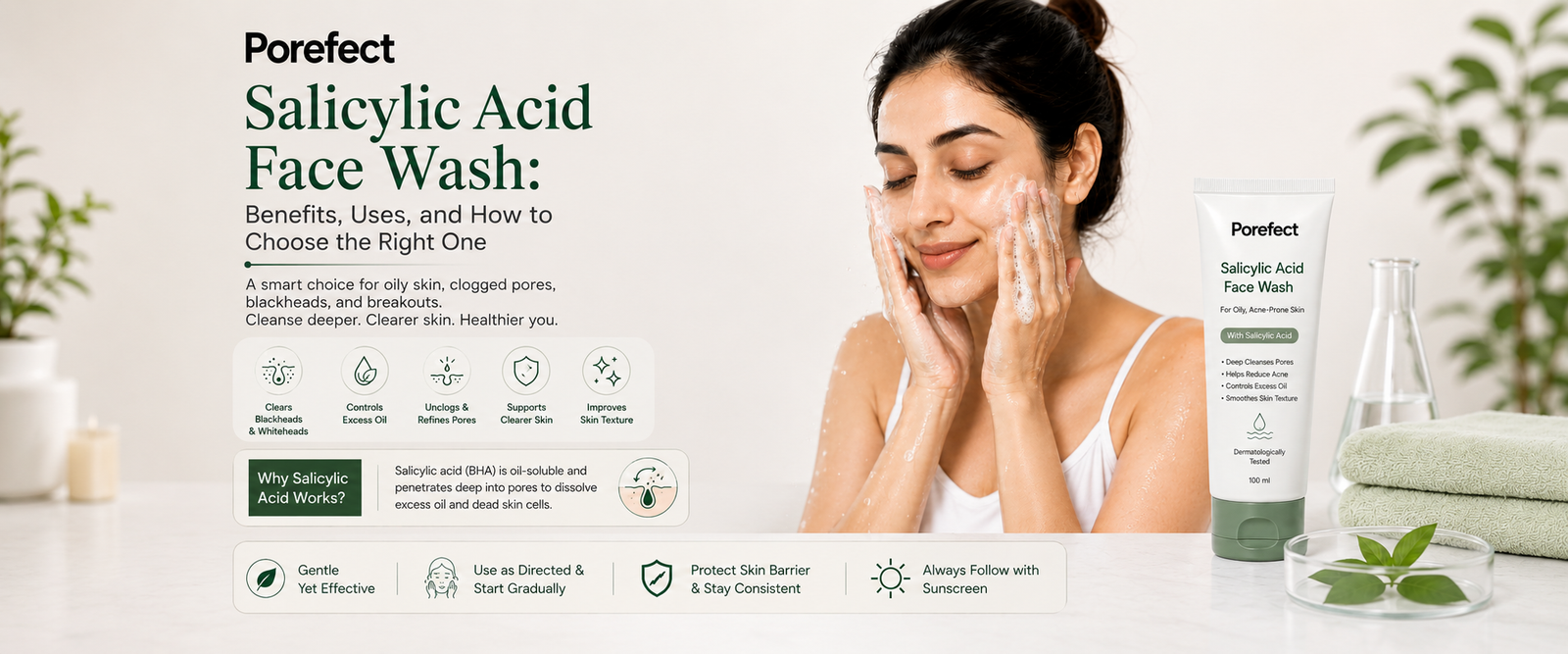
Salicylic Acid Face Wash: Benefits, Uses, and How to Choose the Right One
If you have oily skin, clogged pores, blackheads, or frequent breakouts, a salicylic acid face wash can be a useful addition to your skincare routine. Salicylic acid is a beta-hydroxy acid (BHA) that helps loosen dead skin cells and excess oil within pores, making it particularly relevant for acne-prone skin.
However, not every salicylic acid product is suitable for every person. The concentration, frequency of use, skin sensitivity, and other products in your routine all matter. The goal is to keep pores clearer without damaging the skin barrier.
What Is Salicylic Acid?
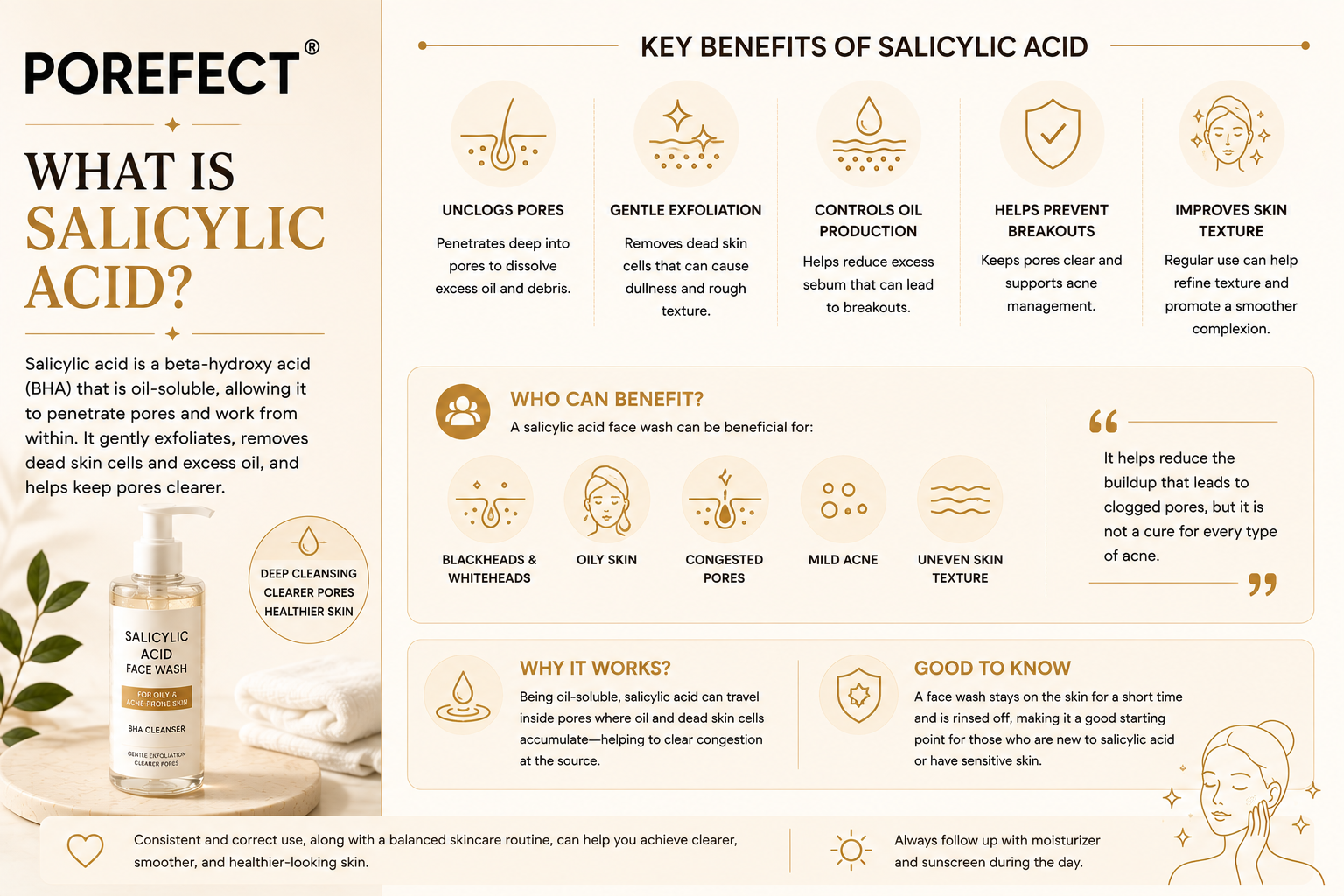
Salicylic acid is a type of exfoliating ingredient that is oil-soluble. Unlike some water-soluble exfoliants, it can work within the oily environment of pores.
This makes a salicylic acid cleanser particularly useful when excess sebum, dead skin cells, and congestion contribute to blackheads or acne.
Because a face wash is rinsed off, it generally provides shorter contact with the skin than a leave-on salicylic acid treatment. For some people, this makes a cleanser a practical starting point, especially if they are concerned about irritation.
What Does a Salicylic Acid Face Wash Do?
A salicylic acid wash can help remove excess oil and surface buildup while supporting the management of clogged pores.
It may be useful for concerns such as:
- Blackheads and whiteheads
- Oily skin
- Congested pores
- Mild acne
- Uneven skin texture
When used appropriately, salicylic acid for acne can help reduce the buildup that contributes to clogged pores. It should not, however, be viewed as a cure for every type of acne.
Inflammatory, persistent, painful, or severe acne may require a broader treatment plan.
Salicylic Acid Cleanser for Acne: Who May Benefit?
A salicylic acid cleanser for acne can be a reasonable option for people whose breakouts are associated with clogged pores and excess oil.
It may be especially helpful if you frequently notice blackheads or small bumps in areas such as the forehead, nose, chin, or cheeks.
If your skin is very dry, sensitive, or already irritated from other active ingredients, however, salicylic acid may not be the best place to start.
The right product should fit your skin rather than simply having the highest concentration or strongest marketing claims.
Salicylic Acid Cleanser for Oily Skin
People with oily skin often look for a salicylic acid cleanser for oily skin because excess sebum can contribute to congestion and make pores appear more noticeable.
A cleanser containing salicylic acid can help remove excess oil without requiring aggressive scrubbing.
But oily skin still needs a healthy skin barrier. Washing your face repeatedly or choosing an overly harsh cleanser can cause dryness and irritation.
A better approach is to cleanse appropriately, moisturize when needed, and use sunscreen during the day.
How to Choose the Best Salicylic Acid Face Wash
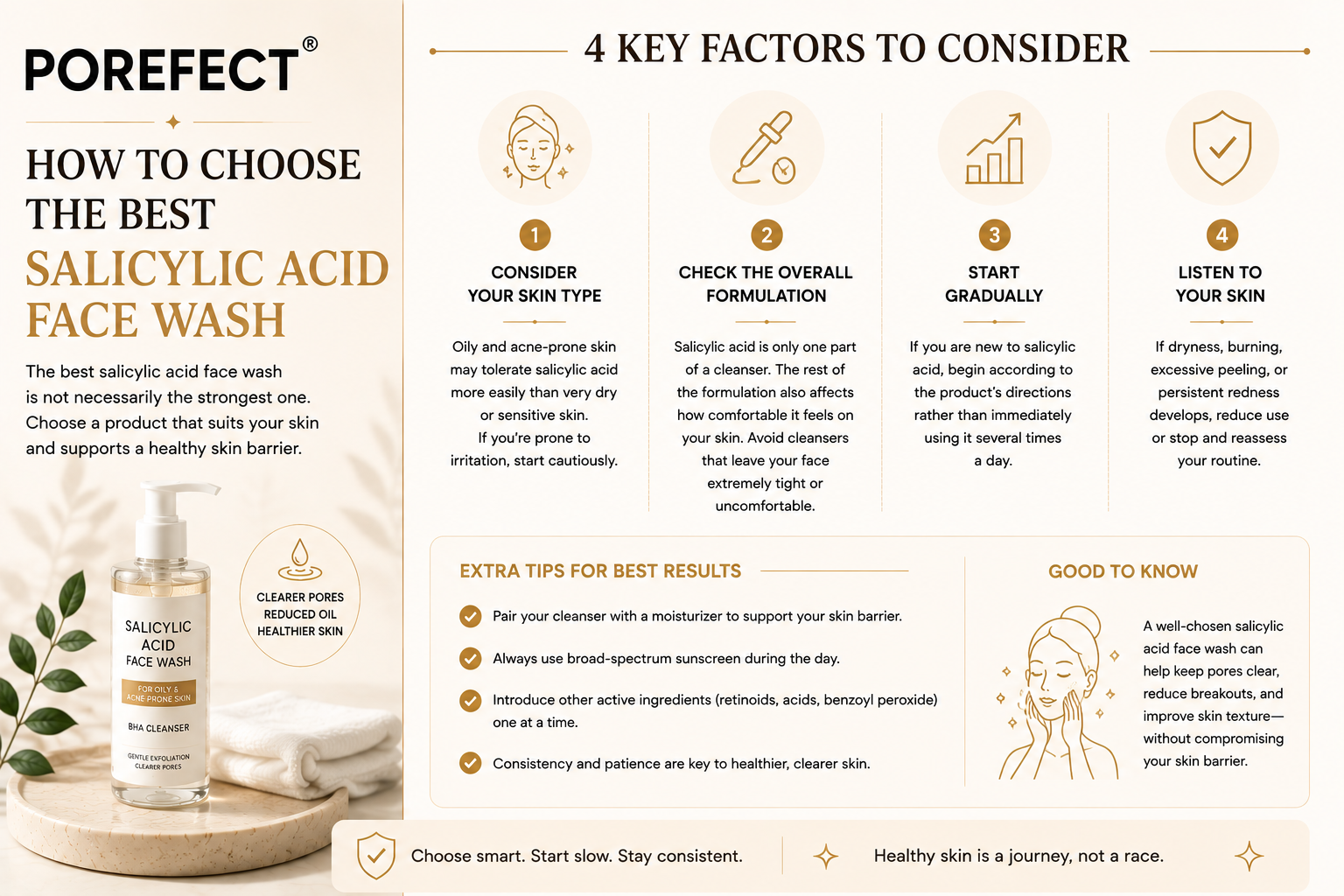
The best salicylic acid face wash is not necessarily the strongest one. Consider the following before choosing a product:
1. Consider Your Skin Type
Oily and acne-prone skin may tolerate salicylic acid more easily than very dry or sensitive skin. If you are prone to irritation, start cautiously.
2. Check the Overall Formulation
Salicylic acid is only one part of a cleanser. The rest of the formulation also affects how comfortable it feels on your skin.
A cleanser that leaves your face extremely tight or uncomfortable may be too harsh for regular use.
3. Start Gradually
If you are new to salicylic acid, begin according to the product's directions rather than immediately using it several times a day.
If dryness, burning, excessive peeling, or persistent redness develops, reduce use or stop and reassess your routine.
How to Use a Salicylic Face Wash
A salicylic face wash should generally be used according to the instructions on the product.
A simple routine can look like this:
Morning
- Gentle cleanser or salicylic acid cleanser, depending on your skin
- Moisturizer
- Broad-spectrum sunscreen
Night
- Cleanser
- Suitable acne treatment, if required
- Moisturizer
You do not necessarily need salicylic acid at every step. If you are also using retinoids, exfoliating acids, benzoyl peroxide, or other acne treatments, introducing everything at once may increase irritation.
What Should You Avoid?
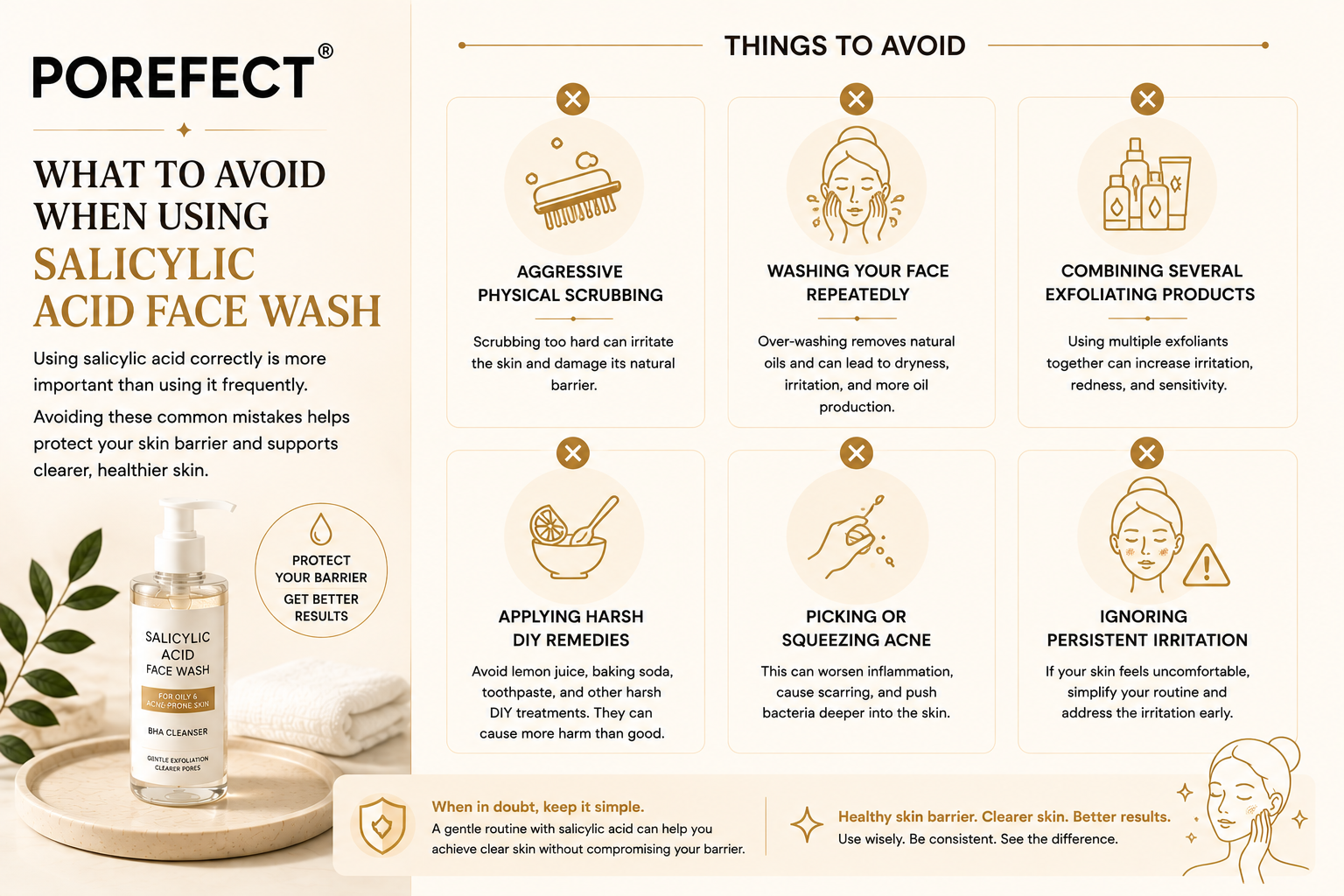
Using salicylic acid correctly is more important than using it frequently.
- Aggressive physical scrubbing
- Washing your face repeatedly to remove oil
- Combining several exfoliating products without guidance
- Applying harsh DIY remedies such as lemon juice or baking soda
- Picking or squeezing acne
- Ignoring persistent irritation
If your skin becomes uncomfortable, simplify your routine and focus on supporting the skin barrier.
When Should You See a Dermatologist?
A salicylic acid cleanser can be useful for mild congestion and some acne-prone skin, but it is not appropriate for every skin concern.
Consider consulting a dermatologist if you have painful or deep acne, frequent breakouts, acne that is leaving scars or persistent pigmentation, or skin irritation that does not settle.
A dermatologist can determine the type and severity of acne and recommend whether a cleanser alone is sufficient or whether additional treatment is needed.
Frequently Asked Questions
Is salicylic acid face wash good for acne?
It can be helpful for acne associated with clogged pores, blackheads, and excess oil. However, persistent or inflammatory acne may need additional treatment.
Can I use salicylic acid face wash every day?
Some people can use it regularly, while others develop dryness or irritation. Follow the product directions and adjust frequency according to your skin's tolerance.
Is salicylic acid good for oily skin?
Yes, salicylic acid can be useful for oily skin because it helps manage excess oil and pore congestion. Avoid over-cleansing, as irritation can compromise the skin barrier.
Can salicylic acid remove blackheads permanently?
It can help reduce blackheads and keep pores clearer with consistent use, but blackheads can return because oil production and pore formation are normal skin processes.
Can I use salicylic acid with other acne products?
It depends on the products involved. Combining multiple strong actives can increase irritation, so introduce treatments gradually and seek professional advice if your routine becomes difficult to tolerate.
Final Thoughts
A salicylic acid face wash can be a practical option for oily, congested, and acne-prone skin when used appropriately. It helps address excess oil and pore buildup without requiring a complicated routine.
Choose a formulation that suits your skin, introduce it gradually, moisturize when needed, and protect your skin with sunscreen. If acne is persistent, painful, scarring, or not improving with basic skincare, professional dermatological assessment is a better next step than continually adding stronger products.