Skin Care
Learn how to manage razor bumps, ingrown hairs and dark marks with suitable creams, gentle skincare and better shaving techniques.
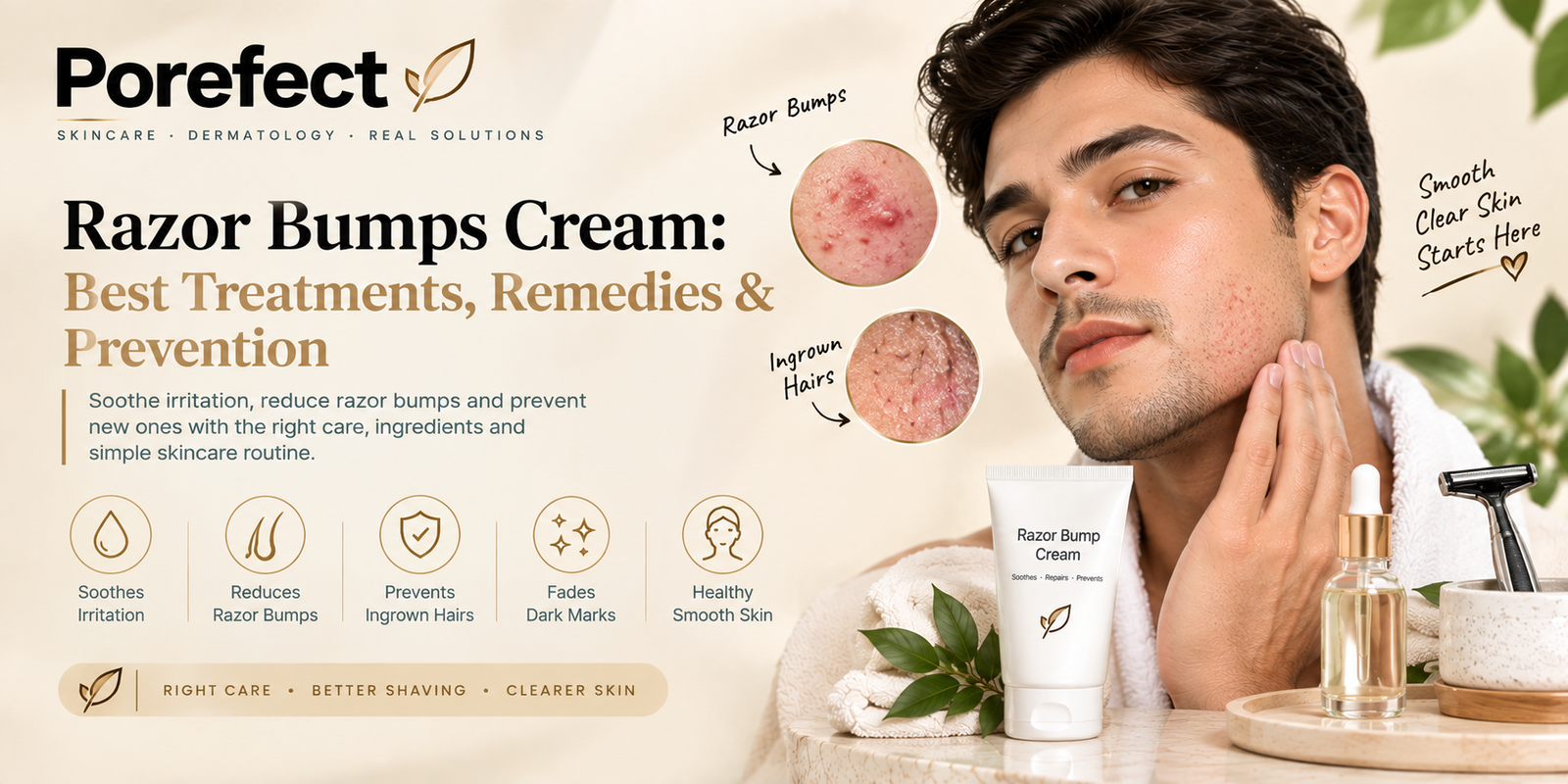
Razor Bumps Cream: Best Treatment & Prevention Guide
Razor bumps cream can help calm irritation and manage the small red or dark bumps that may appear after shaving, waxing, or other forms of hair removal. These bumps can sometimes become itchy, tender, or inflamed. The right cream depends on whether you are dealing with simple shaving irritation, razor bumps, or ingrown hairs.
What Are Razor Bumps?
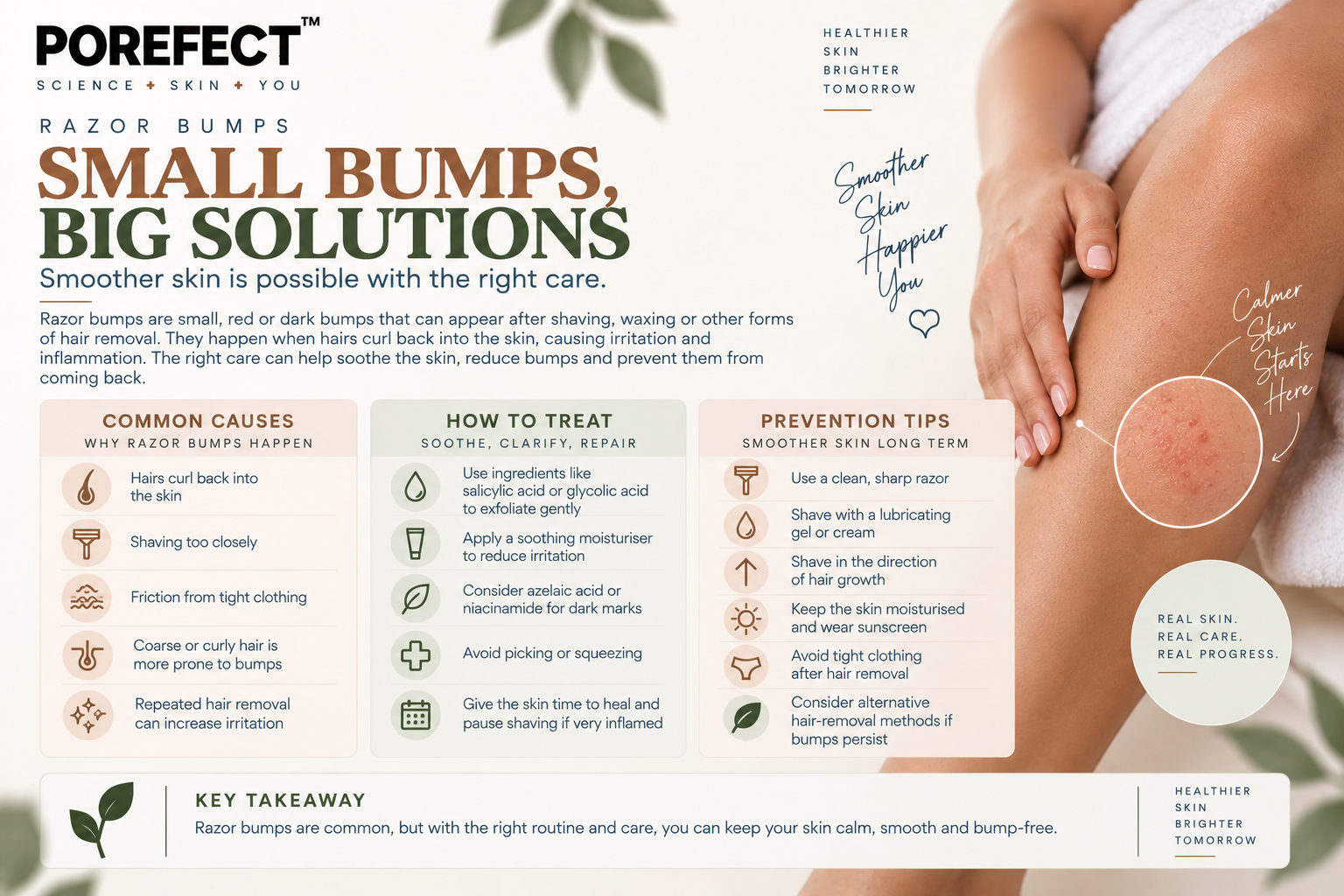
Razor bumps, medically known as pseudofolliculitis barbae, develop when shaved hairs curve back into the skin and trigger inflammation. They are particularly common in areas with coarse or curly hair.
They may appear as small red or skin-coloured bumps, itchy or tender spots, inflamed bumps around recently shaved hairs, dark marks left after inflammation, or ingrown hairs trapped beneath the skin.
How Does Razor Bumps Cream Help?
The right razor bumps cream depends on the severity and type of irritation. Different ingredients can address different skin concerns associated with shaving.
- Salicylic acid: Can help remove excess dead skin cells and reduce pore congestion around hair follicles.
- Glycolic acid: Exfoliates the skin's surface and may help improve rough texture and marks.
- Azelaic acid: Can be useful when bumps are accompanied by inflammation or dark marks.
- Moisturizing ingredients: Can help reduce dryness and support the skin barrier.
A suitable razor bumps cream should therefore be selected according to the main concern rather than simply choosing the strongest formula available.
Best Treatment for Razor Bumps and Ingrown Hairs
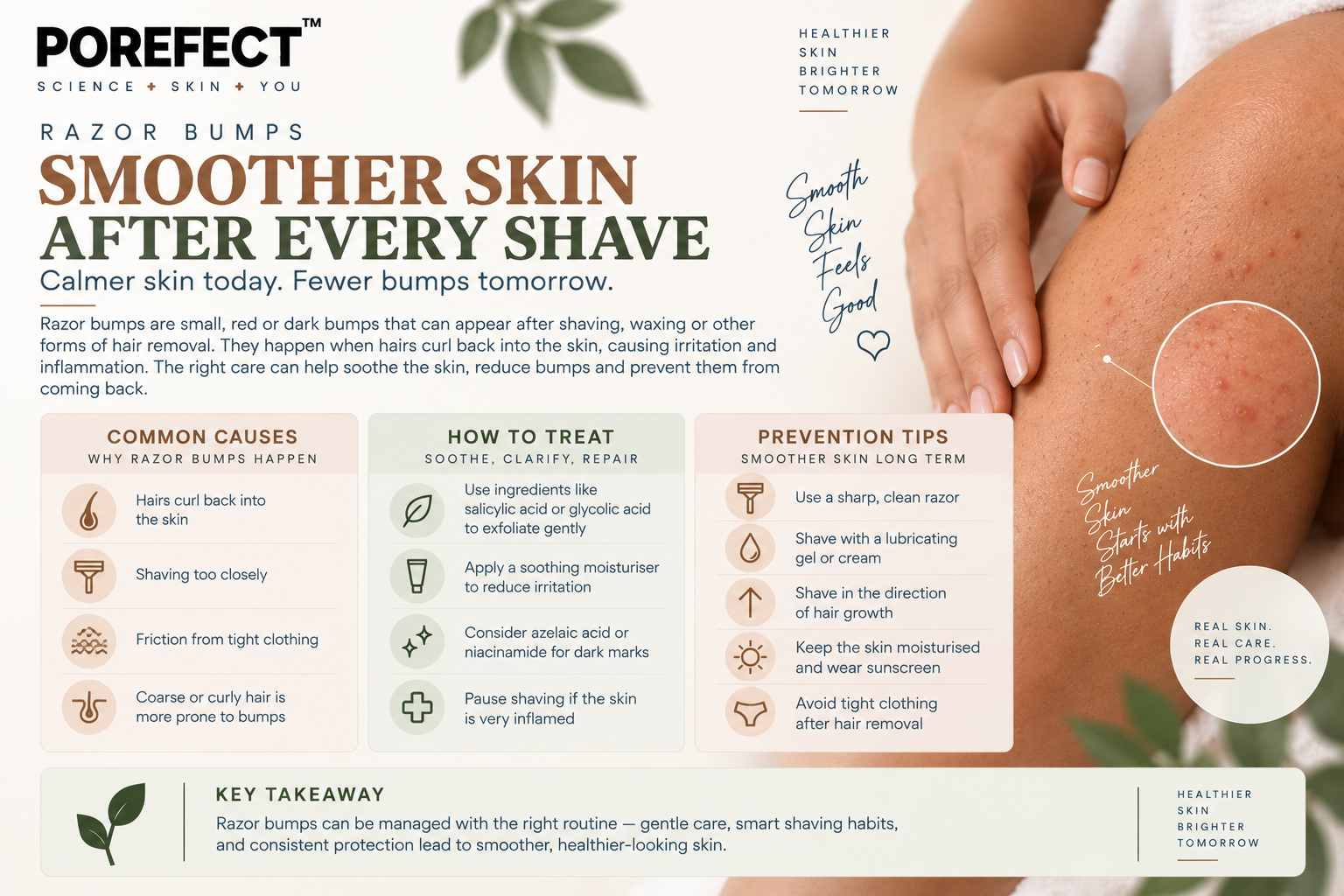
The best approach depends on whether you have inflammation, irritation, or hairs becoming trapped beneath the skin. An ingrown hair and razor bump treatment routine may include pausing shaving if the area is severely irritated, cleansing gently, avoiding picking or squeezing, and introducing a suitable exfoliating ingredient gradually.
Applying a gentle moisturizer can support the skin barrier, while sunscreen is useful on exposed areas.
If the bumps keep returning, improving the hair-removal technique is also an important part of managing them.
Cream for Razor Bumps and Dark Marks
A cream to get rid of razor bumps should not be expected to remove bumps instantly. The first goal is to control inflammation and prevent additional irritation.
Once active bumps settle, attention can shift toward dark marks. A razor bump dark spot remover may contain ingredients such as azelaic acid or niacinamide.
Daily sunscreen is important because ultraviolet exposure can make post-inflammatory pigmentation more noticeable.
Men's Skin Care for Razor Bumps
Men's skin care for razor bumps should focus on reducing friction and preventing hairs from becoming trapped after shaving.
Before Shaving
Wash the face with a gentle cleanser and use warm water to soften the hair.
During Shaving
Use a lubricating shaving product and avoid repeatedly passing the razor over the same area.
After Shaving
Rinse gently, pat the skin dry, and apply a fragrance-free moisturizer. A men's razor bump cream can be selected according to the main concern.
Razor Bump Treatment for the Bikini Area
The bikini area can be especially prone to bumps because of friction, sensitive skin, and coarse hair. For bikini razor bump treatment, avoid aggressive scrubbing and tight clothing immediately after hair removal.
A gentle cleanser, appropriate moisturizer, and carefully selected exfoliating ingredient may help. A razor bumps cream or other active treatment should be introduced gradually because this skin can be sensitive.
Do not apply strong acids, retinoids, or other active treatments to mucosal or internally genital skin.
Razor Bump Ointment vs Cream or Spray
A razor bump ointment may be useful when the skin is very dry because ointments are generally more occlusive. A cream or lotion is often easier to use on larger areas, while a razor bump spray may be convenient for hard-to-reach areas.
There is no single best solution for everyone. Treatment should be matched to the underlying problem and the condition of the skin.
How to Prevent Razor Bumps
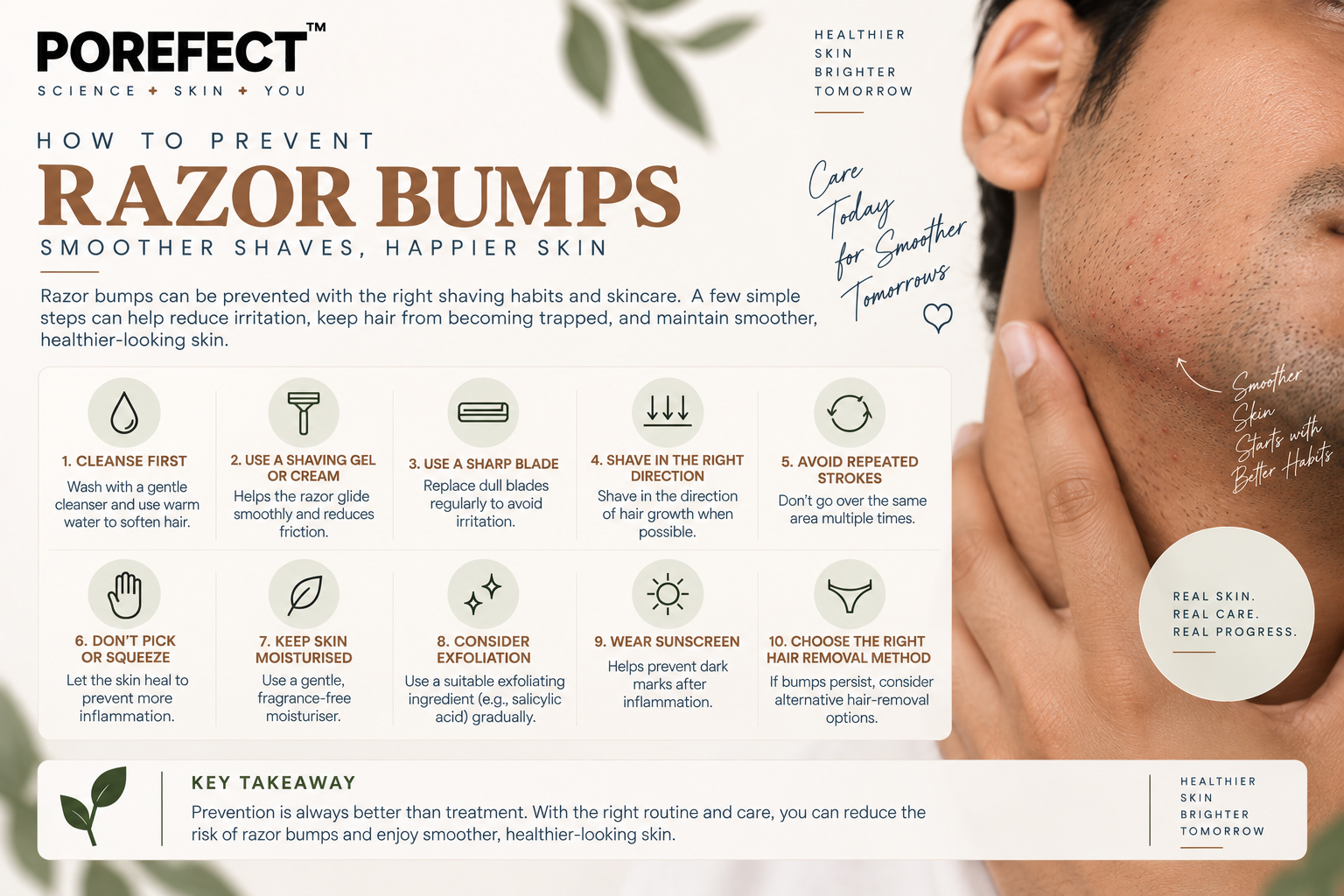
Prevention is often more useful than repeatedly treating irritated bumps. Helpful habits include:
- Avoid shaving too closely.
- Replace dull blades.
- Do not repeatedly shave over the same area.
- Use shaving gel or cream.
- Shave in the direction of hair growth when appropriate.
- Avoid picking or squeezing.
- Keep the skin moisturized.
- Introduce exfoliating products gradually.
- Wear sunscreen on exposed areas.
- Consider alternative hair-removal methods if shaving repeatedly causes severe bumps.
Following these steps alongside an appropriate razor bumps cream can help reduce repeated irritation caused by hair removal.
Can Razor Bumps Be Permanently Removed?
There is no guaranteed best cure for razor bumps because the condition can return if the underlying hair-removal trigger continues.
Long-term management usually combines proper shaving technique, appropriate skincare, and treatment of recurrent inflammation or ingrown hairs.
If bumps are painful, pus-filled, leaving significant scars, or repeatedly returning, professional evaluation is recommended.
Frequently Asked Questions
What Is the Best Razor Bump Treatment?
The appropriate treatment depends on whether you have irritation, ingrown hairs, inflammation, or dark marks. Gentle shaving practices, appropriate exfoliation, moisturization, and treatment of post-inflammatory pigmentation may all play a role.
Can I Use Razor Bump Cream Every Day?
Some gentle moisturizers can be used daily, but exfoliating or medicated products may not be suitable for daily use. Follow product instructions and reduce frequency if irritation develops.
What Is the Best Treatment for Razor Bumps and Ingrown Hairs?
A combination of improved shaving technique, gentle cleansing, gradual exfoliation, moisturization, and avoiding picking can help. Persistent cases may require dermatologist-guided treatment.
How Can I Prevent Bikini Razor Bumps?
Avoid very close shaving, reduce friction, use adequate shaving lubrication, and avoid aggressive scrubbing. If bumps continue to recur, discuss alternative hair-removal methods with a dermatologist.
Final Takeaway
The right razor bumps cream can help manage inflammation, ingrown hairs, rough texture, and the dark marks that sometimes follow shaving. However, skincare works best when combined with proper hair-removal technique.
Choose products according to your specific skin concern rather than simply looking for the strongest formula. If razor bumps are persistent, painful, infected, or leaving scars, a dermatologist can help identify the cause and recommend a targeted treatment plan.