Skin Care
Learn what causes visible pores, which skincare ingredients may help, and how to build a simple routine for smoother-looking skin.
Open Pores Treatment: Causes, Skincare Tips & What Really Helps
If the pores on your nose, cheeks, or forehead look more noticeable, you may be searching for an open pores treatment that can make your skin appear smoother. The first thing to know is that pores are normal skin structures. They do not literally open and close, and they cannot be permanently removed.
Their visibility can increase because of genetics, excess sebum, clogged pores, sun exposure, acne, or reduced skin elasticity. A realistic open pores treatment focuses on reducing the factors that make pores look prominent and improving overall skin texture rather than trying to eliminate pores completely.
Why Do Pores Look Larger on the Face?
Some people naturally have more visible pores than others. Genetics and skin type play an important role, particularly if you have oily skin or produce more sebum.
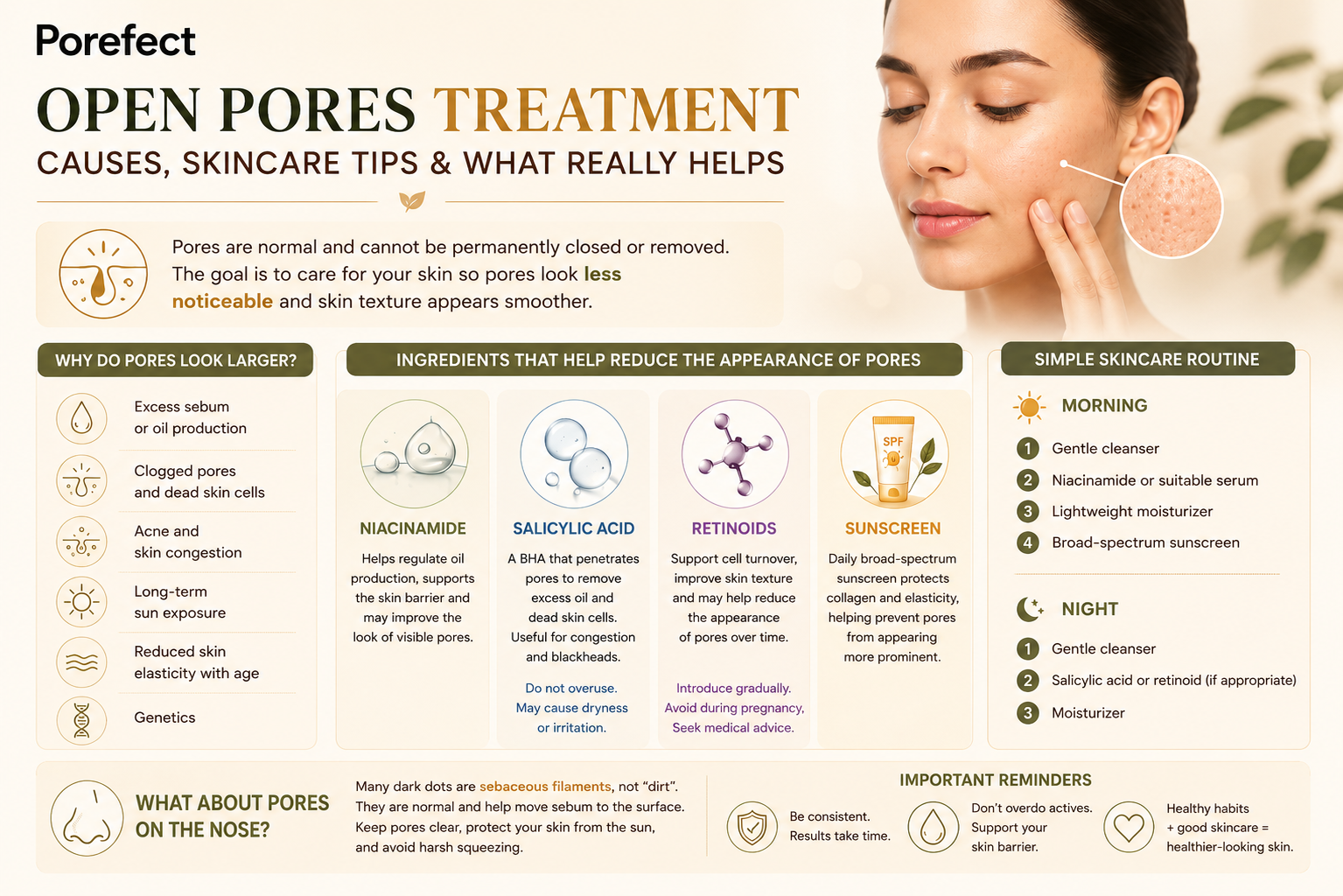
Several factors can make enlarged pores more noticeable:
- Excess sebum or oil production
- Clogged pores and dead skin cells
- Acne and skin congestion
- Long-term sun exposure
- Reduced skin elasticity with age
- Genetics
When oil and dead skin cells collect around a pore, the opening can appear more visible. Similarly, sun-related changes in collagen and elasticity can affect the surrounding skin and make pores look larger.
If you have large pores on the face, it is therefore more useful to understand what is contributing to their appearance than to look for a product that claims to “close” them. A suitable open pores treatment should address the factors that are actually making your pores appear prominent.
Can Open Pores Actually Be Closed?
No. Pores are natural openings associated with hair follicles and sebaceous glands. Their basic size is largely determined by genetics and cannot be permanently changed with skincare.
However, an appropriate open pores on face treatment can make visible pores look less prominent. Controlling excess oil, keeping pores clear, protecting the skin from UV exposure, and maintaining a healthy skin barrier can all improve their appearance.
Think of the goal as minimizing visibility, not eliminating pores. This is the most realistic way to approach an open pores treatment.
Open Pores Treatment: Ingredients That Can Help
There is no single best treatment for everyone. The right approach depends on your skin type and the reason your pores are noticeable. A good open pores treatment routine should be simple enough to use consistently and gentle enough to avoid unnecessary irritation.
Niacinamide
Niacinamide, a form of Vitamin B3, is commonly used in skincare for oily and blemish-prone skin. It can support the skin barrier and may help improve the appearance of excess oil and visible pores.
A well-tolerated niacinamide product can be a useful part of skincare for open pores, particularly when oiliness is contributing to their appearance.
Salicylic Acid
Salicylic acid is a beta-hydroxy acid that can help loosen and remove excess oil and dead skin cells from within pores. It can be useful when visible pores are associated with blackheads or congestion.
It should not be overused. Frequent application can cause dryness, irritation, or peeling, especially when combined with other active ingredients.
Retinoids
Retinoids are commonly used for acne, uneven skin texture, and signs of skin aging. They support skin cell turnover and, with appropriate use, may help improve the overall appearance of skin texture and visible pores.
Because retinoids can cause irritation, they should generally be introduced gradually. Retinoids are also generally avoided during pregnancy; if you are pregnant, planning pregnancy, or unsure whether a retinoid is appropriate, seek professional medical advice.
Sunscreen
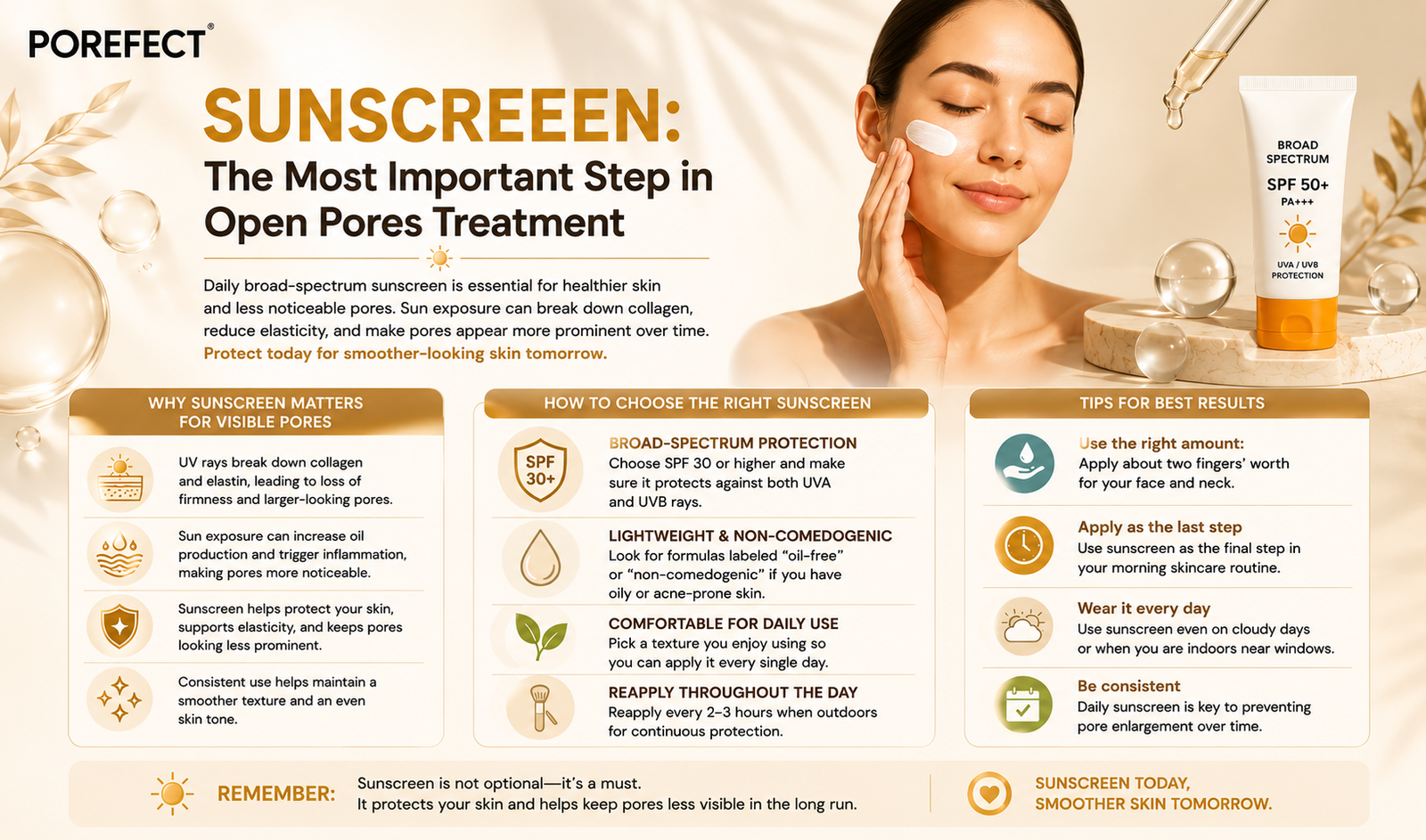
Daily broad-spectrum sunscreen is an important part of any enlarged pores treatment routine. UV exposure can contribute to collagen breakdown and changes in skin elasticity, which may make pores appear more prominent.
Choose a sunscreen that feels comfortable enough for regular use. Consistency matters more than choosing a product you find difficult to wear every day.
A Simple Skincare Routine for Visible Pores
You do not need a complicated routine to manage visible pores. In fact, a simple routine is often a better foundation for an effective open pores treatment.
Morning
- Gentle cleanser
- Niacinamide or another suitable serum
- Lightweight moisturizer
- Broad-spectrum sunscreen
Night
- Gentle cleanser
- Salicylic acid or a retinoid, if appropriate
- Moisturizer
Do not introduce several active ingredients at the same time. If your skin becomes persistently dry, irritated, or starts peeling, reduce the frequency of active products and focus on supporting the skin barrier.
What About Open Pores on the Nose?
Open pores on the nose are particularly common because the nose contains many sebaceous glands. What appears to be enlarged pores may sometimes actually be blackheads or sebaceous filaments.
Sebaceous filaments are normal structures that help move sebum toward the skin surface. They can look like small grey, yellowish, or dark dots and are often confused with blackheads.
They cannot and do not need to be permanently removed. Gentle cleansing and, when suitable, salicylic acid can help reduce excess oil and make them less noticeable.
Avoid repeatedly squeezing the area. This can irritate the skin and may cause inflammation without permanently changing pore size. If nose pores remain a concern, a consistent open pores treatment routine is a safer approach than aggressive extraction at home.
Professional Treatments for Enlarged Pores
If visible pores remain a significant concern despite consistent skincare, a dermatologist can assess your skin and discuss appropriate large pores treatment options.
Depending on your skin type and specific concerns, professional options may include chemical peels, microneedling, or selected laser-based treatments. These procedures may improve skin texture and reduce the visible appearance of enlarged pores in suitable candidates.
They are not appropriate for everyone. A dermatologist should consider factors such as skin type, acne activity, pigmentation risk, skin sensitivity, and overall skin condition before recommending a procedure.
Professional procedures can sometimes complement an at-home open pores treatment routine, but the appropriate option should always be selected after evaluating the individual skin concern.
Common Mistakes to Avoid
Avoid harsh physical scrubs, excessive cleansing, frequent pore strips, and aggressive squeezing. These methods do not permanently reduce pore size and can irritate the skin.
DIY remedies such as lemon juice, baking soda, and toothpaste should also be avoided on the face. Their irritating effects can make skin problems more noticeable.
Using too many active ingredients at once is another common mistake. A simpler routine that your skin tolerates well is usually easier to maintain and can be a more sustainable approach to open pores treatment.
Frequently Asked Questions
Can open pores be permanently closed?
No. Pores are normal skin structures and cannot be permanently closed or removed. Appropriate skincare and selected professional procedures can help reduce their visible appearance.
What is the best open pores treatment?
There is no single treatment that works best for everyone. Managing excess oil, keeping pores clear, using suitable ingredients such as niacinamide or salicylic acid, and protecting the skin from UV exposure can help. The best open pores treatment depends on your skin type and the factors contributing to visible pores.
How can I reduce open pores on my face?
Use a gentle cleanser, a suitable active ingredient, moisturizer, and daily sunscreen. Avoid squeezing and aggressive scrubbing. Consistent skincare is more useful than repeatedly changing products.
Does niacinamide help with visible pores?
Niacinamide may help support the skin barrier and improve the appearance of excess oil and visible pores. Its effect varies between individuals and depends on the formulation and overall routine.
Does salicylic acid help with open pores?
Salicylic acid can help remove excess oil and dead skin cells from within pores, making them appear less congested. It can be particularly useful for oily or acne-prone skin when used appropriately.
Can skincare permanently remove large pores?
No. Skincare cannot permanently remove pores because they are normal structures of the skin. However, appropriate skincare can reduce the factors that make them look larger and improve the overall appearance of skin texture.
A Realistic Approach to Open Pores Treatment
Visible pores are a normal feature of healthy skin. The aim of how to reduce open pores should be to minimize the factors that make them more noticeable, not to eliminate them completely.
Keep your routine simple, control excess oil without stripping the skin, use appropriate active ingredients, moisturize, and protect your skin from the sun. If enlarged pores remain a significant concern, a dermatologist can help determine whether a professional enlarged pores treatment is appropriate.
Whether you are dealing with pores on the nose, cheeks, forehead, or other areas of the face, consistency is more important than using multiple products at once.
Healthy skin does not need to be poreless. The goal of an effective open pores treatment is skin that feels comfortable, balanced, and well cared for.