Skin Care
Discover niacinamide serum benefits for oily skin, pores, uneven tone, acne marks, redness and overall skin barrier support.

Niacinamide Serum: Benefits, Uses, and How It Helps Different Skin Concerns
Niacinamide serum can be a useful addition to a skincare routine if you are dealing with oily skin, visible pores, acne marks, redness, or uneven skin tone. Niacinamide is a form of Vitamin B3 that supports the skin barrier, helps manage excess oil, and can improve the appearance of uneven-looking skin.
One of the advantages of niacinamide is its versatility. It can fit into routines for oily, combination, dry, sensitive, and acne-prone skin when used in an appropriate formulation.
In this guide, we will explain the key niacinamide serum benefits, how to use it correctly, which ingredients can be combined with it, and what you can realistically expect from consistent use.
Understanding Niacinamide Serum
A niacinamide serum is a lightweight skincare product formulated with niacinamide, a water-soluble form of Vitamin B3. Serums are designed to deliver active ingredients to the skin in a convenient, easy-to-layer format.
Niacinamide helps support the skin barrier and maintain moisture while also addressing concerns related to oiliness, uneven-looking skin, and visible pores.
Because it can target multiple concerns without making a routine overly complicated, niacinamide is often included in everyday skincare routines.
What Can Niacinamide Serum Do for Your Skin?
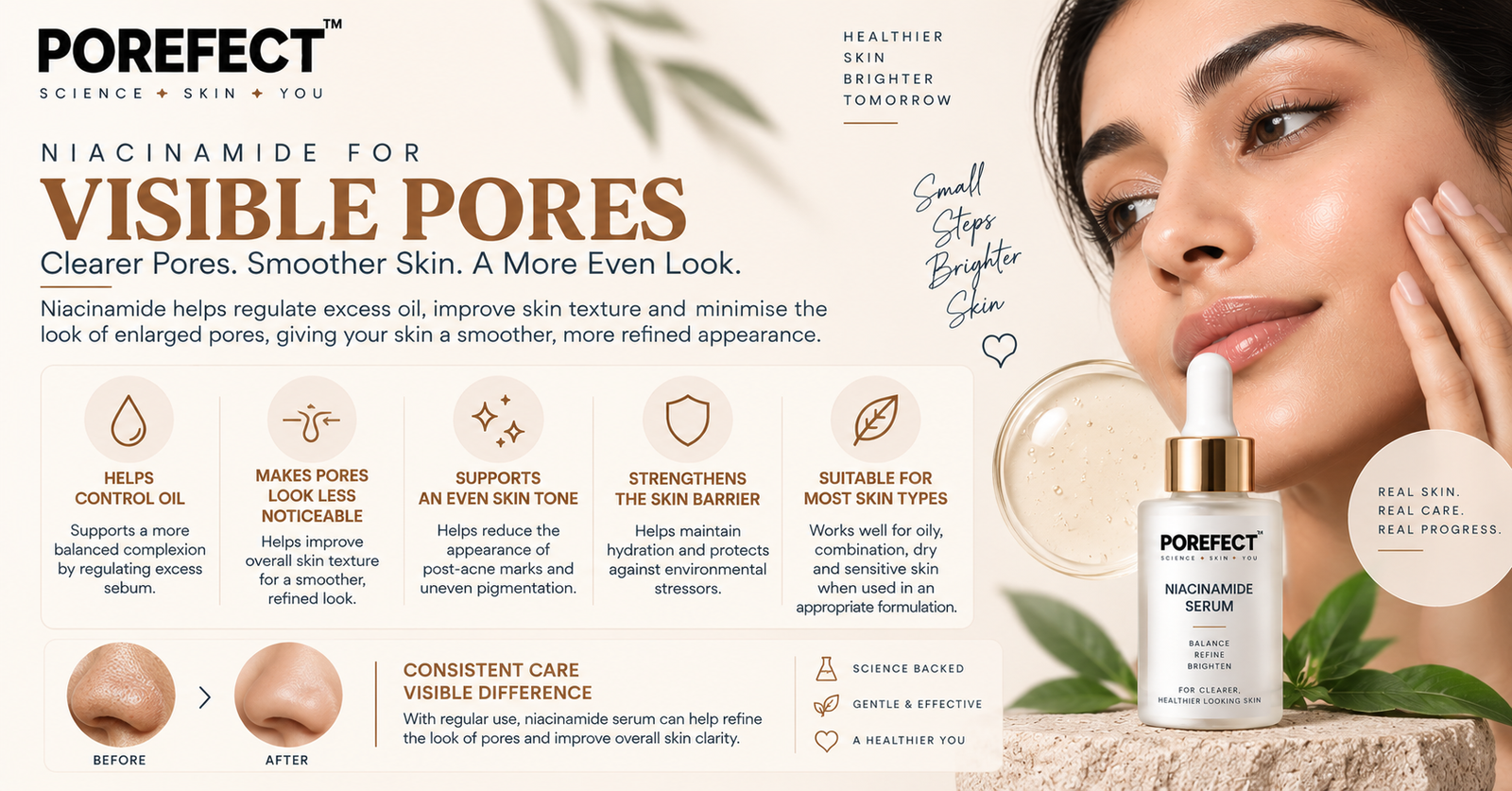
Niacinamide serum can help support the skin barrier, manage excess oil, improve the appearance of uneven skin tone, make visible pores look less noticeable, and calm the appearance of redness.
Key Niacinamide Serum Benefits
The popularity of niacinamide comes from its ability to support several aspects of skin health at the same time.

1. Helps Manage Excess Oil
Excess sebum can make the face appear shiny and may contribute to a congested-looking complexion.
Niacinamide can help regulate the appearance of excess oil without aggressively stripping the skin. This makes it a useful ingredient for people with oily or combination skin who want a more balanced-looking complexion.
2. Supports a Healthy Skin Barrier
Your skin barrier plays an important role in keeping moisture in and protecting the skin from external stressors.
When the barrier is weakened, the skin may feel dry, tight, or irritated. Niacinamide helps support the barrier and can be particularly useful in routines focused on maintaining hydration and skin resilience.
3. Helps Improve Uneven Skin Tone
Post-acne marks and uneven pigmentation can remain visible even after breakouts have disappeared.
A niacinamide serum can be incorporated into a routine designed to improve the appearance of uneven skin tone and post-acne marks. With regular use, it may help the complexion look more balanced and uniform.
4. Makes Enlarged Pores Look Less Noticeable
Pores are a natural part of the skin and cannot be permanently closed. However, factors such as excess oil and buildup can make pores appear more prominent.
By supporting oil balance and overall skin condition, niacinamide may help visible pores look less noticeable over time.
5. Helps Calm the Appearance of Redness
Skin affected by breakouts, dryness, or environmental stress can sometimes appear red or irritated.
Niacinamide is known for its skin-supporting properties. Including it in a well-balanced routine may help the skin look calmer and more comfortable.
Is Niacinamide Serum Suitable for Oily Skin?
Yes, niacinamide is commonly used in skincare routines for oily and combination skin.
One reason is its ability to support a healthier balance of oil production without relying on harsh, drying ingredients. A lightweight niacinamide serum can therefore be easier to incorporate into an oily-skin routine than heavy creams or facial oils.
For oily or acne-prone skin, look for a formulation that feels lightweight and is appropriate for your skin type.
Can Niacinamide Help With Acne Marks?
Niacinamide can be a useful ingredient for people dealing with the appearance of post-acne marks and uneven skin tone.
However, it is important to have realistic expectations. Different types of pigmentation can have different causes, and no single ingredient works equally well for every concern.
For persistent or significant pigmentation, a broader routine may include sunscreen and other targeted ingredients based on individual skin needs.
Who May Benefit From Niacinamide Serum?
One of the strengths of niacinamide is its versatility. A niacinamide serum may be suitable for people with:
- Oily skin
- Combination skin
- Dry skin
- Sensitive skin
- Acne-prone skin
- Visible pores
- Uneven skin tone
- Post-acne marks
- Dull-looking skin
- Mild visible redness
Even though niacinamide is generally well tolerated, individual skin sensitivity can vary. It is sensible to introduce a new product gradually.
How to Add Niacinamide Serum to Your Routine

Adding niacinamide to your skincare routine does not have to be complicated.
Morning Routine
- Cleanse your face with a gentle cleanser.
- Apply a few drops of niacinamide serum.
- Allow the serum to absorb comfortably.
- Apply your moisturizer.
- Finish with broad-spectrum sunscreen.
Evening Routine
- Cleanse your face.
- Apply your niacinamide serum.
- Follow with a suitable moisturizer.
The exact amount and frequency should follow the product's instructions. If you are new to active skincare, starting once a day can be a practical way to introduce it.
Which Skincare Ingredients Work Well With Niacinamide?
Niacinamide is relatively easy to combine with other skincare ingredients, making it convenient for multi-step routines.
Hyaluronic Acid
Hyaluronic Acid provides hydration and can complement niacinamide in routines designed to maintain moisture and skin comfort.
Vitamin C
Vitamin C and niacinamide can both be used in an antioxidant-focused skincare routine. Modern formulations are often designed to combine multiple compatible ingredients.
Azelaic Acid
Azelaic Acid can complement niacinamide in routines targeting uneven-looking skin tone, blemishes, and redness.
Alpha Arbutin
Alpha Arbutin is commonly used in skincare routines focused on the appearance of dark spots and uneven pigmentation. It can be paired with niacinamide when tolerated.
Ceramides
Ceramides help support the skin barrier and can work particularly well alongside niacinamide in routines for dry or sensitive skin.
Retinol
Niacinamide can also complement retinol. Because retinol may initially cause dryness or irritation in some people, introducing both ingredients thoughtfully can help keep the routine manageable.
Niacinamide Skincare Mistakes to Avoid
Using the right ingredient is only part of an effective skincare routine. Avoid these common mistakes:
- Applying excessive amounts of serum
- Starting several new active ingredients at once
- Skipping sunscreen during the daytime
- Expecting visible changes overnight
- Frequently changing products before giving them enough time
- Choosing a formulation that does not suit your skin type
A consistent routine is generally more useful than constantly adding new products.
How Long Does Niacinamide Take to Work?
Skincare results are gradual and can vary from person to person.
Some people may notice improvements in skin hydration, oil balance, or overall skin appearance after several weeks of consistent use. Concerns such as post-acne marks and uneven skin tone can take longer and may require a more targeted routine.
Your results can also depend on the concentration, formulation, frequency of use, sunscreen habits, and the underlying cause of your skin concern.
Are There Any Side Effects of Niacinamide Serum?
Niacinamide is generally considered a well-tolerated skincare ingredient, but irritation can still occur in some individuals.
Possible reactions may include:
- Mild redness
- Tingling
- Dryness
- Temporary irritation
If you notice persistent discomfort, reduce the frequency of use or stop the product and seek professional advice if necessary.
Patch-testing a new skincare product can also be useful, especially if your skin is sensitive or reactive.
Frequently Asked Questions About Niacinamide Serum
Can I use niacinamide serum every day?
Yes. Many people can use a niacinamide serum once or twice daily, depending on the formulation and how their skin responds. Always follow the product's recommended usage.
Is niacinamide serum suitable for sensitive skin?
Niacinamide is generally considered a gentle ingredient and may suit many people with sensitive skin. However, sensitive skin can react to any new product, so introducing it gradually and patch-testing first can be helpful.
Can niacinamide serum help oily and acne-prone skin?
Niacinamide can help support oil balance and the skin barrier, making it a useful ingredient for many oily and acne-prone skin routines. It should not be considered a replacement for prescribed acne treatment when medical treatment is needed.
Does niacinamide reduce pores permanently?
No. Pores cannot be permanently closed. Niacinamide may help improve the appearance of visible pores by supporting oil balance and overall skin condition.
Should niacinamide serum be applied before moisturizer?
Yes. In a typical routine, apply your niacinamide serum after cleansing and before moisturizer. Sunscreen should be applied as the final skincare step in the morning.
Can I use niacinamide with Vitamin C?
Yes. Niacinamide and Vitamin C can be used together when appropriately formulated and tolerated. Both ingredients can play useful roles in an antioxidant-focused skincare routine.
Final Takeaway
A niacinamide serum can be a practical addition to a skincare routine because it addresses several common concerns without requiring an overly complicated regimen. From supporting the skin barrier and managing excess oil to improving the appearance of pores and uneven skin tone, niacinamide offers multiple benefits in one ingredient.
The most important factor is consistency. Choose a formulation appropriate for your skin type, introduce it gradually, moisturize regularly, and use sunscreen every morning.
If you have persistent acne, significant pigmentation, ongoing redness, or repeated irritation, a dermatologist can help identify the underlying concern and recommend a more personalized skincare approach.