Skin Care
Learn about keratosis pilaris treatment, its causes and symptoms, and how urea, salicylic acid, lactic acid, moisturisers and gentle skincare can help smooth rough bumps.
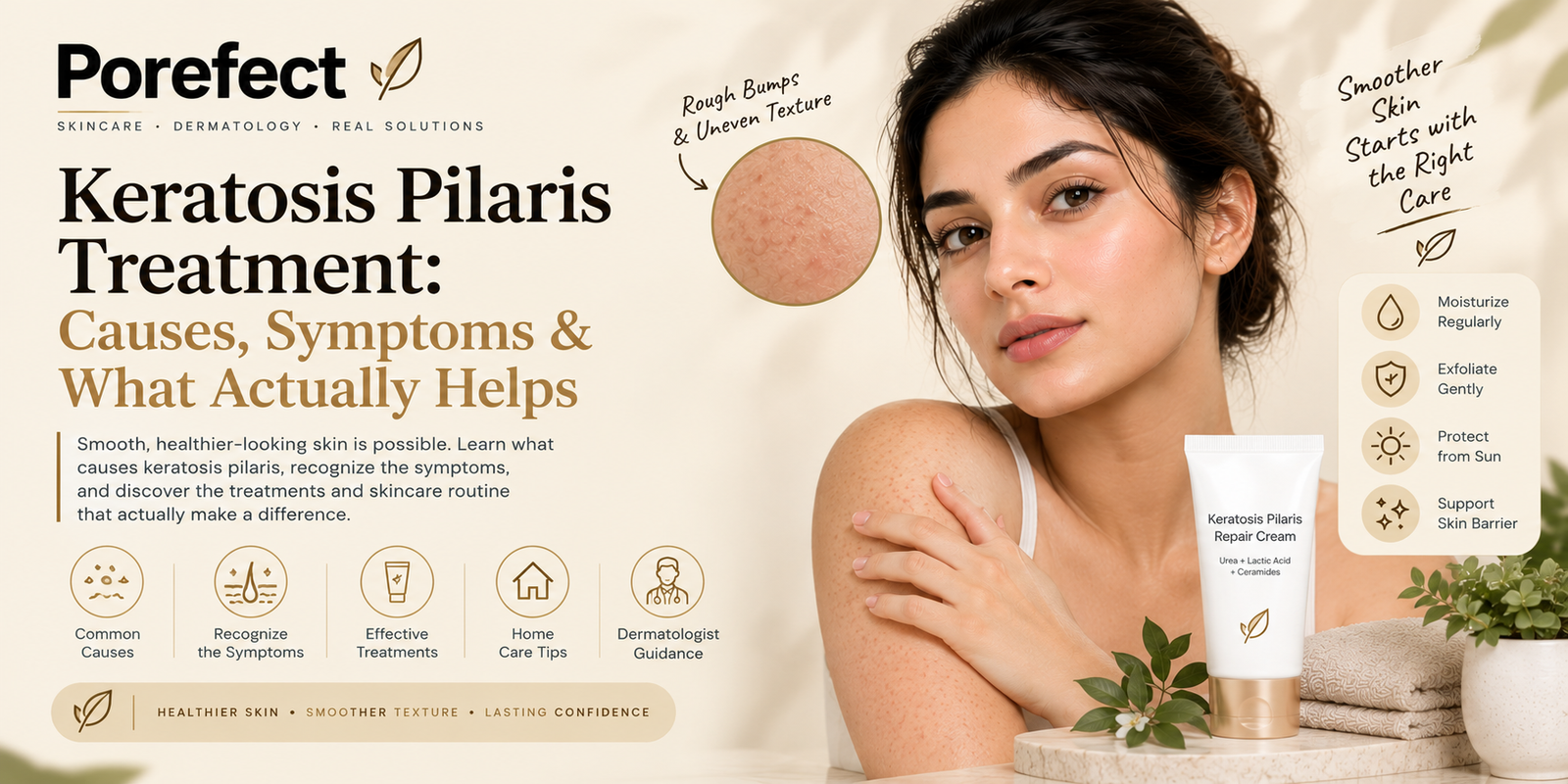
Keratosis Pilaris Treatment: Causes, Symptoms & What Actually Helps
Keratosis pilaris treatment can help reduce the appearance of small, rough bumps and make affected skin feel smoother. Keratosis pilaris is a common skin condition that often appears on the upper arms, thighs, buttocks, or cheeks. The bumps may look like tiny pimples or gooseflesh and are sometimes called “chicken skin.” Although keratosis pilaris is harmless and not contagious, it can make the skin feel rough and uneven.
The condition develops when keratin, a protein naturally found in the skin, builds up around hair follicles. An effective keratosis pilaris treatment usually focuses on softening this buildup, improving roughness, maintaining moisture, and preventing excessive dryness. The right approach depends on the affected area, skin sensitivity, and how persistent the bumps are.
What Is Keratosis Pilaris?
Keratosis pilaris occurs when dead skin cells and keratin accumulate around hair follicles, creating small raised bumps. The bumps may be skin-coloured, white, pink, or reddish-brown depending on skin tone and inflammation.
It is particularly common during childhood, adolescence, and early adulthood, although it can occur at any age. Some people notice that keratosis pilaris becomes more visible when the skin is dry.
Keratosis pilaris is not caused by poor hygiene. Scrubbing harder does not remove the underlying problem and may increase irritation. A gentle keratosis pilaris treatment routine is generally more appropriate than aggressive physical exfoliation.
Keratosis Pilaris Symptoms
Common signs of keratosis pilaris include:
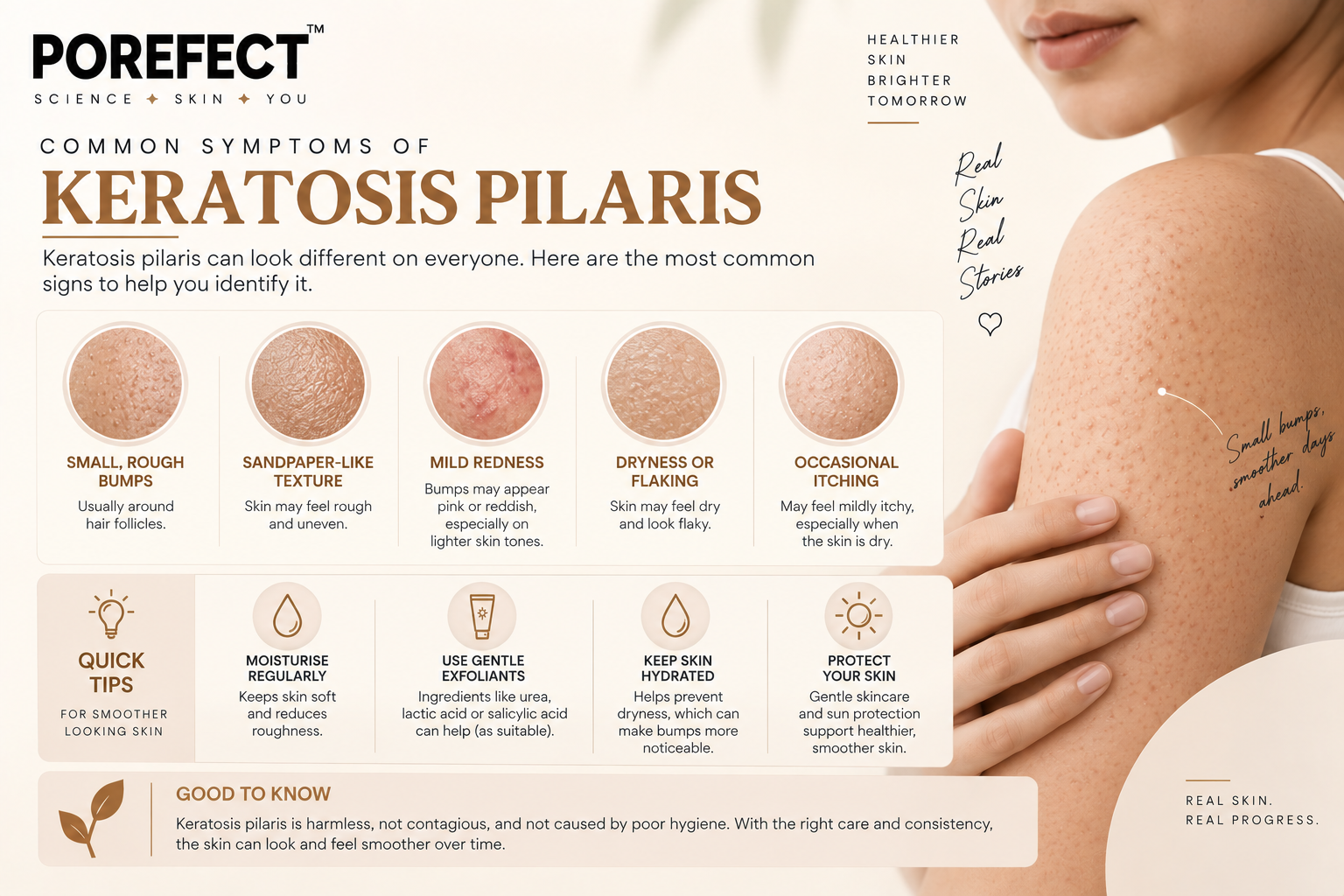
- Small, rough bumps around hair follicles
- Rough or sandpaper-like skin texture
- Mild redness around individual bumps
- Dryness or flaking
- Occasional mild itching
Keratosis pilaris commonly appears on the upper arms and thighs. When similar bumps occur on the face, particularly the cheeks, they may sometimes be mistaken for acne or another skin condition.
What Causes Keratosis Pilaris?
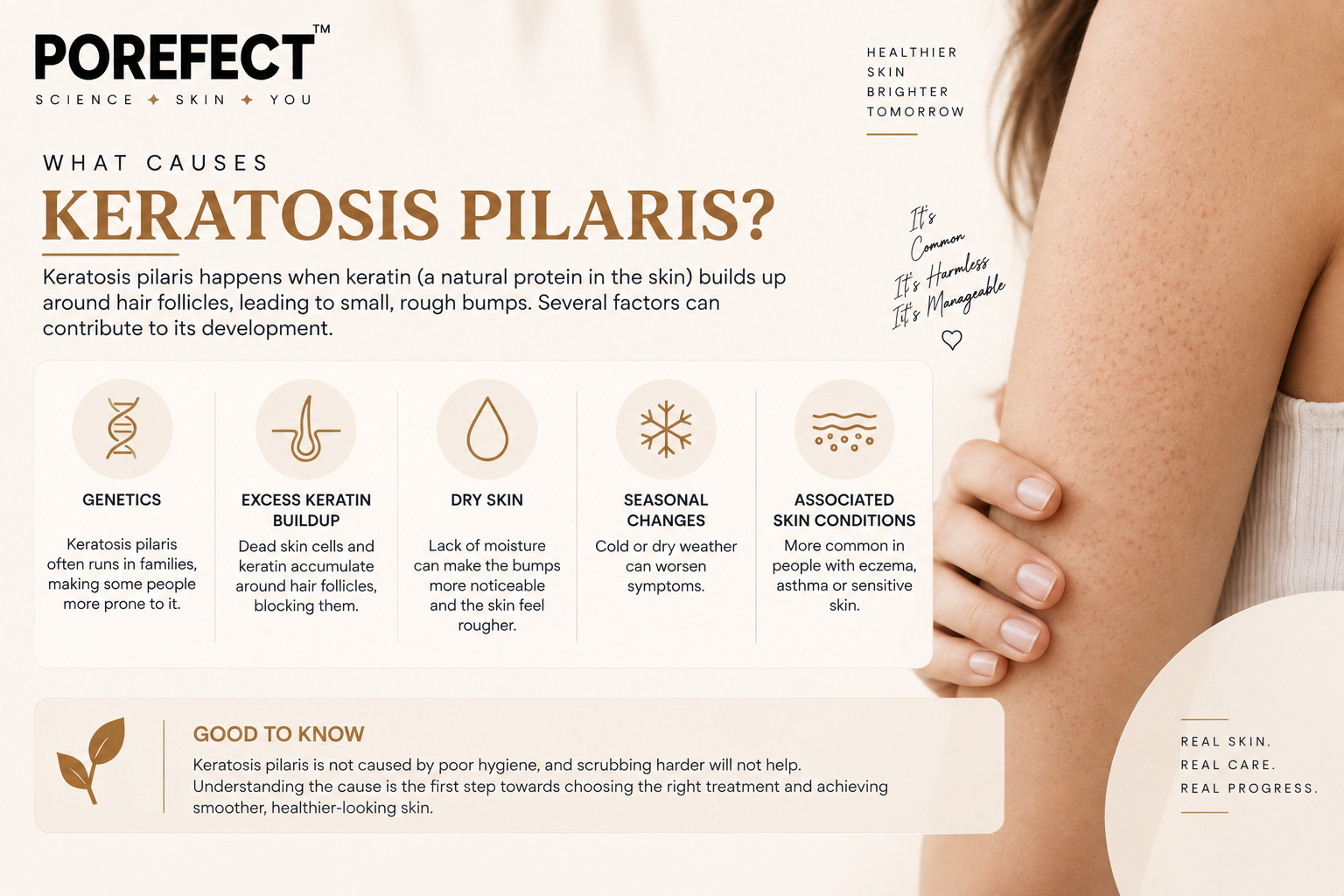
The exact reason some people develop keratosis pilaris is not completely understood, but genetics can play a role. The condition is associated with abnormal buildup of keratin around hair follicles.
Dry skin can make the bumps more noticeable. Some people also find that symptoms fluctuate with seasonal changes, particularly when the air is cold or dry.
Because several conditions can resemble keratosis pilaris, persistent or unusual bumps should be assessed if the diagnosis is uncertain. Correct identification of the condition helps determine the most appropriate keratosis pilaris treatment.
Keratosis Pilaris Treatment: What Actually Helps?
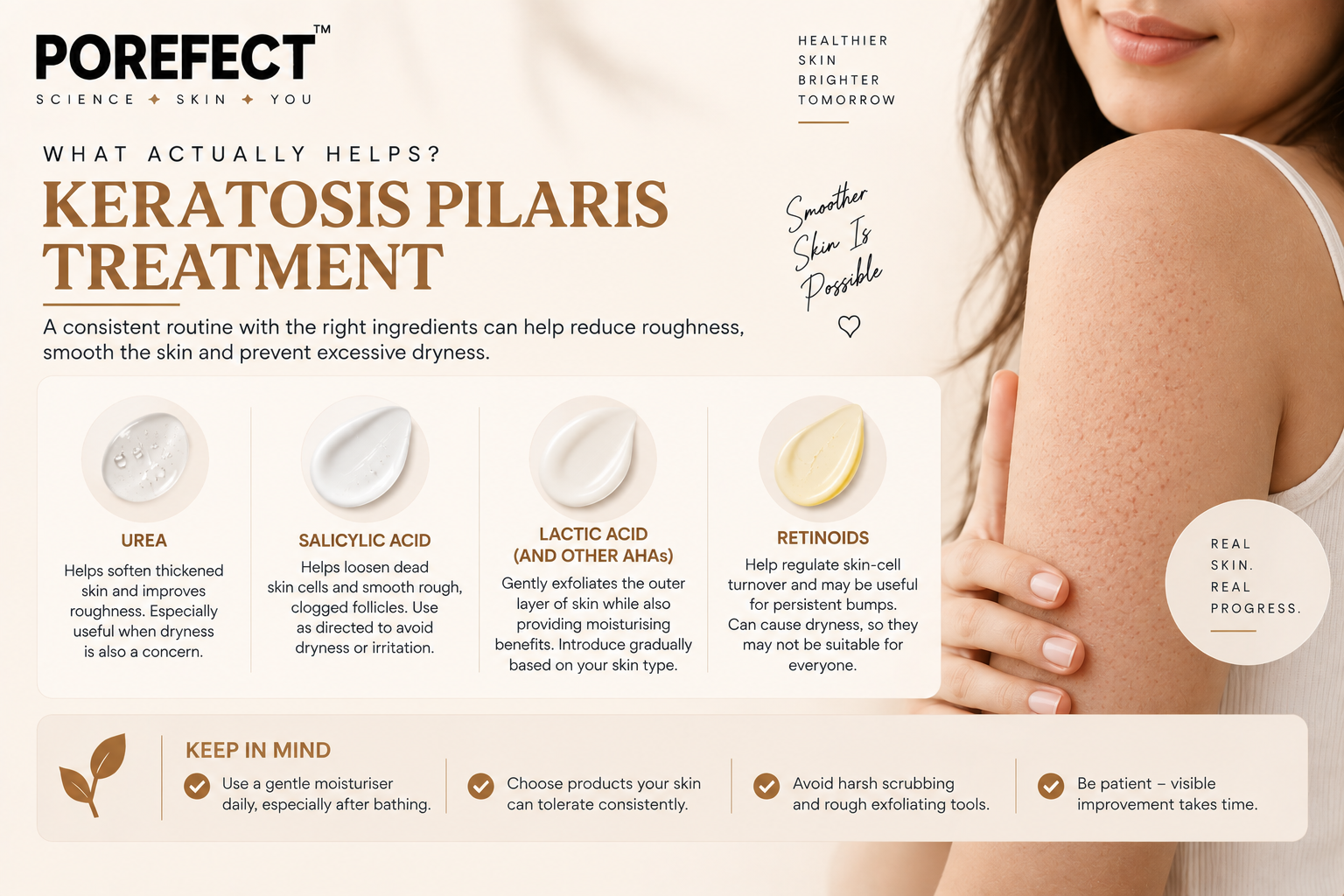
There is no single best keratosis pilaris treatment for everyone. A consistent routine combining moisturisation with gentle keratolytic ingredients is usually more useful than aggressive physical exfoliation.
Urea
Urea is a moisturising ingredient that can also soften thickened skin. Keratosis pilaris urea creams may be helpful when roughness and dryness occur together. Higher concentrations can be more exfoliating and may be irritating for sensitive skin.
For people with dry, rough bumps, urea can therefore be a useful ingredient in a regular keratosis pilaris treatment routine.
Salicylic Acid
Salicylic acid helps loosen dead skin cells and can smooth rough, clogged follicular areas. Salicylic acid for keratosis pilaris may be useful on the arms or legs, but frequent application can cause dryness or irritation.
When using salicylic acid as a keratosis pilaris treatment, start gradually and monitor how your skin responds.
Lactic Acid and Other Alpha Hydroxy Acids
Lactic acid and other AHAs can help exfoliate the outer layer of skin while providing some moisturising benefit. They may be useful when roughness is the main concern, but they should be introduced gradually.
Using one exfoliating ingredient at a time can make your keratosis pilaris treatment routine easier to tolerate and manage.
Retinoids
Topical retinoids can help regulate skin-cell turnover and may be considered for persistent keratosis pilaris. They can cause dryness and irritation, so they are not always the first choice for sensitive skin and should be used appropriately.
If a retinoid is being considered as part of keratosis pilaris treatment, professional advice can help determine whether it is appropriate for your skin.
Choosing a Keratosis Pilaris Cream
When choosing a keratosis pilaris cream, look for a formulation that combines moisturising and smoothing ingredients. Depending on your skin, useful ingredients may include urea, lactic acid, salicylic acid, or other gentle exfoliating agents.
The best cream for keratosis pilaris is not necessarily the strongest formula. A product that your skin can tolerate consistently is often a more practical choice.
If the skin is very dry or irritated, start with a fragrance-free moisturiser and focus on barrier support before adding stronger exfoliating ingredients. This can make the overall keratosis pilaris treatment routine more comfortable.
Keratosis Pilaris Arms Treatment
For keratosis pilaris arms treatment, apply moisturiser regularly, especially after bathing. A lotion or cream containing urea, lactic acid, or salicylic acid may help improve rough texture when tolerated.
Apply moisturiser while the skin is slightly damp to help reduce dryness. Consistency is more important than aggressively trying to remove every individual bump.
Avoid vigorous scrubbing or using a rough keratosis pilaris scrub. Physical friction may temporarily make the skin feel smoother but can increase irritation and redness.
Can You Get Rid of Keratosis Pilaris?
If you want to get rid of keratosis pilaris, it is important to have realistic expectations. The condition can often be managed and the skin can become smoother, but it may recur.
Consistent moisturisation and appropriate exfoliating ingredients can help control roughness. Stopping treatment may allow the bumps to become noticeable again, particularly when the skin becomes dry.
For this reason, keratosis pilaris treatment is often best viewed as ongoing skin management rather than a one-time solution.
Simple Routine for KP Skin
A practical KP skin treatment routine can be simple and consistent.
Morning or After Bathing
- Use a gentle cleanser.
- Apply a moisturiser or treatment containing an appropriate keratolytic ingredient.
- Use sunscreen on exposed areas.
Evening
- Cleanse gently.
- Apply the selected keratosis pilaris treatment cream.
- Moisturise if additional hydration is needed.
Introduce one active ingredient at a time. If burning, marked redness, or persistent irritation develops, reduce use and allow the skin to recover.
Common Mistakes to Avoid
When managing keratosis pilaris, avoid:
- Aggressive scrubbing or picking
- Using a keratosis pilaris scrub too frequently
- Applying several exfoliating acids together
- Using strong products on already irritated skin
- Taking very hot showers
- Skipping moisturiser
- Expecting overnight improvement
Gentle, consistent care is generally more suitable than trying to physically remove every bump. Over-exfoliation can damage the skin barrier and make redness or irritation more noticeable.
When Should You See a Dermatologist?
A dermatologist can confirm whether the bumps are actually keratosis pilaris and recommend treatment when symptoms are persistent, extensive, inflamed, or difficult to manage.
Professional care may be particularly useful when bumps are painful, intensely itchy, spreading, or associated with significant redness or changes in the skin.
Depending on the diagnosis, a dermatologist may recommend prescription-strength treatments or adjust the combination of moisturising and exfoliating therapies.
Keratosis pilaris medication is not routinely necessary for everyone, and treatment should be selected according to the individual's skin and symptoms.
Frequently Asked Questions
What is the best treatment for keratosis pilaris?
There is no universal best treatment for keratosis pilaris. Regular moisturisation combined with ingredients such as urea, lactic acid, or salicylic acid may help smooth rough bumps. Persistent cases may benefit from dermatological advice.
Can salicylic acid help keratosis pilaris?
Yes. Salicylic acid can help loosen dead skin cells and improve rough follicular bumps. It may cause dryness or irritation if used too often, so it should be introduced gradually.
Is urea good for keratosis pilaris?
Urea can be useful because it moisturises the skin and, at suitable concentrations, helps soften rough or thickened areas. It may be particularly useful when dryness occurs along with keratosis pilaris.
Are strawberry legs the same as keratosis pilaris?
Not always. “Strawberry legs” can describe visible dark pores or follicular dots after shaving, while keratosis pilaris is specifically related to keratin buildup around hair follicles. A dermatologist can distinguish between different causes.
Can keratosis pilaris be permanently cured?
Keratosis pilaris can often be controlled, but it may recur. Ongoing moisturisation and appropriate maintenance can help keep the skin smoother. A consistent keratosis pilaris treatment routine may be needed to maintain improvement.
Conclusion
Keratosis pilaris is common, harmless, and manageable. The most useful approach is usually gentle skincare, regular moisturisation, and a suitable exfoliating ingredient such as urea, salicylic acid, or lactic acid when tolerated.
Whether you are looking for KP treatment, keratosis pilaris arms treatment, or a suitable keratosis pilaris cream, consistency matters more than aggressive exfoliation. If the bumps are persistent, unusually inflamed, or unclear in appearance, a dermatologist can help confirm the diagnosis and recommend an appropriate keratosis pilaris treatment plan.