Skin Care
Discover a simple glass skin routine with hydrating ingredients, suitable serums, moisturizers and sunscreen for a smooth, healthy-looking glow.
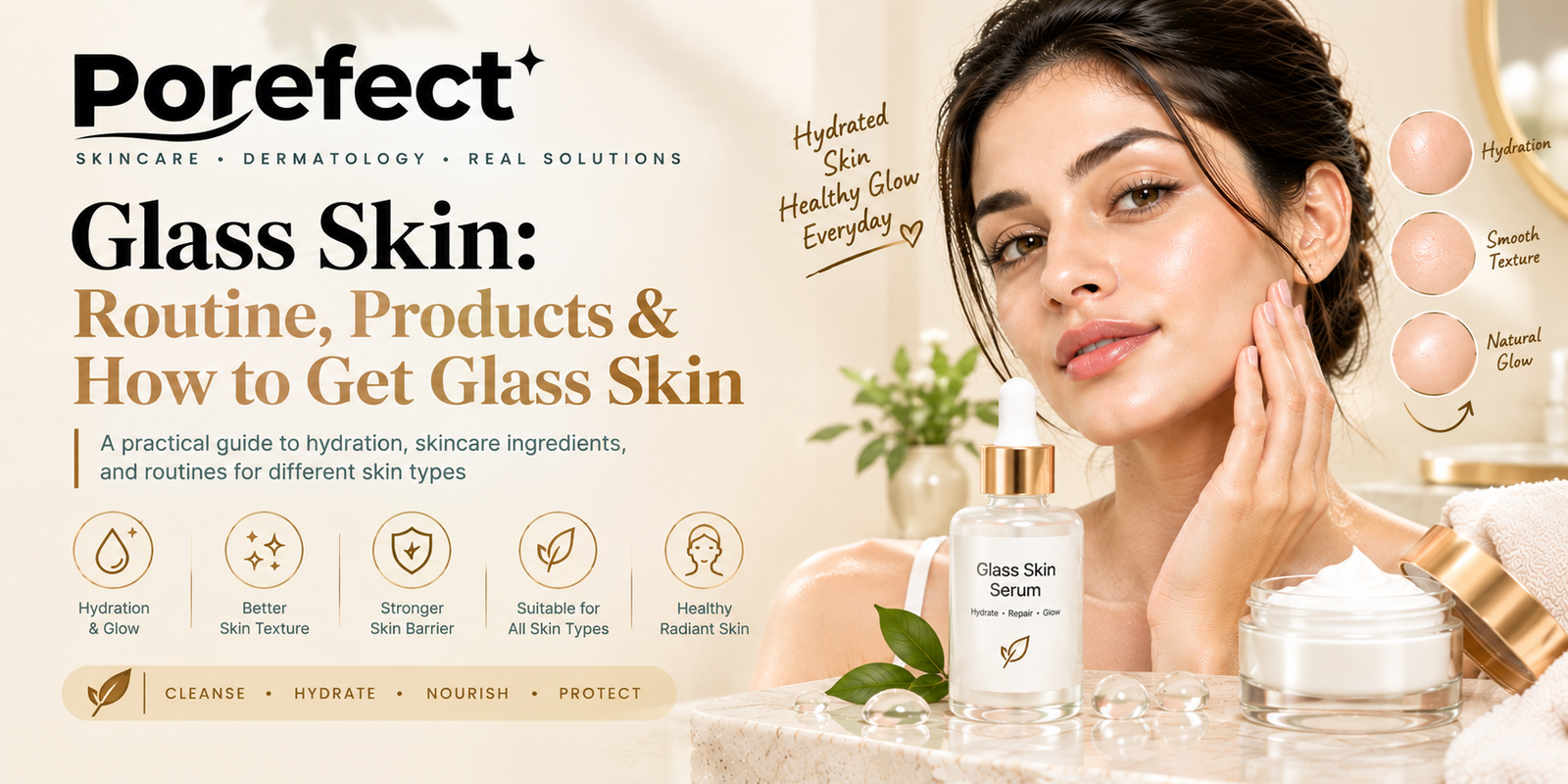
Glass Skin: Routine, Products & How to Get Glass Skin
Glass skin is the main focus of this skincare guide. This glass skin routine explains how to choose the right glass skin products, use hydrating serums and moisturizers, and protect your skin with sunscreen for a smooth, hydrated, radiant-looking complexion.
Glass skin is often associated with a fresh, luminous complexion. However, real skin naturally has pores, fine lines, and texture. The goal is to maintain healthy, hydrated skin rather than achieve a completely poreless appearance. A simple skincare routine can help improve the appearance of dryness and dullness without irritating your skin.
What Is Glass Skin?
Glass skin describes a complexion that looks well-hydrated, smooth, and naturally radiant. The trend is often associated with Korean skincare, which emphasizes gentle cleansing, hydration, moisturization, and daily sun protection.
A good glass skin skincare routine focuses on maintaining moisture and supporting the skin barrier. You do not need every trending product or an expensive collection of serums to achieve a healthy-looking glow.
Your results depend on your skin type, existing concerns, consistency, and the products you tolerate. Healthy skin does not need to be flawless or poreless to look radiant.
How to Get Glass Skin: Essential Steps
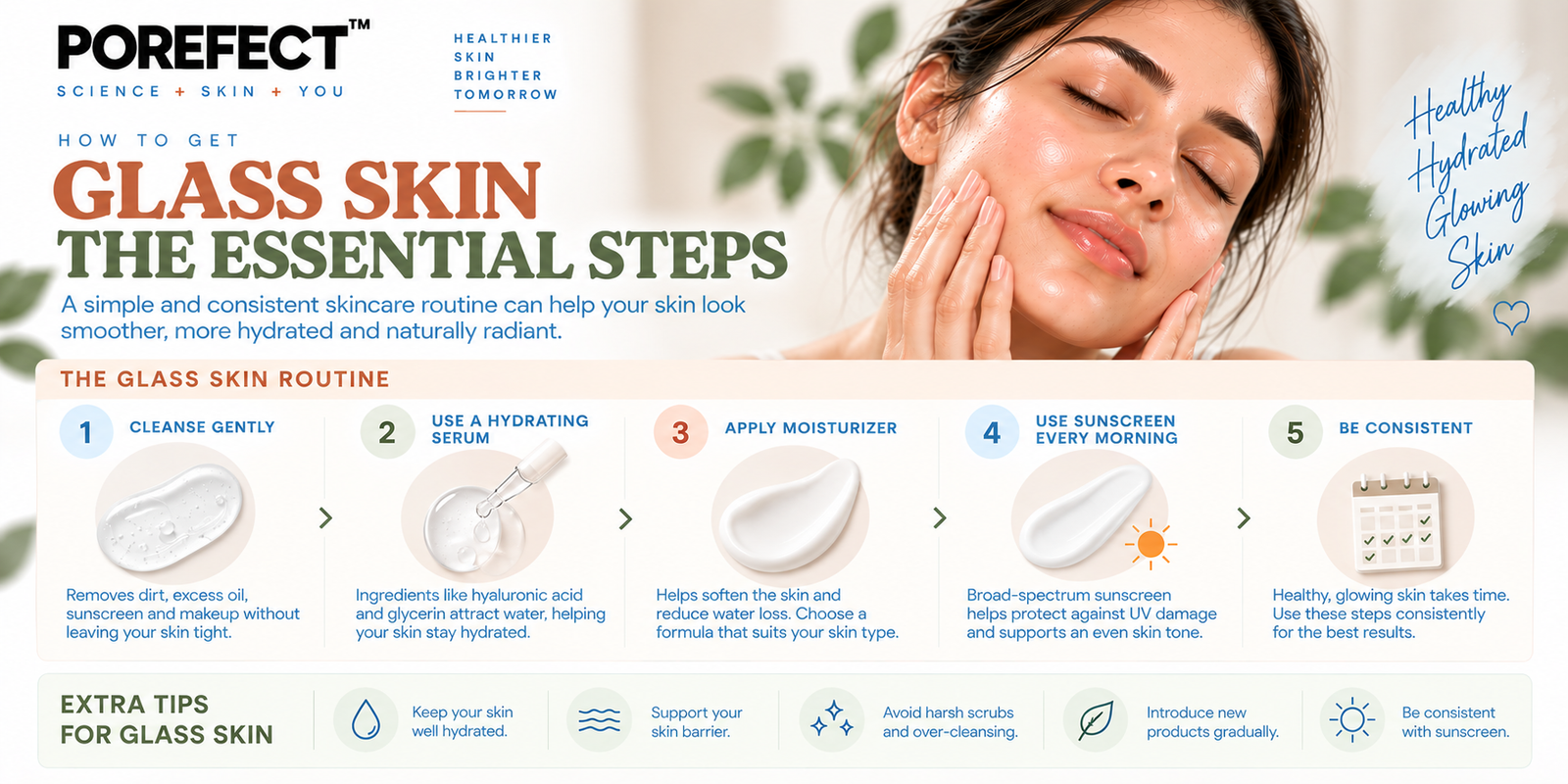
Following a consistent glass skin routine can help improve the appearance of dryness, dullness, and uneven texture over time. The key is to choose suitable skincare products and use them consistently.
1. Cleanse Gently
Start your glass skin routine with a cleanser that removes dirt, excess oil, sunscreen, and makeup without leaving your skin tight or uncomfortable.
For oily skin, a gentle gel cleanser may be suitable. For dry or sensitive skin, a mild, non-stripping cleanser may be more comfortable.
Avoid harsh scrubs and repeated washing. Over-cleansing can damage the skin barrier and make your complexion appear irritated rather than radiant. Gentle cleansing creates a good foundation for the rest of your skincare routine.
2. Add Hydrating Ingredients
Hydration is essential for achieving the appearance of glass skin. Ingredients such as hyaluronic acid and glycerin attract water, helping the outer layers of the skin remain hydrated.
Panthenol can support skin comfort, while ceramides help maintain the skin barrier. These ingredients can help your skin look softer, smoother, and more hydrated when used in suitable formulations.
You do not need every ingredient in a separate product. A well-formulated serum or moisturizer may already contain several hydrating ingredients.
3. Choose the Right Glass Skin Serum
The best glass skin serum depends on your skin type and primary concern. A suitable serum can help address dehydration, dullness, or uneven-looking skin tone.
- Hyaluronic acid: Helps attract water and support skin hydration.
- Niacinamide: Can support the skin barrier and improve the appearance of uneven tone.
- Vitamin C: An antioxidant that may help improve the appearance of dullness and some forms of uneven pigmentation.
- Panthenol: Helps condition the skin and support moisture.
Start with one suitable serum rather than layering multiple active ingredients at once. A well-chosen glass skin serum can complement your routine, but it should not replace moisturizer or sunscreen.
4. Apply a Glass Skin Moisturizer
A glass skin moisturizer helps soften the skin and reduce water loss. This step is important even if your skin feels oily because all skin types need appropriate moisturization.
Choose a lightweight lotion or gel-cream if richer formulas feel uncomfortable. If your skin is dry, a cream containing ceramides, glycerin, or other moisturizing ingredients may provide more comfort.
A hydrating serum alone may not be enough, particularly if your skin is dry or your skin barrier is compromised. The right moisturizer helps maintain the hydrated appearance associated with glass skin.
5. Use Sunscreen Every Morning
Daily broad-spectrum sunscreen helps protect against ultraviolet radiation, premature skin ageing, and worsening of some pigmentation concerns.
Choose a sunscreen that suits your skin type and apply it according to the product directions. Reapply when needed, particularly during prolonged outdoor exposure.
Sun protection is an essential part of a glass skin routine because it helps protect your skin while supporting a more even-looking complexion over time.
Glass Skin Routine for Morning and Night
You can build an effective glass skin routine without using too many products. Focus on cleansing, hydration, moisturization, and sun protection.
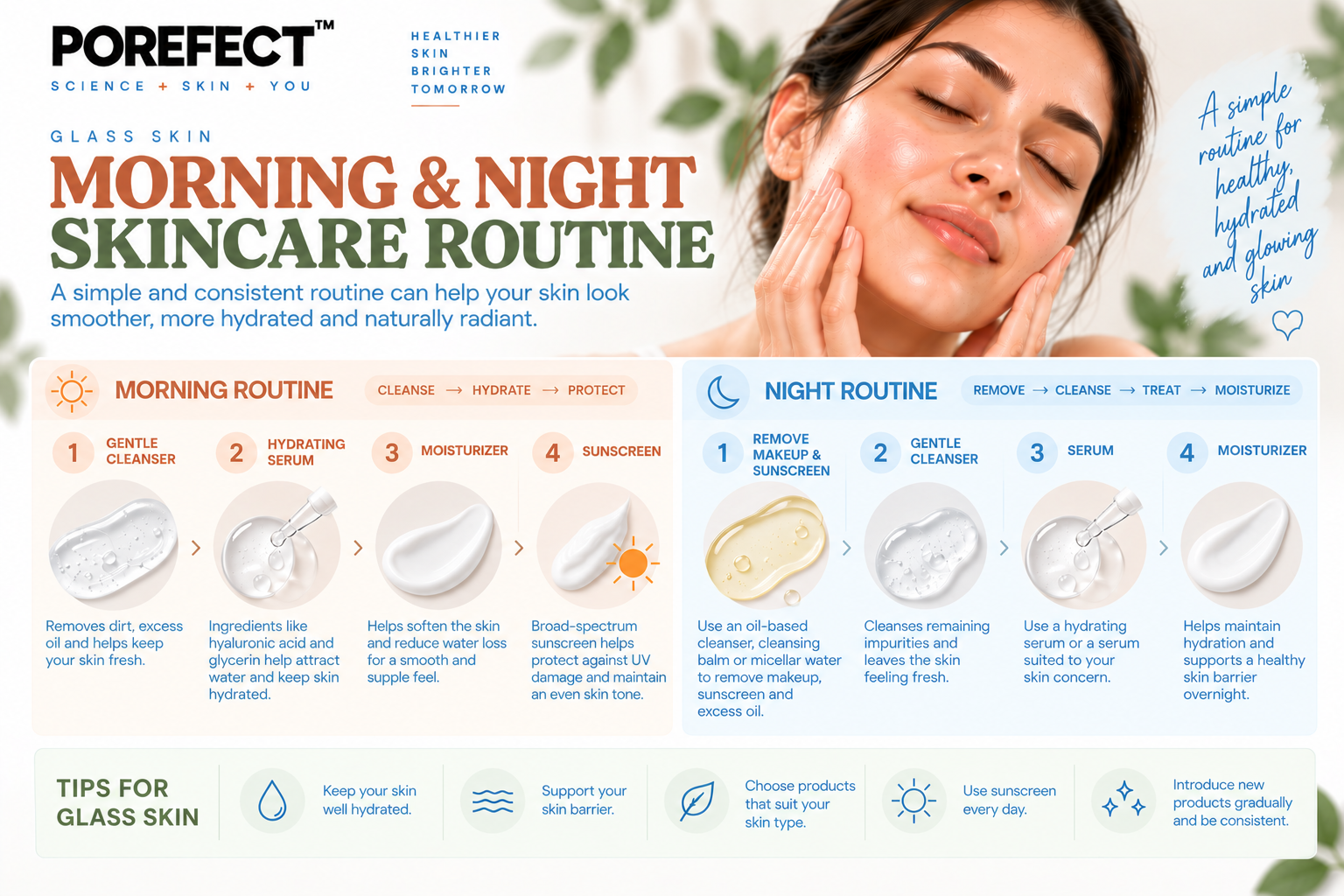
Morning Glass Skin Routine
- Use a gentle cleanser, if needed.
- Apply a hydrating serum or a serum suited to your skin concern.
- Use a moisturizer appropriate for your skin type.
- Finish with broad-spectrum sunscreen.
This morning glass skin routine helps prepare your skin for the day while supporting hydration and sun protection.
Night Glass Skin Routine
- Remove makeup and sunscreen.
- Cleanse gently.
- Apply a hydrating serum or another suitable treatment.
- Finish with moisturizer.
Introduce new products gradually. If your skin becomes irritated, simplify your glass skin routine and pause products that may be contributing to the problem.
Best Glass Skin Products and Ingredients
The best glass skin products are those that address your skin's needs without causing irritation. Look for ingredients that support hydration, skin barrier function, and a healthy-looking complexion.
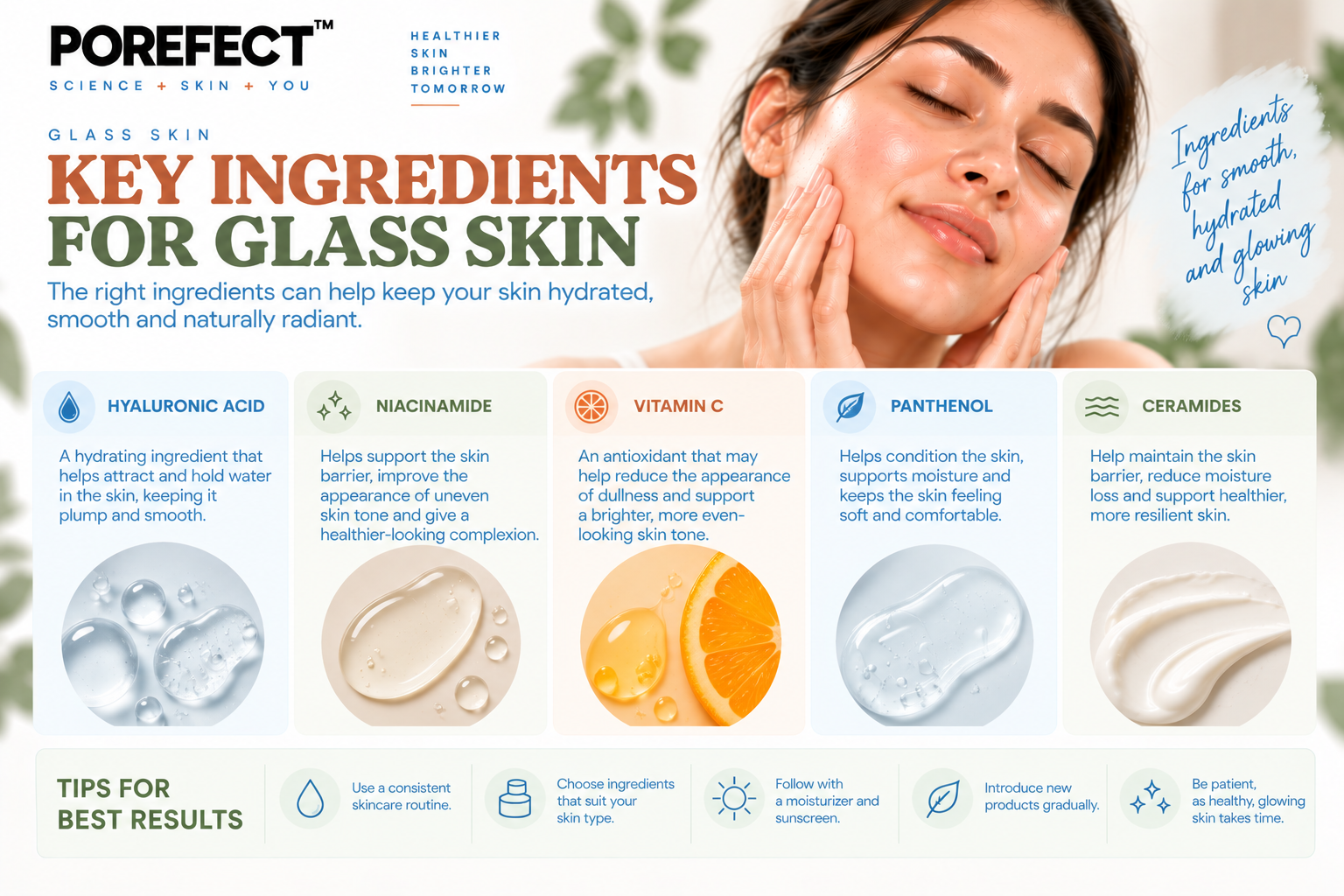
Hyaluronic Acid and Glycerin
Hyaluronic acid and glycerin are humectants that attract water and can help improve the hydrated appearance of the skin. They are useful ingredients to look for in serums and moisturizers when building a glass skin routine.
Niacinamide
Niacinamide supports the skin barrier and may help improve the appearance of uneven skin tone and excess oil. Choose a concentration that your skin tolerates rather than assuming a higher concentration is always better.
Ceramides
Ceramides are lipids naturally found in the skin barrier. Skincare products containing ceramides can help support barrier function and improve skin comfort. They can be particularly useful in a glass skin routine for dry or sensitive skin.
Vitamin C
Vitamin C is an antioxidant commonly used to address dullness and the appearance of uneven pigmentation. Some formulations may irritate sensitive skin, so introduce them carefully and follow the product directions.
Gentle Exfoliating Ingredients
Exfoliating acids can help improve certain types of rough texture and clogged pores. However, they are not essential for everyone. Excessive exfoliation can lead to redness, dryness, and increased sensitivity, which may work against your glass skin goals.
Do You Need a Glass Skin Toner?
A glass skin toner is optional. Some toners contain hydrating ingredients, while others contain exfoliating acids or astringents.
If your skin feels dry or sensitive, a simple hydrating toner may be more suitable than an exfoliating formula. However, you can achieve an effective glass skin skincare routine without using toner at all.
Prioritize a cleanser, moisturizer, and sunscreen before adding optional products to your routine.
Glass Skin for Oily Skin
Glass skin for oily skin is possible without making the face excessively shiny or greasy. The goal is to maintain hydration while choosing products that feel comfortable on your skin.
Use a gentle gel cleanser, a lightweight hydrating serum, and a non-comedogenic moisturizer if suitable for your skin. Niacinamide may also help some people manage excess oil and improve the appearance of uneven tone.
Avoid stripping the skin with harsh cleansers or frequent exfoliation. Oily skin still needs hydration and appropriate moisturization.
If you are prone to acne, choose products that your skin tolerates and avoid adding several new treatments simultaneously.
Glass Skin for Dry Skin
Glass skin for dry skin requires particular attention to hydration and moisture retention. The aim is to reduce dryness and support a comfortable, healthy-looking skin barrier.
Choose a gentle cleanser, a hydrating serum containing ingredients such as glycerin or hyaluronic acid, and a moisturizer that helps reduce water loss. Cream-based moisturizers may be more comfortable than lightweight gels when dryness is significant.
Avoid very hot water, rough scrubbing, and frequent exfoliation, as these can worsen dryness and irritation. Consistent moisturization can help your skin look smoother and more radiant.
If dryness persists despite a gentle routine, consider seeking advice from a dermatologist.
How to Get Glass Skin at Home Naturally
You can work towards a healthy, radiant-looking complexion at home by keeping your glass skin routine simple and consistent. Daily habits and suitable skincare products can support your skin without requiring an expensive collection.
- Cleanse gently without scrubbing.
- Use products that support hydration.
- Moisturize according to your skin type.
- Apply sunscreen every morning.
- Get adequate sleep and maintain balanced nutrition.
- Introduce new products gradually.
- Avoid DIY remedies such as lemon juice, baking soda, and abrasive scrubs.
Natural ingredients are not automatically safer than formulated skincare products. Some can irritate the skin or trigger allergic reactions. Choose products based on their formulation and your skin's tolerance.
Common Glass Skin Mistakes to Avoid
Trying too many products at once makes it difficult to identify what is helping or irritating your skin. Excessive exfoliation can weaken the skin barrier, while skipping moisturizer may leave skin feeling dry and tight.
Another common mistake is expecting a glass skin treatment to create completely poreless skin. Real skin naturally has pores and texture. Professional treatments may help with certain concerns, but the right approach depends on the individual. Procedures are not necessary for everyone and should be discussed with a qualified dermatologist when appropriate.
Frequently Asked Questions About Glass Skin
How can I get glass skin naturally?
Follow a consistent glass skin routine with gentle cleansing, hydration, moisturizer, and daily sunscreen. Avoid harsh DIY remedies and excessive exfoliation.
How long does it take to achieve glass skin?
There is no fixed timeline. Hydration may improve the skin's appearance relatively quickly, while concerns such as uneven pigmentation and texture may take longer to improve. Results vary by individual and treatment.
Can oily skin achieve glass skin?
Yes. Lightweight hydrating products, a suitable moisturizer, gentle cleansing, and sunscreen can help oily skin look healthy and hydrated without requiring heavy products.
Which serum is best for glass skin?
The best serum for glass skin depends on your main concern. Hyaluronic acid or glycerin may help with hydration, niacinamide may support the skin barrier and uneven tone, and vitamin C may help address dullness. Choose according to your skin's tolerance.
Is glass skin possible without expensive products?
Yes. A simple, affordable glass skin routine with a gentle cleanser, moisturizer, and sunscreen can support healthy-looking skin. Additional products are optional and should address a specific need.
Conclusion
Achieving glass skin is less about following a trend and more about supporting your skin consistently. Gentle cleansing, hydrating ingredients, an appropriate moisturizer, and daily sunscreen can help improve the appearance of dryness, dullness, and uneven texture.
Whether you have oily, dry, or sensitive skin, choose products according to your needs instead of copying a complicated routine. The best glass skin routine is one you can follow consistently without irritating your skin. Healthy skin does not need to be poreless or flawless to look radiant.