Skin Care
Learn how to choose the right face serum for your skin type and concerns, including pigmentation, dehydration, dullness, fine lines, and uneven skin tone.
Face Serum: How to Choose the Right Serum for Your Skin
If your skincare shelf is already full but your skin still doesn’t look the way you want, the problem may not be a lack of products. It may be choosing products that don’t match your actual skin concerns.
A face serum is designed to deliver specific ingredients to the skin in a lightweight formula. Unlike a basic cleanser or moisturizer, a serum is usually chosen for a particular concern such as dullness, dehydration, pigmentation, fine lines, or uneven skin tone.
But there isn’t one serum that is best for everyone. The right choice depends on your skin type, your main concern, and the ingredients your skin can tolerate.
What Is a Face Serum?
A face serum is a skincare product formulated with concentrated active or supporting ingredients. Serums are generally lighter in texture than creams and are commonly applied after cleansing and before moisturizer.
The important thing is not simply how concentrated a serum sounds on the label. What matters is the ingredient, formulation, concentration, stability, and suitability for your skin.
For example, someone looking for hydration may need a very different serum from someone trying to manage pigmentation or signs of skin aging.
Face Serum Benefits: What Can a Serum Actually Do?
The benefits depend on the ingredients in the formula.
A well-chosen serum may help support:
- Skin hydration
- A stronger skin barrier
- Brighter-looking skin
- More even-looking skin tone
- The appearance of pigmentation and dark spots
- Antioxidant protection
- Smoother-looking skin
- Improvement in the appearance of fine lines over time
A serum is not a magic product, though. Results depend on the active ingredient, consistency, sun protection, and the underlying cause of the skin concern.
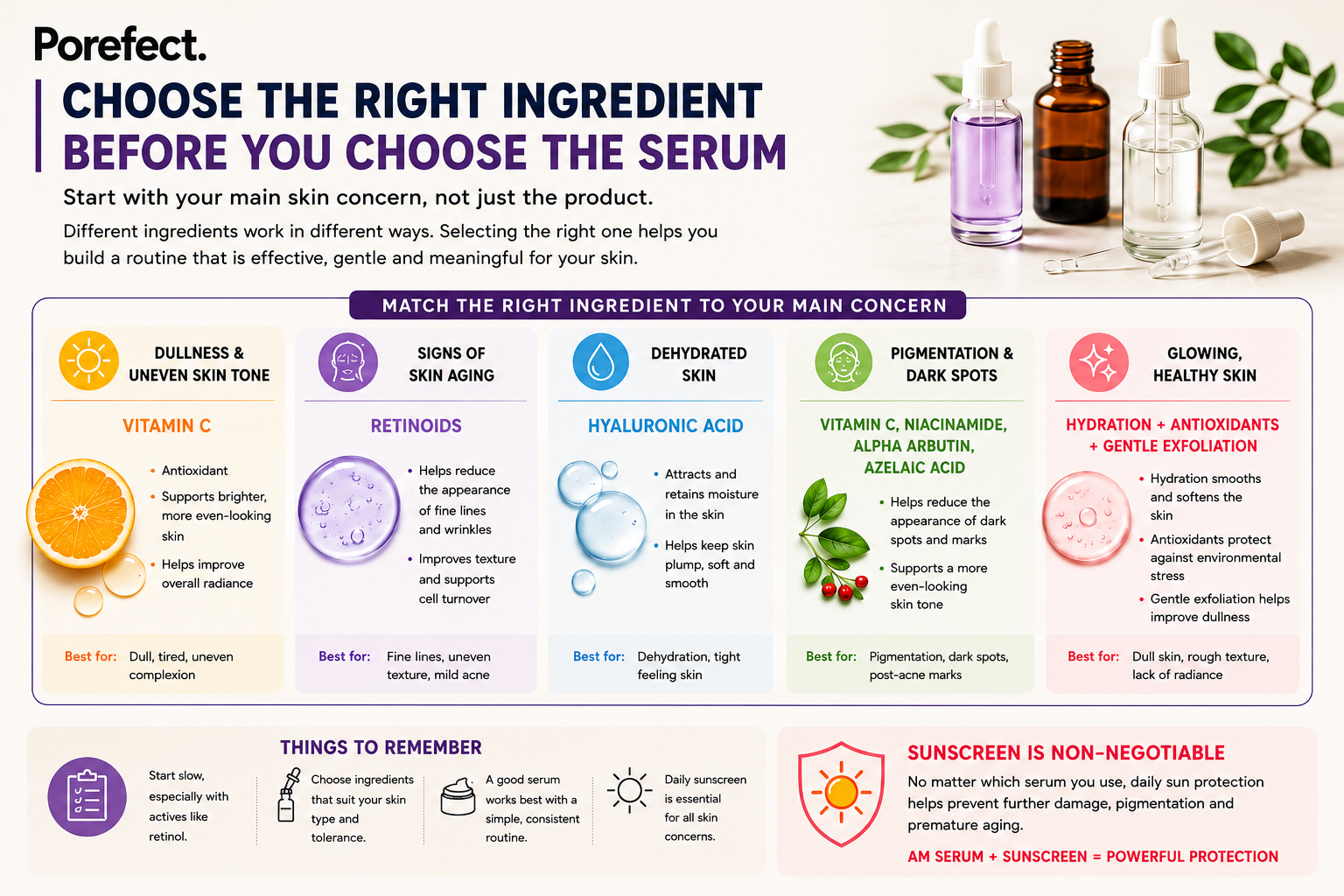
Choose the Ingredient Before You Choose the Product
Instead of searching for the “best serum” in general, start with your main concern.
For Dullness and Uneven Skin Tone
Vitamin C is a popular choice because of its antioxidant properties and its role in supporting a brighter, more even-looking complexion.
If you’re specifically searching for a vitamin C serum for face, look beyond the percentage on the front of the bottle. The form of Vitamin C, formulation, packaging, and your skin’s tolerance all matter.
For Signs of Skin Aging
Retinoids are among the better-studied ingredients for concerns such as fine lines, uneven texture, and acne.
People often search for the best retinol serum, but the strongest product isn’t automatically the best choice. Retinol can cause dryness or irritation, especially when someone starts using it too frequently.
A sensible approach is to begin gradually and use a moisturizer and sunscreen as part of the overall routine.
For Dehydrated Skin
Hyaluronic acid is a humectant that helps attract and retain water in the skin.
If your main concern is dehydration or tight-feeling skin, searching for the best hyaluronic acid serum may help you find suitable options, but remember that the complete formula matters. A hydrating serum works best as part of a routine that also supports the skin barrier.
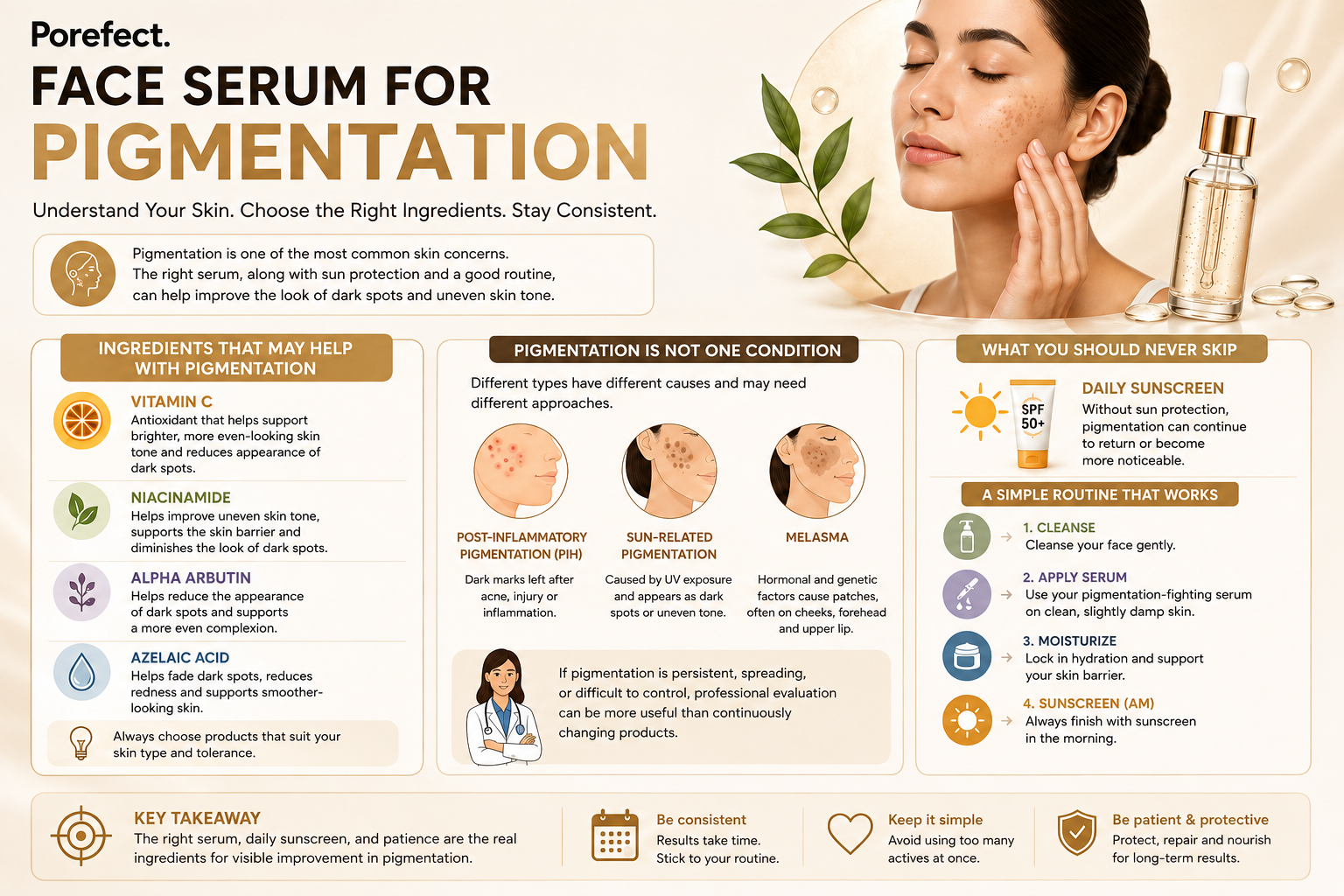
Face Serum for Pigmentation: What Should You Know?
Pigmentation is one of the most common reasons people start using serums.
Ingredients such as Vitamin C, niacinamide, alpha arbutin, and azelaic acid may be useful depending on the type and cause of pigmentation.
However, pigmentation isn’t one single condition.
Dark marks left after acne, sun-related pigmentation, and melasma can behave differently. That means simply adding a “brightening serum” may not address the underlying issue.
If pigmentation is persistent, spreading, or difficult to control, professional evaluation can be more useful than continuously changing products.
And whatever serum you use, daily sunscreen remains essential. Without good sun protection, pigmentation can continue to return or become more noticeable.
Face Serum for Glowing Skin: Keep It Simple
When people search for a face serum for glowing skin, they often expect an instant transformation.
Healthy-looking skin is usually less complicated.
Hydration can make skin look smoother. Antioxidants can provide protection against environmental stress. Gentle exfoliation may improve the appearance of dull skin for some people. And sunscreen helps protect the skin from UV-related damage.
A serum can support these goals, but “glowing skin” doesn’t come from one ingredient alone.
If your skin is irritated or dehydrated, adding more active ingredients may actually make it look worse.
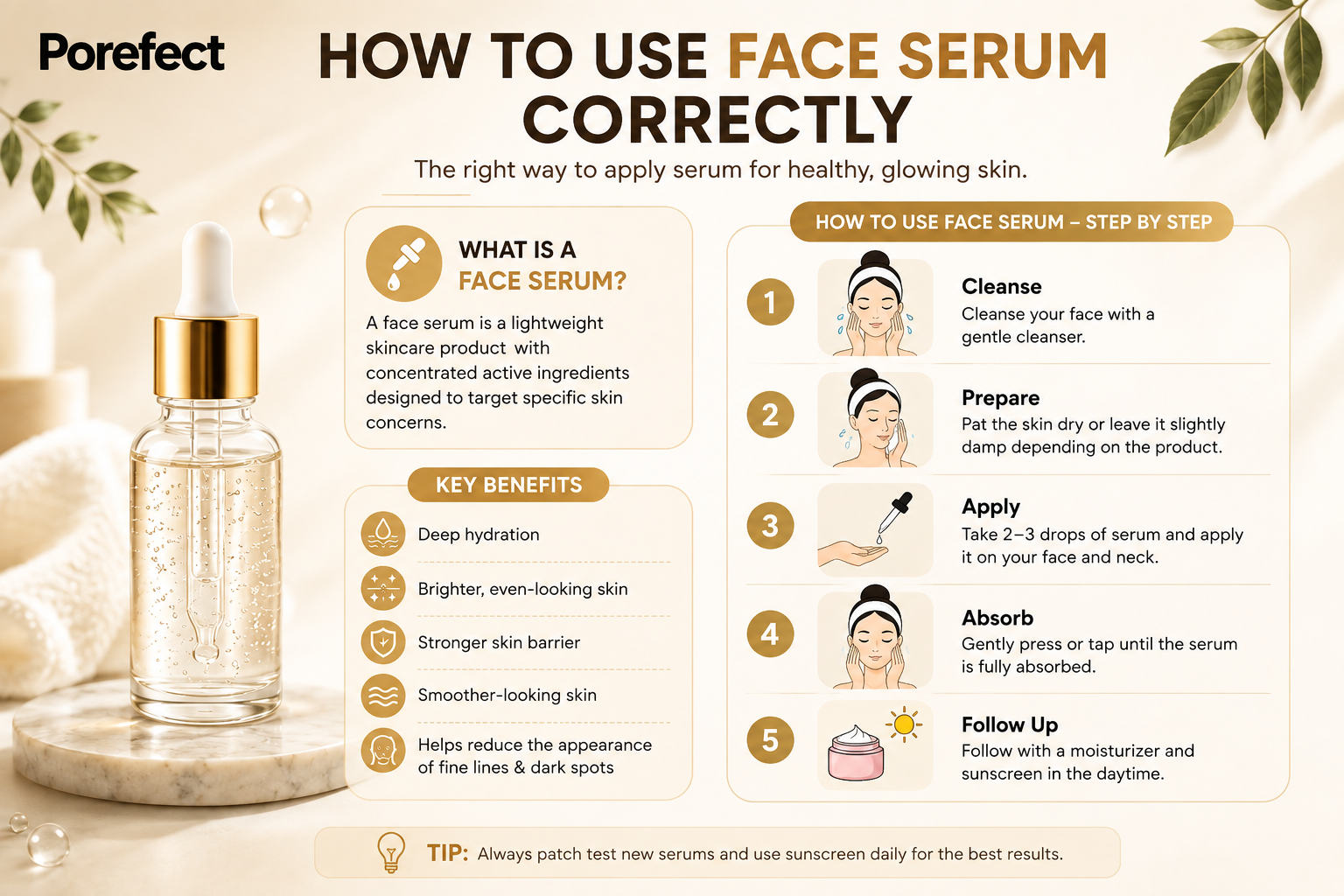
How to Use Face Serum Correctly
If you’re wondering how to use face serum, the basic order is straightforward:
- Cleanse your face with a gentle cleanser.
- Pat the skin dry or leave it slightly damp depending on the product.
- Apply a small amount of serum.
- Allow it to absorb comfortably.
- Follow with moisturizer.
- During the day, finish with broad-spectrum sunscreen.
You don’t need a large amount of serum. Using more product does not necessarily produce faster results.
If you’re introducing an active ingredient such as retinol, start slowly and follow the product’s directions.
Can You Use More Than One Serum?
You can, but you don’t always need to.
Using multiple active serums at the same time can make a routine unnecessarily complicated and may increase the chance of irritation.
For example, instead of immediately combining several strong treatments, start with the ingredient that addresses your biggest concern.
Once your skin is comfortable with the routine, other products can be considered if there is a genuine reason to add them.
Common Mistakes When Using Face Serums
Choosing a Serum Only Because It Is Trending
Popularity doesn’t tell you whether an ingredient is right for your skin.
Starting Strong Actives Too Quickly
Retinol and other active ingredients may cause irritation when introduced too aggressively.
Skipping Moisturizer
Serums don’t necessarily replace moisturizers. Many routines benefit from using both.
Forgetting Sunscreen
This is particularly important when using serums for pigmentation, uneven tone, or signs of aging.
Expecting Overnight Results
Most skincare concerns improve gradually. Give a consistent routine enough time before deciding whether it is working.
Frequently Asked Questions
What is the best face serum?
There is no single best face serum for everyone. The right serum depends on your skin type and primary concern.
Can I use face serum every day?
Many serums can be used daily, but the ideal frequency depends on the ingredients. Stronger actives such as retinol may need a gradual introduction.
Which serum is best for pigmentation?
Vitamin C, niacinamide, alpha arbutin, and azelaic acid can be useful for different pigmentation concerns. The right option depends on the cause and your skin’s tolerance.
Which serum is best for glowing skin?
A serum containing a suitable antioxidant or hydrating ingredient may improve the appearance of dull skin. However, hydration, moisturizer, and sunscreen are also important.
Can I use Vitamin C and retinol together?
They can both be part of a skincare routine, but using them at the same time isn’t necessary for everyone. Separating them into different routines can be a simpler approach, especially for sensitive skin.
Is hyaluronic acid suitable for oily skin?
Yes. Hyaluronic acid provides hydration without necessarily adding a heavy or greasy feel, making it suitable for many oily and combination skin types.
The Right Serum Is the One Your Skin Can Use Consistently
A good face serum should have a clear purpose in your routine.
Instead of looking for the product with the biggest claims or highest percentage, identify your main concern first. Then choose an ingredient with evidence behind it, introduce it appropriately, and give your skin time to respond.
Whether you’re looking for a vitamin C serum for face, the best retinol serum, or the best hyaluronic acid serum, the same principle applies: the best product is one that suits your skin, fits into your routine, and can be used consistently without causing unnecessary irritation.
```