Skin Care
Learn how to choose a face serum for dry skin, including hydrating ingredients, moisturizer and cleanser tips, application steps and common skincare mistakes.
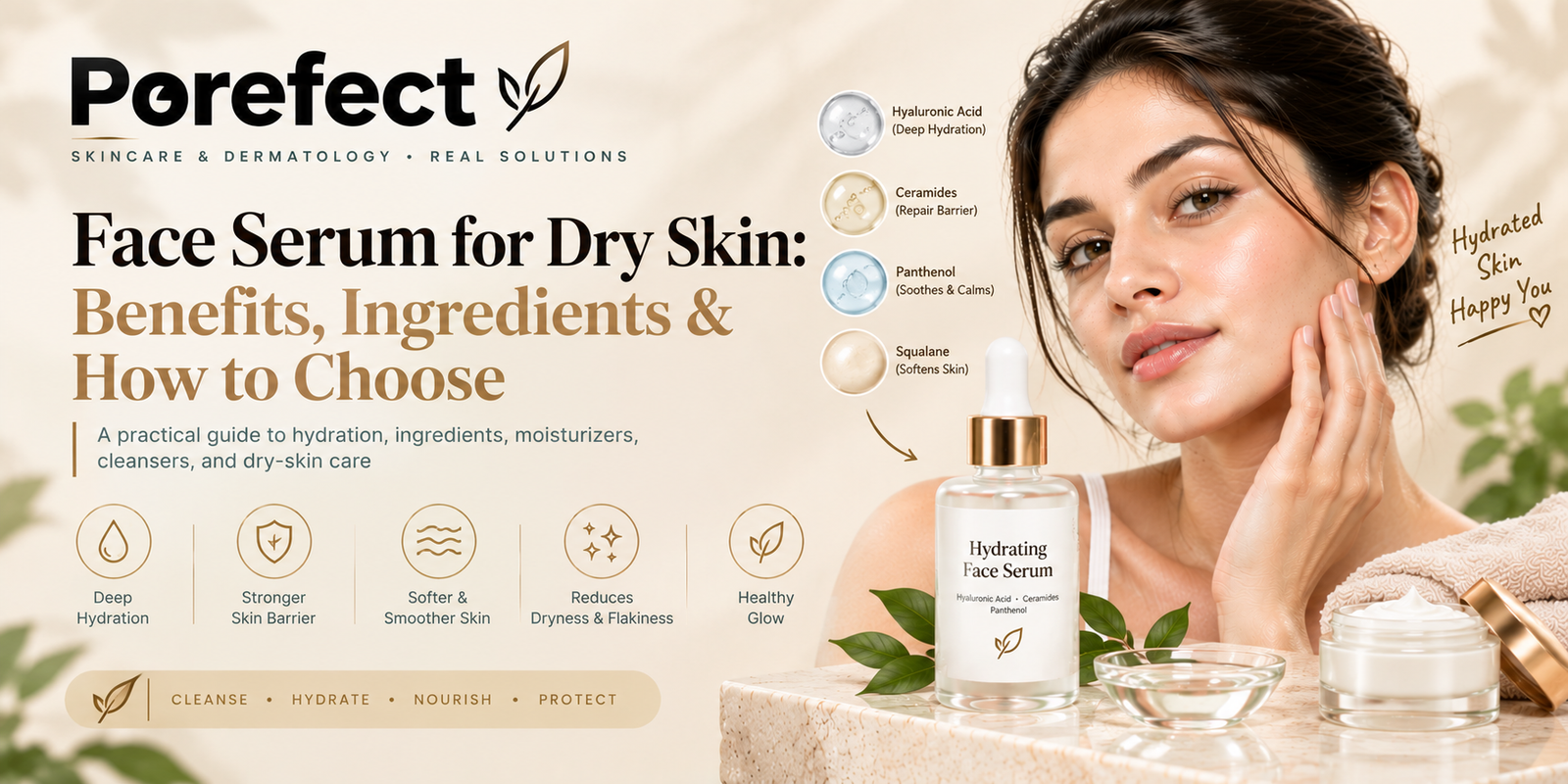
Face Serum for Dry Skin: Benefits, Ingredients & How to Choose
Dry skin can feel tight, rough, flaky, or uncomfortable, especially after cleansing or exposure to dry weather. Choosing the right face serum for dry skin can add hydration to your routine, but a serum works best when combined with a suitable moisturizer and gentle cleanser.
A hydrating serum can help improve the skin’s water content and make it feel softer and more comfortable. However, not every serum is designed for dry skin. The ingredients, texture, and overall formulation matter when deciding which product is appropriate for your skin.
What Is a Face Serum for Dry Skin?
A face serum for dry skin is typically a lightweight skincare product formulated with hydrating or skin-conditioning ingredients.
Serums can contain humectants that attract water, emollients that help soften the skin, or ingredients that support the skin barrier. Some formulas combine several of these approaches.
Common hydrating ingredients include:
- Hyaluronic acid
- Glycerin
- Panthenol
- Ceramides
- Squalane
- Beta-glucan
- Other skin-conditioning ingredients
A serum is usually applied after cleansing and before moisturizer.
Why Does Dry Skin Need Hydration?
Dry skin generally has a reduced amount of lipids in the outer skin layer, which can contribute to increased water loss and a rough or tight feeling.
Hydration and moisturization are related but not identical. Hydrating ingredients can help increase water content in the outer layers of the skin, while moisturizers help soften the skin and reduce water loss.
This is why using a serum alone may not be enough for someone with significantly dry skin.
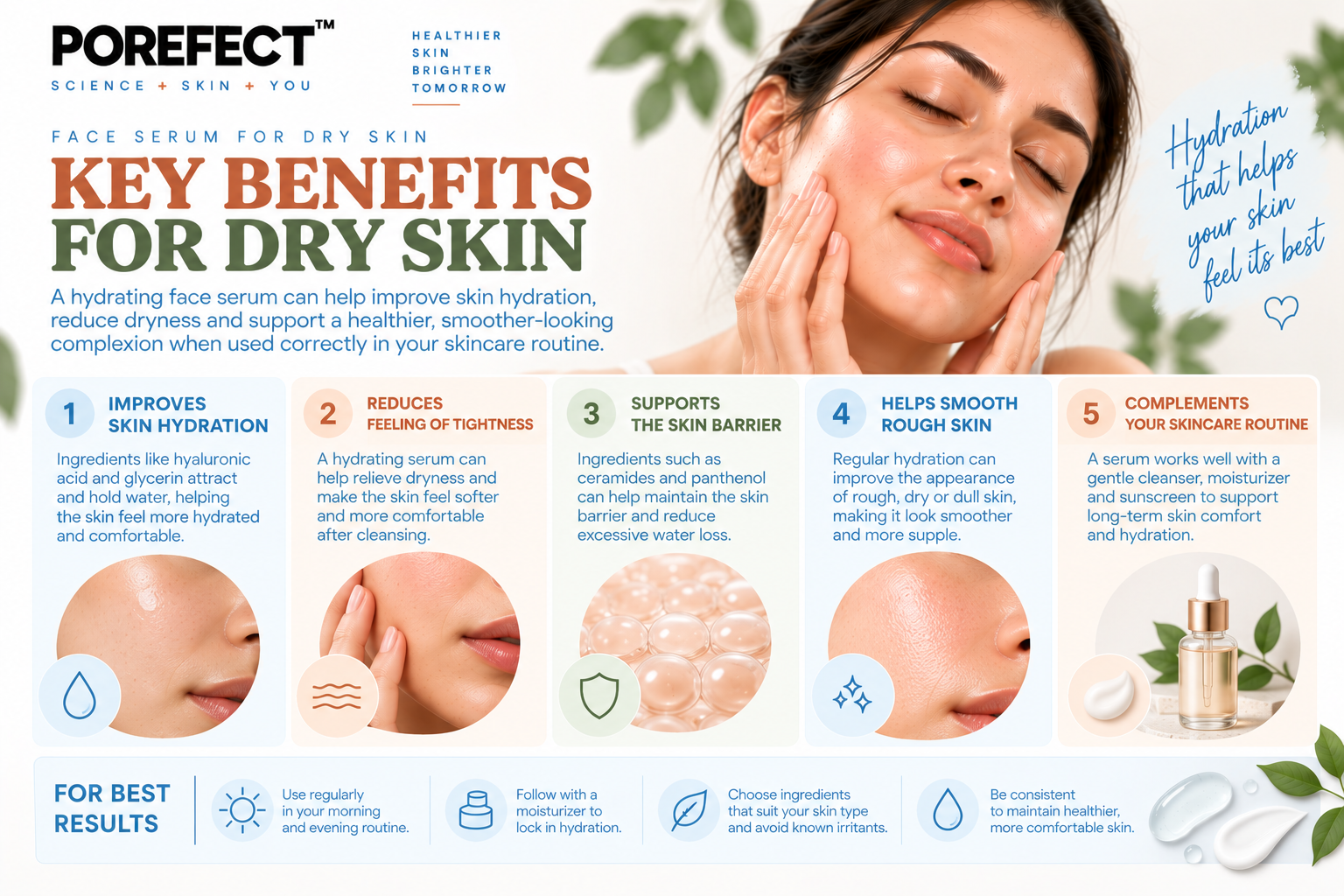
Benefits of Face Serum for Dry Skin
1. Helps Improve Skin Hydration
A hydrating serum can provide ingredients such as hyaluronic acid or glycerin that attract and hold water.
This can make dry skin feel more comfortable and may temporarily improve the appearance of fine dehydration lines.
2. Helps Reduce the Feeling of Tightness
If your skin feels tight after cleansing, a well-formulated hydrating serum may help restore some of the moisture that your skin needs.
For best results, follow the serum with a moisturizer to help maintain hydration.
3. Supports the Skin Barrier
Some serums contain ingredients such as ceramides, panthenol, or other barrier-supportive ingredients.
A healthy skin barrier helps limit excessive water loss and protects the skin from external irritants.
4. Can Improve the Look of Rough Skin
When dry skin becomes dehydrated, its surface may appear rough or dull. Regular hydration and moisturization can help the skin look smoother and more supple.
What Ingredients Should You Look for in a Serum for Dry Skin?
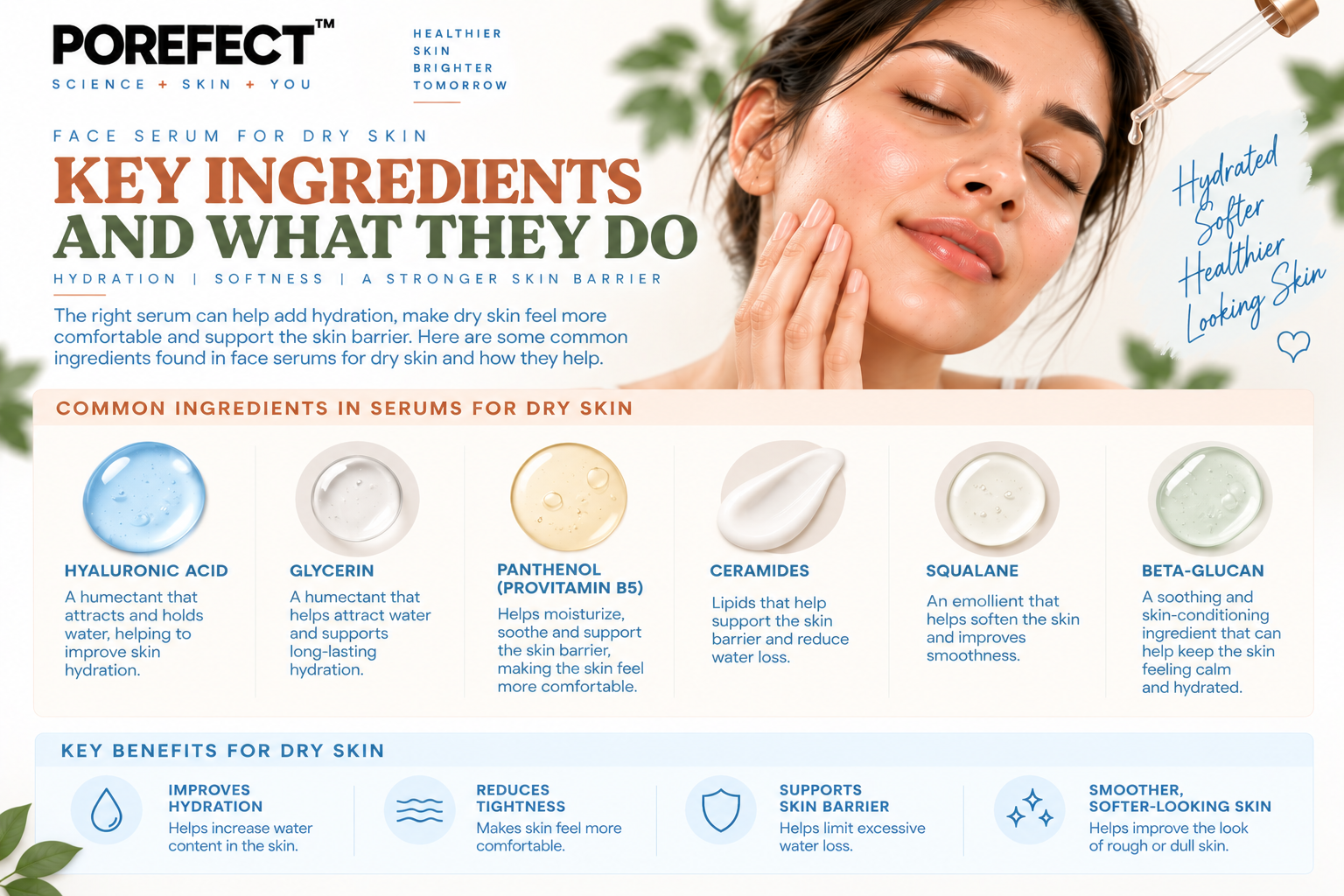
When choosing a face serum for dry skin, focus on ingredients that support hydration and comfort.
Hyaluronic Acid
Hyaluronic acid is a humectant that attracts water. It is commonly used in hydrating serums and can be useful for skin that feels dehydrated.
Glycerin
Glycerin is another humectant frequently used in moisturizers and serums. It helps attract water and supports skin hydration.
Panthenol
Panthenol, also known as provitamin B5, has moisturizing and skin-conditioning properties and is commonly included in products designed for dry or sensitive skin.
Ceramides
Ceramides are lipids naturally found in the skin barrier. Topical products containing ceramides can complement a routine focused on maintaining barrier function.
Squalane
Squalane is an emollient that can help soften the skin and improve its feel. It can be particularly useful in formulations designed for dry skin.
How to Choose the Best Serum for Dry Skin
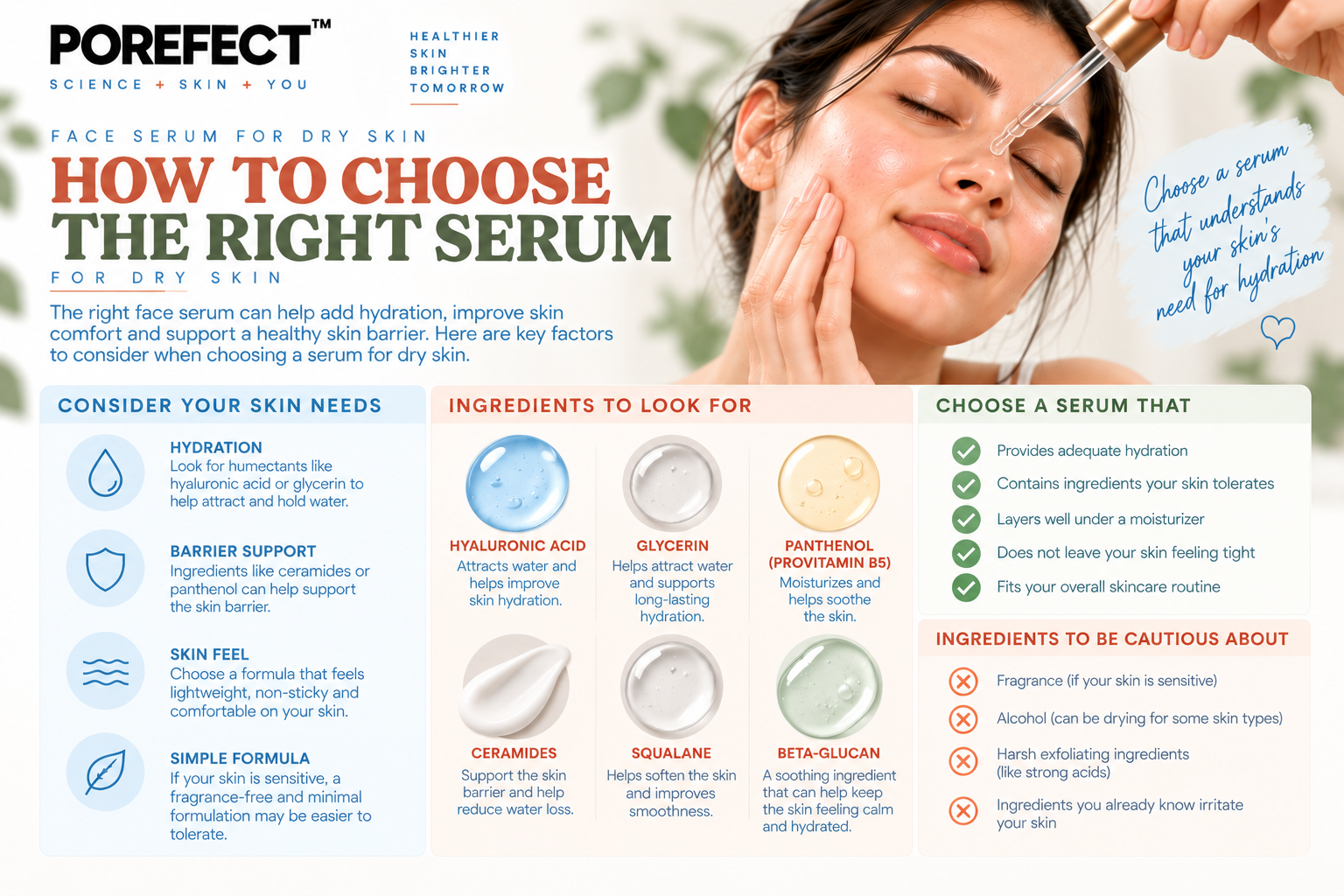
There is no single best serum for dry skin for everyone.
Your choice should depend on how dry your skin is, whether it is sensitive, and what other products you already use.
Look for a serum that:
- Provides adequate hydration
- Contains ingredients your skin tolerates
- Does not leave your skin feeling tight
- Layers comfortably under moisturizer
- Fits your overall skincare routine
If your skin is both dry and sensitive, a simple fragrance-free formulation may be easier to tolerate.
If your skin is very dry, consider a serum containing multiple hydrating ingredients and follow it with a richer moisturizer.
How to Use Face Serum for Dry Skin
A serum can be used in both morning and evening routines, depending on the product.
Morning Routine
- Use a gentle cleanser if needed.
- Apply your hydrating serum.
- Apply moisturizer.
- Finish with broad-spectrum sunscreen.
Evening Routine
- Cleanse gently.
- Apply the serum.
- Follow with moisturizer.
Applying a serum to slightly damp skin may be helpful for some hydrating formulations, but always follow the product's instructions.
Moisturizer for Dry Skin: Why It Matters
Even the best hydrating serum cannot replace a moisturizer in every dry-skin routine.
A moisturizer for dry skin helps soften the skin and can reduce water loss from the outer layer.
Look for formulas containing ingredients such as:
- Ceramides
- Glycerin
- Squalane
- Fatty acids
- Shea butter
- Petrolatum or other occlusive ingredients
The ideal texture depends on your skin. Creams and richer formulations may be more comfortable for very dry skin, while lighter lotions may be sufficient for mildly dry skin.
Best Moisturizer for Dry Skin: How to Choose
There is no universally best moisturizer for dry skin.
For significantly dry skin, a cream containing barrier-supportive lipids and occlusive ingredients may provide more comfort than a very lightweight lotion.
If your skin is dry and sensitive, choose a formulation that minimizes ingredients known to trigger irritation for you.
For acne-prone skin, consider a moisturizer that provides adequate hydration without feeling excessively heavy or congesting your pores.
Cleanser for Dry Skin: What Should You Use?
Choosing the right cleanser for dry skin is just as important as choosing a serum.
A cleanser should remove dirt, sunscreen, makeup, and excess oil without leaving the skin feeling stripped.
Look for a gentle cleanser with a comfortable, non-drying formula.
Avoid:
- Very hot water
- Aggressive scrubbing
- Harsh cleansing brushes
- Excessive cleansing
- Products that consistently leave your skin tight
If your skin feels uncomfortable immediately after washing, your cleansing routine may be contributing to dryness.
Best Face Wash for Dry Skin
The best face wash for dry skin is not necessarily the one that produces the strongest feeling of cleanliness.
A mild cleanser that removes impurities without excessive dryness is generally a better choice.
People with very dry skin may not need an aggressive foaming cleanser, particularly if they are not exposed to heavy makeup or water-resistant sunscreen.
Common Mistakes When Treating Dry Skin
Using Serum Without Moisturizer
A hydrating serum can add water to the skin, but moisturizer helps maintain comfort and reduce water loss.
Over-Cleansing
Washing too frequently can make dry skin feel even tighter.
Exfoliating Too Often
Exfoliation can improve rough texture, but excessive use may worsen dryness and irritation.
Using Too Many Active Ingredients
Retinoids, exfoliating acids, and acne treatments can be useful, but using several active products simultaneously may increase irritation in dry skin.
Skipping Sunscreen
UV exposure contributes to premature skin ageing and can worsen some forms of skin damage. Daily broad-spectrum sunscreen is an important part of a complete skincare routine.
Frequently Asked Questions
Which serum is best for dry skin?
The best serum for dry skin depends on individual needs. Look for hydrating ingredients such as hyaluronic acid, glycerin, panthenol, ceramides, or other well-tolerated moisturizing ingredients.
Can I use face serum every day for dry skin?
Many hydrating serums can be used daily, often morning and evening. Follow the product's instructions and reduce frequency if irritation develops.
Should I apply moisturizer after serum?
Yes. Applying a face moisturizer for dry skin after a hydrating serum can help support hydration and reduce water loss.
Is a cleanser necessary for dry skin?
Cleansing can help remove sunscreen, makeup, dirt, and excess oil. However, dry skin generally benefits from a gentle cleanser rather than frequent or aggressive washing.
Can serum alone fix very dry skin?
A serum may improve hydration, but very dry skin often benefits from a complete routine that includes gentle cleansing, moisturizer, and sunscreen. Persistent or severe dryness may require evaluation by a dermatologist.
Conclusion
A face serum for dry skin can be a useful step when your skin feels tight, rough, dehydrated, or uncomfortable. Hydrating ingredients such as hyaluronic acid, glycerin, panthenol, and ceramides can help support a more comfortable, hydrated-looking complexion.
However, serum should not be viewed as a replacement for moisturizer. A simple routine combining a gentle cleanser, hydrating serum, suitable moisturizer, and daily sunscreen is often a more practical approach.
Instead of searching for one universally best serum for dry skin, choose a formulation that matches your skin's needs and that you can use consistently without irritation.