Skin Care
Learn about eczema treatment, creams, ointments, OTC options, home care and dermatologist-guided treatments for managing eczema flare-ups.
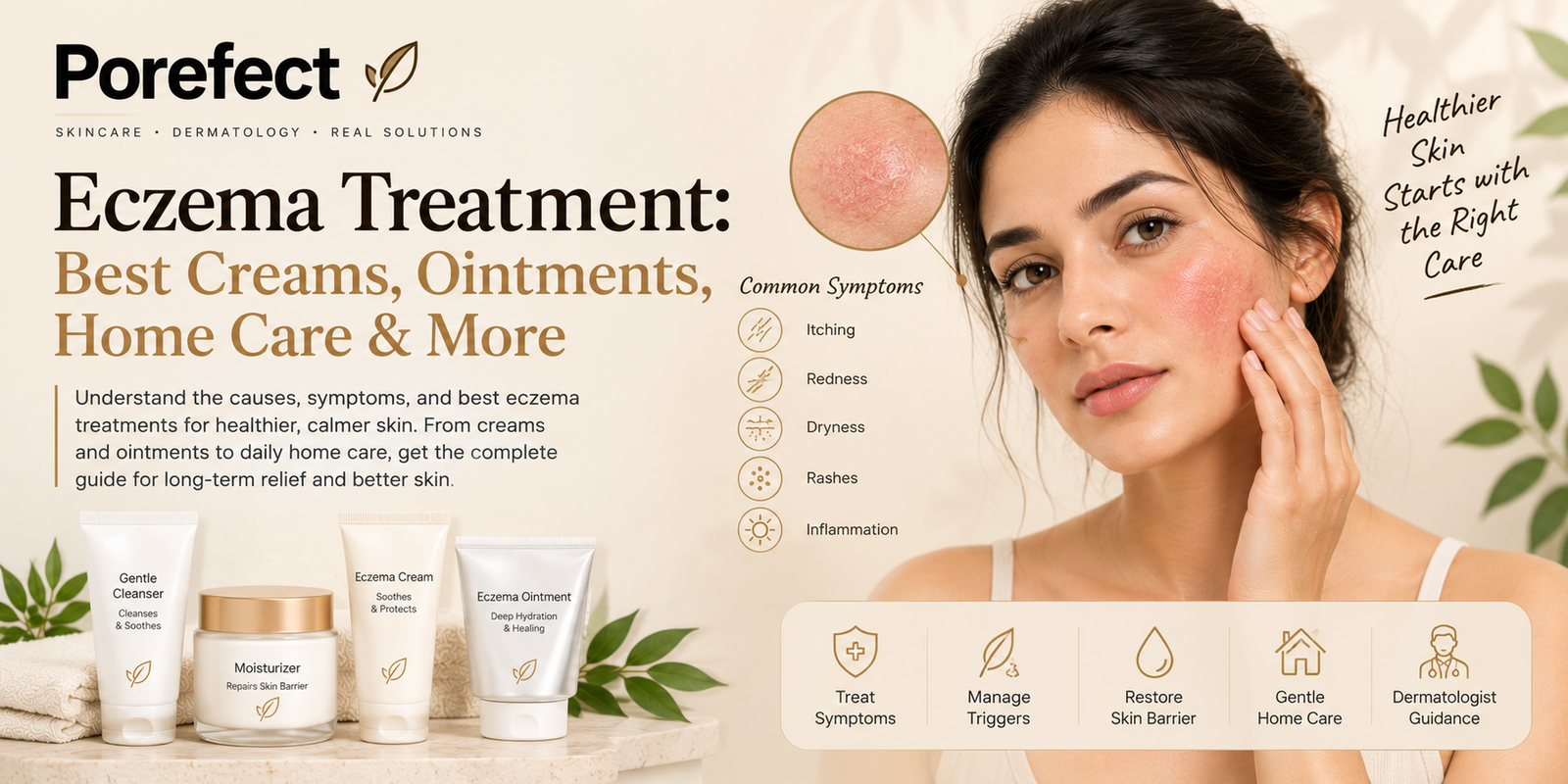
Eczema Treatment: Best Creams, Ointments, Home Care & More
Eczema treatment depends on the type and severity of eczema, the affected body area, age, and individual triggers. Eczema is a common inflammatory skin condition that can cause dry, itchy, irritated, and sometimes cracked skin. It can affect the face, hands, arms, legs, feet, and other parts of the body. Treatment usually focuses on repairing the skin barrier, reducing inflammation, controlling itching, and preventing future flare-ups. While eczema creams and moisturizers are important for everyday care, some people may also need medicated creams or ointments recommended by a healthcare professional.
What Causes Eczema?
Eczema can develop because of a combination of genetic, immune, and environmental factors. People with eczema often have a weakened skin barrier, which allows moisture to escape more easily and makes the skin more vulnerable to irritants.
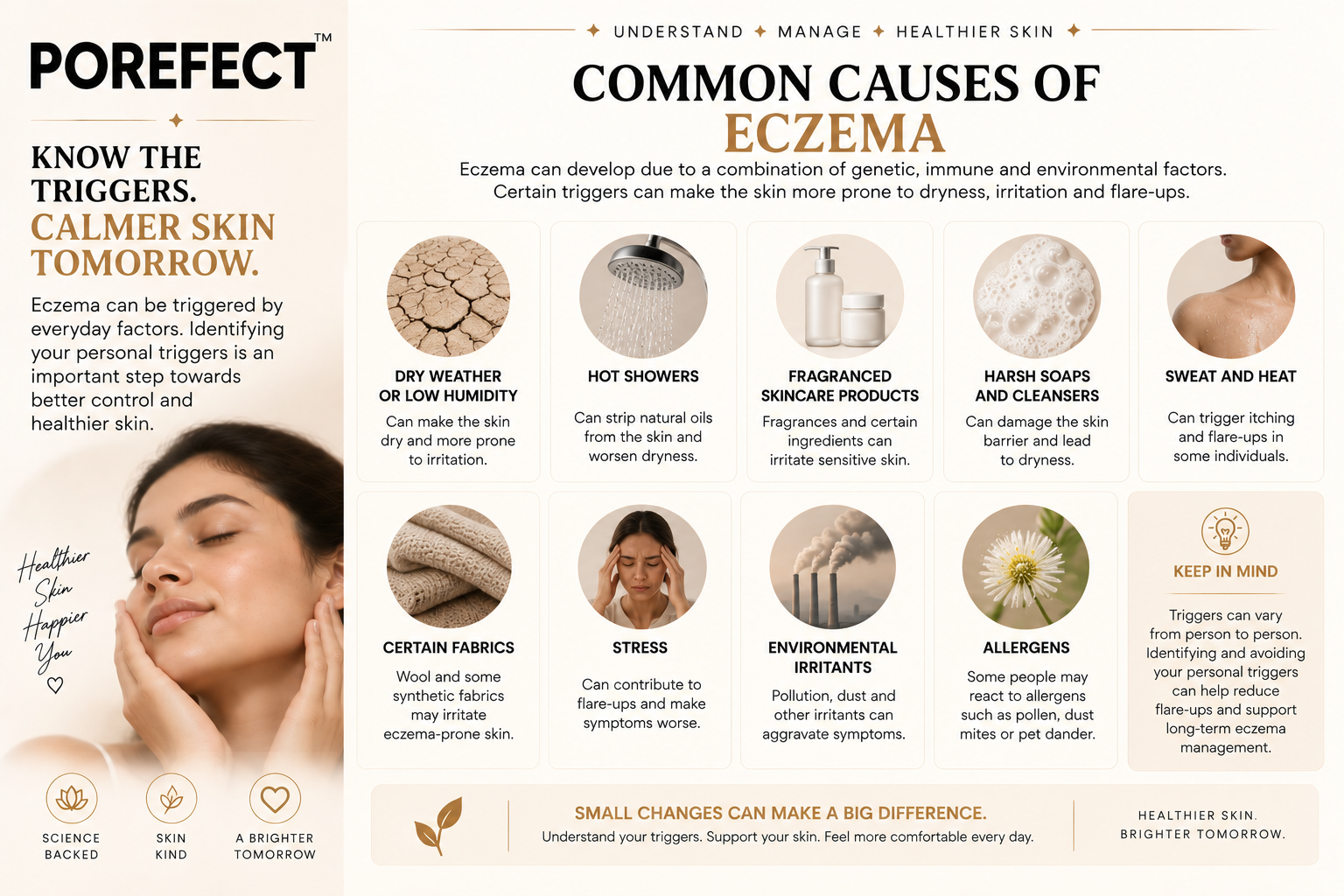
Common triggers include:
- Dry weather or low humidity
- Hot showers
- Fragranced skincare products
- Harsh soaps and cleansers
- Sweat and heat
- Certain fabrics
- Stress
- Environmental irritants
- Allergens in some individuals
Identifying personal triggers can be an important part of long-term eczema management and may help reduce future flare-ups.
Eczema Symptoms
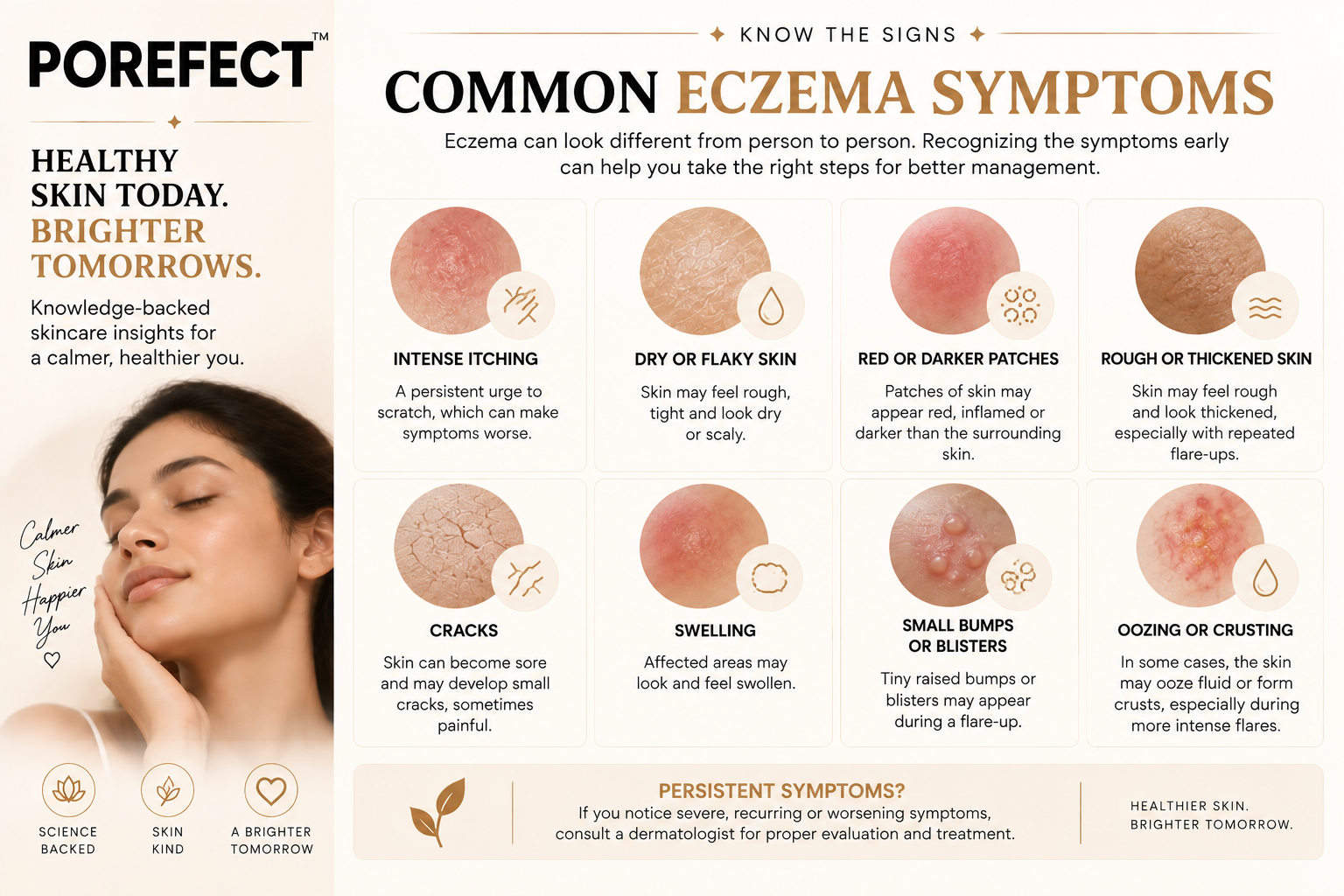
Typical eczema symptoms include:
- Intense itching
- Dry or flaky skin
- Red or darker patches
- Rough or thickened skin
- Cracks
- Swelling
- Small bumps or blisters
- Oozing or crusting during some flares
The appearance of eczema can vary depending on skin tone and the stage of a flare-up. Persistent itching can also lead to scratching, which damages the skin barrier and may increase the risk of infection.
What Is the Best Eczema Treatment?
There is no single best eczema treatment for everyone. Treatment should be tailored to the severity and location of the condition.
The foundation of eczema care is regular moisturization. A thick, fragrance-free moisturizer or emollient can help reduce water loss and support the skin barrier.
During active flares, a dermatologist may recommend anti-inflammatory medication, such as a topical corticosteroid or another appropriate prescription treatment. The strength and duration of treatment depend on factors such as the affected body area, age, and severity.
For moderate or severe eczema that does not respond adequately to topical treatment, dermatologists may consider additional therapies.
Eczema Creams and Ointments: What’s the Difference?
Both eczema creams and ointments can help moisturize dry skin, but their textures differ.
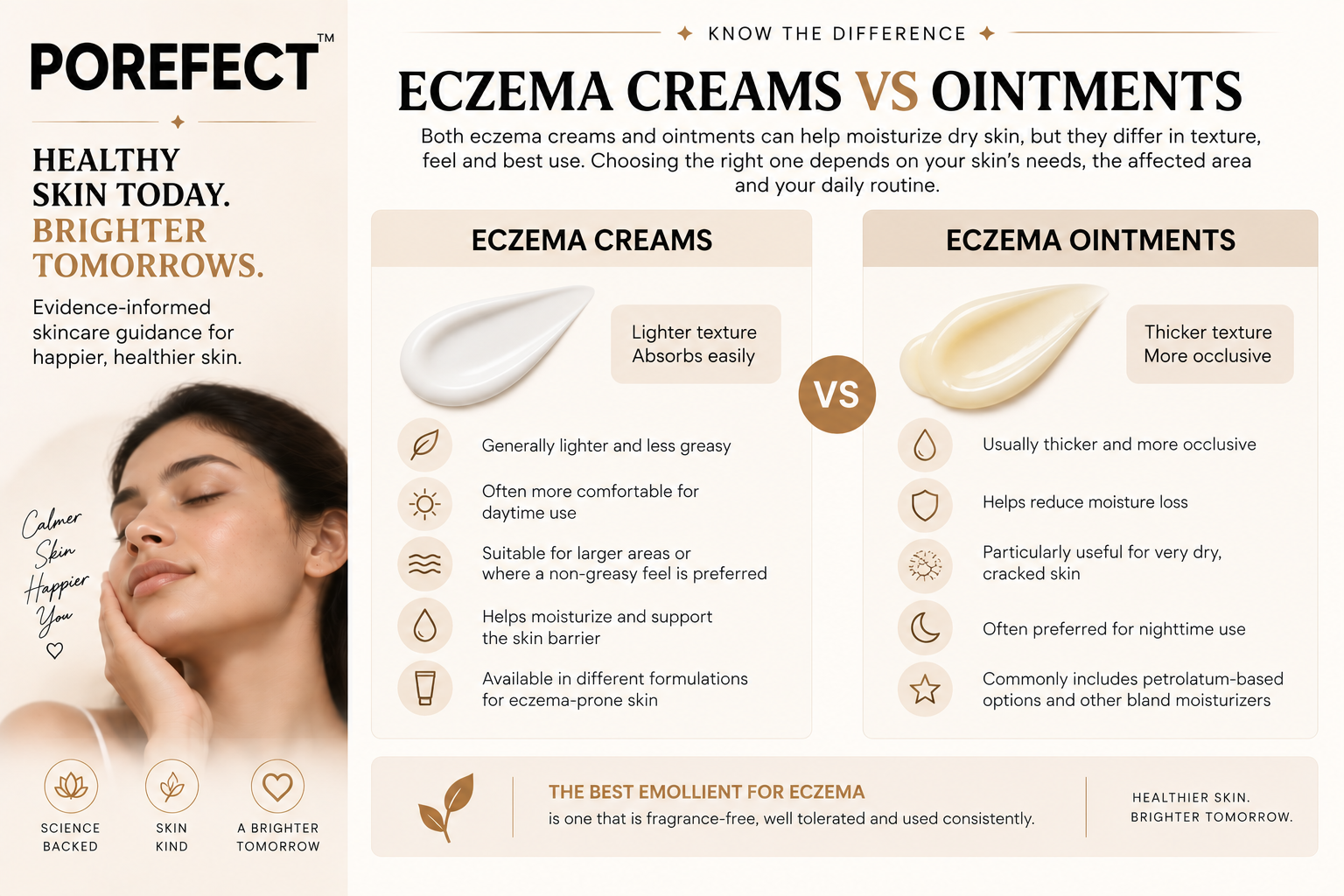
Creams are generally lighter and may be more comfortable during the day or on areas where a greasy texture is inconvenient.
An eczema ointment is usually thicker and more occlusive. Ointments can be particularly useful for very dry, cracked skin because they help reduce moisture loss.
The best emollient for eczema is generally one that is fragrance-free, well tolerated, and used consistently. Petrolatum-based ointments and other bland moisturizers are commonly used for dry, eczema-prone skin.
Medicine for Eczema
Depending on the severity of symptoms, medicine for eczema may include topical anti-inflammatory treatments prescribed or recommended by a healthcare professional.
Topical corticosteroids are commonly used to control eczema flares. Other prescription treatments, including topical calcineurin inhibitors and newer anti-inflammatory medicines, may be appropriate in selected cases.
The best medicine for eczema depends on the individual diagnosis. Stronger treatment is not automatically better, and using topical steroids incorrectly or for prolonged periods without medical supervision can cause problems.
If eczema is severe, widespread, frequently recurring, or significantly affecting sleep or daily life, professional assessment is recommended.
Best Eczema Treatment for Adults
The best eczema treatment for adults usually combines daily skin-barrier care with appropriate treatment during flare-ups.
A practical routine can include:
Morning
- Use a gentle, fragrance-free cleanser when needed.
- Apply a thick moisturizer or emollient.
- Avoid products containing known personal triggers.
- Protect exposed skin from environmental irritation.
Evening
- Take a short, lukewarm shower rather than a very hot one.
- Pat the skin dry without rubbing.
- Apply moisturizer immediately after bathing.
- Use prescribed eczema medication on affected areas as directed.
Consistency is often more important than using a large number of skincare products.
Best OTC for Eczema
When looking for the best OTC for eczema, focus on products designed to moisturize and protect the skin rather than products promising instant relief.
Useful OTC options may include:
- Fragrance-free creams
- Thick moisturizers
- Petrolatum-based ointments
- Barrier-supporting emollients
- Gentle fragrance-free cleansers
Some OTC anti-itch products may provide temporary relief, but they are not appropriate for every type of eczema. If symptoms are persistent or severe, self-treatment should not replace professional diagnosis.
Treatment for Eczema on Legs
Treatment for eczema on legs depends on the underlying type of eczema and severity.
Dry, irritated eczema on the legs may improve with frequent application of a thick emollient and avoidance of harsh soaps and hot water.
However, eczema-like rashes on the lower legs can sometimes be associated with other conditions, including venous or circulation-related problems. A rash that is persistent, swollen, painful, weeping, or repeatedly returning should be evaluated rather than assumed to be ordinary eczema.
Eczema on Feet Treatment
Eczema on feet treatment can be challenging because the skin on the feet is thicker and exposed to friction, footwear, sweat, and moisture.
Helpful measures may include:
- Applying a thick fragrance-free moisturizer regularly
- Keeping feet clean and dry
- Wearing breathable footwear
- Avoiding irritating soaps
- Changing damp socks promptly
- Following prescribed treatment during flares
Foot eczema treatment should also account for conditions that can resemble eczema, particularly fungal infections. If the rash is persistent or does not respond to typical eczema care, a dermatologist can help determine the cause.
Infant Eczema Treatment
Infant eczema treatment requires extra care because babies have sensitive skin.
Regular application of a fragrance-free moisturizer can help support the skin barrier. Bathing should be gentle, with lukewarm water and mild, fragrance-free products.
If an infant develops extensive eczema, significant itching, oozing, crusting, sleep disruption, or signs of infection, parents should consult a pediatrician or dermatologist before using medicated creams.
Do not use adult-strength eczema medicines on an infant unless specifically recommended by a healthcare professional.
Oatmeal Bath for Eczema: Does It Help?
An oatmeal bath for eczema may provide temporary relief from itching and irritation for some people. Colloidal oatmeal is designed to disperse in water and can help soothe dry, irritated skin.
Use lukewarm rather than hot water and avoid prolonged bathing. After the bath, gently pat the skin dry and apply a moisturizer while the skin is still slightly damp.
An oatmeal bath can support comfort, but it does not replace appropriate treatment for moderate or severe eczema.
Extreme Eczema Treatment: When Is Medical Care Needed?
People searching for extreme eczema treatment should avoid experimenting with multiple strong creams or home remedies.
Severe eczema may involve widespread inflammation, intense itching, painful cracks, bleeding, or significant sleep disruption. In these situations, a dermatologist can assess the condition and determine whether prescription treatments or advanced therapies are appropriate.
Seek prompt medical attention if the skin becomes increasingly painful, warm, swollen, develops pus or extensive crusting, or if you develop fever or other signs of infection.
Common Mistakes to Avoid
Avoid these common eczema-care mistakes:
- Taking very hot showers
- Scrubbing affected skin
- Using fragranced products
- Changing treatments too frequently
- Scratching repeatedly
- Applying multiple medicated creams without guidance
- Stopping prescribed treatment prematurely
- Ignoring signs of infection
Eczema management works best when skincare and medical treatment are consistent.
FAQs
What is the best way to treat eczema?
The best way to treat eczema is usually a combination of regular moisturization, trigger avoidance, and appropriate treatment for inflammation during flare-ups. Moderate or severe eczema may require dermatologist-guided treatment.
Are eczema creams better than ointments?
Neither is universally better. Creams are lighter and may be more convenient, while ointments are thicker and can be useful for very dry or cracked skin. The choice depends on the affected area, dryness, preference, and treatment needs.
Can eczema be treated permanently?
Eczema is often a chronic condition that can be managed rather than permanently cured. Many people experience periods when symptoms are well controlled, but flare-ups can recur.
Can I treat eczema at home?
Mild eczema may often be managed with regular moisturization, gentle skincare, and trigger avoidance. Persistent, severe, infected-looking, or unexplained rashes should be assessed by a healthcare professional.
Conclusion
Effective eczema treatment focuses on controlling inflammation, restoring the skin barrier, reducing itching, and preventing future flare-ups. Regular use of suitable eczema creams, moisturizers, or an eczema ointment can form the foundation of daily care, while medicated treatments may be needed during active or more severe flares.
Whether you need treatment for eczema on legs, eczema on feet treatment, or infant eczema treatment, the right approach depends on the individual and the underlying diagnosis. If symptoms are severe, persistent, frequently recurring, or showing signs of infection, professional evaluation is the safest way to determine appropriate treatment.