Skin Care
Learn about dull skin treatment, common causes of dullness, skincare routines, hydration, exfoliation, vitamin C and sunscreen for brighter-looking skin.

Dull Skin Treatment: Causes, Skincare Routine & How to Brighten Dull Skin
Dull skin can make your complexion look tired, uneven, or less radiant than usual. If “my face looks dull and tired” is a concern you regularly notice, the cause may be more than simply needing a brighter skincare product. Dehydration, dryness, buildup of dead skin cells, sun exposure, irritation, poor skincare habits, and an unhealthy skin barrier can all contribute to a lack of radiance.
The right dull skin treatment depends on what is making your skin look lackluster. A consistent routine focused on cleansing, hydration, gentle exfoliation, moisturization, and sun protection can help improve the appearance of the skin without relying on harsh products.
What Causes Dull Skin?
Healthy skin naturally sheds dead cells, but when dead skin cells accumulate on the surface, the complexion can appear rough and less radiant. Other factors can make this effect more noticeable.
Common causes include:
- Dehydrated or dry skin
- Excessive buildup of dead skin cells
- Sun exposure
- Inadequate moisturization
- Over-exfoliation and skin irritation
- A weakened skin barrier
- Environmental pollution and dry air
- Inconsistent skincare
Dry dull skin may feel rough or tight, while dehydrated skin can look tired even when the skin produces plenty of oil. Identifying the underlying issue makes it easier to choose appropriate skin dullness treatment.
Dull Skin Treatment: What Can Help?
There is no single best treatment for dull skin. Instead, focus on restoring hydration, supporting the skin barrier, and improving surface texture gradually. A suitable dull skin treatment should address the specific reason your complexion looks dull rather than relying on aggressive brightening products.
Gentle Cleansing
A gentle cleanser helps remove sweat, excess oil, sunscreen, and environmental impurities without unnecessarily stripping the skin.
Avoid washing your face excessively or using very hot water. If cleansing leaves your skin feeling tight or uncomfortable, your cleanser may be too harsh for your skin.
Hydration and Moisturization
Hydration is an important part of skincare for dull skin. Ingredients such as glycerin, hyaluronic acid, and panthenol can help support skin hydration, while moisturizers help reduce water loss.
Choose a moisturizer according to your skin type. Lightweight gel or lotion textures may suit oily skin, while richer creams may be more comfortable for dry skin.
Vitamin C
Vitamin C is an antioxidant commonly used in brightening skincare. It can help support a more even-looking complexion and is often included in routines designed to address dullness and uneven skin tone.
If your skin is sensitive, introduce it gradually and avoid combining too many potentially irritating products at once.
Gentle Exfoliation
Exfoliation can help remove excess dead skin cells and improve the appearance of rough texture. Chemical exfoliants such as alpha hydroxy acids may be suitable for some people.
However, more exfoliation does not mean better results. Overuse can cause dryness, irritation, and barrier disruption, which may make dull skin face concerns more noticeable.
How to Brighten Dull Skin With a Simple Routine
If you are wondering how to treat dull skin, start with a routine that is simple enough to maintain consistently. For many people, consistent basic skincare is a more practical approach to dull skin treatment than repeatedly changing products.
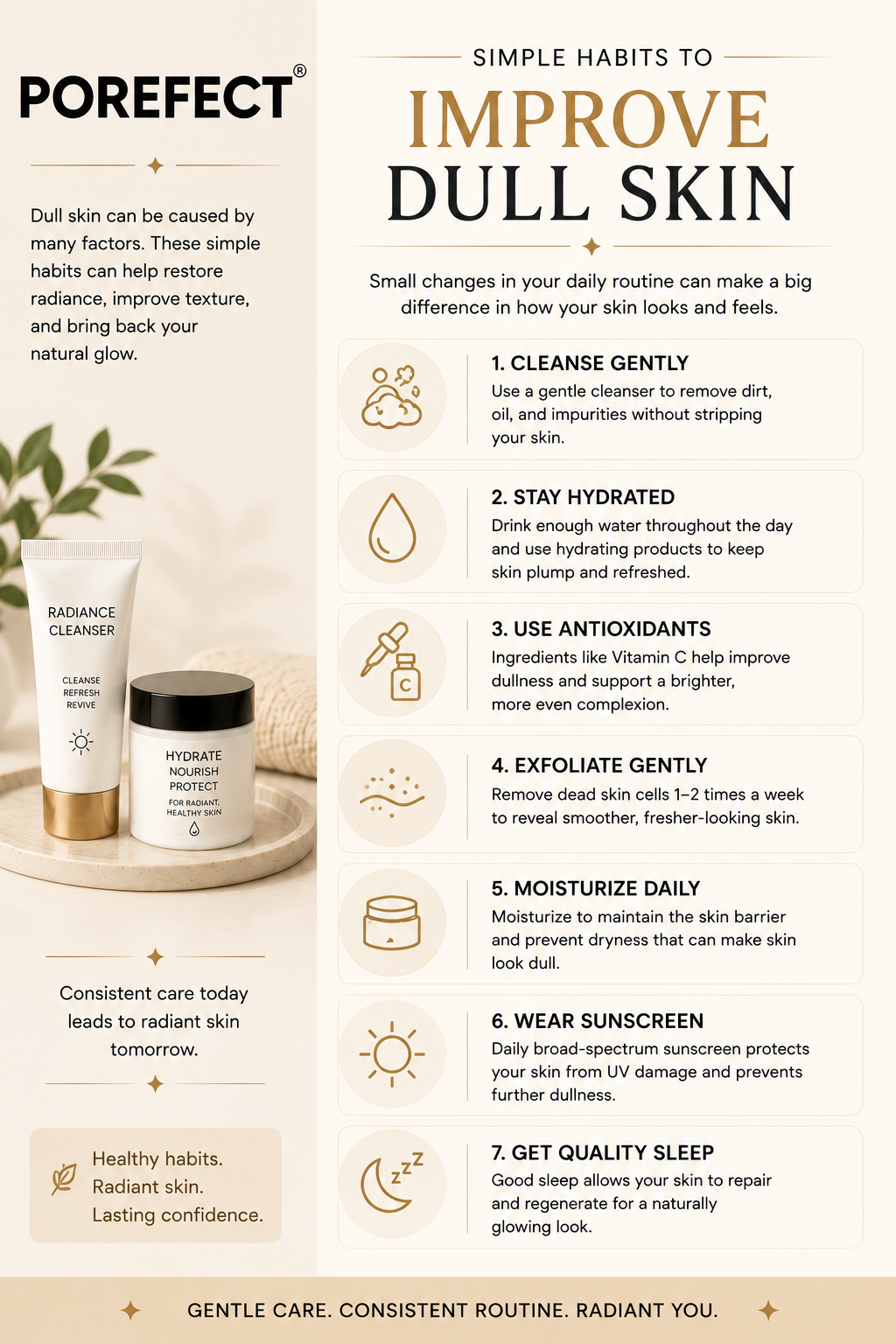
Morning
- Gentle cleanser or water rinse
- Vitamin C or another suitable antioxidant, if desired
- Moisturizer
- Broad-spectrum sunscreen
Night
- Gentle cleanser
- Hydrating or targeted treatment
- Moisturizer
If exfoliation is appropriate for your skin, use it occasionally rather than adding multiple exfoliating products to your routine.
Sunscreen and Skin Dullness
Daily sunscreen is an important part of skin care for dull complexion. UV exposure can contribute to uneven skin tone, pigmentation, premature skin ageing, and a less even-looking complexion.
Use a broad-spectrum sunscreen during the day and reapply according to your exposure and the product's instructions. Consistent sun protection also helps protect the progress made through the rest of your skincare routine.
How to Improve Dull Skin Based on Your Skin Type
The best skincare for dull skin is not necessarily the most complicated routine. Your skin type and tolerance should guide product selection.
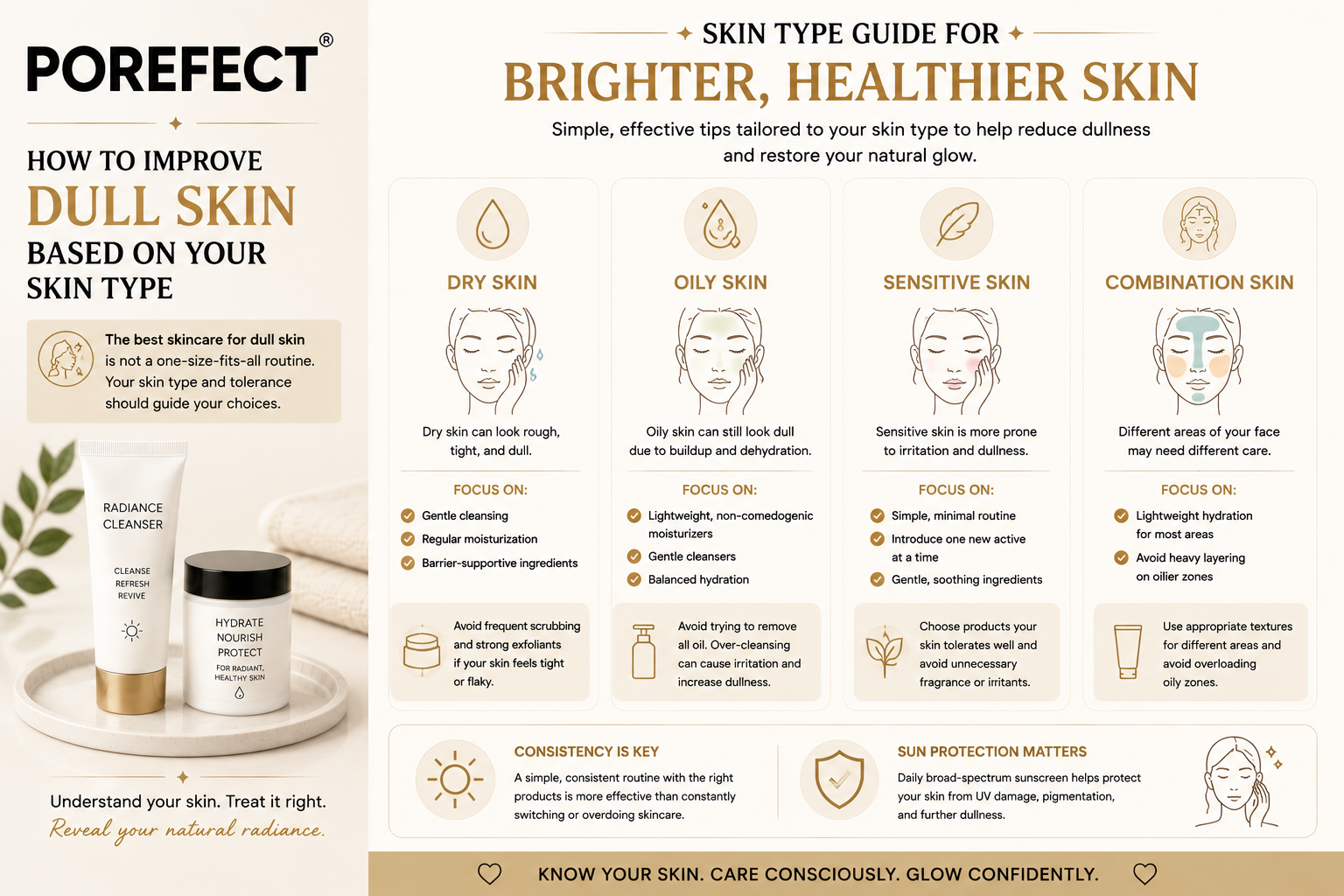
For Dry Skin
Focus on gentle cleansing, regular moisturization, and barrier-supportive ingredients. Avoid frequent scrubbing and strong exfoliants if your skin feels tight or flaky.
For Oily Skin
Choose lightweight, non-comedogenic moisturizers and gentle cleansers. Avoid trying to remove all oil from the skin, as excessive cleansing may cause irritation.
For Sensitive Skin
Keep your routine simple. Introduce one new active at a time and prioritize products that your skin tolerates comfortably.
For Combination Skin
You may need different textures for different areas of the face. Lightweight hydration can often work well while avoiding excessive layering in oilier areas.
Common Mistakes That Can Make Skin Look Dull
Some habits can work against your skincare goals:
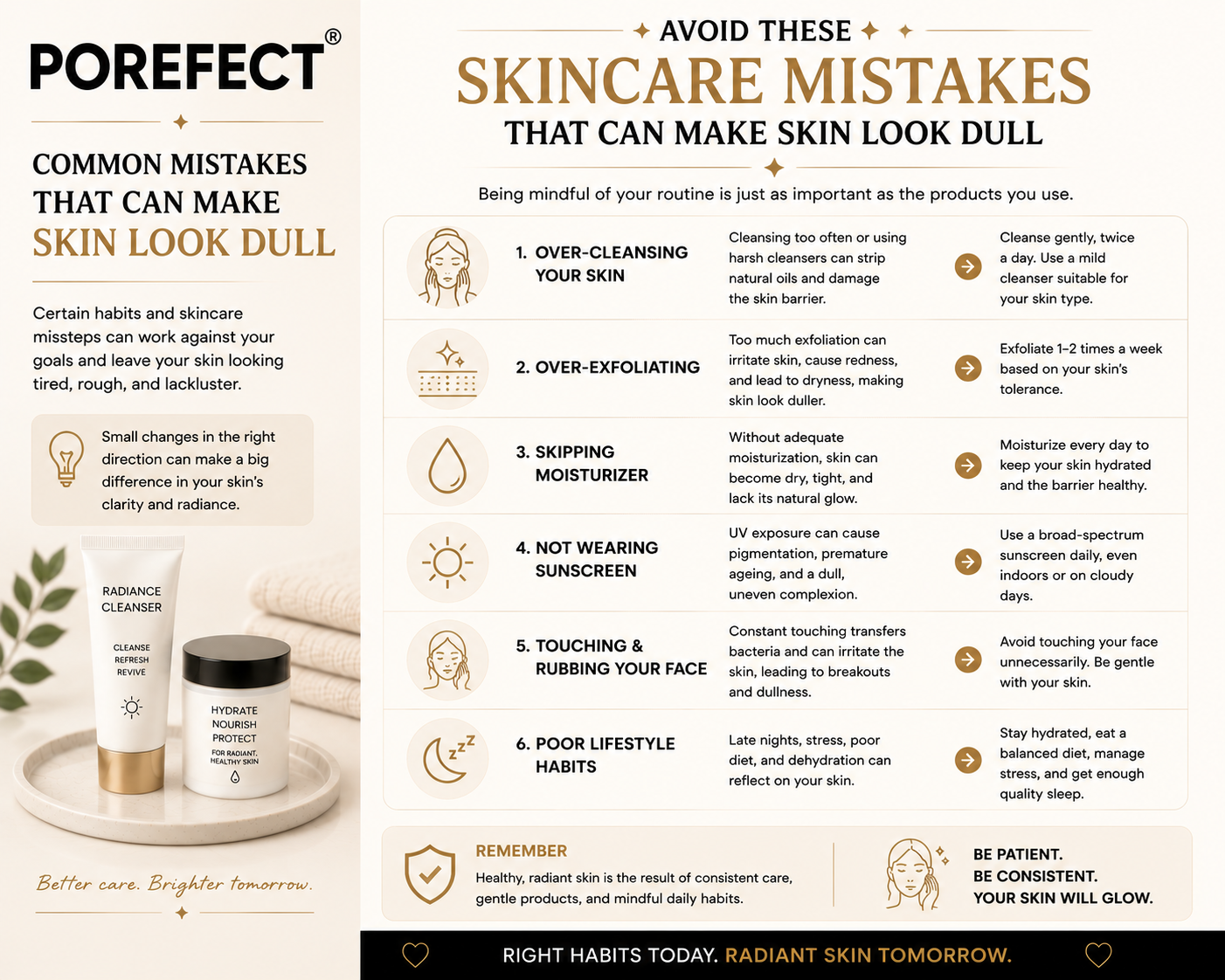
- Over-exfoliating
- Scrubbing the face aggressively
- Skipping moisturizer
- Using very hot water
- Washing the face too frequently
- Introducing several active ingredients at once
- Skipping sunscreen
- Constantly changing skincare products
- Using harsh DIY remedies such as lemon juice or baking soda
Irritation can compromise the skin barrier and leave the complexion looking rough, dry, or uneven.
When Should You See a Dermatologist?
If your skin remains persistently dull despite a consistent, gentle routine, consider discussing it with a dermatologist.
Professional assessment is particularly appropriate when dullness is accompanied by persistent redness, itching, burning, significant scaling, sudden changes, or unexplained pigmentation. These symptoms may indicate an underlying skin concern rather than simple lack of radiance.
A dermatologist can help determine whether your concern is related to dryness, dehydration, pigmentation, acne, irritation, or another skin condition.
Frequently Asked Questions
How to get rid of dull skin?
Start with gentle cleansing, adequate moisturization, appropriate exfoliation, and daily broad-spectrum sunscreen. A suitable antioxidant such as vitamin C may also support a brighter-looking complexion.
How to brighten dull skin naturally?
Protect your skin from excessive sun exposure, maintain adequate hydration, use gentle skincare, and avoid habits that cause irritation. There is no need for harsh home remedies to improve skin radiance.
What is the best skincare routine for dull skin?
A simple routine can include a gentle cleanser, moisturizer, sunscreen, and one targeted product such as vitamin C. Exfoliation can be added according to skin type and tolerance.
Can dry skin cause dullness?
Yes. When skin is dry, rough and flaky surface texture can make the complexion appear less radiant. Improving moisturization and barrier support may help.
How long does dull skin treatment take to work?
Improvement varies depending on the underlying cause and the products used. Consistency is more important than expecting immediate changes, and persistent concerns may require professional assessment.
Conclusion
Effective dull skin treatment is less about finding one powerful product and more about understanding why your skin looks tired or lackluster. Gentle cleansing, adequate hydration, appropriate exfoliation, moisturization, and daily sunscreen provide a practical foundation.
If you are looking for how to improve dull skin, keep your routine consistent and avoid unnecessary irritation. When dullness persists or is accompanied by other concerning symptoms, a dermatologist can help identify the cause and recommend an appropriate approach.