Skin Care
Learn how double cleansing removes makeup, sunscreen and buildup, plus the correct steps, suitable skin types and common mistakes to avoid.

Double Cleansing: Benefits, Steps & How to Do It Correctly
Double cleansing is a skincare method that involves cleansing the face twice, usually with two different types of cleansers. The first cleanse helps loosen makeup, sunscreen, excess oil, and other oil-soluble buildup, while the second cleanse removes remaining impurities from the skin.
Although this method can be useful, it is not necessary for everyone. People who do not wear makeup or water-resistant sunscreen may find that one gentle cleanser is enough. The right approach depends on your skin type, daily routine, and how much product buildup needs to be removed.
What Is Double Cleansing?
Double cleansing means using two cleansing steps instead of one. The first step usually involves an oil-based cleanser, cleansing balm, or micellar water, while the second step uses a water-based facial cleanser.
The first cleanser helps remove makeup, sunscreen, and excess sebum. The second cleanser then removes remaining residue and impurities from the skin.
This method is generally performed at night because the skin may have accumulated sunscreen, makeup, pollution, sweat, oil, and other products throughout the day.
What Are the Benefits of Double Cleansing?
Helps Remove Sunscreen and Makeup
Some sunscreens and makeup products are designed to resist water and may not be completely removed with a quick cleanse.
The first cleansing step can help break down these products before the second cleanser is used.
Removes Excess Oil and Daily Buildup
An appropriate first cleanser can help loosen excess sebum, makeup residue, and oil-soluble impurities.
The second cleanse then helps remove remaining residue without requiring aggressive rubbing.
Can Leave Skin Feeling Cleaner
When performed correctly, this method can provide a thorough but gentle cleansing routine without relying on excessive scrubbing.
Helps Prepare Skin for the Rest of Your Routine
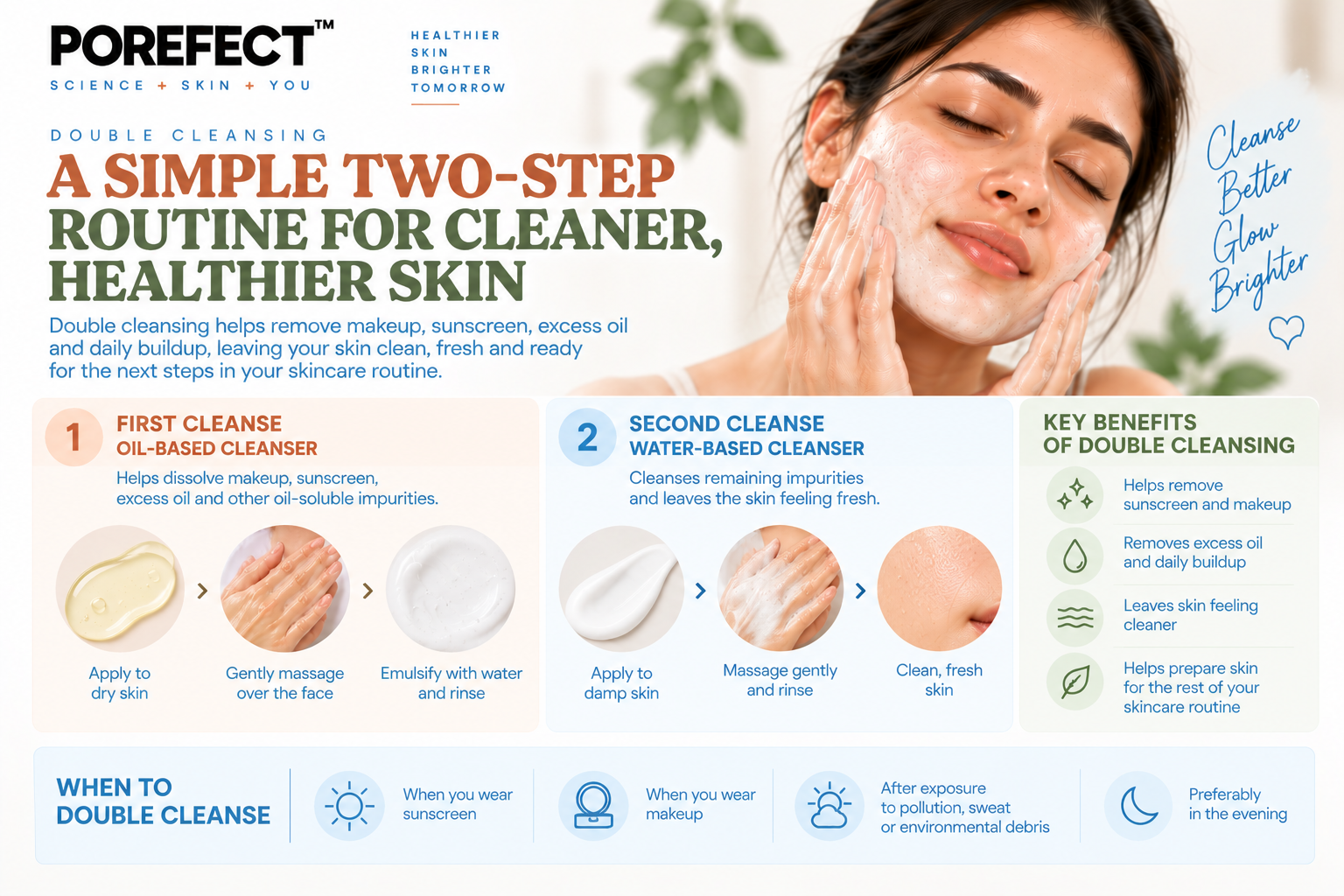
After cleansing, skincare products such as hydrating serums and moisturizers can be applied to clean skin.
However, cleansing more frequently or more aggressively does not necessarily improve the skin.
How to Double Cleanse: Step-by-Step
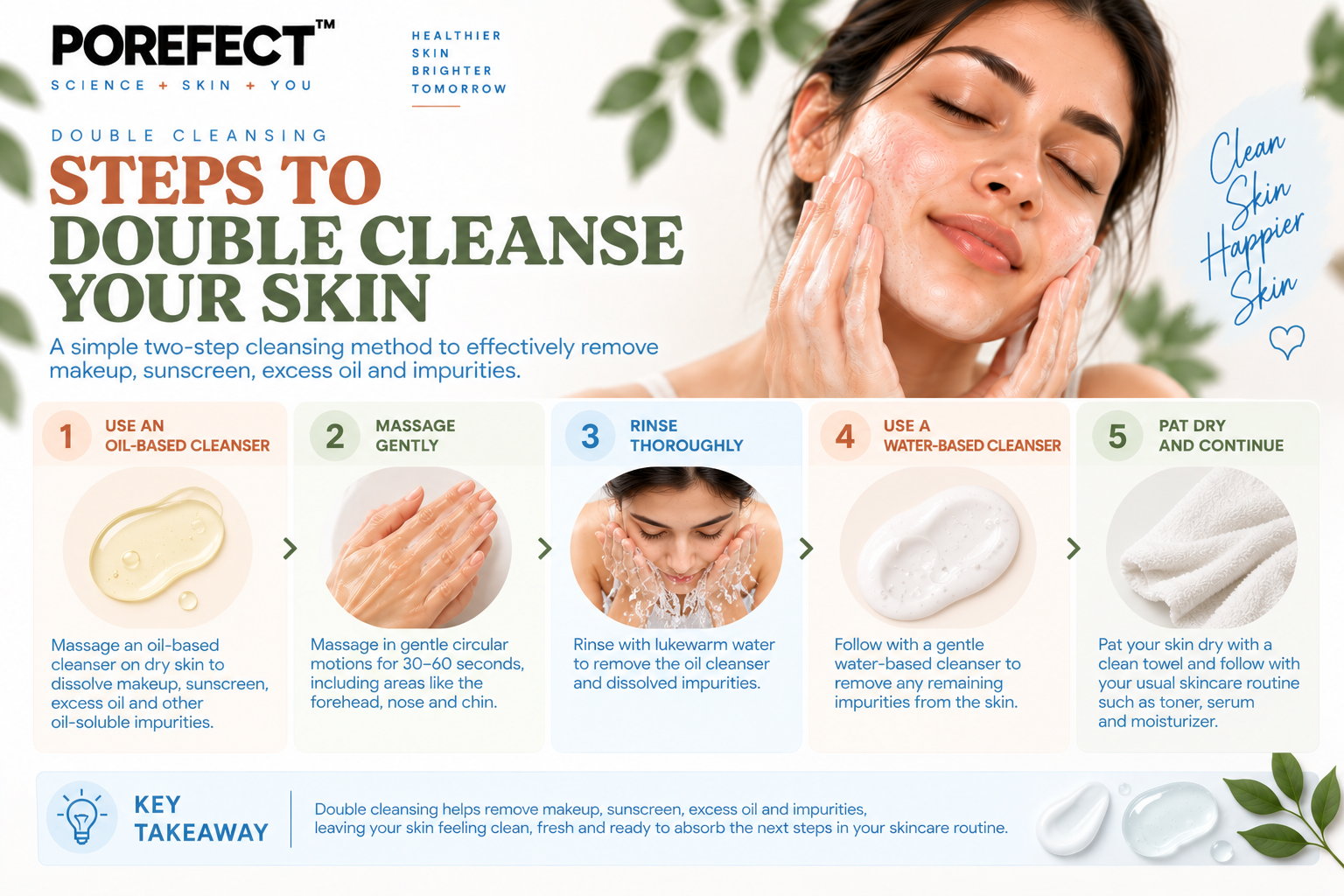
Learning how to double cleanse is simple when each step is performed gently.
Step 1: Start With an Oil-Based Cleanser
Apply an oil cleanser or cleansing balm to dry skin, depending on the product instructions.
Gently massage the product over your face to loosen sunscreen, makeup, and excess oil. Avoid vigorous rubbing, particularly around the eyes.
Emulsify the cleanser with water if required by the product, then rinse.
Step 2: Use a Gentle Water-Based Cleanser
Apply a gentle facial cleanser to damp skin.
Massage it lightly over the face and rinse thoroughly with lukewarm water.
Avoid very hot water because it may increase dryness and irritation.
Step 3: Pat the Skin Dry
Use a clean, soft towel and gently pat your face dry rather than rubbing it.
Follow with your usual skincare routine, such as a hydrating serum or moisturizer.
What Is an Oil Cleanser for Double Cleansing?
An oil cleanser for double cleansing is designed to help dissolve oil-soluble substances such as makeup, sunscreen, and excess sebum.
Oil-based cleansers can be particularly useful when you regularly wear long-wearing makeup or water-resistant sunscreen.
However, an oil cleanser is not automatically better for every person. If you do not have much buildup to remove, a single gentle cleanser may be sufficient.
Double Cleansing With Micellar Water
Double cleansing with micellar water is another option.
Micellar water contains surfactant molecules that can help lift makeup, sunscreen, and surface impurities. Some people use it as the first cleansing step and then follow with a gentle facial cleanser.
If micellar water leaves your skin feeling dry, tight, or irritated, consider using less product, rinsing afterward if appropriate, or choosing a different cleansing method.
Double Cleansing at Night
Double cleansing at night is generally more practical than doing it in the morning.
During the day, your skin may accumulate:
- Sunscreen
- Makeup
- Excess sebum
- Sweat
- Pollution and environmental debris
If you have worn sunscreen or makeup, the first cleanse can help remove these products before the second cleansing step.
In the morning, most people do not need a two-step cleansing routine. Depending on skin type, a gentle cleanser or even a water rinse may be sufficient.
Double Cleansing for Oily Skin
Double cleansing for oily skin can be useful when excess sebum, sunscreen, or makeup creates significant buildup.
However, oily skin does not mean you should use harsh cleansers or cleanse repeatedly.
Over-cleansing can leave the skin irritated and uncomfortable and may make your routine harder to tolerate.
For oily skin, choose a gentle cleanser and avoid aggressively scrubbing the face.
Double Cleansing for Acne-Prone Skin
Double cleansing for acne-prone skin should be approached carefully.
Removing sunscreen and makeup thoroughly can be useful, but aggressive cleansing does not treat the underlying causes of acne.
If you have acne-prone skin, choose non-irritating cleansers and avoid repeatedly washing your face throughout the day.
If you use an acne cleanser containing an active ingredient such as salicylic acid or benzoyl peroxide, follow the product directions rather than automatically adding multiple cleansing steps.
Persistent or inflammatory acne may require appropriate acne treatment rather than additional cleansing.
Double Cleansing for Sensitive Skin
Double cleansing for sensitive skin is not always necessary.
Sensitive skin can become irritated when exposed to too many cleansing steps, strong surfactants, fragrances, or excessive rubbing.
If you have sensitive skin, consider this method only when you need to remove substantial sunscreen or makeup. Use gentle products and keep the massage brief.
If your skin feels burning, tight, unusually dry, or irritated afterward, simplify your routine.
When to Double Cleanse
Knowing when to double cleanse is more important than following the method every day.
It may be useful when you:
- Wear makeup
- Use water-resistant sunscreen
- Have significant oil or product buildup
- Need to remove long-wearing cosmetic products
You may not need two cleansing steps when you have spent the day indoors without makeup and have minimal product buildup.
How Often Should You Double Cleanse?
There is no universal schedule for this cleansing method.
For many people, it is most appropriate in the evening when makeup or sunscreen needs to be removed.
You do not need to cleanse twice simply because it is part of a popular skincare trend.
If your skin becomes dry or irritated, reduce cleansing intensity or return to a simple single-cleanse routine.
Double Cleansing Before or After Face Wash?
A common question is whether you should double cleanse before or after face wash. The first cleansing step comes first, followed by the second facial cleanser.
In other words:
Oil cleanser or micellar water → gentle face wash → skincare
The first step removes makeup, sunscreen, and oil-based residue. The second step cleanses the skin more thoroughly.
Common Double Cleansing Mistakes
Cleansing Too Aggressively
More rubbing does not mean better cleansing. Gentle massage is generally enough.
Using Very Hot Water
Hot water can worsen feelings of dryness and irritation.
Using Two Strong Cleansers
Using harsh products twice can unnecessarily disrupt skin comfort.
Double Cleansing Every Time You Wash Your Face
This method is mainly useful when there is significant product or oil buildup. It is not automatically necessary morning and night.
Ignoring Skin Type
Dry and sensitive skin may need fewer cleansing steps, while oily skin may tolerate a more thorough routine.
Is Double Cleansing Good for Skin?
So, is double cleansing good for skin?
It can be useful when you need to remove makeup, sunscreen, or substantial product buildup. However, it is not inherently better than a well-performed single cleanse.
The goal should be clean, comfortable skin rather than a completely stripped or "squeaky clean" feeling.
If one gentle cleanser effectively removes what you have applied during the day, there may be no need for a second cleansing step.
Frequently Asked Questions
Can I double cleanse every night?
Yes, if your skin tolerates it and you regularly need to remove sunscreen, makeup, or significant product buildup. It is not essential for everyone.
Is double cleansing good for acne-prone skin?
It can help remove sunscreen and makeup effectively, but the cleansing method itself does not treat acne. Use gentle products and avoid over-cleansing.
Can I use micellar water for double cleansing?
Yes. Micellar water can be used as the first cleansing step, followed by a gentle facial cleanser when appropriate.
Should I double cleanse if I only wear sunscreen?
It depends on the sunscreen and your skin. If the sunscreen is water-resistant or difficult to remove, a first cleansing step may be useful.
Is double cleansing suitable for sensitive skin?
It can be, but sensitive skin may not need two cleansing steps every night. Use gentle products and stop or simplify the routine if irritation develops.
Conclusion
Double cleansing can be a useful skincare method for removing makeup, sunscreen, excess oil, and daily buildup. The basic steps involve a first cleanser, such as an oil cleanser, cleansing balm, or micellar water, followed by a gentle water-based cleanser.
However, this method is not a requirement for healthy skin. The best approach depends on your skin type, the products you use, and how much buildup needs to be removed.
For most people, doing this at night makes more sense than cleansing twice in the morning. Keep both steps gentle, avoid excessive rubbing, and remember that effective cleansing should leave the skin comfortable rather than stripped.