Skin Care
Learn about dehydrated skin symptoms, causes, treatment, hydration tips, skincare ingredients, and how to fix dehydrated skin safely.
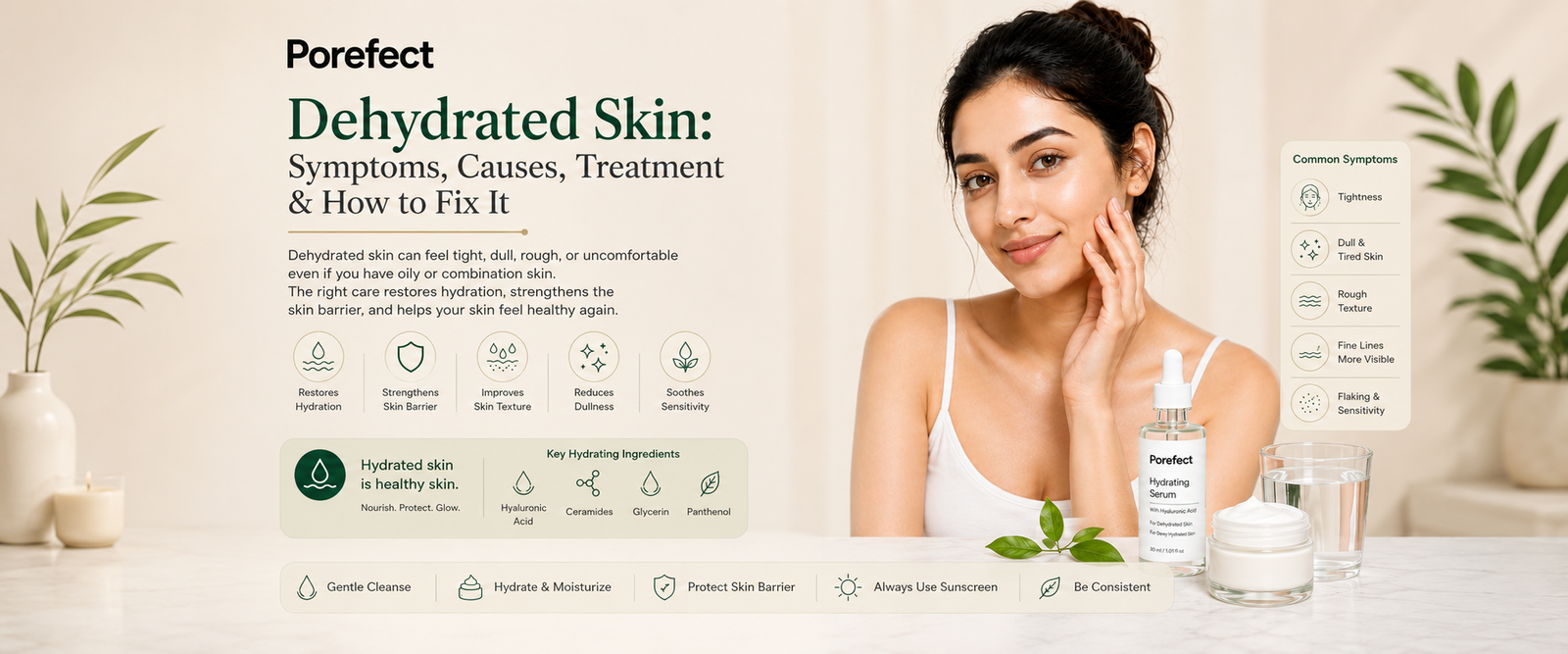
Dehydrated Skin: Symptoms, Causes, Treatment & How to Fix It
Dehydrated skin can make your face feel tight, rough, dull, or uncomfortable even if you normally have oily or combination skin. Unlike dry skin, which is primarily related to lower oil production, dehydration means the skin lacks sufficient water.
This distinction is important because dehydrated skin can affect almost any skin type. The right approach is usually to improve hydration, support the skin barrier, and reduce factors that increase water loss rather than simply applying more products.
What Is Dehydrated Skin?
Dehydrated skin is a temporary condition in which the outer layers of the skin do not retain enough water. It can develop when the skin loses water faster than it can maintain its moisture balance.
Common triggers include dry weather, excessive cleansing, hot showers, over-exfoliation, air conditioning, and skincare products that are too harsh for your skin.
You may notice dehydrated skin on the face more easily because facial skin is frequently exposed to environmental changes and multiple skincare products.
Dehydrated Skin Symptoms
Recognizing dehydrated skin symptoms can help you adjust your routine before irritation becomes more significant.
- Tightness, particularly after cleansing
- Dull or tired-looking skin
- Rough or uneven texture
- Fine lines that appear more noticeable
- Mild flaking or sensitivity
- Skin that feels dry but becomes oily later
- Increased sensitivity to skincare products
Dehydration does not necessarily mean that your skin type is dry. Someone with oily skin can produce plenty of sebum while still experiencing a lack of water.
Dry Skin vs Dehydrated Skin: What's the Difference?
Understanding dry skin vs dehydrated skin is useful when choosing skincare.
Dry skin is generally considered a skin type associated with lower natural oil or sebum production. It may consistently feel rough, tight, or flaky.
Dehydrated skin, in contrast, refers to a temporary lack of water. It can occur in oily, combination, normal, or dry skin.
For example, someone with oily skin may notice excess shine while also experiencing tightness after cleansing. Using stronger cleansers to remove the oil may worsen discomfort by affecting the skin barrier.
What Causes Dehydrated Skin?
Several everyday factors can contribute to dehydration.
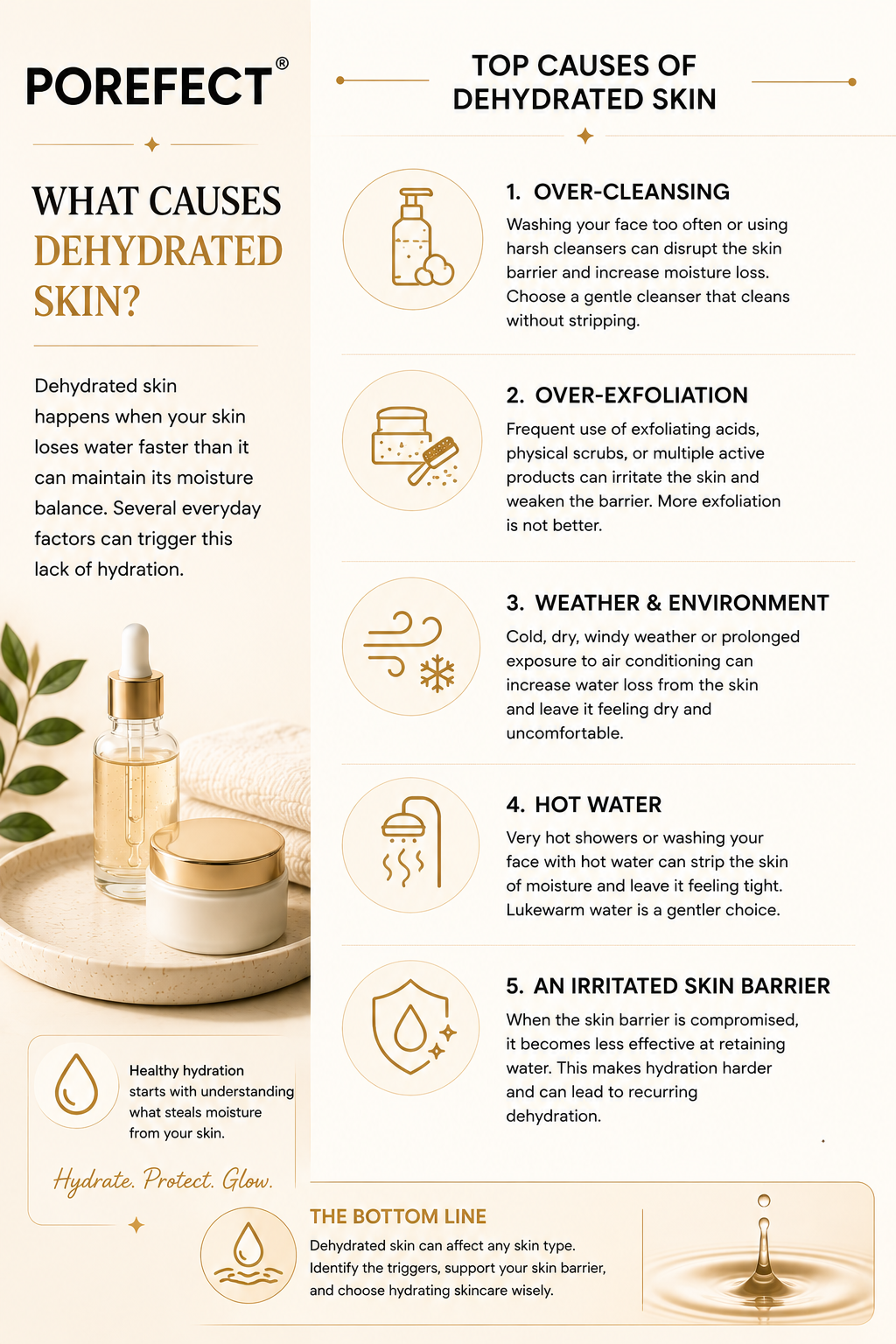
Over-Cleansing
Washing your face too frequently or using a harsh cleanser can disrupt the skin's protective barrier and increase moisture loss. A cleanser should remove impurities without leaving the skin persistently tight or stripped.
Over-Exfoliation
Frequent use of exfoliating acids, physical scrubs, or several active products may irritate the skin and interfere with barrier function. More exfoliation is not necessarily better for dehydrated skin.
Weather and Environment
Cold, dry, or windy conditions can increase water loss from the skin. Prolonged exposure to air conditioning may also contribute to dryness and discomfort.
Hot Water
Very hot showers or washing the face with hot water can leave the skin feeling tight. Lukewarm water is generally a gentler choice.
An Irritated Skin Barrier
When the skin barrier is compromised, it becomes less effective at retaining water. This is why hydration and barrier care often need to be addressed together.
How to Fix Dehydrated Skin
If you are wondering how to fix dehydrated skin, start by simplifying your routine and reducing unnecessary irritation.
Use a gentle cleanser, apply a hydrating moisturizer, and temporarily limit exfoliating products if your skin feels uncomfortable.
Look for moisturizers containing ingredients such as:
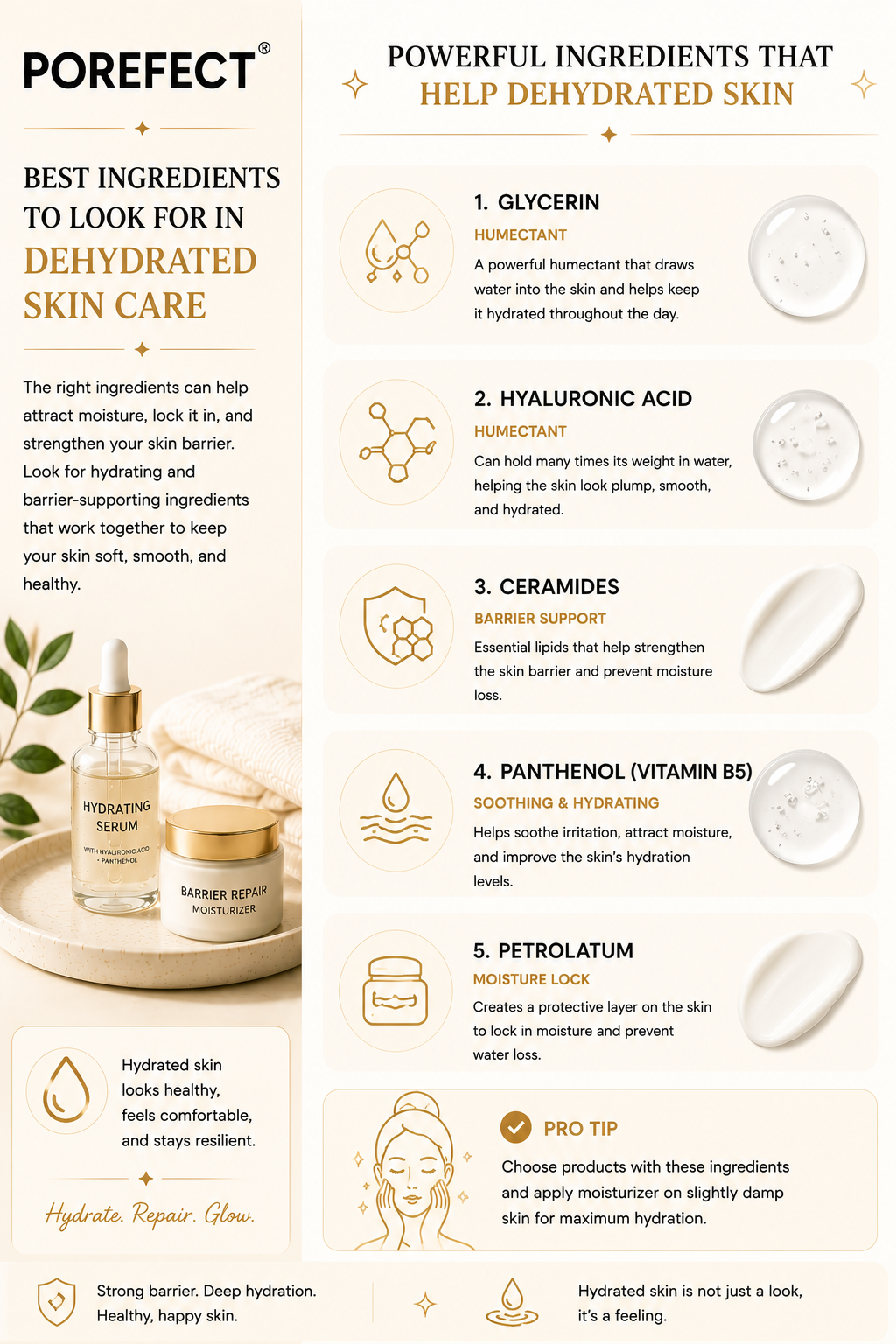
- Glycerin
- Hyaluronic acid
- Ceramides
- Panthenol
- Petrolatum
Humectants such as glycerin and hyaluronic acid help attract and retain water, while ingredients such as ceramides support the skin barrier. Applying moisturizer to slightly damp skin can also help support hydration.
How to Hydrate Dehydrated Skin
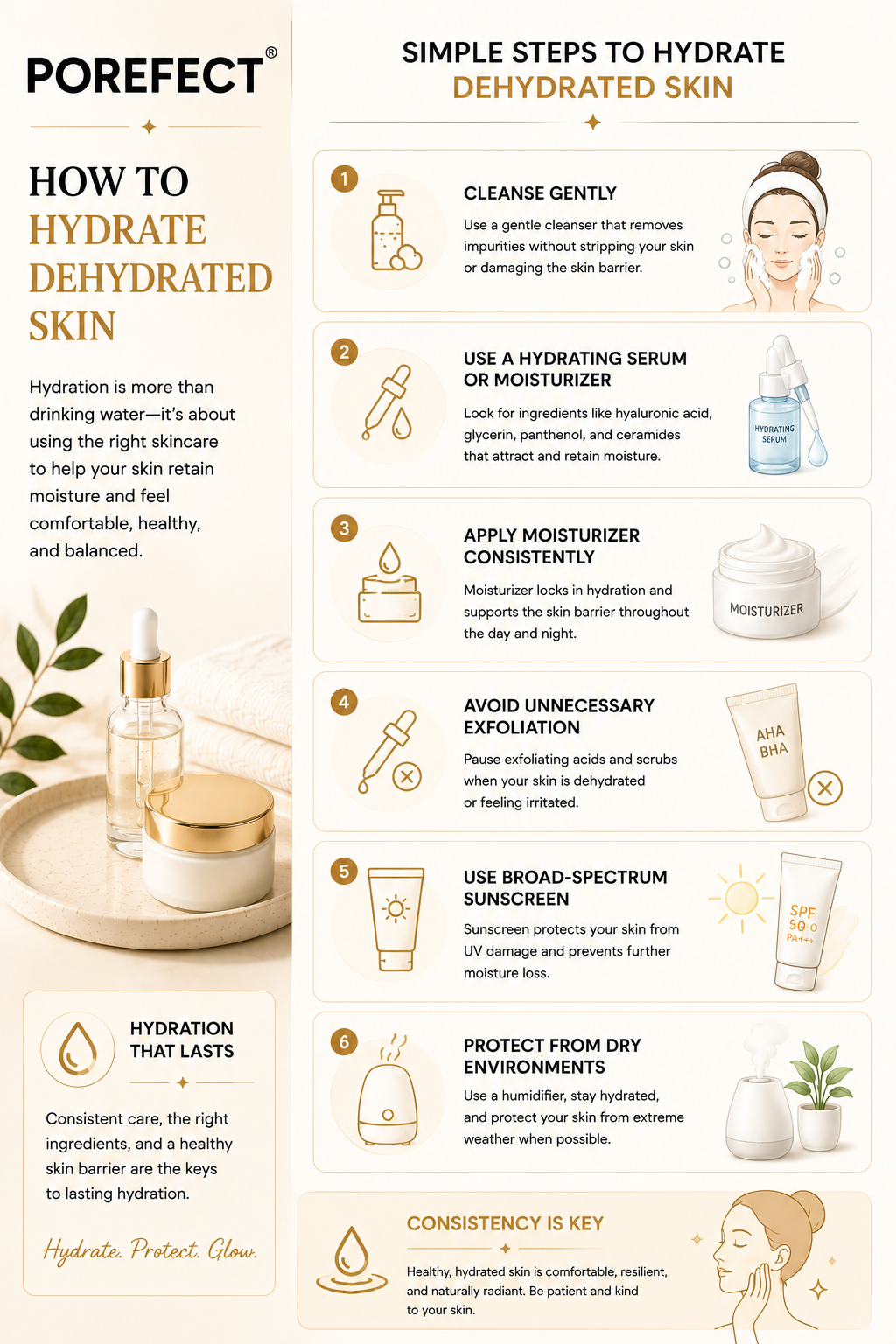
Learning how to hydrate dehydrated skin involves more than simply drinking additional water. Hydration is important for overall health, but topical skincare can help support the skin's ability to retain moisture.
- Cleanse gently without leaving the skin feeling stripped.
- Use a hydrating serum or moisturizer if needed.
- Apply moisturizer consistently.
- Avoid unnecessary exfoliation while the skin is irritated.
- Use broad-spectrum sunscreen during the day.
- Protect the skin from very dry environmental conditions when possible.
Can a Hydrating Serum Help Dehydrated Skin?
A lightweight hydrating serum can be useful when dehydrated skin needs additional moisture support. Serums containing humectants such as hyaluronic acid may help attract water to the outer layers of the skin.
A hydrating serum can generally be applied after cleansing and before moisturizer. The moisturizer then helps support moisture retention.
A serum is not a replacement for moisturizer, and adding more products is not always necessary. If your skin is irritated, keeping the routine simple is often preferable.
Dehydrated Skin Treatment: A Simple Routine
A straightforward dehydrated skin treatment routine can be more useful than using multiple products.
Morning
- Gentle cleanser or water rinse, depending on your skin
- Hydrating serum, if desired
- Moisturizer
- Broad-spectrum sunscreen
Night
- Gentle cleanser
- Hydrating serum or treatment
- Moisturizer
Introduce new products one at a time. If a product causes persistent burning, redness, or irritation, stop or reduce its use.
Skincare for Dehydrated Skin
Good skincare for dehydrated skin should prioritize hydration and barrier support rather than aggressive treatment.
Avoid repeatedly using strong exfoliating acids, physical scrubs, or multiple active ingredients when the skin already feels sensitive.
If you have sensitive skin, simpler formulations with fewer potential irritants may be easier to tolerate. If your skin is oily but dehydrated, consider a lightweight, non-comedogenic moisturizer rather than skipping moisturizer altogether.
Common Mistakes to Avoid
Some habits can make dehydration harder to manage:
- Washing the face excessively
- Using very hot water
- Scrubbing flaky skin
- Applying multiple exfoliating products
- Skipping moisturizer because the skin feels oily
- Constantly changing skincare products
- Using harsh DIY remedies
Lemon juice, baking soda, toothpaste, and similar household remedies can irritate facial skin and should not be used as hydration treatments.
When Should You See a Dermatologist?
If dryness, redness, itching, burning, scaling, or sensitivity persists despite a gentle routine, consider seeing a dermatologist.
Persistent symptoms may sometimes be related to conditions such as eczema, contact dermatitis, or other skin disorders rather than simple dehydration. Professional assessment is especially appropriate when symptoms are unexplained, worsening, or repeatedly returning.
Frequently Asked Questions
How do I know if my skin is dehydrated?
Tightness, dullness, rough texture, increased sensitivity, and more noticeable fine lines can be dehydrated skin symptoms. Oily skin can also experience dehydration.
Can oily skin be dehydrated?
Yes. Oil and water are different components of the skin. Oily skin can still lack adequate water and feel tight or uncomfortable.
What is the best treatment for dehydrated skin?
A gentle cleanser, hydrating moisturizer, barrier-supportive ingredients, and consistent sunscreen provide a practical foundation. The ideal routine depends on your skin's needs and tolerance.
How long does dehydrated skin take to improve?
Mild dehydration may improve after irritating factors are reduced and consistent hydration is restored. Persistent symptoms should be professionally assessed rather than treated by continually adding products.
Is dehydrated skin permanent?
Dehydrated skin is generally temporary and may improve when factors contributing to water loss are reduced and the skin is supported with a gentle, consistent routine. If symptoms persist, professional assessment can help identify whether another skin condition is involved.
Conclusion
Dehydrated skin is different from naturally dry skin because dehydration refers primarily to a lack of water rather than a lack of oil. It can affect almost any skin type and may be influenced by cleansing habits, environmental conditions, over-exfoliation, or a weakened skin barrier.
If you are looking for how to fix dehydrated skin, keep your routine simple: cleanse gently, use suitable hydrating ingredients, moisturize consistently, avoid unnecessary irritation, and protect your skin from the environment. With persistent redness, itching, burning, scaling, or unexplained symptoms, professional assessment is the safer approach.