Skin Care
Learn what causes dark circles under eyes, treatment options, skincare tips, and safe ways to reduce under-eye darkness.

Dark Circles Under Eyes: Causes, Treatment & How to Get Rid of Them
Dark circles under eyes are a common cosmetic concern that can make the face look tired even when you feel well-rested. The skin around the eyes is delicate, and darker appearance in this area can develop for several reasons, including genetics, pigmentation, visible blood vessels, shadows from under-eye hollows, allergies, and lifestyle factors.
Because the cause differs from person to person, there is no single dark circle treatment that works for everyone. The most useful approach is to identify what is contributing to the dark appearance and choose skincare or professional treatment accordingly.
What Causes Dark Circles Under Eyes?
Dark circles under eyes can have more than one cause. Common factors include genetics, pigmentation, visible blood vessels, allergies, repeated rubbing, lack of sleep, dehydration, and other lifestyle factors.
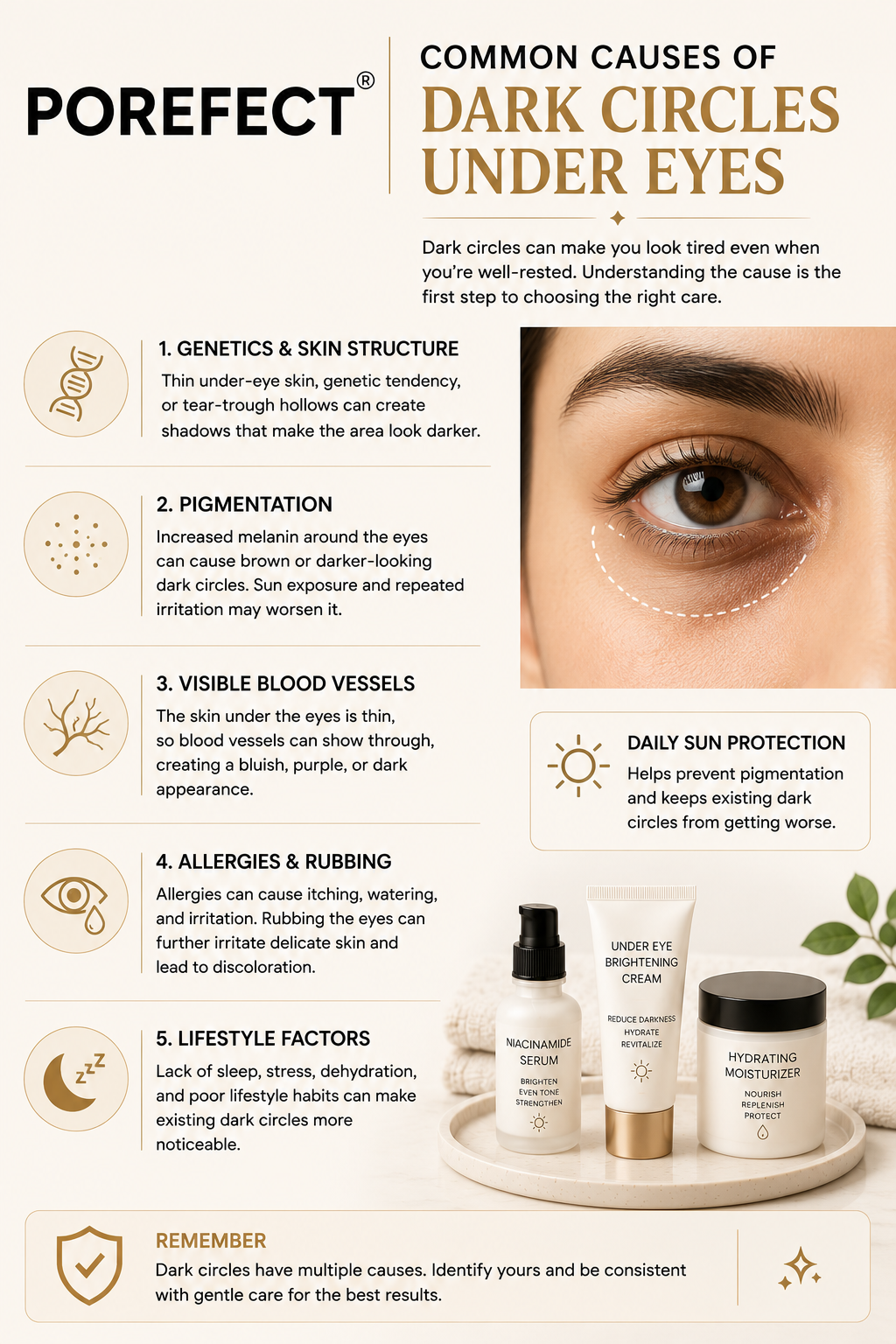
Genetics and Skin Structure
Some people naturally have thinner skin around the eyes or are genetically more likely to develop under-eye darkness. Tear-trough hollows can also create shadows that make the area appear darker.
When facial structure contributes to dark circles under eyes, topical skincare may have limited effects because the appearance is partly related to anatomy and the way light creates shadows.
Pigmentation
Increased melanin around the eyes can contribute to brown or deeper-looking dark eye circles. Sun exposure and repeated irritation may make pigmentation more noticeable.
When pigmentation is a major contributor, suitable skincare and consistent sun protection may help improve the appearance gradually.
Visible Blood Vessels
The skin beneath the eyes is relatively thin. Blood vessels can therefore be more visible, creating a bluish, purple, or darker appearance.
This type of under-eye darkness may look different from pigmentation and may not respond strongly to conventional brightening products.
Allergies and Rubbing
Allergies may cause itching, watering, or irritation around the eyes. Repeated rubbing can further irritate delicate skin and may contribute to persistent discoloration.
If allergies are contributing to dark circles under eyes, controlling the underlying allergy and avoiding rubbing may be more useful than adding multiple cosmetic products.
Lack of Sleep and Lifestyle Factors
Poor sleep can make existing dark circles look more noticeable, although tiredness is not the only cause. Stress, dehydration, and general lifestyle habits may also affect how the under-eye area appears.
Improving sleep and maintaining adequate hydration may support healthier-looking skin, although lifestyle changes cannot correct every type of under-eye darkness.
Dark Circles Under Eyes Treatment: What Can Help?
The right dark circles under eyes treatment depends on the underlying cause.
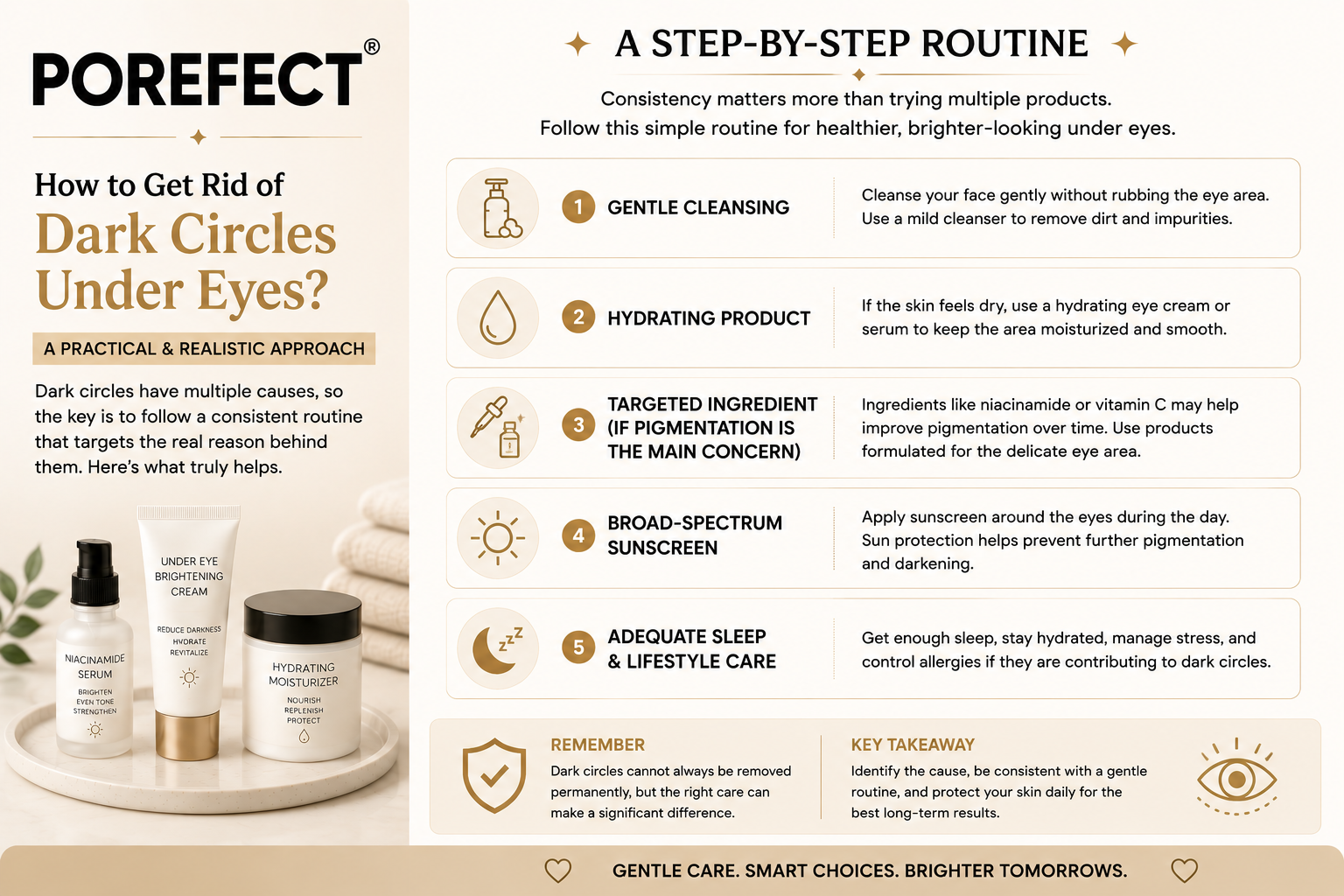
If pigmentation is contributing to the problem, gentle skincare may help improve the appearance over time. Ingredients such as niacinamide or vitamin C are sometimes used in products formulated for uneven skin tone, but the eye area can be sensitive, so formulations specifically intended for this region are preferable.
If dryness is making the area look dull or creased, a gentle moisturizer or eye-area hydrating product may improve the appearance of the skin.
For allergy-related irritation, controlling the underlying allergy and avoiding rubbing may be more useful than adding multiple cosmetic products.
Skincare for Dark Circles Under Eyes
A simple skincare routine can help support the delicate skin around the eyes. The goal should be to avoid unnecessary irritation while addressing the factors that can make dark circles under eyes more noticeable.
- Cleanse the face gently without rubbing the eye area.
- Use a suitable hydrating product if the skin feels dry.
- Consider a targeted ingredient when pigmentation is the main concern.
- Use broad-spectrum sunscreen during the day when suitable for the eye area.
- Avoid rubbing or scratching the skin around the eyes.
Consistency is generally more useful than constantly switching between different products.
Sunscreen Matters

Daily sun protection is important when pigmentation is part of the concern. UV exposure can contribute to increased pigmentation and may make existing discoloration more noticeable.
Use a broad-spectrum sunscreen around the eye area if the product is formulated and tolerated for that region. Avoid getting sunscreen directly into the eyes.
Sun protection is particularly relevant when pigmentation contributes to dark circles under eyes, because repeated UV exposure can make discoloration more noticeable over time.
How to Get Rid of Dark Circles Under Eyes?
If you are searching for how to get rid of dark circles under eyes, it is important to set realistic expectations. Dark circles are not always caused by pigmentation alone, so a brightening cream cannot correct every type.
A practical routine may include:
- Gentle cleansing without rubbing the eye area.
- A suitable hydrating product if the skin feels dry.
- A targeted ingredient when pigmentation is the main concern.
- Broad-spectrum sunscreen during the day.
- Adequate sleep and management of factors such as allergies when relevant.
Consistency is more useful than constantly switching between products. The appropriate approach depends on whether the darkness is primarily related to pigmentation, visible vessels, facial structure, allergies, or a combination of factors.
Can You Remove Dark Circles Under Eyes Permanently?
There is no universal method to remove dark circles under eyes permanently. If genetics, skin structure, or under-eye hollowness is the main contributor, topical skincare may have limited effects.
This is why identifying the type of dark circle is important. Pigmentation may respond differently from vascular darkness or shadowing caused by facial anatomy.
Avoid products that promise instant or permanent removal. The under-eye area is particularly sensitive, and aggressive treatment can cause irritation that makes the area look worse.
Best Treatment for Dark Circles Under Eyes
The best treatment for dark circles under eyes depends on the cause.
For pigmentation, a dermatologist may recommend suitable topical ingredients and sun protection. For significant structural hollows or shadows, skincare alone may not address the main issue.
Professional options can include prescription treatments, chemical peels in selected cases, laser-based procedures, or treatments designed to address volume loss. These are not suitable for everyone, particularly around the delicate eye area, and should be selected after professional assessment.
Professional treatment should be chosen according to the underlying cause rather than simply the visible appearance of dark circles under eyes.
If dark circles appear suddenly, are significantly different on one side, or occur with swelling, pain, persistent itching, or other unusual symptoms, medical evaluation is appropriate.
Common Mistakes to Avoid
The skin around the eyes needs a gentle approach. Avoid:
- Rubbing or scratching the eyes
- Applying harsh exfoliating acids close to the eyes
- Using lemon juice, baking soda, or toothpaste as DIY treatments
- Applying strong skincare products that are not intended for the eye area
- Expecting a product to correct structural shadows
- Constantly changing products in search of faster results
If a product causes burning, persistent redness, swelling, or irritation, stop using it and seek professional advice if symptoms continue.
How to Prevent Dark Circles From Becoming More Noticeable
Not every type of under-eye darkness can be prevented, particularly when genetics or facial structure plays an important role. However, several habits can help support the delicate skin around the eyes.
- Use sun protection consistently.
- Avoid rubbing the eyes.
- Keep the under-eye area appropriately moisturized.
- Use skincare products formulated for sensitive areas when needed.
- Maintain healthy sleep habits.
- Address allergies when they contribute to itching or rubbing.
- Avoid harsh DIY treatments around the eyes.
Frequently Asked Questions
What causes dark eye circles?
Dark eye circles can result from pigmentation, visible blood vessels, genetics, under-eye hollows, allergies, irritation, and lifestyle factors. More than one factor can be involved.
What is the best dark circle treatment?
There is no single best treatment. The appropriate option depends on whether the main cause is pigmentation, vascular visibility, allergies, skin structure, or another factor.
Can skincare remove dark circles under eyes?
Skincare may help improve the appearance of some pigmentation and dryness-related darkness, but it may have limited effects when genetics, visible vessels, or facial structure are the main causes.
How long does dark circle treatment take to work?
Improvement varies depending on the cause and treatment. Gradual, consistent care is generally more realistic than expecting immediate changes.
Can sleep get rid of dark circles?
Better sleep may make existing under-eye darkness look less noticeable when tiredness contributes to the appearance. However, sleep alone may not correct pigmentation, visible blood vessels, genetics, or structural shadows.
Can vitamin C help with dark circles?
Vitamin C is sometimes used in skincare products formulated to address uneven skin tone. However, the delicate eye area can be sensitive, so products specifically formulated and intended for this region are preferable.
When should I see a dermatologist?
Consider professional assessment if dark circles are persistent, worsening, unexplained, associated with significant irritation or swelling, or not improving despite appropriate skincare.
Conclusion
Dark circles under eyes can have several different causes, so effective management starts with understanding what is making the area look darker. Gentle skincare, hydration, sun protection, and avoiding eye rubbing can help support the delicate skin around the eyes.
If you want to get rid of dark circles or remove dark circles under eyes, avoid chasing quick fixes. When darkness is persistent or its cause is unclear, a dermatologist can assess the area and help determine the most appropriate dark circle treatment.
Understanding the underlying cause is the most important step because pigmentation, visible blood vessels, allergies, genetics, and facial structure may require different approaches.