Skin Care
Learn what causes closed comedones, how to treat them, which skincare ingredients help, and how to prevent clogged pores and recurring bumps.
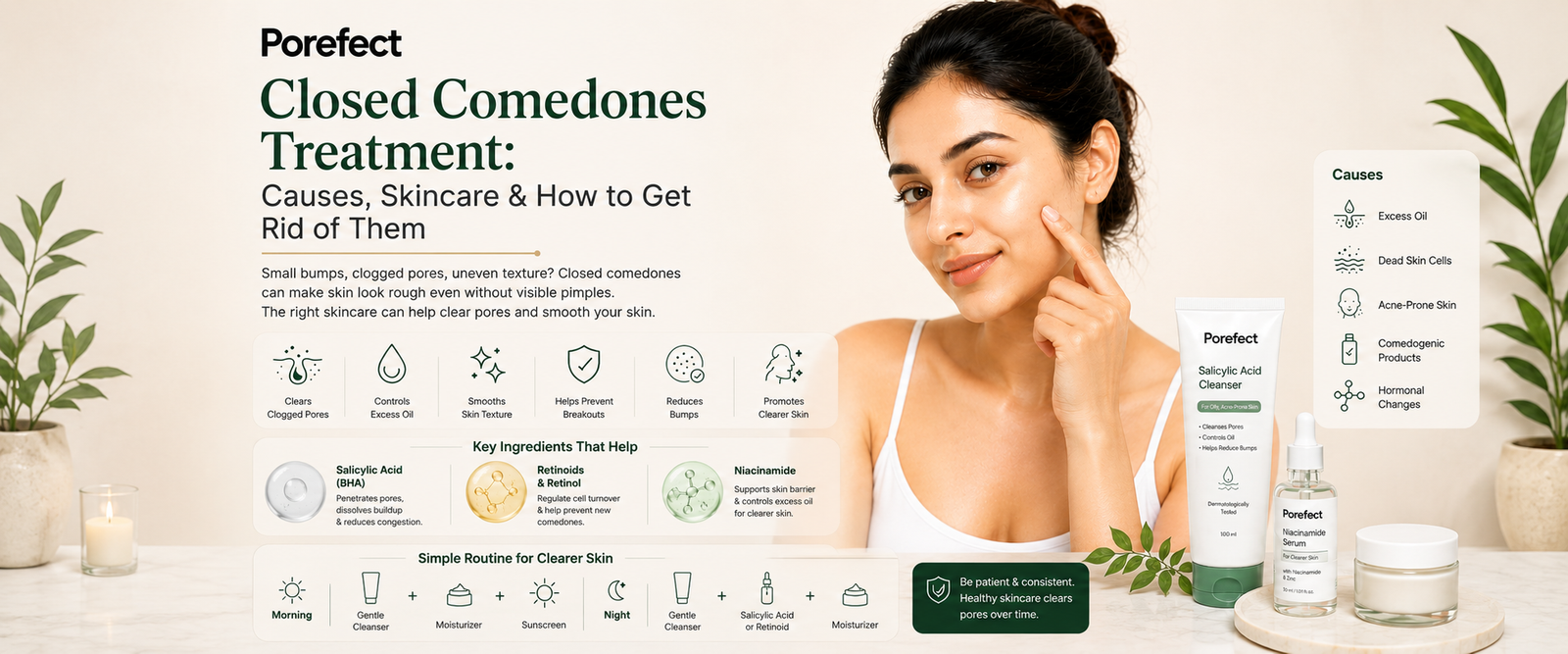
Closed Comedones Treatment: Causes, Skincare & How to Get Rid of Them
Closed comedones are small, flesh-coloured or white bumps that develop when oil, dead skin cells, and other material become trapped inside a hair follicle. They are common, especially on the forehead, cheeks, chin, and jawline, and can make the skin feel uneven even when there are no obvious pimples.
If you are looking for treatment for these small bumps, the goal is to prevent clogged pores, improve cell turnover, and reduce excess oil without irritating the skin. With consistent care, many clogged pores can improve, but they should not be squeezed or aggressively scrubbed.
What Are Closed Comedones?
Closed comedones are a type of non-inflammatory acne. Unlike blackheads, the pore opening is covered by a thin layer of skin, so the trapped material is not exposed to air.
They often appear as tiny bumps with little or no redness. Some may remain stable, while others can become inflamed and develop into acne lesions.
Common contributing factors include:
- Excess sebum production
- Accumulation of dead skin cells
- Acne-prone skin
- Comedogenic skincare or cosmetic products
- Hormonal changes
- Friction or occlusion in some cases
Understanding the cause is important when choosing products for clogged pores.
Best Treatment Approach
There is no single best treatment for everyone. A suitable routine usually focuses on keeping pores clear while maintaining the skin barrier.
Salicylic Acid
Salicylic acid is a beta-hydroxy acid (BHA) that can penetrate into oily pores and help loosen accumulated debris. This makes it a commonly used option, particularly for oily or acne-prone skin.
A salicylic acid cleanser can be useful for some people because it provides a short-contact application. However, stronger leave-on formulations may be more appropriate for certain persistent concerns.
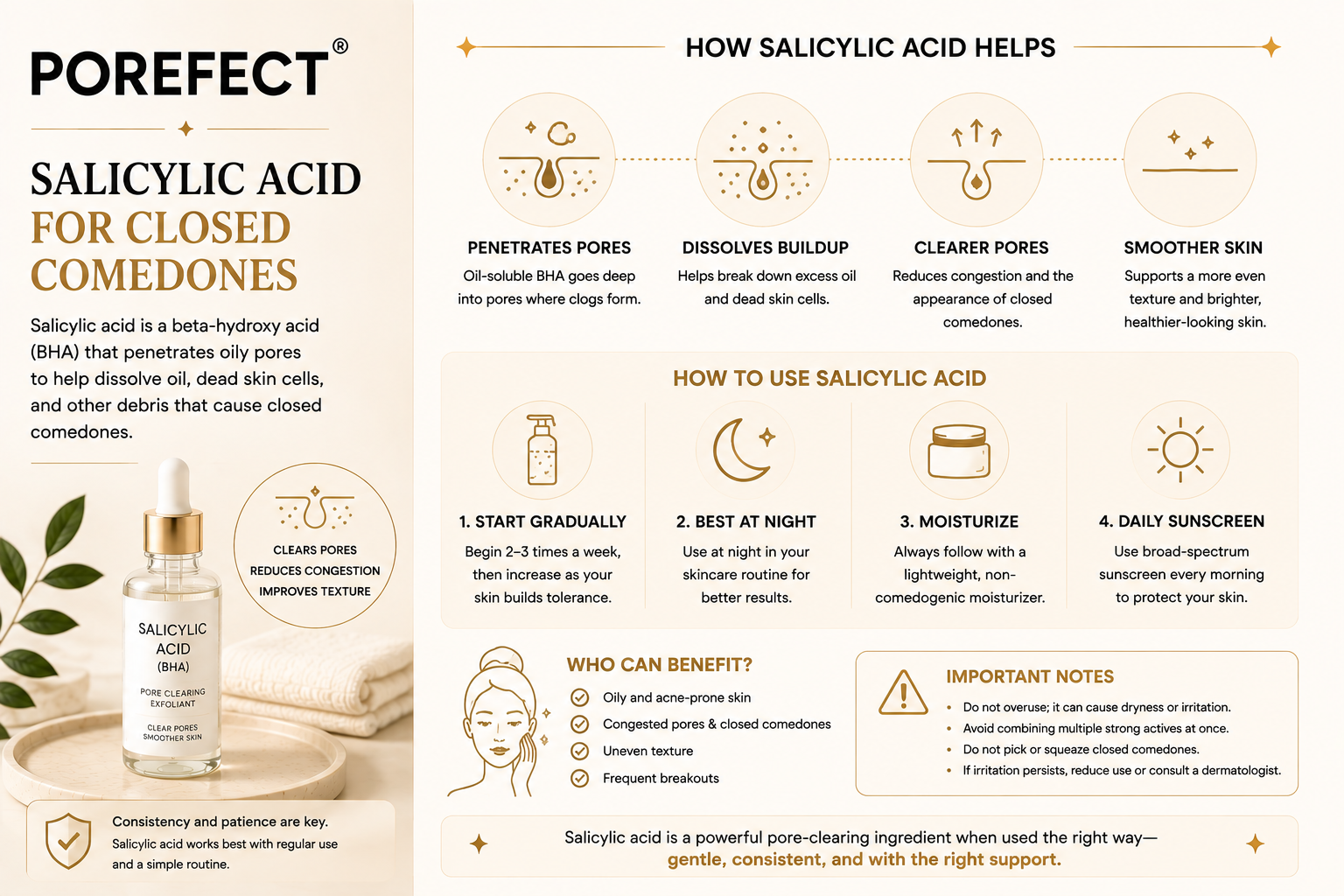
Start gradually rather than using exfoliating products too frequently. Excessive use can cause dryness and irritation.
Retinoids and Retinol
Retinoids help regulate skin-cell turnover and are commonly used in acne management. They can be useful when comedonal acne is persistent or recurs frequently.
Over-the-counter retinol is generally milder than prescription retinoids, while prescription options may be recommended by a dermatologist depending on the severity of the acne.
If you are considering retinol for clogged pores, introduce it gradually and use moisturizer to reduce irritation. Retinoids are generally avoided during pregnancy, so seek professional advice if you are pregnant or planning pregnancy.
Niacinamide
Niacinamide can support the skin barrier and may be helpful for people dealing with excess oil or sensitivity. It is not a primary pore-clearing treatment, but it can complement a simple acne-focused routine.
Best Cleanser for Clogged Pores
The best cleanser is not necessarily the strongest face wash. A cleanser should remove excess oil, sunscreen, and impurities without leaving the skin excessively dry or tight.
For oily or acne-prone skin, a gentle salicylic acid cleanser may be suitable. For sensitive or easily irritated skin, a mild non-stripping cleanser may be a better starting point.
When choosing a cleanser, consider how your skin feels after washing. Persistent tightness, burning, or excessive dryness can indicate that the product is too harsh.
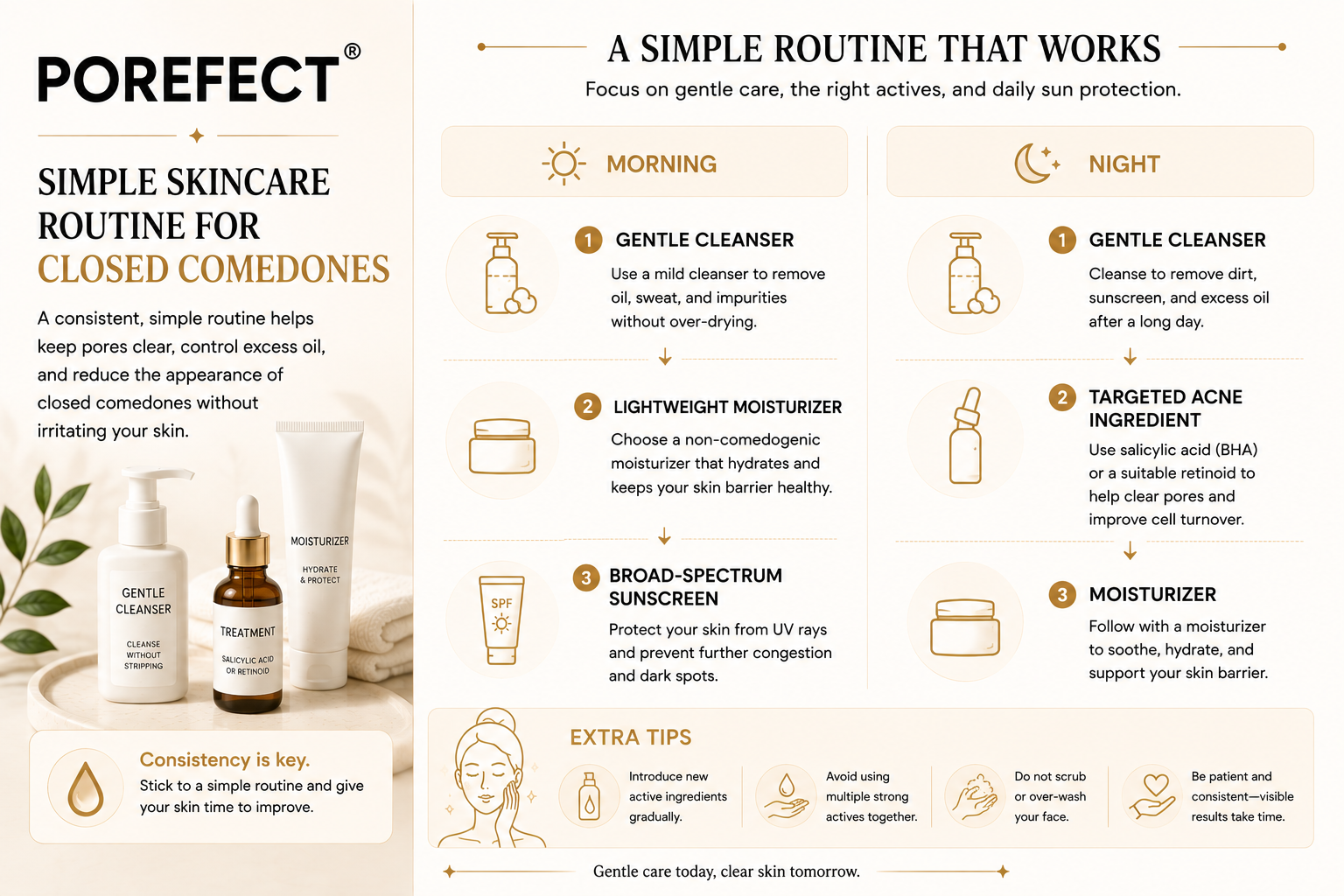
Simple Skincare Routine
A consistent routine is often more useful than constantly switching products.
Morning
- Gentle cleanser
- Lightweight, non-comedogenic moisturizer
- Broad-spectrum sunscreen
Night
- Gentle cleanser
- One targeted acne ingredient, such as salicylic acid or a suitable retinoid
- Moisturizer
Do not introduce several strong active ingredients at the same time. Combining multiple exfoliants and retinoids too quickly can irritate the skin and make acne management more difficult.
If you are using a cleanser for clogged pores, follow the product directions and adjust frequency according to your skin's tolerance.
Treatment at Home: What Actually Helps?
For people looking for treatment at home, the most useful approach is consistent, gentle skincare rather than aggressive removal.
Focus on:
- Using a suitable cleanser
- Keeping the routine simple
- Introducing salicylic acid gradually
- Considering a retinoid when appropriate
- Choosing non-comedogenic moisturizers and cosmetics
- Avoiding excessive oil-based or occlusive products if they worsen congestion
- Using sunscreen during the day
Avoid picking, squeezing, or digging at the bumps. This can cause inflammation, irritation, and potentially post-inflammatory marks.
How to Get Rid of These Bumps Safely
If you are wondering how to get rid of these bumps, patience is important. The aim is to reduce new blockages while gradually improving existing congestion.
Avoid trying to manually remove every bump at home. Extraction is best performed by a trained professional when appropriate. Attempting extraction with nails or unsterile tools can damage the skin.
A dermatologist can also determine whether the bumps are truly comedonal acne. Some conditions can look similar but require a different approach.
Common Mistakes to Avoid
Several skincare habits can make congestion or irritation worse:
- Scrubbing the skin aggressively
- Using too many exfoliating products
- Applying several acne treatments at once
- Picking or squeezing bumps
- Using heavy products that worsen congestion
- Washing the face excessively
- Skipping moisturizer because the skin is oily
A damaged skin barrier can make even appropriate acne treatments harder to tolerate. If your skin becomes persistently red, painful, burning, or excessively dry, simplify your routine.
When Should You See a Dermatologist?
Consider professional assessment if these bumps are widespread, persistent, repeatedly becoming inflamed, or not improving with a consistent routine.
A dermatologist can recommend the most appropriate treatment based on your acne pattern, skin type, sensitivity, and previous treatments. Professional options may include prescription retinoids or other acne medications when appropriate.
If the bumps are sudden, itchy, unusual, or do not respond to typical acne care, assessment is particularly useful because not every small facial bump is a comedone.
Frequently Asked Questions
What is the best face wash for closed comedones?
A gentle cleanser or a suitable salicylic acid cleanser can be useful depending on your skin type. The best option should clean effectively without causing excessive dryness or irritation.
Can salicylic acid remove closed comedones?
Salicylic acid can help reduce pore congestion by loosening accumulated material inside oily pores. Results depend on the individual and consistent use.
Is retinol good for closed comedones?
Retinol may help improve comedonal acne by supporting skin-cell turnover. It should be introduced gradually and may not be suitable for everyone.
Can I extract closed comedones at home?
It is better not to squeeze or manually extract them yourself. Professional extraction may be considered when appropriate.
How long does treatment take?
Improvement usually takes time and depends on the severity, routine, and treatment used. Consistency is more useful than repeatedly changing products.
Conclusion
Effective care is about keeping pores clear while protecting the skin barrier. A suitable cleanser, gradual use of salicylic acid or a retinoid when appropriate, non-comedogenic skincare, and consistent sun protection can form a practical routine.
If the bumps remain persistent or become inflamed, a dermatologist can help identify the cause and recommend a more individualized treatment plan.