Skin Care
Learn the causes of clogged pores on face, effective treatment options, salicylic acid skincare, and safe ways to unclog pores.
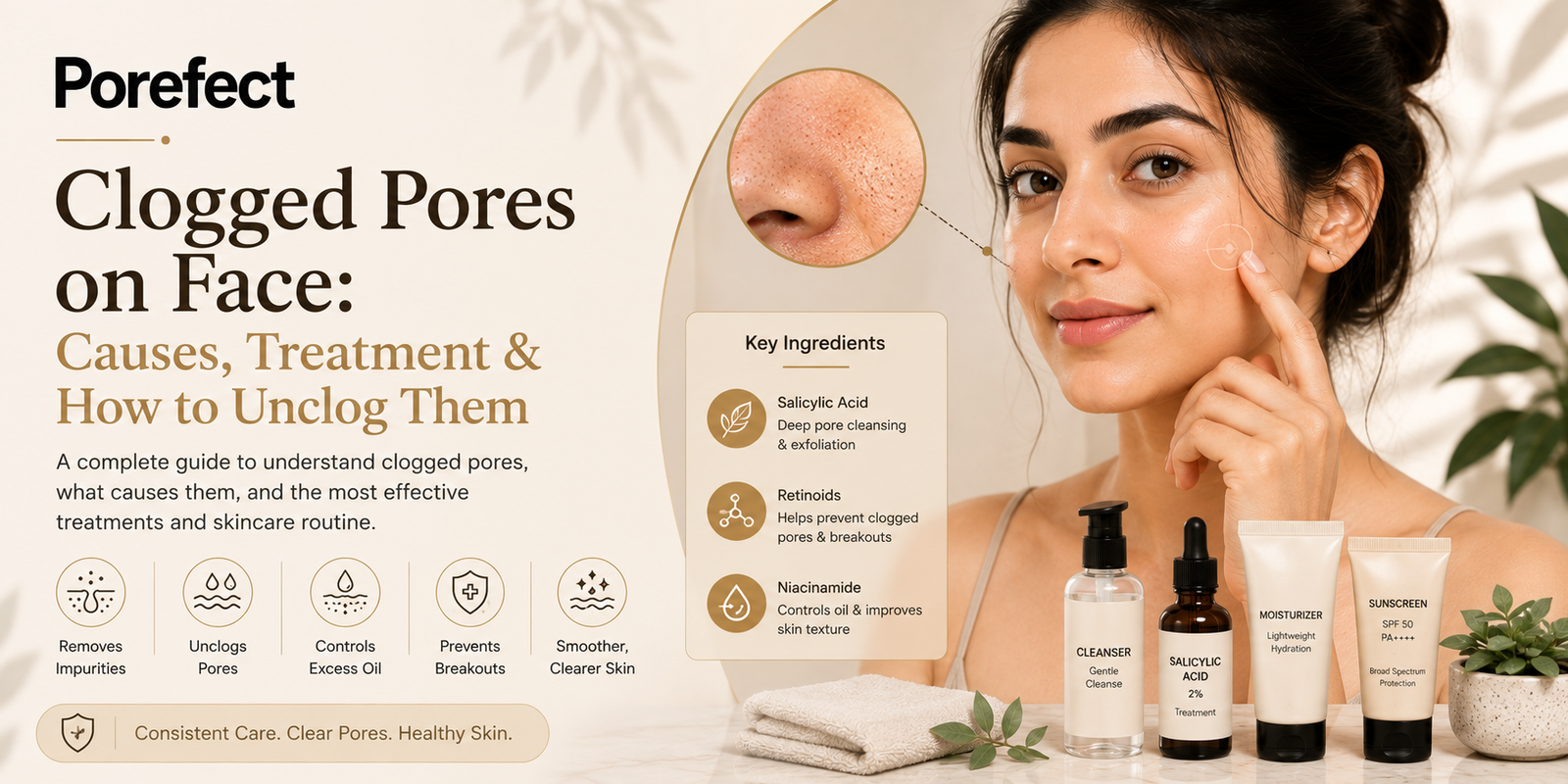
Clogged Pores on Face: Causes, Treatment & How to Unclog Them
Clogged pores on face are a common skincare concern, especially if your skin is oily, acne-prone, or frequently exposed to sweat, sunscreen, and environmental impurities. They may appear as blackheads, whiteheads, small bumps, or rough-looking skin texture.
Pores themselves are normal structures that allow sebum and sweat to reach the skin's surface. The problem occurs when excess sebum, dead skin cells, and other debris build up inside them. Understanding the cause is the first step toward choosing the right treatment for clogged pores on face.
What Causes Clogged Pores on Face?
Clogged pores on face develop when oil and dead skin cells accumulate around the opening of a hair follicle. Several factors can contribute to pore congestion:
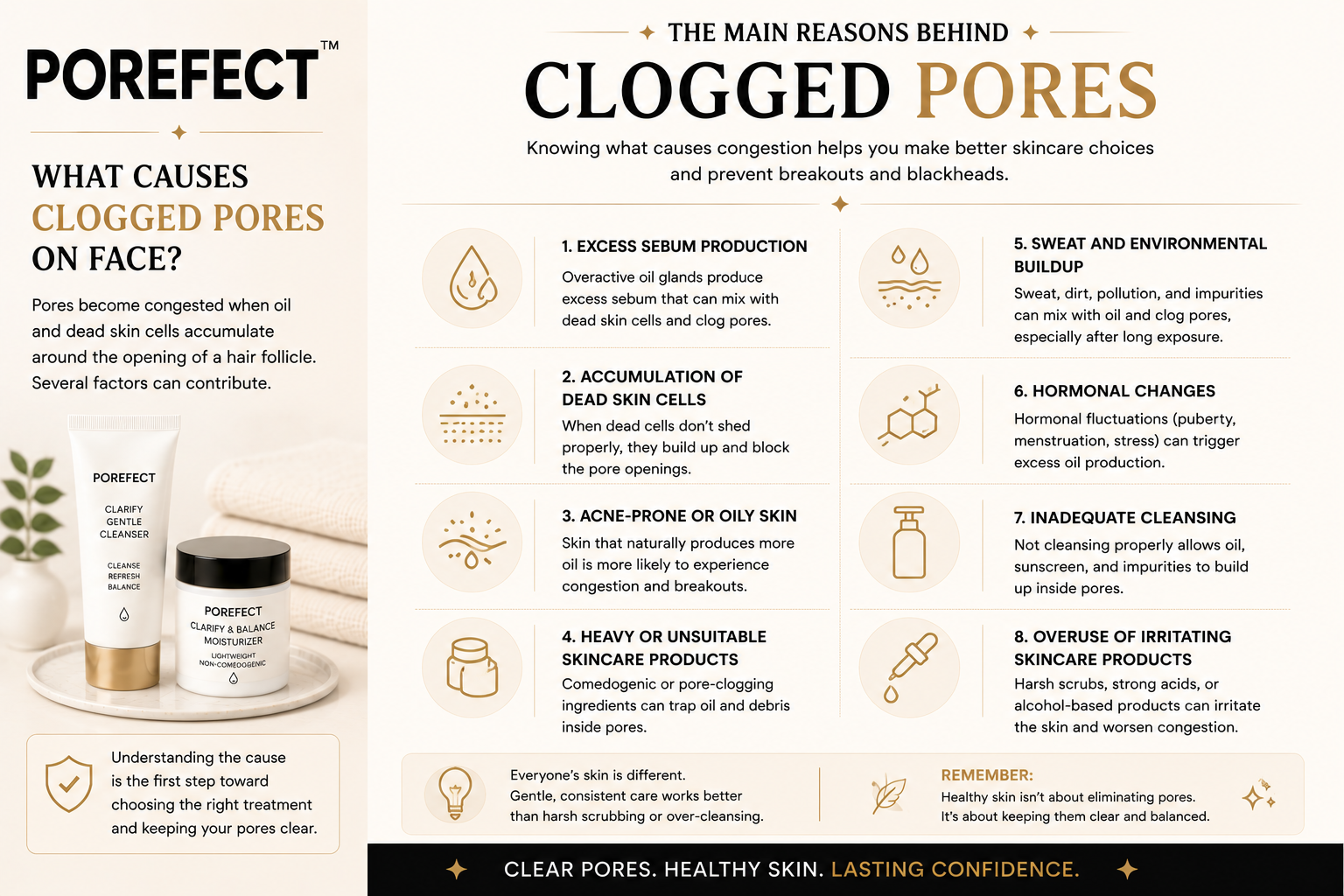
- Excess sebum production
- Accumulation of dead skin cells
- Acne-prone or oily skin
- Heavy or unsuitable skincare products
- Sweat and environmental buildup
- Hormonal changes
- Inadequate cleansing
- Overuse of irritating skincare products
Some people naturally have skin that produces more oil, making congestion more likely. However, aggressive cleansing or scrubbing is not the solution and may irritate the skin, potentially making clogged pores on face more noticeable.
What Do Clogged Pores Look Like?
Clogged pores on face can appear differently depending on what is accumulating inside them.
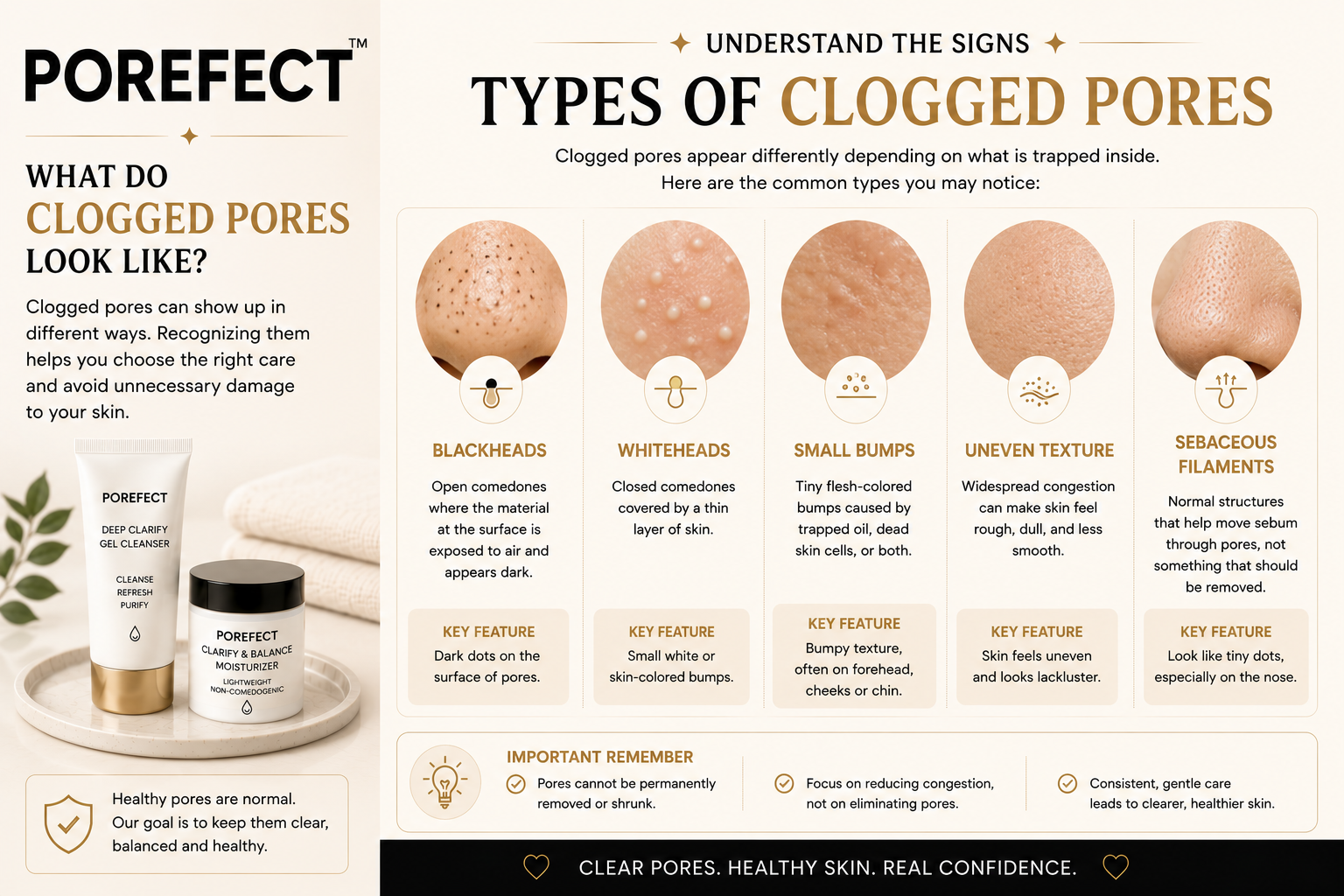
Blackheads are open comedones where the material at the surface becomes exposed to air and appears dark. Whiteheads are closed comedones covered by a thin layer of skin.
You may also notice small, flesh-coloured bumps or an uneven texture. When congestion becomes extensive, the skin may look rough or feel less smooth to the touch.
It is also important to distinguish clogged pores from sebaceous filaments. Sebaceous filaments are normal structures that help move sebum through pores. They are especially noticeable around the nose and are not something that can or should be permanently removed.
Clogged Pores Treatment: What Actually Helps?
Effective clogged pores treatment focuses on keeping excess oil and dead skin cells under control without damaging the skin barrier. The most suitable approach depends on your skin type, tolerance, and severity of congestion.
Salicylic Acid
Salicylic acid is a beta-hydroxy acid that can penetrate into oily pores and help loosen accumulated dead skin cells and sebum. It can be particularly useful for blackheads, whiteheads, and oily or congested skin.
Start gradually, especially if your skin is sensitive. Using it too frequently can cause dryness or irritation.
Retinoids
Retinoids can help normalize the shedding of skin cells within hair follicles, making them useful for comedonal acne and recurring congestion.
They can be effective but may initially cause dryness or irritation. Introduce them carefully and follow professional guidance when appropriate. Retinoids are generally avoided during pregnancy, so discuss suitable alternatives with a healthcare professional.
Gentle Cleansing
A gentle cleanser can remove excess oil, sunscreen, sweat, and surface impurities without excessively stripping the skin.
If you are looking for the best way to clean pores, remember that pores do not need aggressive scrubbing. Consistent, gentle cleansing is usually more appropriate for managing clogged pores on face.
How to Unclog Pores on Face Safely
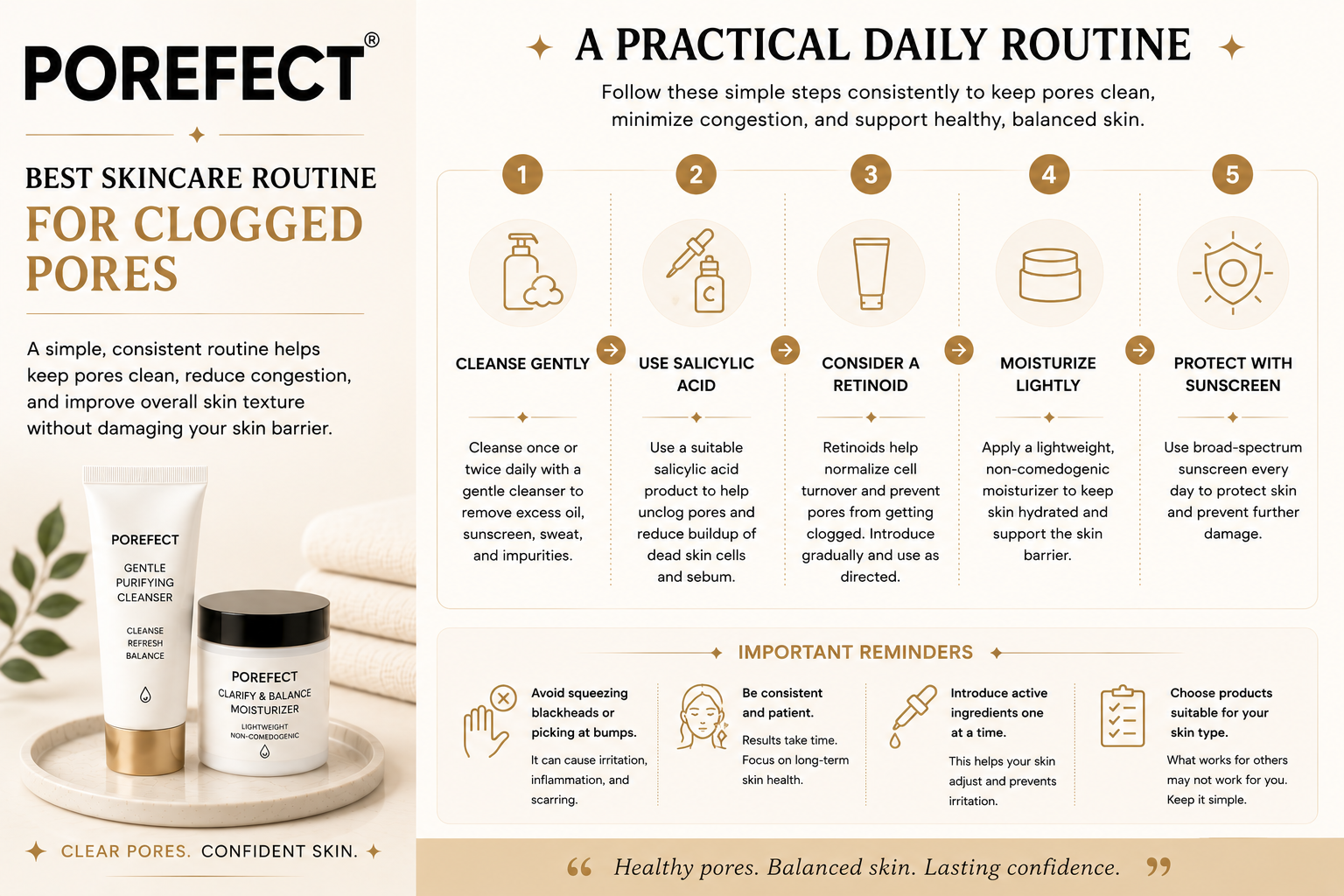
If you are wondering how to unclog pores on face, keep your routine simple and consistent. A practical routine for clogged pores on face can include:
- Cleanse gently once or twice daily depending on your skin and routine.
- Use a suitable salicylic acid product if your skin tolerates it.
- Consider a retinoid when appropriate for your concern.
- Apply a lightweight, non-comedogenic moisturizer.
- Use broad-spectrum sunscreen during the day.
- Avoid squeezing blackheads or repeatedly extracting bumps.
The goal is not to remove everything from your pores at once. Instead, focus on reducing recurring congestion while keeping the skin barrier healthy.
Products for Clogged Pores: How to Choose
The right products for clogged pores on face depend on your skin type and the severity of congestion.
For oily skin, lightweight non-comedogenic formulations may be more comfortable. If you have sensitive skin, choose a simpler routine and introduce active ingredients one at a time.
When searching for the best products for clogged pores sensitive skin, avoid assuming that stronger formulas are automatically better. Sensitive skin may benefit more from lower-frequency use and careful product selection.
If you have both congestion and blackheads, ingredients such as salicylic acid may address both concerns. Persistent or extremely clogged pores may require a more individualized treatment plan.
Best Skincare Routine for Clogged Pores
A practical skincare routine for clogged pores on face does not need to contain numerous products.
Morning
- Gentle cleanser
- Lightweight moisturizer
- Broad-spectrum sunscreen
Evening
- Gentle cleanser
- Salicylic acid or another appropriate treatment
- Moisturizer
If a retinoid is part of your routine, it is generally used at night and should be introduced gradually.
Avoid starting several exfoliating or acne-focused products at the same time. Irritation can weaken the skin barrier and make your skin more uncomfortable.
How to Prevent Clogged Pores
Once congestion improves, prevention becomes part of long-term skincare. These habits may help reduce recurring clogged pores on face:
- Cleanse consistently without over-washing.
- Remove makeup and sunscreen thoroughly.
- Choose non-comedogenic products when appropriate.
- Avoid frequently touching or squeezing the face.
- Keep pillowcases and items that regularly contact the face clean.
- Avoid excessive exfoliation.
- Maintain a simple routine that your skin tolerates.
Knowing how to prevent clogged pores is particularly useful for people who experience recurring blackheads or whiteheads.
When to See a Dermatologist
If clogged pores on face are persistent, painful, widespread, or associated with significant acne, professional assessment may be helpful.
A dermatologist can determine whether the problem is primarily clogged pores, comedonal acne, irritation, or another skin condition. Treatment may include prescription retinoids, other topical medications, or professionally selected procedures when appropriate.
For people searching for clogged pores treatment dermatologist, the key benefit is individualized assessment rather than simply choosing the strongest available product.
Common Mistakes to Avoid
Avoid these habits when trying to clear congested skin:
- Aggressive scrubbing
- Frequent squeezing or picking
- Using multiple exfoliating acids together
- Washing the face excessively
- Applying harsh DIY remedies
- Using heavy products that your skin does not tolerate
- Expecting pores to become permanently invisible
Pores are a normal part of healthy skin. Good skincare aims to reduce visible congestion and improve texture rather than eliminate pores.
Frequently Asked Questions
How do I clean clogged pores?
Use gentle cleansing and an appropriate pore-clearing ingredient such as salicylic acid. Avoid aggressive scrubbing or squeezing, as these habits may irritate the skin.
What is the best treatment for clogged pores?
There is no single best treatment for clogged pores for everyone. Salicylic acid, retinoids, and appropriate skincare can help depending on the type and severity of congestion.
Can clogged pores be permanently removed?
No. Pores are normal skin structures and cannot be permanently eliminated. The goal is to manage oil and dead skin buildup and reduce their visible appearance.
What are the best products for clogged pores and blackheads?
Products containing salicylic acid may be useful for blackheads and congestion. A lightweight moisturizer and daily sunscreen can also support a balanced routine.
Conclusion
Clogged pores on face are usually managed through consistent, gentle skincare rather than aggressive extraction. Start by understanding your skin type, choose appropriate ingredients, and avoid habits that cause irritation.
If you are looking for how to clean clogged pores or how to unclog pores on face, a simple routine built around gentle cleansing, suitable pore-clearing ingredients, moisturizer, and sunscreen is a practical place to start. Persistent or severe congestion deserves professional assessment so that the underlying cause can be addressed appropriately.