Skin Care
Learn how chemical peels may help hyperpigmentation, including peel types, benefits, risks, aftercare and professional treatment guidance.
Chemical Peel for Hyperpigmentation: Types, Benefits, Risks & Treatment Guide
Chemical peel for hyperpigmentation is a professional skin treatment that uses a carefully selected chemical solution to exfoliate the outer layers of the skin. Depending on the type and strength of the peel, it may help improve uneven skin tone, post-acne marks, sun-related pigmentation, and other superficial discoloration. However, not every peel is suitable for every type of pigmentation or skin tone. Choosing the right chemical peel depends on the cause of pigmentation, skin sensitivity, treatment history, and the depth of discoloration. Stronger does not necessarily mean better, and poorly selected peels can cause irritation or even worsen pigmentation.
What Is a Chemical Peel?
A chemical face peel involves applying a chemical solution to the skin for a controlled period to produce exfoliation. As the treated skin gradually sheds, newer skin becomes visible underneath.
Chemical peels vary considerably in their ingredients and depth. Superficial peels are generally used for concerns such as mild pigmentation and uneven texture, while deeper peels have more significant effects and require greater medical expertise and recovery.
For pigmentation concerns, the goal of a chemical peel for hyperpigmentation is usually controlled improvement rather than aggressive peeling. The appropriate treatment should be selected according to the individual's skin type, pigmentation pattern, and overall skin condition.
How Does a Chemical Peel Help Hyperpigmentation?
Hyperpigmentation develops when excess melanin makes areas of skin appear darker than the surrounding skin. A professionally selected peel can help by removing some pigmented superficial skin cells and promoting skin renewal.
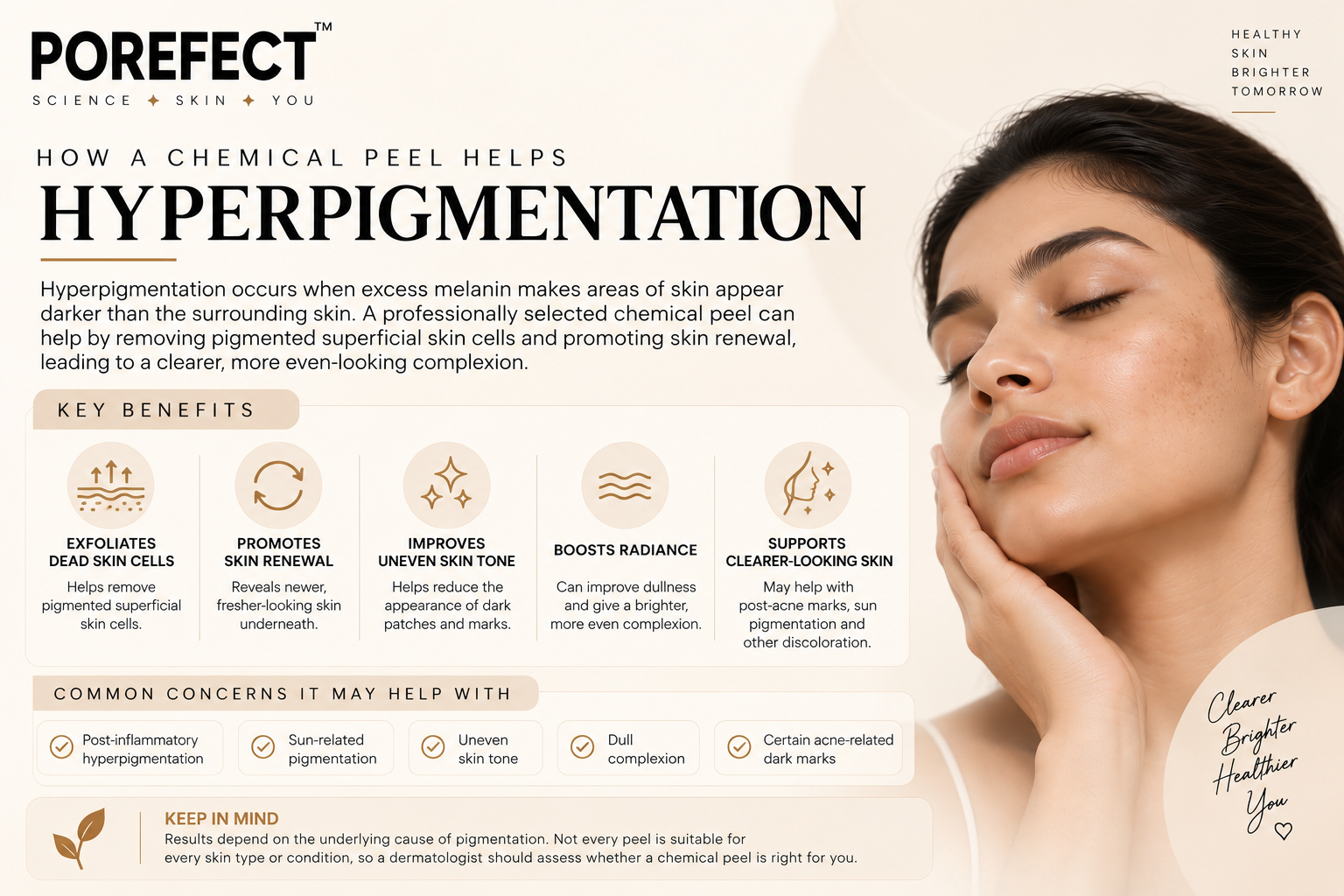
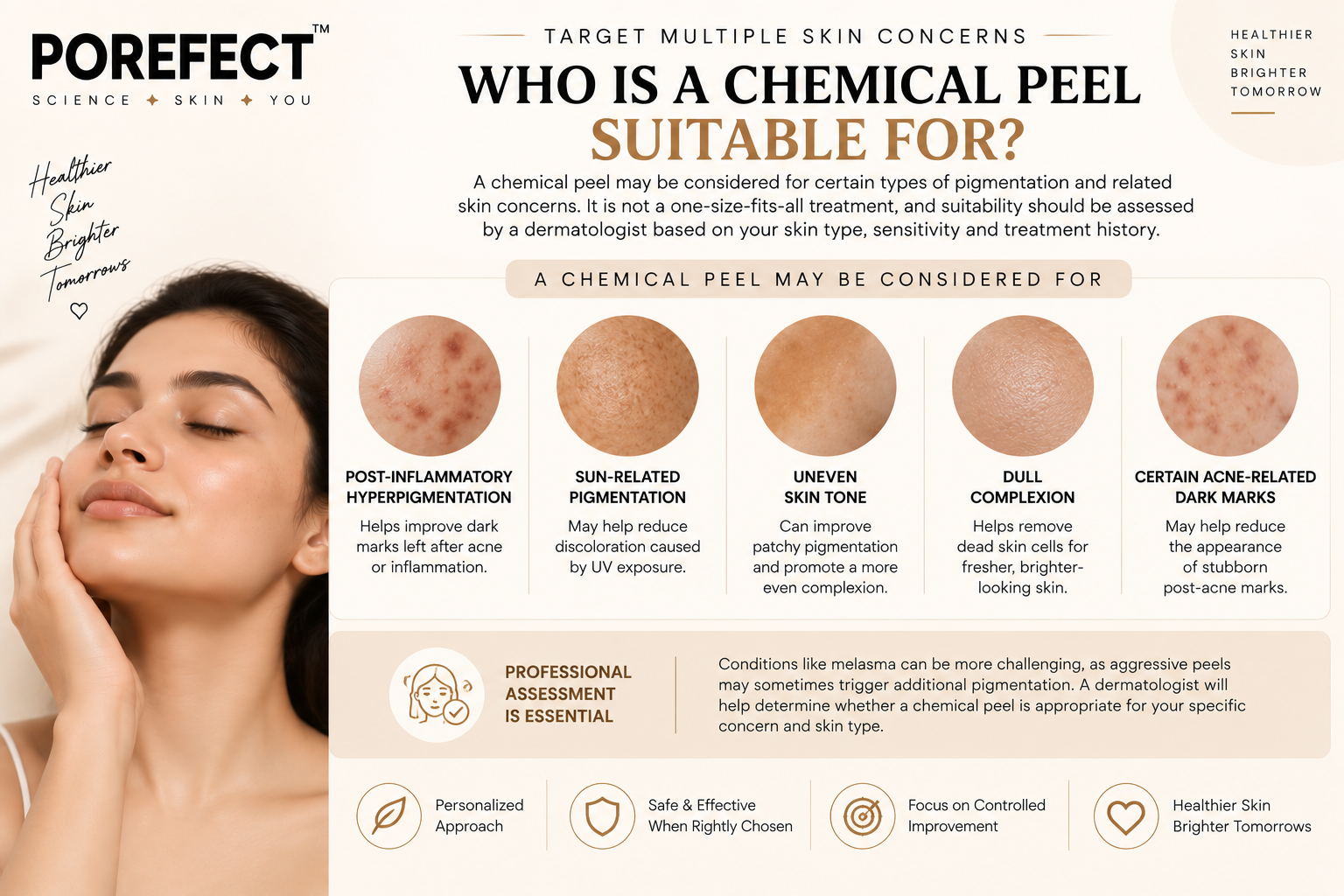
A chemical peel may be considered for:
- Post-inflammatory hyperpigmentation
- Mild sun-related pigmentation
- Uneven skin tone
- Dull complexion
- Certain acne-related dark marks
The results depend on the underlying cause. Melasma, for example, can be particularly challenging because aggressive procedures may sometimes trigger additional pigmentation.
For this reason, a dermatologist should determine whether a chemical peel for hyperpigmentation is appropriate before treatment.
Glycolic Peel and Glycolic Acid Peel
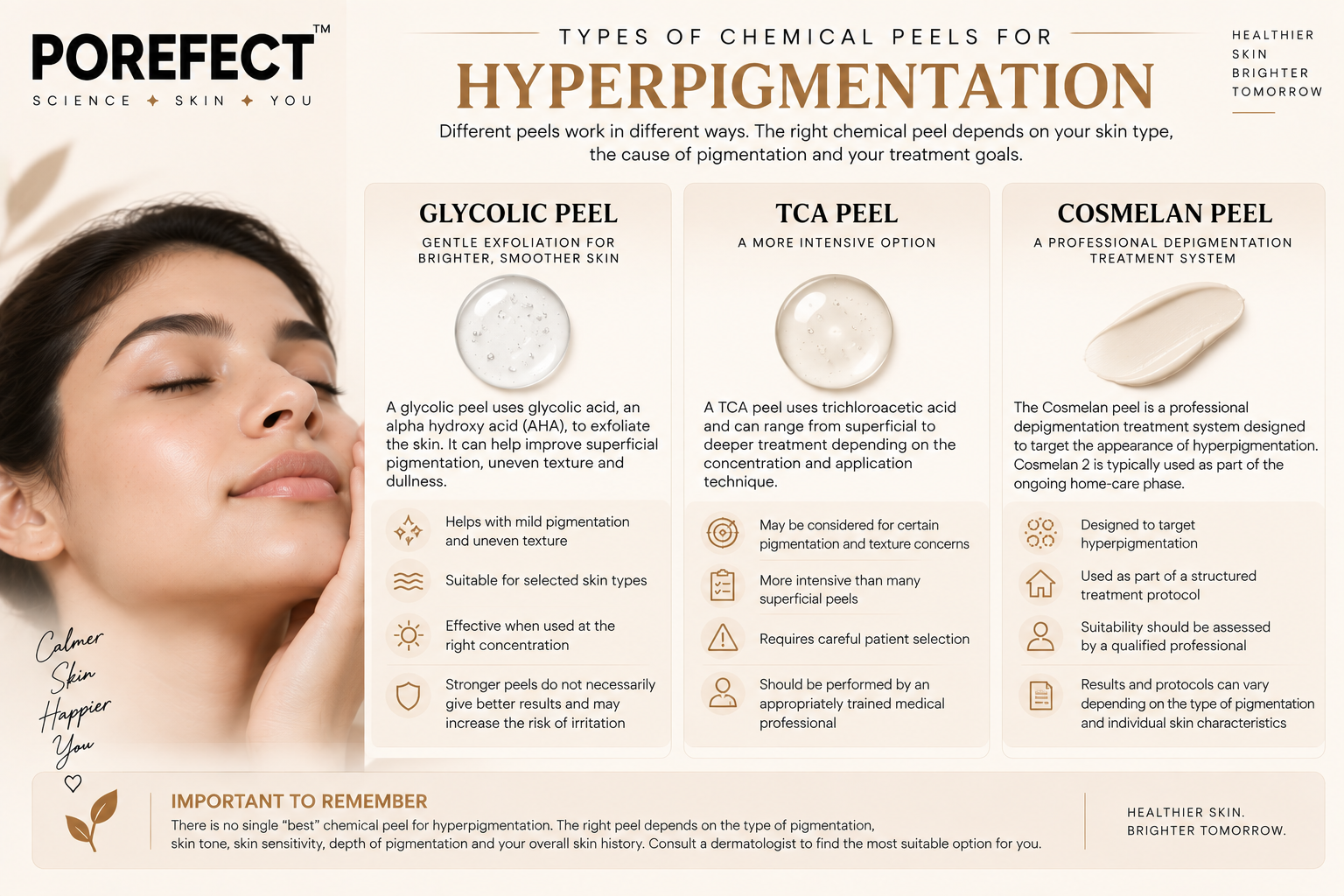
A glycolic peel uses glycolic acid, an alpha hydroxy acid (AHA), to exfoliate the skin. Because glycolic acid has a relatively small molecular size, it can provide effective exfoliation when used at an appropriate concentration.
A glycolic acid peel may be used professionally to address superficial pigmentation, uneven texture, and dullness.
The strength and duration of application should be selected according to the patient's skin and treatment objective. Using a stronger peel without proper assessment does not automatically produce better results and can increase the risk of irritation and post-inflammatory pigmentation.
For some people, a professionally selected glycolic peel can be part of a broader chemical peel for hyperpigmentation treatment plan.
TCA Peel and TCA Chemical Peel
A TCA peel uses trichloroacetic acid and can range from superficial to deeper treatment depending on the concentration and application technique.
A TCA chemical peel is more intensive than many superficial acid peels and therefore requires careful patient selection. It may be considered for certain pigmentation and texture concerns, but it is not appropriate for everyone.
In pigmentation-prone skin, particularly medium to deeper skin tones, inappropriate TCA use can increase the risk of post-inflammatory hyperpigmentation.
A TCA peel should therefore be performed by an appropriately trained medical professional rather than used as a DIY treatment.
What Is the Best Chemical Peel for Hyperpigmentation?
There is no universally best chemical peel for hyperpigmentation. The appropriate peel depends on several individual factors, including:
- Type of pigmentation
- Skin tone
- Skin sensitivity
- Depth of pigmentation
- History of acne or inflammation
- Previous cosmetic procedures
- Current skincare and medications
Superficial peels such as glycolic, lactic, or salicylic acid peels may be considered in selected patients. More intensive options require greater caution.
The best chemical peel is therefore the one that provides an appropriate level of exfoliation without unnecessarily damaging the skin barrier.
Cosmelan Peel and Cosmelan 2
The Cosmelan peel is a professional depigmentation treatment system designed to target the appearance of hyperpigmentation. It is commonly used as part of a structured treatment protocol rather than as a conventional single-acid peel.
Cosmelan 2 is typically used as part of the ongoing home-care phase associated with the Cosmelan treatment system.
Because pigmentation conditions vary significantly, suitability should be assessed by a qualified professional. Results and treatment protocols can differ depending on the type of pigmentation and individual skin characteristics.
Jessner Peel for Pigmentation
A Jessner peel is a superficial chemical peel traditionally formulated using a combination of exfoliating ingredients. It may be considered for concerns such as uneven tone, acne, and superficial pigmentation.
Like other peels, its suitability depends on the individual's skin type and condition. Repeated or overly aggressive exfoliation can irritate the skin and potentially make pigmentation more noticeable.
A professional should determine whether a Jessner peel is appropriate and how it should be incorporated into a chemical peel for hyperpigmentation treatment plan.
Phenol Peel: Is It Suitable for Hyperpigmentation?
A phenol peel is a deep chemical peel that produces significantly more extensive skin injury than superficial peels.
It is generally not the first choice for treating ordinary facial hyperpigmentation. Deep peels carry greater risks and require careful medical assessment, monitoring, and recovery.
For pigmentation concerns, especially in darker skin tones, deep phenol peeling can have significant complications and should not be considered a routine pigmentation treatment.
Can You Use an At Home Chemical Peel?
An at home chemical peel can sound appealing because many products are marketed as quick solutions for pigmentation. However, stronger chemical peels are not suitable for unsupervised use.
People searching for the best at home chemical peel should understand that concentration, pH, contact time, skin condition, and previous treatments all influence safety.
DIY high-strength acids can cause:
- Chemical burns
- Severe irritation
- Skin barrier damage
- Persistent redness
- Post-inflammatory hyperpigmentation
- Scarring in severe cases
A TCA peel at home is particularly risky and should not be attempted without appropriate professional supervision.
For home skincare, a gentle, properly formulated exfoliating product may be more appropriate than attempting a professional-strength peel. If pigmentation is persistent or worsening, professional assessment is safer than experimenting with strong acids.
How to Prepare for a Chemical Peel
Preparation depends on the type of peel and your skin condition. A professional may advise you to simplify your skincare routine before treatment and temporarily avoid certain irritating products.
Tell your dermatologist about:
- Current skincare products
- Prescription medications
- Recent cosmetic treatments
- History of cold sores
- Previous reactions to chemical peels
- Any tendency toward abnormal pigmentation
Do not perform a peel on actively irritated, sunburned, infected, or damaged skin unless specifically advised by a healthcare professional.
Chemical Peel Aftercare
After a peel, the skin may be temporarily sensitive, dry, red, or flaky depending on the treatment depth.
General aftercare may include:
- Following the provider's instructions
- Using a gentle cleanser
- Applying a bland moisturizer
- Avoiding picking or peeling the skin
- Avoiding unnecessary exfoliation
- Using broad-spectrum sunscreen
- Limiting excessive sun exposure
Sun protection is particularly important after pigmentation treatment because UV exposure can contribute to recurrence and prolong discoloration.
Good aftercare is an important part of achieving safer and more consistent results from a chemical peel for hyperpigmentation.
Chemical Peel vs Facial for Pigmentation
A regular facial and a chemical peel are not equivalent treatments.
A facial may temporarily improve hydration and surface smoothness, whereas a chemical peel uses a controlled chemical exfoliant to produce a more specific biological effect.
If your primary concern is pigmentation, the chemical face peel should be selected according to the diagnosis rather than simply choosing the most intensive treatment available.
When Should You See a Dermatologist?
Professional assessment is particularly important when pigmentation is persistent, widespread, recurrent, or difficult to identify.
A dermatologist can determine whether the discoloration is related to:
- Acne or inflammation
- Sun exposure
- Melasma
- Medication
- Post-procedure pigmentation
- Another skin condition
This assessment helps determine whether a chemical peel for hyperpigmentation is appropriate or whether another treatment approach would be safer and more effective.
FAQs
Which chemical peel is best for hyperpigmentation?
There is no single best peel for everyone. Superficial peels such as glycolic acid may be appropriate for some patients, while others may need a different approach. Skin type, pigmentation cause, and sensitivity should guide the choice.
Is a glycolic acid peel good for pigmentation?
A professionally selected glycolic acid peel may help improve superficial pigmentation and uneven skin tone. The concentration and treatment frequency should be appropriate for the individual's skin.
Can I do a TCA peel at home?
A TCA peel at home is not recommended because uncontrolled concentration, application, or contact time can result in burns, scarring, and worsening pigmentation.
How many chemical peels are needed for hyperpigmentation?
The number varies depending on the type and severity of pigmentation and the selected peel. Some people may require a series of treatments, while others may be better suited to alternative treatments.
Conclusion
A chemical peel for hyperpigmentation can be a useful professional treatment for selected pigmentation concerns, but the right peel matters more than choosing the strongest option. Glycolic peel, Jessner peel, and other superficial peels may be considered for appropriate patients, while treatments such as TCA chemical peel require greater caution.
Deep treatments such as phenol peel are not routine options for ordinary pigmentation, and DIY treatments—including a TCA peel at home—can cause serious skin damage.
For the safest approach, pigmentation should first be correctly identified and the peel selected according to your skin type, pigmentation, and treatment history. Consistent sunscreen and appropriate home skincare are also essential for maintaining improvements and reducing the risk of pigmentation returning.