Skin Care
Discover ceramide serum benefits for dry, dehydrated and sensitive skin, plus how to use ceramides to support a healthy skin barrier.
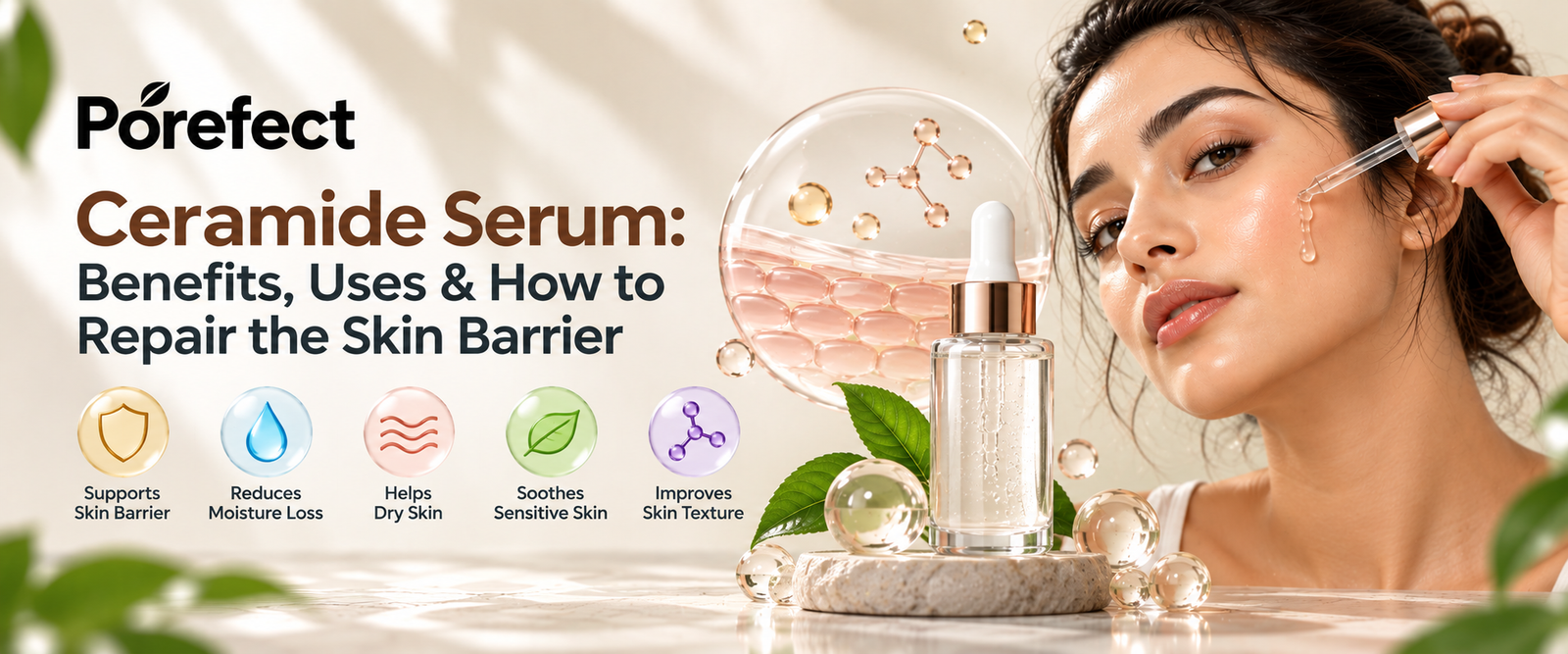
Ceramide Serum: Benefits, Uses & How to Repair the Skin Barrier
A ceramide serum can be a useful addition to a skincare routine when the skin feels dry, tight, rough, sensitive, or easily irritated. Ceramides are naturally occurring lipids found in the outermost layer of the skin. They help support the skin barrier, which plays an important role in keeping moisture in and protecting the skin from external irritants.
When the skin barrier becomes weakened by over-exfoliation, harsh cleansers, environmental stress, or excessive use of active ingredients, skincare products containing ceramides may help support barrier function and improve the feeling of dryness.
What Are Ceramides?
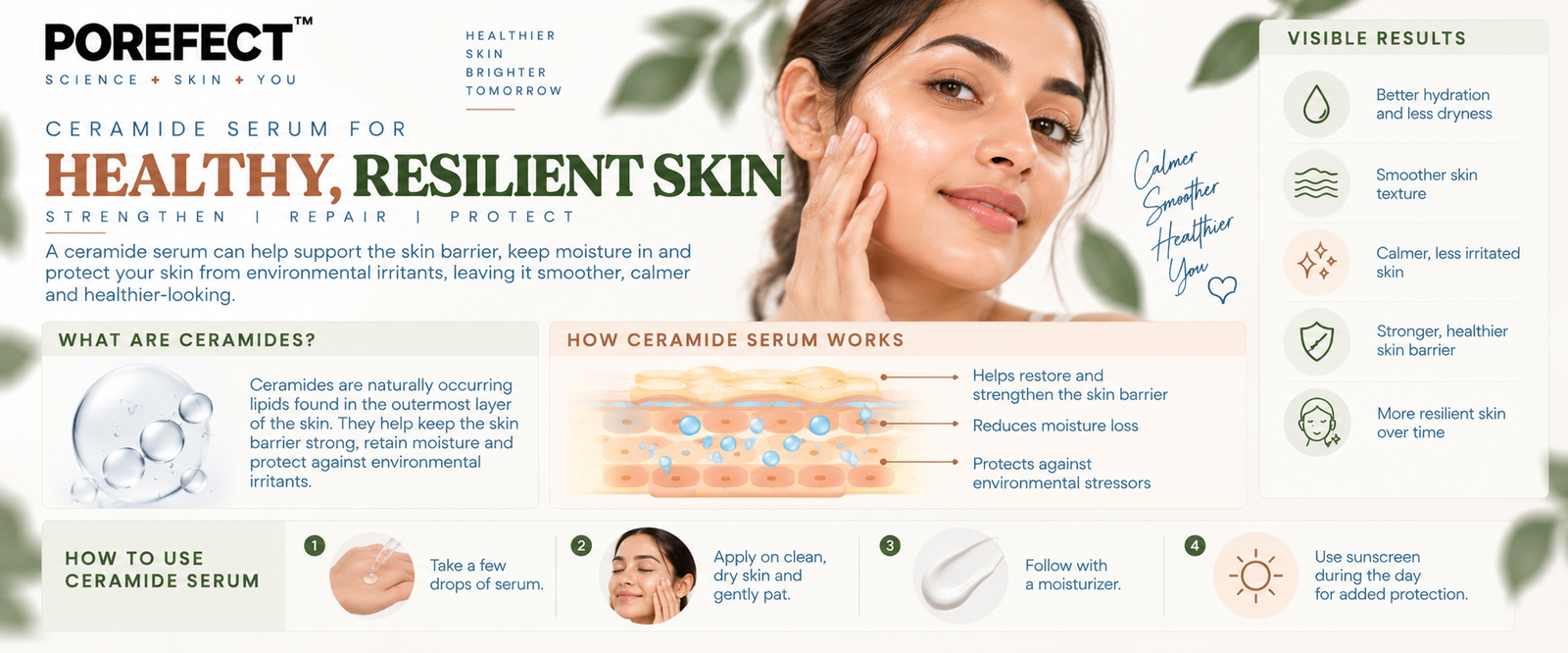
Ceramides are waxy, lipid-like substances that naturally occur in the skin. Along with cholesterol and fatty acids, they form part of the structure that helps maintain the skin barrier.
Think of the skin barrier as a protective layer that helps reduce excessive water loss while keeping unwanted irritants from easily penetrating the skin.
Ceramide levels can decrease with age and may also be affected by dry weather, frequent cleansing, certain skincare habits, and some skin conditions. This is why ceramides are commonly included in moisturizers, creams, lotions, and serums designed for barrier support.
What Is a Ceramide Serum?
A ceramide serum is a lightweight skincare product formulated with ceramides and other ingredients that may support hydration and the skin barrier.
Unlike heavier creams, serums are generally designed to have a lighter texture and can be layered underneath a moisturizer. Depending on the formulation, a ceramide serum may also contain ingredients such as hyaluronic acid, glycerin, panthenol, or other moisturizing agents.
However, the formulation matters more than the word "ceramide" on the label. A good barrier-supporting routine usually combines humectants, emollients, and occlusive ingredients rather than relying on one ingredient alone.
Benefits of Ceramides for the Skin
1. Supports the Skin Barrier
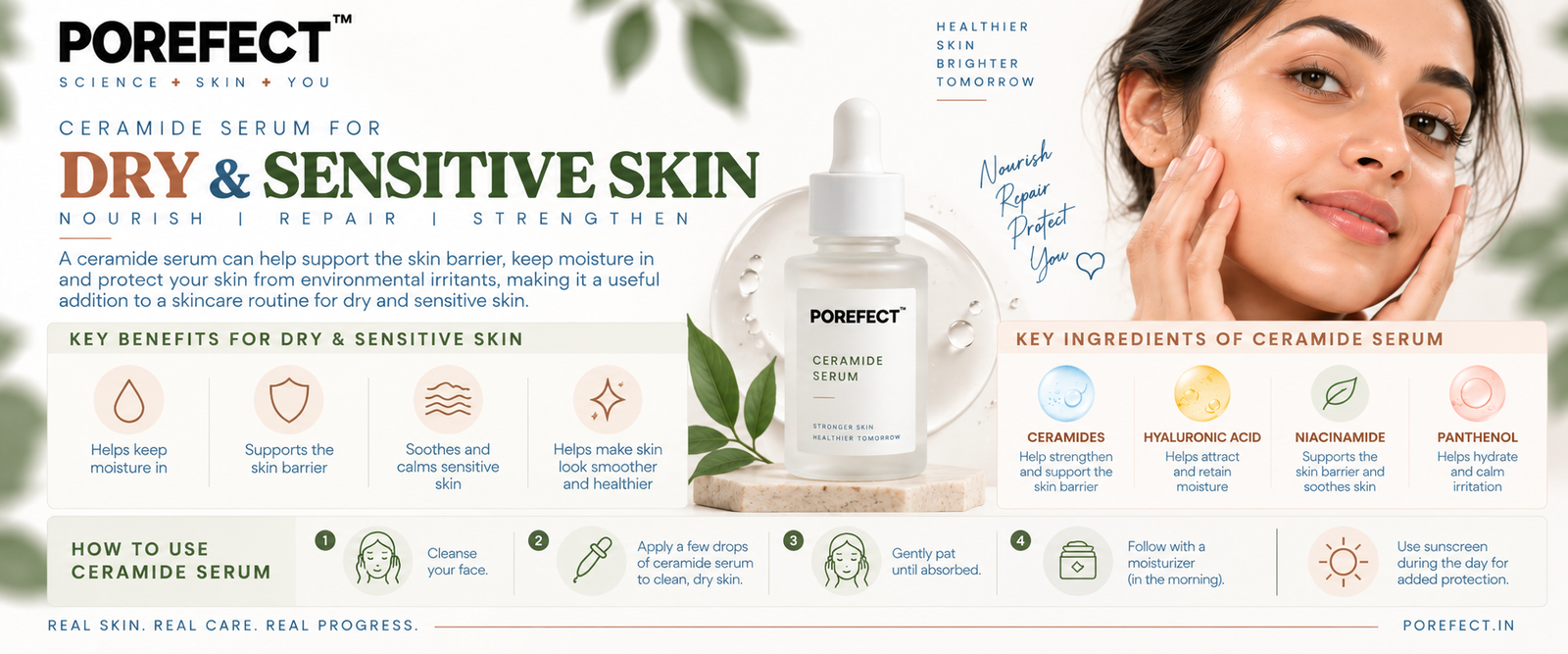
One of the main reasons people use ceramides is to support the skin barrier. When the barrier is compromised, the skin may feel dry, tight, rough, or more reactive than usual.
A ceramide-containing product can complement a gentle skincare routine designed to restore and maintain barrier function.
2. Helps Reduce Moisture Loss
A healthy skin barrier helps limit transepidermal water loss. Ceramides are part of the skin's natural lipid structure, so topical formulations containing them can be useful for maintaining skin hydration.
For very dry skin, applying a serum followed by moisturizer can provide additional barrier support.
3. Useful for Dry or Dehydrated Skin
Dryness and dehydration are not exactly the same. Dry skin generally lacks sufficient lipids, while dehydrated skin lacks water.
A ceramide barrier serum can be particularly useful when dryness occurs alongside dehydration because a well-formulated serum may provide hydration while ceramides support the lipid component of the barrier.
4. Can Be Helpful for Sensitive Skin
Sensitive skin often benefits from a simpler routine with fewer potentially irritating active ingredients. Ceramide-based products are commonly used in barrier-focused routines because they can provide support without relying on aggressive exfoliation.
If your skin is very reactive, introduce any new serum gradually and stop if persistent burning, swelling, or irritation develops.
How to Use a Ceramide Serum
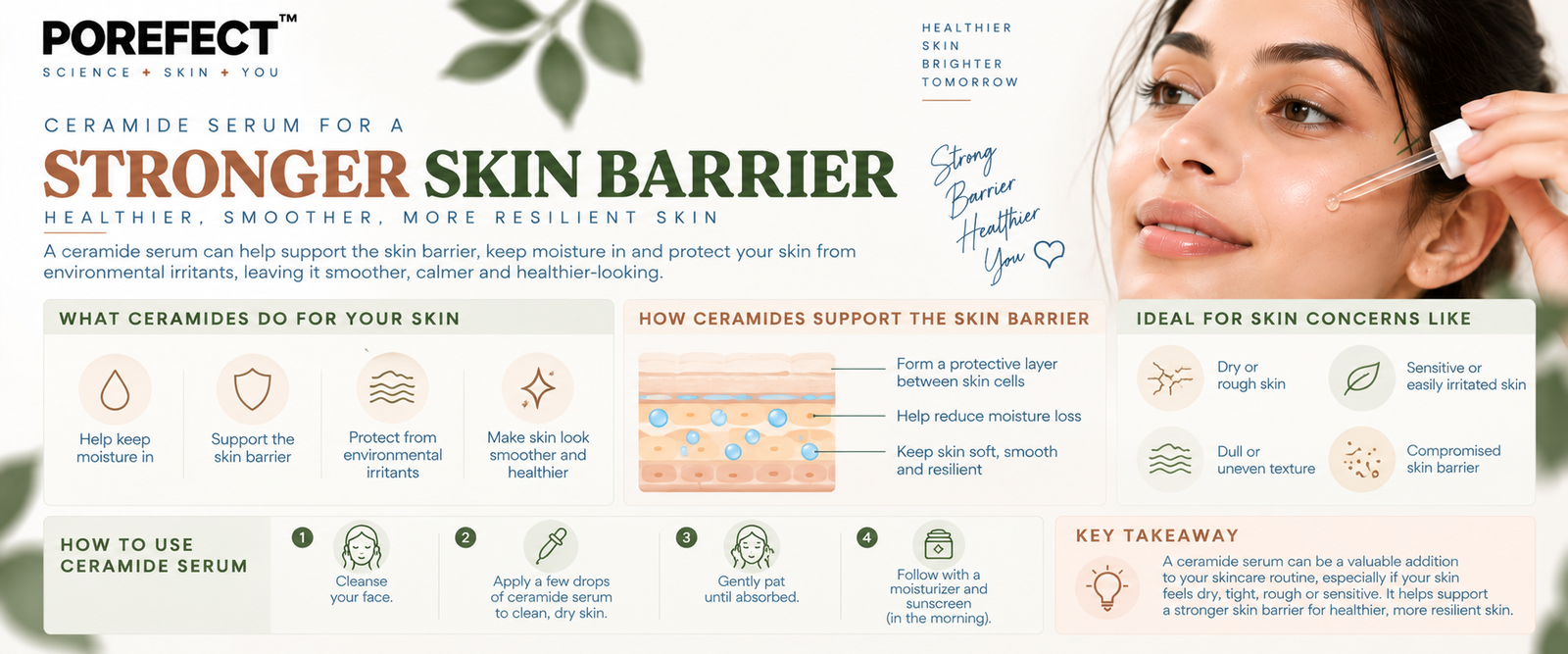
A simple routine is usually enough. The serum can be incorporated into either a morning or evening skincare routine depending on the product instructions.
Morning Routine
- Use a gentle cleanser if needed.
- Apply a few drops of ceramide serum to slightly damp or clean skin.
- Follow with moisturizer.
- Finish with broad-spectrum sunscreen.
Evening Routine
- Cleanse gently.
- Apply the serum.
- Apply moisturizer.
If you already use exfoliating acids, retinoids, or acne treatments, a ceramide serum can be incorporated into a routine to provide additional barrier support. However, adding multiple new products at once makes it difficult to determine which product is helping or causing irritation.
How to Choose the Best Ceramide Serum
There is no single best ceramide serum for everyone. The right choice depends on your skin type, concerns, and the overall formulation.
Look for products that combine ceramides with supportive moisturizing ingredients such as:
- Ceramides
- Glycerin
- Hyaluronic acid
- Panthenol
- Fatty acids
- Cholesterol
- Squalane
For oily or acne-prone skin, a lightweight serum may feel more comfortable. For dry or compromised skin, layering a serum underneath a richer moisturizer may be more useful.
Also consider fragrance and other potentially irritating ingredients if your skin is sensitive.
Ceramide Capsules vs Ceramide Serum
The term ceramide capsules can refer to products that package a skincare serum or treatment into individual capsules or single-use portions. The capsule format itself does not necessarily make a ceramide product more effective.
When comparing a capsule product with a serum in a bottle, focus on the ingredient list, concentration where disclosed, formulation, packaging stability, and how well the product fits your routine.
The delivery format is secondary to the actual formulation.
What About Cocokind Barrier Serum and Cocokind Ceramide Serum?
Cocokind barrier serum and Cocokind ceramide serum are examples of branded searches people may use when looking for ceramide-focused barrier products.
If you are comparing a specific product, check its current ingredient list and manufacturer's directions because formulations can change. Rather than choosing a product solely because it contains ceramides, consider whether the complete formula suits your skin type and whether you actually need a dedicated serum.
Common Mistakes When Repairing the Skin Barrier
Using too many active ingredients is one of the most common problems when trying to improve a compromised skin barrier.
Avoid combining several exfoliating products, frequent scrubbing, strong cleansers, and retinoids without considering your skin's tolerance. Over-cleansing and repeatedly changing products can also make irritation harder to manage.
A barrier-focused routine is usually simpler: gentle cleansing, adequate moisturization, appropriate treatment products, and daily sunscreen.
Frequently Asked Questions
Is ceramide serum good for dry skin?
Yes. A ceramide serum can support the skin barrier and complement a moisturizing routine for dry skin. For significant dryness, follow the serum with a suitable moisturizer.
Can I use ceramide serum every day?
Many ceramide serums are designed for regular use, including daily use. Follow the specific product instructions and reduce frequency if irritation develops.
Can ceramide serum help a damaged skin barrier?
It can support a barrier-focused routine, particularly when combined with gentle cleansing and adequate moisturization. Persistent redness, burning, cracking, or irritation may require professional evaluation.
Can I use ceramide serum with retinol or vitamin C?
Generally, ceramides can be incorporated into routines containing active ingredients such as retinoids or vitamin C. Using a barrier-supporting moisturizer or serum may also make an active-heavy routine more comfortable. Introduce products gradually rather than adding several actives simultaneously.
Final Thoughts
A ceramide serum can be a practical option for supporting the skin barrier, especially when the skin feels dry, tight, rough, or sensitive. Ceramides work as part of the skin's natural lipid structure and can complement ingredients that hydrate and moisturize the skin.
Rather than searching for one universally best ceramide serum, focus on a well-formulated product that matches your skin type and fits into a simple, consistent routine. Gentle cleansing, regular moisturization, and daily sun protection remain important parts of maintaining a healthy skin barrier.