Skin Care
Learn the causes of blackheads on nose, safe treatment options, the best face wash and products, and how to prevent clogged pores without irritating your skin.
Blackheads on Nose: Causes, Treatment & How to Get Rid of Them
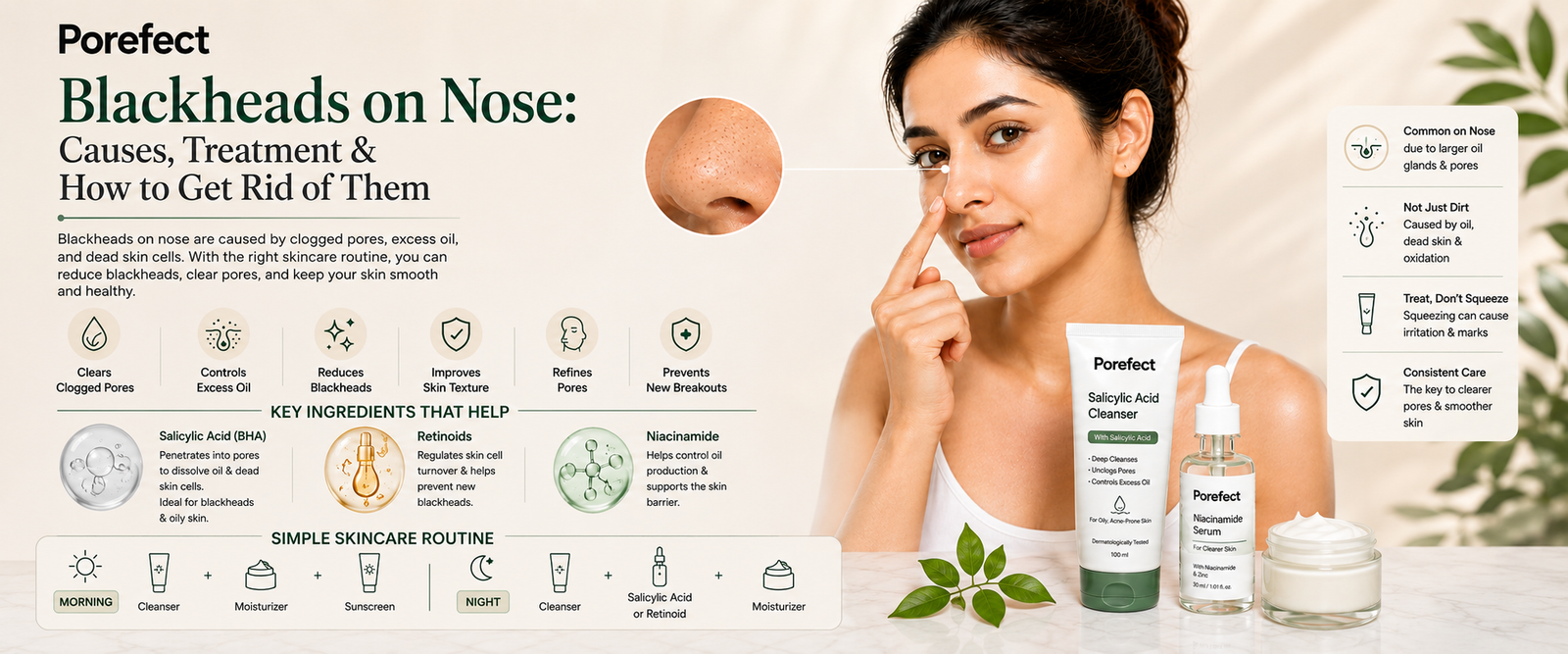
Blackheads on nose are one of the most common concerns for people with oily or combination skin. They appear as tiny dark dots and can make the skin look congested, especially around the nose. Although they can be frustrating, blackheads are usually manageable with the right skincare routine.
If you frequently notice blackheads on nose, the key is to understand why they form and choose a suitable blackhead treatment rather than repeatedly squeezing or scrubbing the skin. The goal is to reduce clogged pores and prevent new blackheads from forming, not to permanently eliminate pores.
What Are Blackheads?
Blackheads are a type of open comedone. They form when sebum, dead skin cells, and other material accumulate inside a hair follicle or pore. Because the opening remains exposed to air, the material at the surface oxidizes and appears dark.
The dark colour is not simply dirt. This is why washing the nose repeatedly or scrubbing harder does not necessarily remove blackheads.
The nose is particularly prone to congestion because it contains numerous sebaceous glands and may produce more oil than other areas of the face.
What Causes Blackheads on the Nose?
Several factors can contribute to blackheads on nose, including:
- Excess sebum production
- Accumulation of dead skin cells
- Oily or combination skin
- Hormonal changes
- Pore congestion
- Certain skincare or cosmetic products
- Inconsistent or overly aggressive cleansing
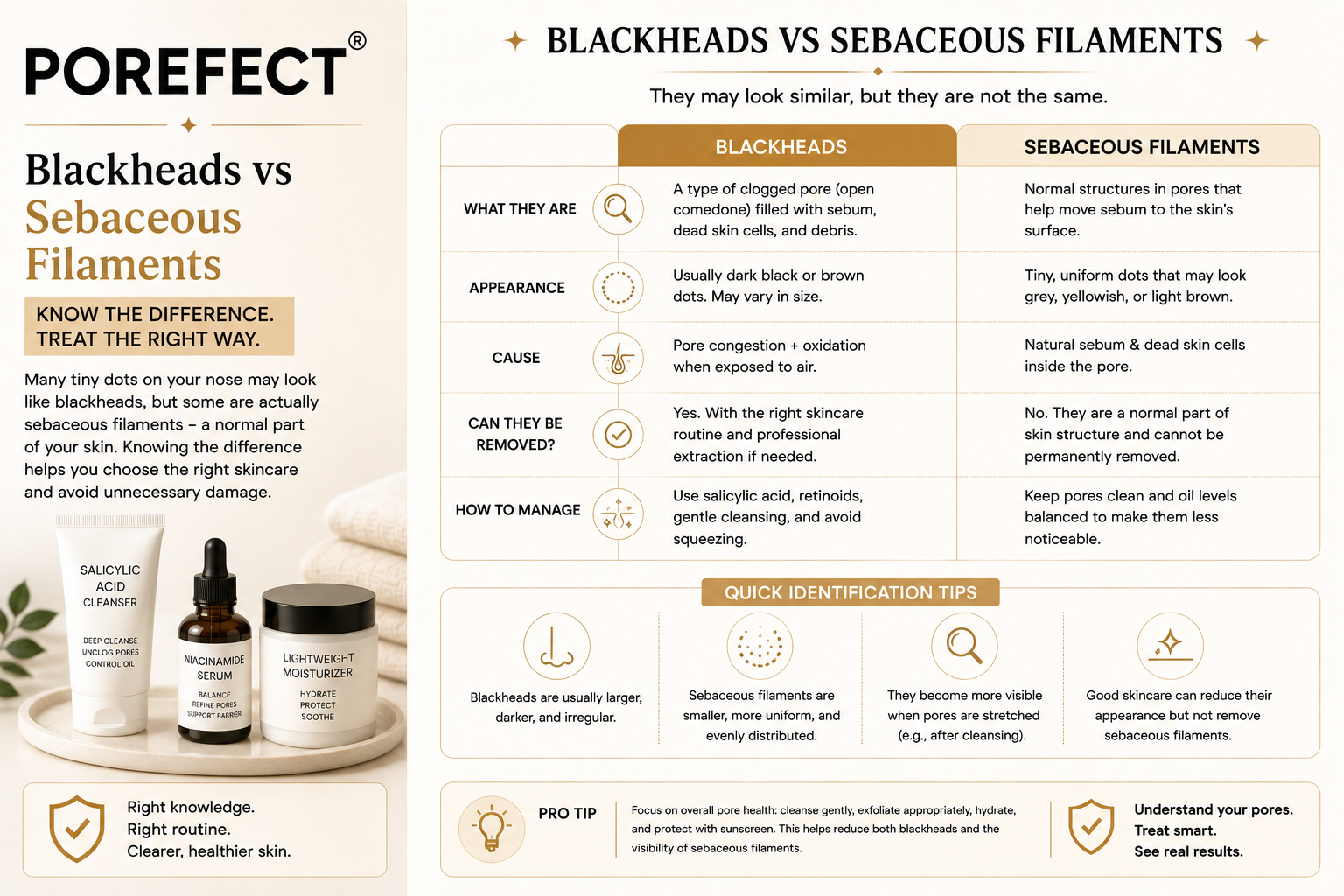
Some people also notice many tiny, evenly distributed dots across their nose that quickly return after cleansing. These may be sebaceous filaments rather than blackheads.
Blackheads vs Sebaceous Filaments
Sebaceous filaments are normal structures within pores that help move sebum toward the skin's surface. They are usually smaller and more uniform than blackheads and may appear grey, yellowish, or light brown.
Unlike blackheads, sebaceous filaments are a normal part of skin structure and cannot be permanently removed. They can, however, become less noticeable with appropriate skincare.
How to Remove Blackheads on Nose Safely
If you are wondering how to remove blackheads on nose, focus on gradually reducing pore congestion rather than trying to extract every blackhead at once.
Use Salicylic Acid
Salicylic acid is one of the most useful ingredients for blackhead-prone skin. It is a beta hydroxy acid (BHA) that can help loosen oil and dead skin cells within pores.
A salicylic acid cleanser may be suitable for oily or congested skin, while a leave-on formulation can provide more targeted exfoliation. Start gradually because excessive use can cause dryness and irritation.
Consider Retinoids
Retinoids can help regulate skin-cell turnover and reduce the formation of comedones. They may be particularly useful when blackheads are persistent or occur alongside acne.
Because retinoids can cause dryness and irritation, they should generally be introduced gradually. Anyone who is pregnant or planning pregnancy should seek professional advice before using a retinoid.
Moisturize and Protect Your Skin
Using moisturizer does not make blackheads worse when the product is appropriate for your skin. A lightweight, non-comedogenic moisturizer can help support the skin barrier.
Daily broad-spectrum sunscreen is also important, particularly if you are using exfoliating or retinoid-based products.
Best Way to Get Rid of Blackheads
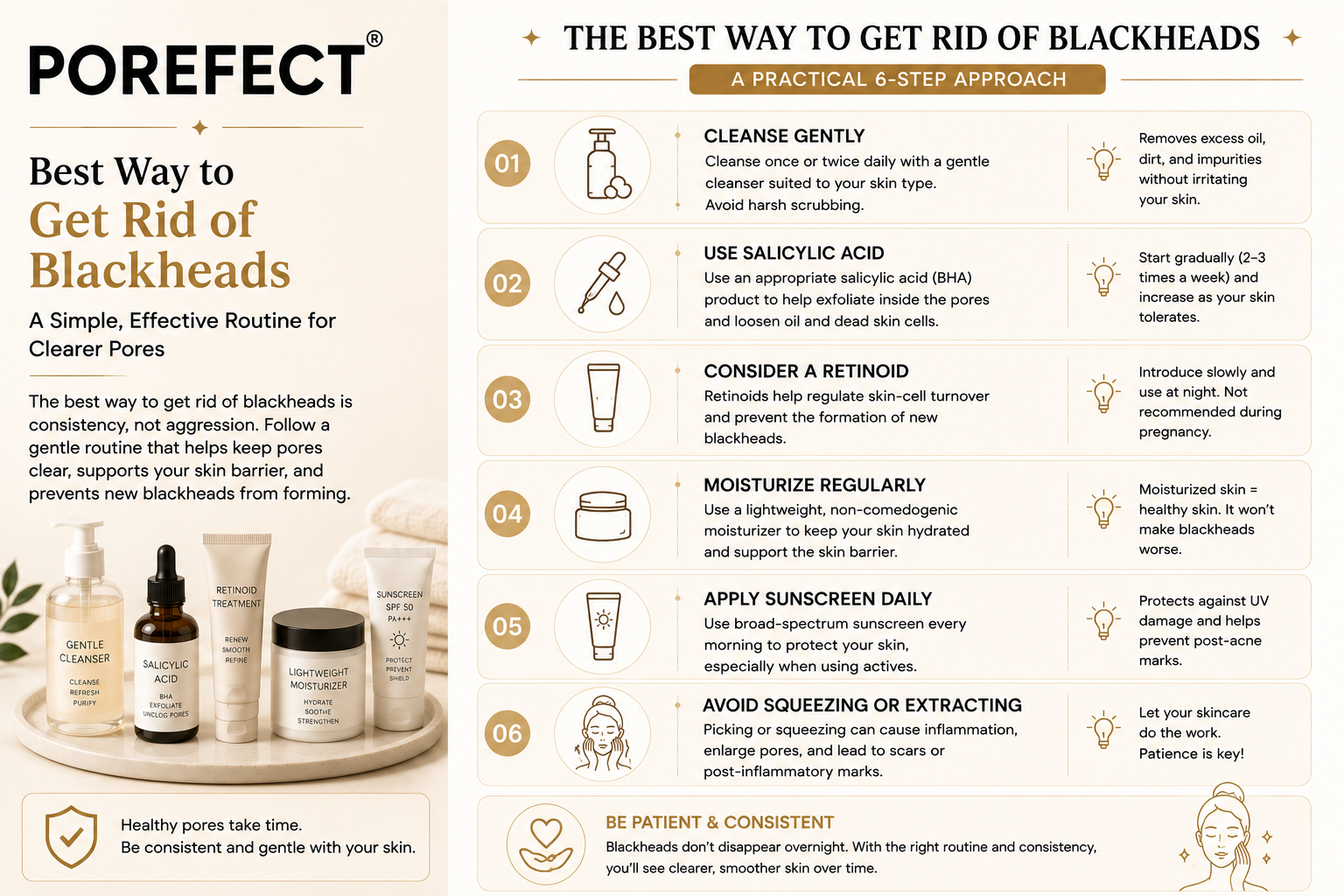
The best way to get rid of blackheads is usually a consistent routine rather than aggressive removal.
A practical approach includes:
- Cleanse gently once or twice daily, depending on your skin.
- Use an appropriate salicylic acid product if your skin tolerates it.
- Consider a retinoid when appropriate.
- Moisturize regularly.
- Apply sunscreen during the day.
- Avoid squeezing or repeatedly extracting blackheads.
If your skin becomes red, burning, excessively dry, or flaky, reduce active products and allow the skin barrier to recover.
Best Face Wash for Blackheads
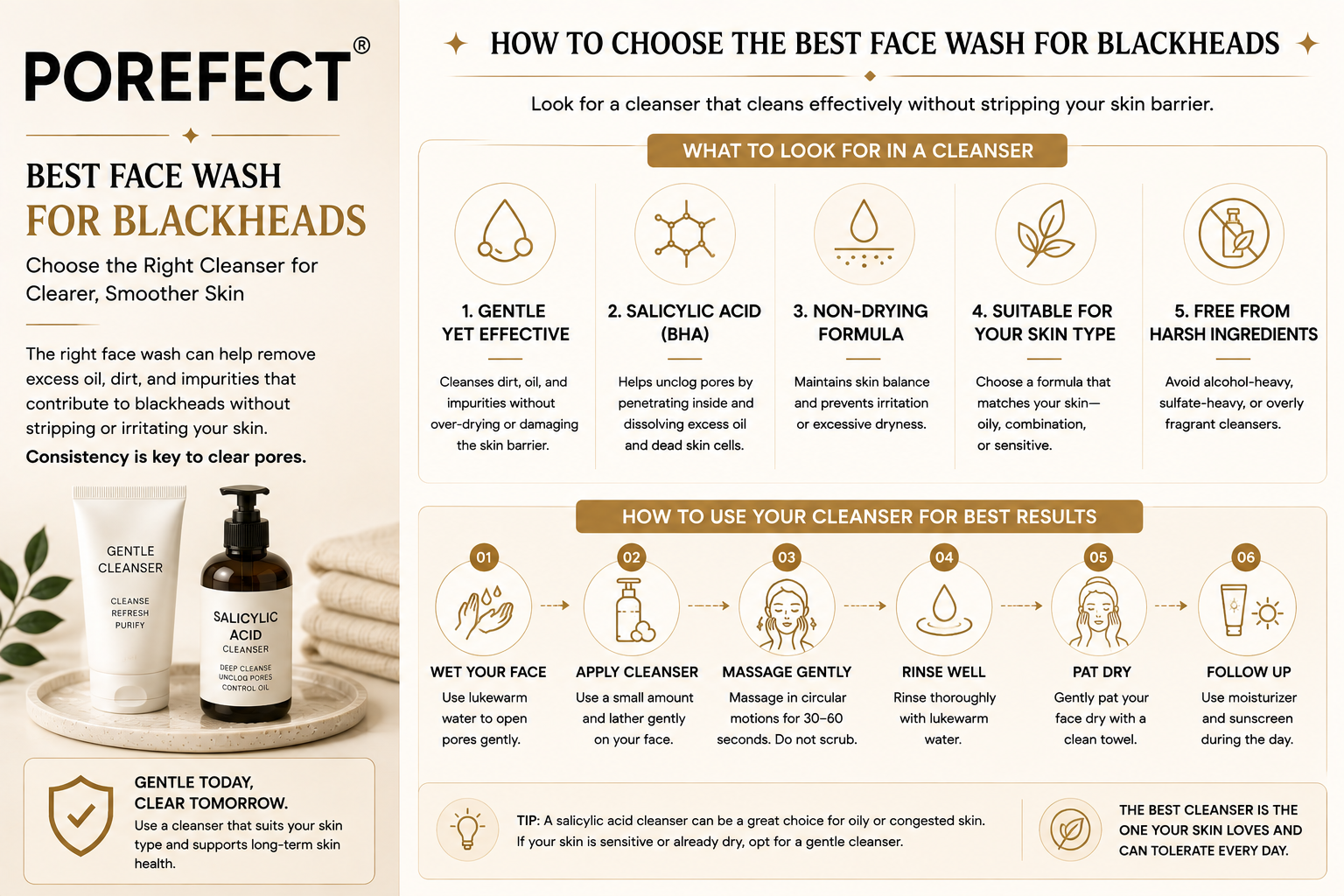
When searching for the best face wash for blackheads, look for a cleanser that removes excess oil without leaving the skin feeling stripped.
A salicylic acid cleanser can be a useful choice for oily or congested skin. However, it is not necessary for everyone. If your skin is sensitive or already dry, a gentle cleanser may be more appropriate.
The best product is one that suits your skin type and can be used consistently without causing irritation.
What About Blackhead Removers?
People often search for a blackhead remover, black head remover, or blackhead removal cream because they want a quick solution.
There is no cream that permanently prevents every blackhead. Products containing ingredients such as salicylic acid or retinoids can help manage congestion over time when used appropriately.
A blackhead extractor may physically remove some comedones, but applying too much pressure can injure the skin, cause inflammation, or leave marks. If extraction is necessary, professional extraction may be safer than repeated squeezing at home.
Best Products for Blackheads: How to Choose
The best products for blackheads depend on your skin type and the severity of congestion.
Oily Skin
Choose a gentle cleanser and lightweight, non-comedogenic moisturizer. Salicylic acid may be useful for excess oil and clogged pores.
Sensitive Skin
Prioritize gentle cleansing and barrier support. Introduce exfoliating ingredients slowly and avoid combining several active products.
Acne-Prone Skin
Salicylic acid may help with comedonal acne, while retinoids may be considered for persistent comedones. A dermatologist can recommend an appropriate routine when acne is significant.
How Long Does It Take to Get Rid of Blackheads?
Blackheads generally do not disappear after one cleansing session or treatment. Improvement depends on factors such as the amount of congestion, skin type, products used, and how consistently the routine is followed.
Some people may notice changes gradually as clogged pores become better controlled, while persistent congestion can require a longer-term approach.
If blackheads on nose continue despite consistent skincare, professional assessment can help determine whether another type of acne or skin concern is contributing.
Common Mistakes to Avoid
Avoid these common habits when treating blackheads:
- Repeatedly squeezing blackheads
- Scrubbing the nose aggressively
- Using several exfoliating acids together
- Washing the face excessively
- Applying toothpaste, lemon juice, baking soda, or other harsh DIY remedies
- Skipping moisturizer because the skin is oily
- Expecting overnight results
Irritation can compromise the skin barrier and make your skin more uncomfortable, so gentle and consistent care is usually preferable.
When Should You See a Dermatologist?
Consider seeing a dermatologist if blackheads are persistent, extensive, painful, associated with inflammatory acne, or not improving despite an appropriate skincare routine.
A dermatologist can assess your skin and determine whether you are dealing with blackheads, sebaceous filaments, acne, or another type of congestion. Professional treatment may include prescription medications or carefully performed extraction when appropriate.
Frequently Asked Questions
Why Do Blackheads on My Nose Keep Coming Back?
The skin continuously produces sebum and sheds skin cells, so pores can become congested again. Pores cannot be permanently closed or eliminated. The goal is ongoing management and reducing visible congestion.
How Can I Get Rid of Blackheads on My Nose?
Gentle cleansing, salicylic acid, appropriate retinoid use, moisturizer, and sunscreen can help manage blackheads. Avoid squeezing or aggressive scrubbing.
Is There a Blackhead Removal Cream?
Some creams or gels containing ingredients such as salicylic acid or retinoids may help reduce clogged pores. However, no product can guarantee permanent blackhead removal.
Can a Blackhead Extractor Remove Blackheads?
An extractor can remove some comedones, but improper pressure may damage the skin. Professional extraction is a safer option when extraction is appropriate.
Are All Dark Dots on the Nose Blackheads?
No. Some may be sebaceous filaments, which are normal structures within the pores. They can become less noticeable but cannot be permanently eliminated.
Conclusion
Managing blackheads on nose is less about finding a quick blackhead remover and more about maintaining a routine that keeps pores clear without irritating the skin. Gentle cleansing, suitable pore-clearing ingredients, moisturizer, and daily sunscreen can provide a practical foundation.
If blackheads remain persistent or are accompanied by significant acne or irritation, professional assessment can help identify the most appropriate treatment.