Skin Care
Learn about the best treatment for melasma on face, including skincare, sunscreen, chemical peels and dermatologist-guided treatment options.
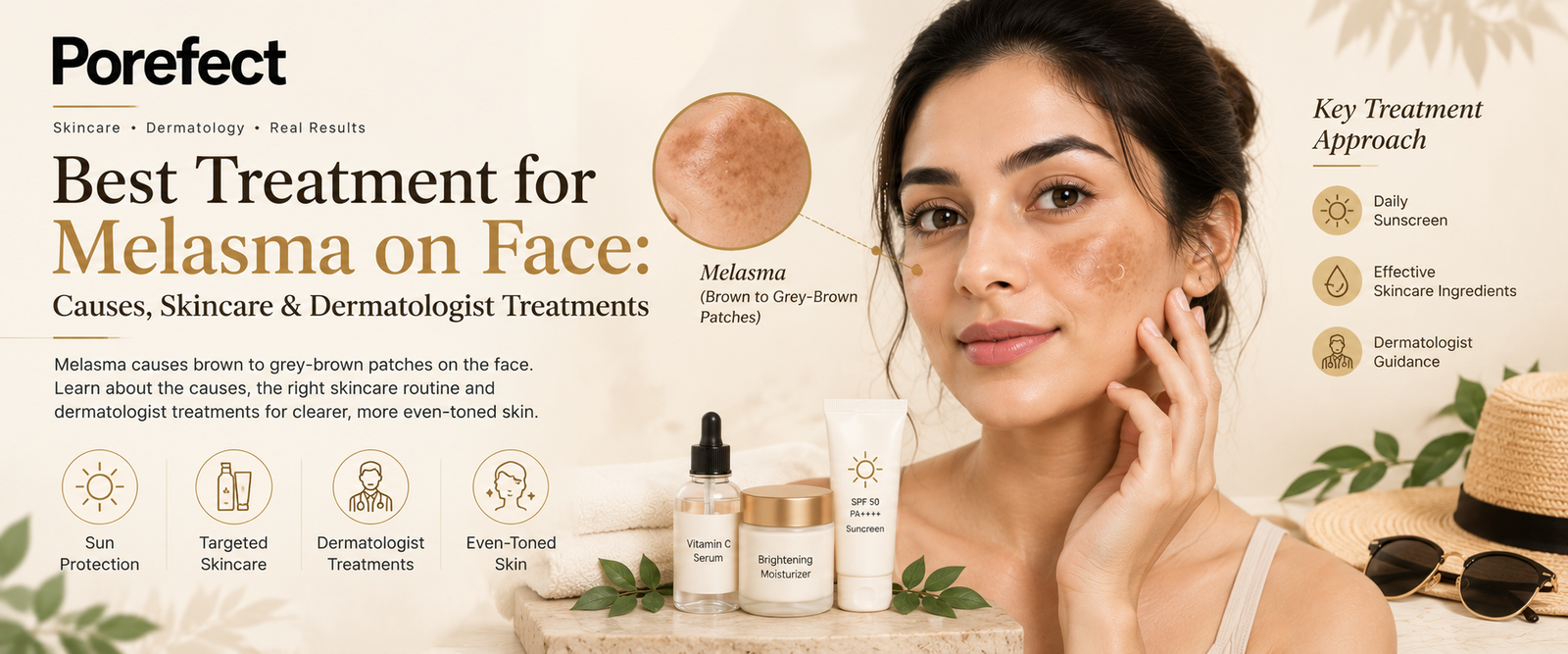
Best Treatment for Melasma on Face: Causes, Skincare & Dermatologist Treatments
Finding the best treatment for melasma on face can be challenging because melasma is a persistent pigmentation concern that may have several contributing factors. It commonly causes brown to grey-brown patches on the cheeks, forehead, upper lip and nose. Sun exposure, hormonal changes and genetic susceptibility can all play a role.
The best treatment for melasma on face usually involves a combination of consistent sun protection, suitable skincare ingredients and, when necessary, dermatologist-guided treatments. The goal is not simply pigmentation removal but long-term control, gradual improvement and prevention of recurrence.
What Causes Melasma on the Face?
Melasma develops when melanocytes, the cells responsible for producing melanin, become overactive. Several factors can contribute to this process.
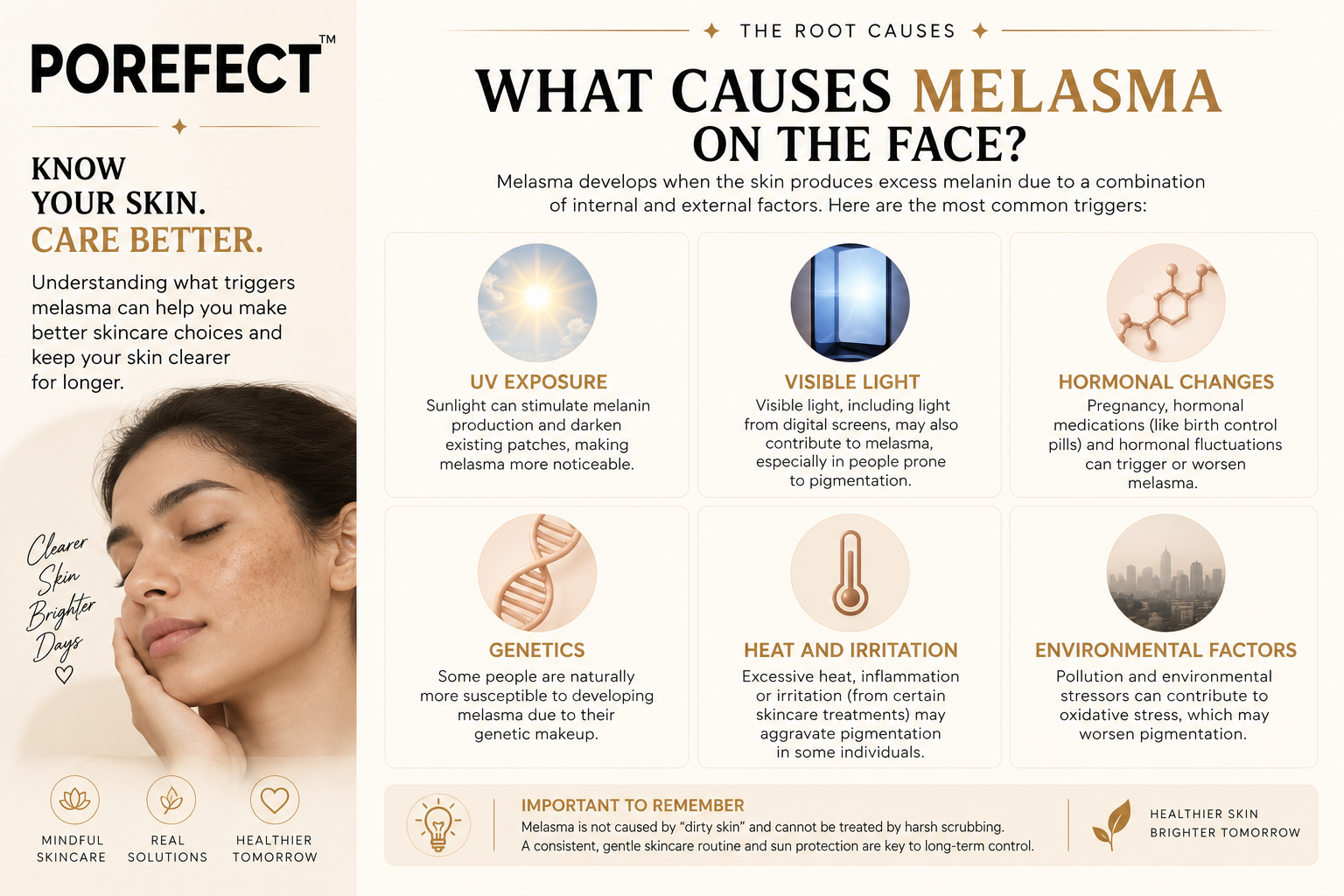
Common triggers include:
- UV exposure: Sunlight can stimulate melanin production and darken existing patches.
- Visible light: Visible light may also contribute to melasma, particularly in people prone to pigmentation.
- Hormonal changes: Pregnancy and certain hormonal medications can trigger or worsen melasma.
- Genetics: Some people are naturally more susceptible to developing melasma.
- Heat and irritation: Excessive heat and skin irritation may aggravate pigmentation in some individuals.
This is why effective melasma treatment for face should address both pigmentation and the factors that make it worse.
What Is the Best Treatment for Melasma on Face?
There is no single treatment that is best for everyone. The right approach depends on the depth and pattern of pigmentation, skin type, sensitivity and individual triggers. For this reason, the best treatment for melasma on face should be selected according to the individual's skin needs rather than based only on product claims.
1. Sunscreen Is the Foundation
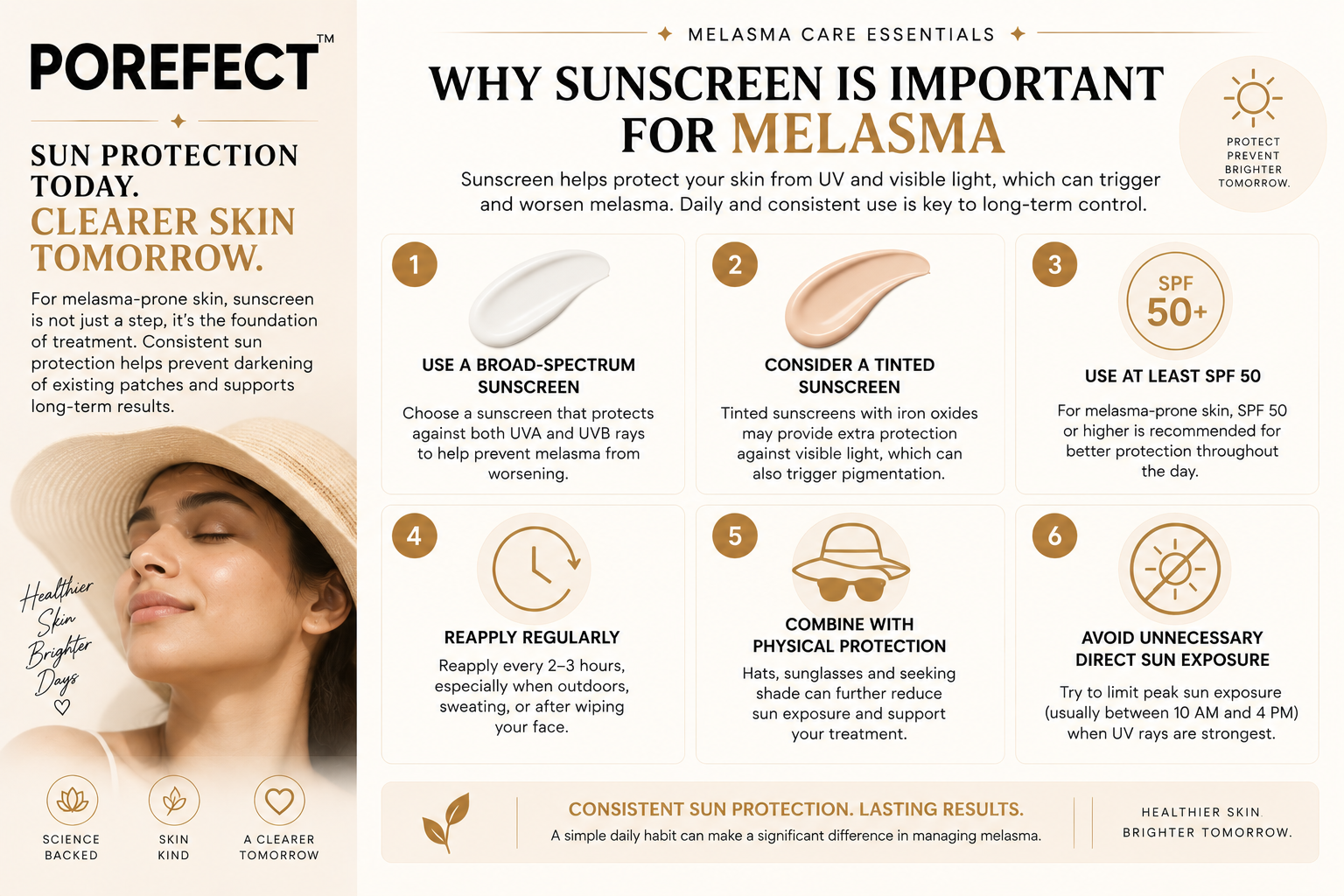
Daily sunscreen is one of the most important steps in melasma skincare. Use a broad-spectrum sunscreen every morning and reapply when spending extended time outdoors.
For people with melasma, a tinted sunscreen containing iron oxides may provide additional protection against visible light. Hats, shade and avoiding unnecessary direct sun exposure can further support treatment.
Without consistent sun protection, even an effective pigmentation treatment may provide limited long-term results. This makes sun protection an essential part of the best treatment for melasma on face.
2. Pigment-Targeting Skincare Ingredients
Certain ingredients can be incorporated into a routine to help improve uneven pigmentation. Depending on your skin and the severity of melasma, options may include:
- Azelaic acid: Can help with pigmentation while also being useful for acne-prone skin.
- Niacinamide: Supports the skin barrier and may help reduce the appearance of uneven pigmentation.
- Vitamin C: Provides antioxidant benefits and can support a brighter, more even-looking complexion.
- Retinoids: Can improve skin cell turnover and may be included in dermatologist-guided pigmentation routines.
- Prescription pigment treatments: Dermatologists may recommend stronger treatments when appropriate.
If you are searching for the best cream for melasma, focus on the active ingredient, formulation and your skin's tolerance rather than choosing a product based only on claims such as “instant whitening” or “permanent pigmentation removal.”
Best Skincare Routine for Melasma
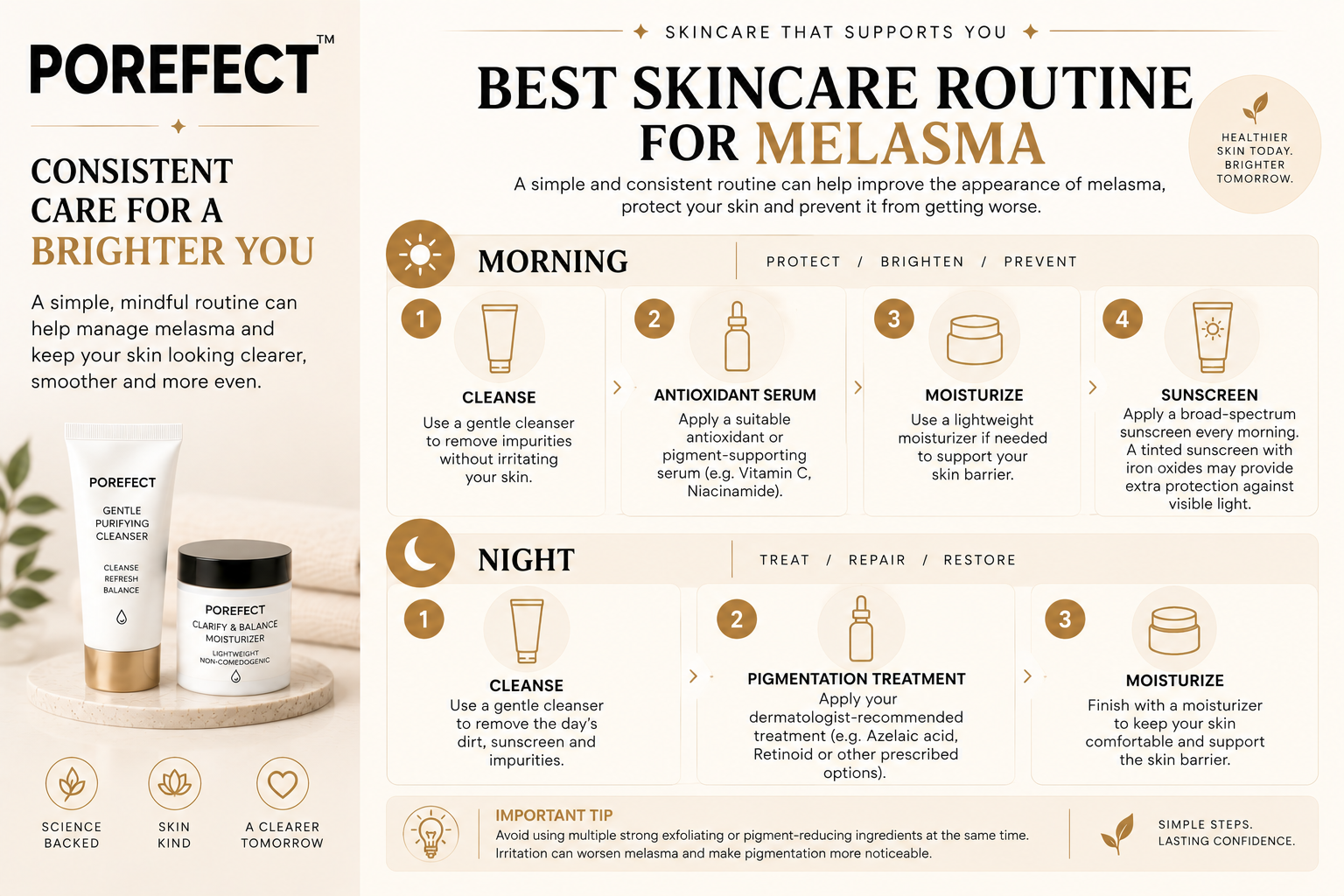
A simple routine is often easier to maintain than using multiple aggressive products. A consistent routine can support the best treatment for melasma on face by helping protect the skin barrier while addressing pigmentation.
Morning Routine
- Cleanse with a gentle cleanser.
- Apply a suitable antioxidant or pigment-supporting serum.
- Use a moisturizer if needed.
- Apply broad-spectrum sunscreen, preferably tinted if recommended for your skin.
Night Routine
- Cleanse gently.
- Apply your dermatologist-recommended pigmentation treatment.
- Finish with a moisturizer to support the skin barrier.
Avoid combining several strong exfoliating or pigment-reducing ingredients without guidance. Irritation can lead to post-inflammatory pigmentation and make pigmentation on face more noticeable.
How to Treat Melasma on Face at Home
Melasma treatment at home should focus on controlling triggers rather than aggressively trying to remove pigmentation. For mild cases, a consistent routine may form part of the best treatment for melasma on face.
Start with consistent sunscreen use, gentle cleansing and a moisturizer appropriate for your skin type. A carefully selected active ingredient can then be introduced gradually.
Avoid harsh scrubs, frequent exfoliation, DIY acidic treatments and unregulated bleaching products. Some fairness products may contain undisclosed ingredients that can damage the skin when used incorrectly.
If your pigmentation continues to worsen despite a consistent routine, it is better to seek professional assessment rather than continuously adding new products.
Chemical Peel for Melasma
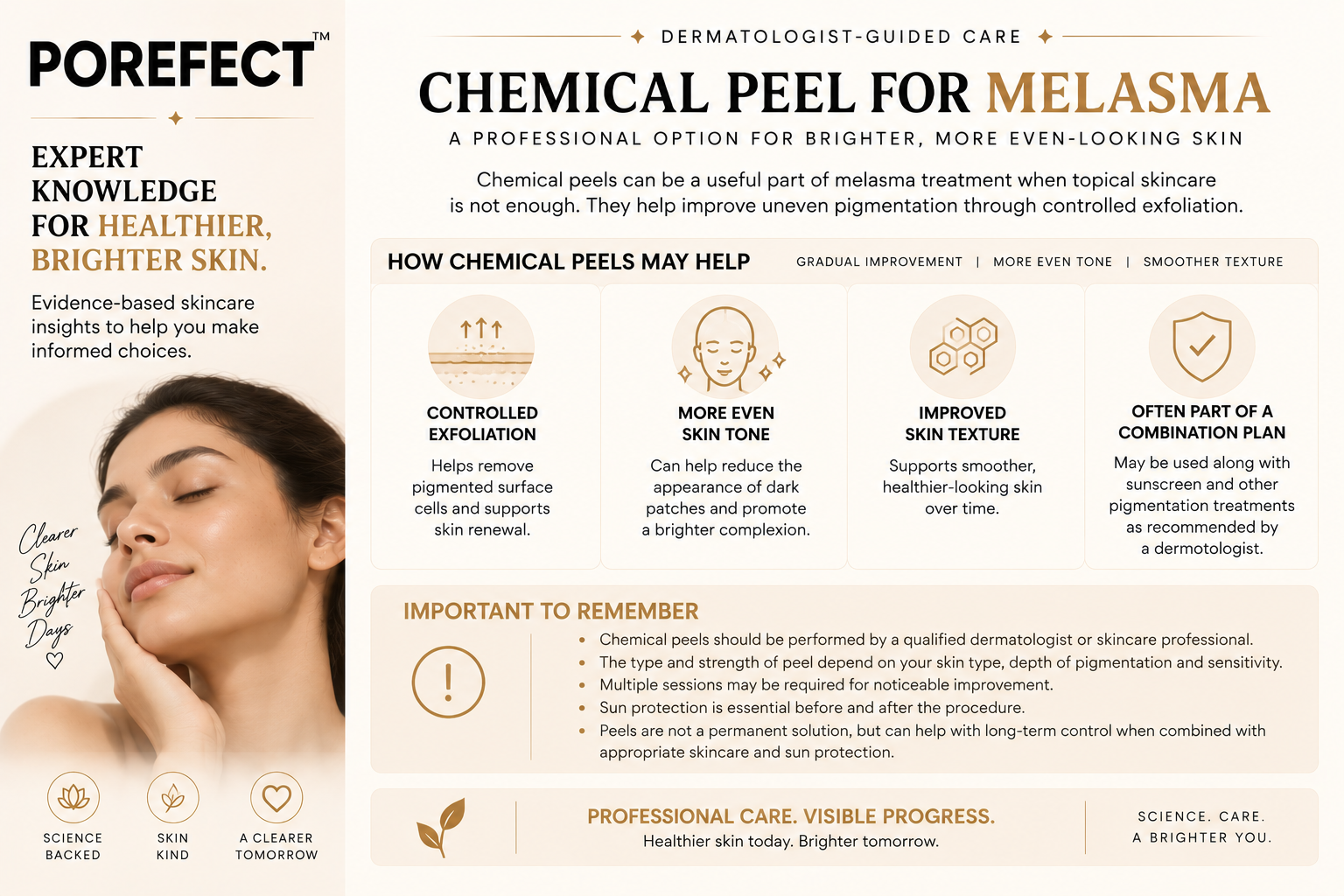
A chemical peel for melasma may be considered when topical skincare does not provide sufficient improvement. Superficial chemical peels can help improve uneven pigmentation through controlled exfoliation and increased skin turnover.
However, a chemical peel for hyperpigmentation is not automatically appropriate for everyone. People with darker skin tones may be more prone to post-inflammatory hyperpigmentation if the skin is excessively irritated.
The type, strength and frequency of a peel should therefore be selected by a qualified professional. Chemical peels should also be combined with strict sun protection and an appropriate maintenance routine.
Melasma Treatment by Dermatologist
Melasma treatment by dermatologist is particularly useful when pigmentation is persistent, recurrent, widespread or difficult to diagnose.
A dermatologist can assess whether the pigmentation is actually melasma or another condition such as post-inflammatory hyperpigmentation. Depending on the individual case, treatment may involve prescription topical medicines, superficial chemical peels or selected laser and light-based procedures.
Professional procedures require careful patient selection because irritation and excessive heat can sometimes worsen melasma. Treatment should therefore be gradual and individualized rather than based on aggressive pigmentation removal.
How to Reduce Melasma and Prevent Recurrence
If you want to know how to reduce melasma, prevention should be considered just as important as treatment. Long-term prevention is also an important part of the best treatment for melasma on face.
Helpful habits include:
- Apply sunscreen every day.
- Reapply sunscreen during prolonged outdoor exposure.
- Use hats and seek shade when possible.
- Consider tinted sunscreen for visible-light protection.
- Avoid unnecessary heat exposure if it triggers your melasma.
- Avoid picking, scrubbing or aggressively exfoliating the skin.
- Introduce active skincare ingredients gradually.
- Maintain a healthy skin barrier with suitable moisturizing.
Melasma removal is better understood as long-term pigmentation management. Even when patches become lighter, maintenance skincare and sun protection remain important because melasma can recur.
Common Mistakes to Avoid
Several mistakes can make melasma more difficult to manage:
- Using too many active ingredients simultaneously
- Skipping sunscreen
- Using harsh scrubs or frequent exfoliation
- Expecting overnight pigmentation removal
- Using unregulated bleaching or fairness products
- Treating melasma without confirming the diagnosis
- Starting strong professional treatments without considering skin type
A consistent, gentle approach is generally more appropriate than repeatedly switching between aggressive treatments.
FAQs About Melasma Treatment
Can melasma be permanently removed?
Melasma can often be significantly improved, but it is a chronic and recurrent pigmentation condition. Even after improvement, maintenance treatment and sun protection are important.
What is the best treatment for melasma?
The best treatment varies from person to person. Consistent sun protection combined with appropriate topical treatment is usually the foundation, while prescription treatments and professional procedures may be considered when necessary.
What is the best treatment for melasma on face for long-term results?
The best treatment for melasma on face for long-term management generally focuses on consistent sun protection, suitable topical skincare and professional guidance when required. Because melasma can recur, maintenance is important even after pigmentation improves.
How long does melasma treatment take to work?
Melasma usually improves gradually rather than overnight. The timeline depends on the severity of pigmentation, treatment used, skin type and consistency with sun protection.
Can I use a chemical peel for melasma?
Superficial chemical peels may benefit selected patients, but they should be recommended or performed by a qualified professional. Excessive irritation can worsen pigmentation.
How can I prevent melasma?
Daily broad-spectrum sunscreen, visible-light protection, shade, gentle skincare and avoiding known triggers are key steps for reducing the risk of melasma becoming darker or recurring.
Conclusion
The best treatment for melasma on face is rarely a single cream, serum or procedure. Effective melasma treatment usually requires a long-term approach that combines sun protection, gentle melasma skincare and appropriate pigmentation treatment.
Topical ingredients can help improve uneven pigmentation, while prescription treatments and professional options such as a chemical peel for melasma may be considered under dermatologist guidance. Most importantly, avoid aggressive pigmentation removal methods that can irritate the skin and potentially make pigmentation worse.
With consistent treatment, appropriate skincare and diligent prevention, melasma can often be made less noticeable and managed more effectively over time.