Skin Care
Learn how to choose a serum for uneven skin tone, with ingredients for dark spots, post-acne marks, dullness and pigmentation, plus a simple skincare routine.
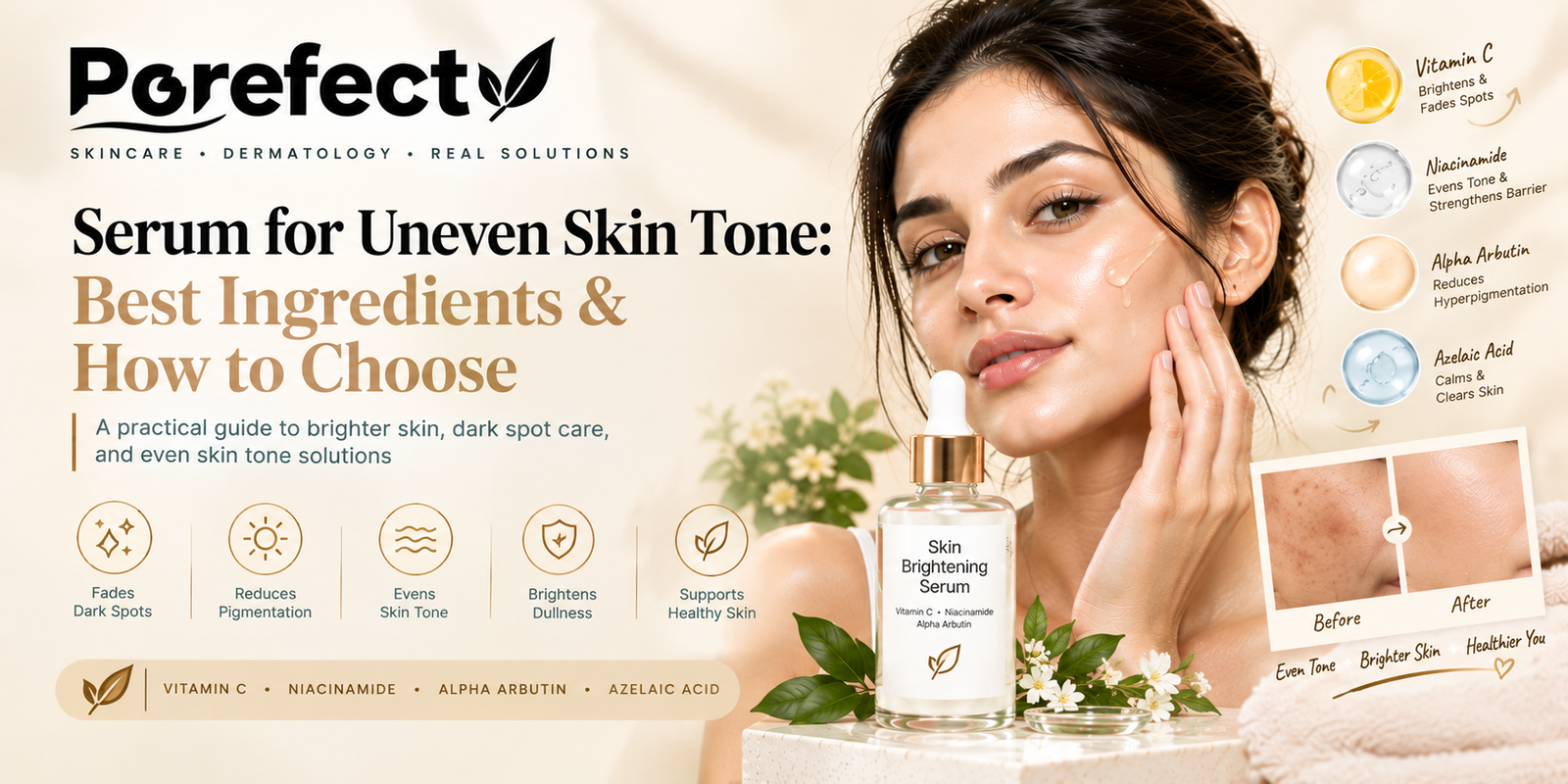
Serum for Uneven Skin Tone: Best Ingredients & How to Choose
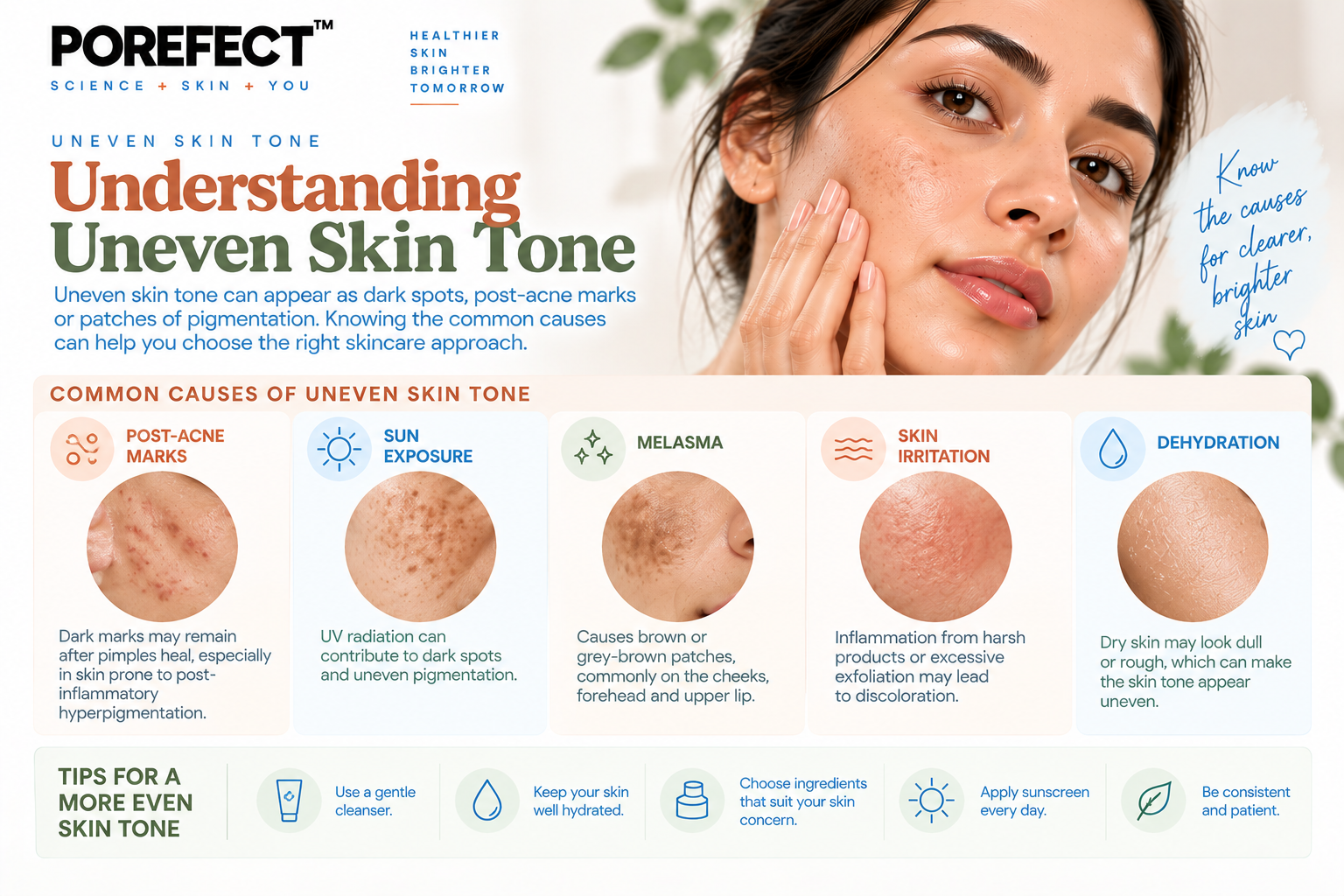
Uneven skin tone can appear as dark spots, post-acne marks, patches of pigmentation, or areas that look darker than the surrounding skin. Choosing the right serum for uneven skin tone can help improve the appearance of these concerns over time. However, the best approach depends on what is causing the discoloration and how well your skin tolerates different ingredients.
A useful skincare routine combines targeted ingredients, gentle cleansing, moisturizer, and daily sun protection. Rather than using several brightening products at once, choose a serum that addresses your main concern and use it consistently.
What Causes Uneven Skin Tone?
Uneven skin tone occurs when some areas of the skin appear darker, duller, or less uniform than others. Common causes include:
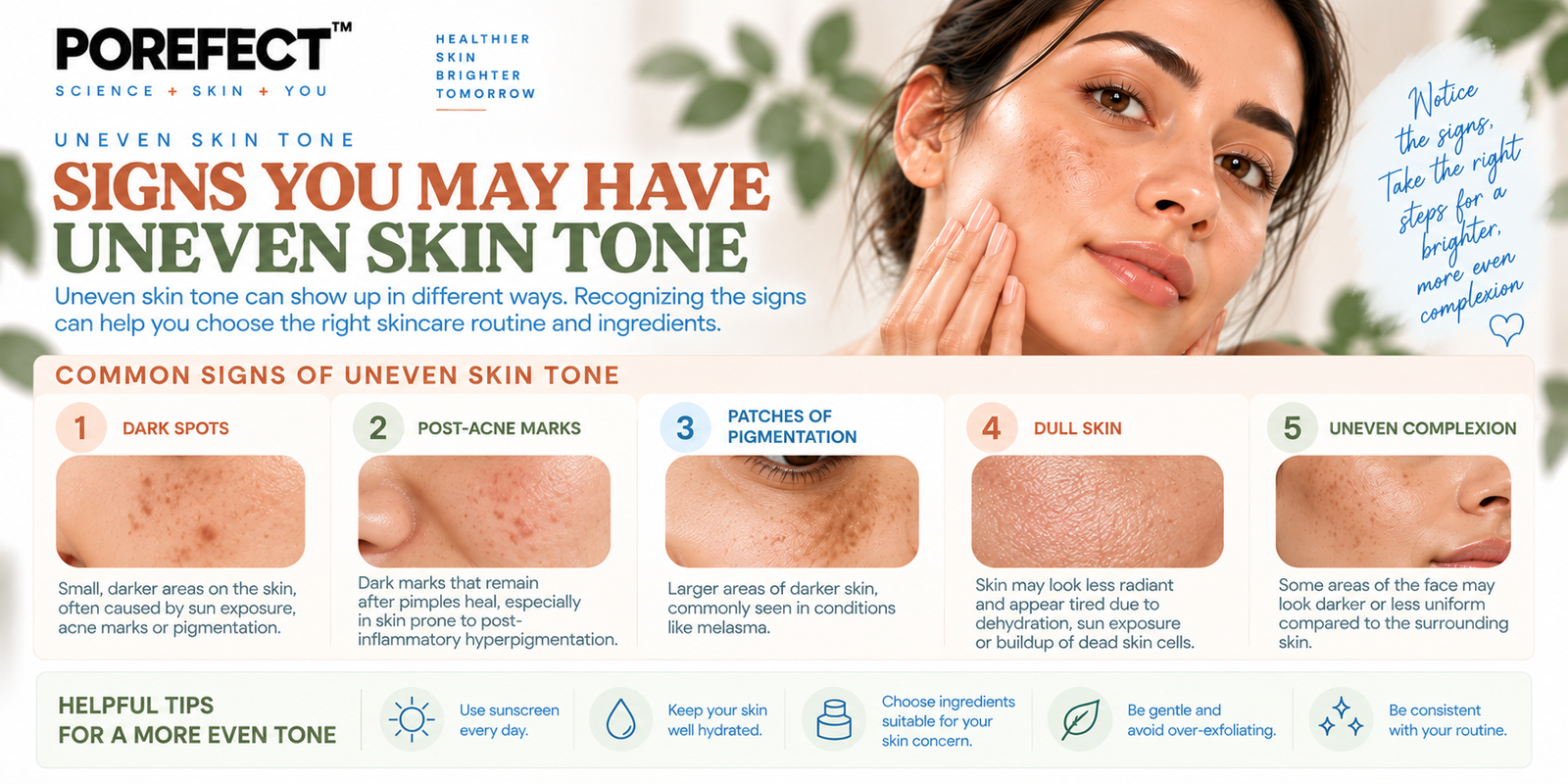
- Post-acne marks: Dark marks may remain after pimples heal, particularly in skin prone to post-inflammatory hyperpigmentation.
- Sun exposure: Ultraviolet radiation can contribute to dark spots and uneven pigmentation.
- Melasma: This condition causes brown or grey-brown patches, commonly on the cheeks, forehead, and upper lip.
- Skin irritation: Inflammation caused by harsh products or excessive exfoliation may lead to discoloration.
- Dehydration: Dry, dehydrated skin may look dull or rough, although dehydration itself is not the same as pigmentation.
Identifying the likely cause helps you choose a suitable serum for pigmentation and uneven skin tone.
How Can a Serum Help With Uneven Skin Tone?
A facial serum delivers selected skincare ingredients in a formulation designed to target particular concerns. Depending on its ingredients, a serum may help reduce the appearance of dark spots, support a more uniform-looking complexion, or improve dullness.
A face serum for uneven skin tone is not a universal treatment for every pigmentation condition. Some ingredients are better suited to post-acne marks, while others may help with sun-related discoloration or general dullness.
Visible improvement takes time, and results depend on the cause, product formulation, consistency, and sun exposure.
Best Ingredients in a Serum for Uneven Skin Tone
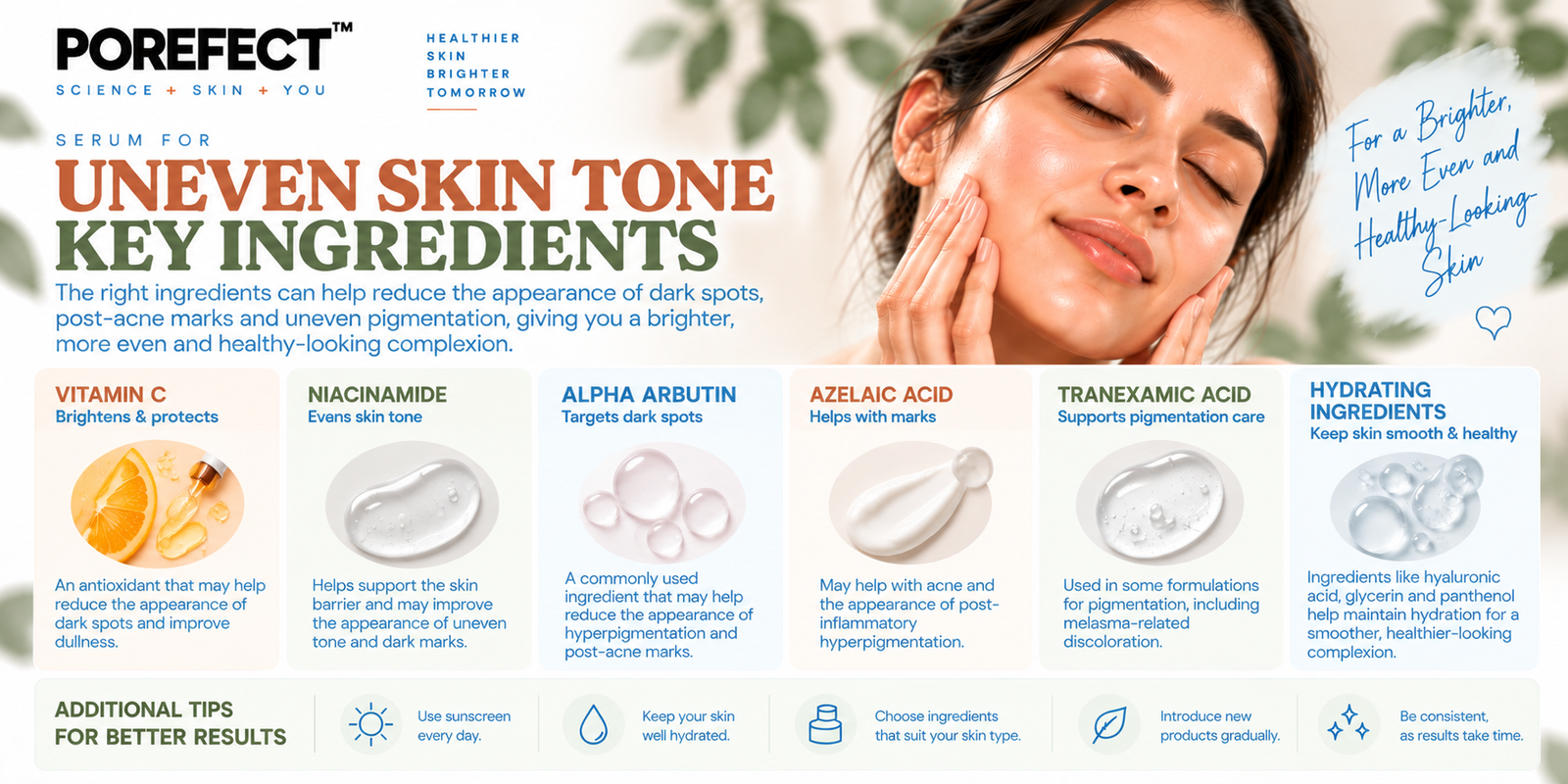
1. Vitamin C
Vitamin C is an antioxidant commonly used in brightening skincare. It may help improve the appearance of uneven pigmentation and dullness while supporting protection against environmental oxidative stress.
The best vitamin C serum for uneven skin tone should suit your skin type and be formulated for stability and tolerability. Vitamin C products can irritate some people, so introduce them gradually if your skin is sensitive.
2. Niacinamide
Niacinamide, a form of vitamin B3, supports the skin barrier and may help improve the appearance of uneven tone and dark marks. It can also be useful for people concerned about excess oil.
It is often a practical option for a serum for even skin tone, especially when you want to address discoloration while maintaining skin comfort.
3. Alpha Arbutin
Alpha arbutin is a cosmetic ingredient used in products formulated to improve the appearance of hyperpigmentation. It may be useful for people concerned about post-acne marks and localized dark spots.
Choose a properly formulated product and follow its directions. Avoid combining too many brightening treatments without considering your skin’s tolerance.
4. Azelaic Acid
Azelaic acid can help with acne and the appearance of post-inflammatory hyperpigmentation. It may be particularly relevant when breakouts and dark marks occur together.
Higher-strength formulations may cause irritation, so choose a suitable product and seek professional advice if you have persistent acne or pigmentation.
5. Tranexamic Acid
Tranexamic acid is used in some topical formulations designed for pigmentation, including melasma-related discoloration. Evidence and effectiveness vary by formulation, and it is not a guaranteed solution for every type of dark spot.
For persistent or widespread pigmentation, a dermatologist can help determine whether a topical product is appropriate.
6. Hydrating Ingredients
Ingredients such as glycerin, hyaluronic acid, and panthenol help support hydration. They do not directly treat every cause of pigmentation, but improving hydration may help dry, dull skin look smoother and more comfortable.
Best Serum for Pigmentation and Uneven Skin Tone
The best serum for pigmentation and uneven skin tone depends on the type of discoloration you are trying to address.
- Post-acne marks: Niacinamide, azelaic acid, or other suitable pigmentation-focused ingredients may help.
- Sun-related dark spots: Vitamin C and other well-formulated brightening ingredients may be useful alongside sunscreen.
- Melasma: Treatment can be more complex and may require dermatologist-guided skincare or prescription treatment.
- Dull, dehydrated skin: Hydrating ingredients may improve the appearance of dullness, even when pigmentation is not the main issue.
- Sensitive skin: A simpler formula with fewer potential irritants may be easier to tolerate.
There is no single best serum for even skin tone for every person. Choose according to your skin concern rather than relying only on marketing claims.
Best Serum for Dark Spots and Uneven Skin Tone
If your main concern is dark spots, first consider whether they appeared after acne, sun exposure, irritation, or another skin condition.
A serum for dark spots and uneven skin tone may contain vitamin C, niacinamide, alpha arbutin, azelaic acid, or another targeted ingredient. However, dark spots can have different causes, and not all respond in the same way.
Avoid applying multiple strong brightening products at once. Irritation can worsen discoloration, especially in skin that is prone to post-inflammatory hyperpigmentation.
How to Choose a Serum to Even Out Skin Tone
When choosing a serum to even out skin tone, consider these factors:
- Your main concern: Identify whether you are treating acne marks, sun-related spots, melasma, or dullness.
- Your skin type: Oily, dry, and sensitive skin may respond differently to the same formulation.
- The ingredient list: Choose a product with ingredients relevant to your concern.
- Your existing routine: Avoid introducing several new active ingredients at the same time.
- Product tolerability: Stop using a product if it causes persistent burning, swelling, or significant irritation.
If your concern includes roughness as well as discoloration, look for a routine that addresses both without excessive exfoliation. The best serum for uneven skin tone and texture may differ from a product designed only for dark spots.
How to Use a Serum for Uneven Skin Tone
A simple routine is often easier to maintain and less likely to irritate the skin.
Morning Routine
- Cleanse gently.
- Apply your selected serum according to its instructions.
- Use a moisturizer suited to your skin.
- Apply broad-spectrum sunscreen.
Evening Routine
- Remove makeup and sunscreen, then cleanse gently.
- Apply your targeted serum if appropriate for nighttime use.
- Finish with moisturizer.
Start new active ingredients gradually. Daily sun protection is particularly important when managing pigmentation because UV exposure can make discoloration more persistent or noticeable.
Common Mistakes to Avoid
- Using several brightening serums at the same time.
- Exfoliating too frequently in an attempt to remove dark spots faster.
- Skipping sunscreen.
- Expecting pigmentation to disappear overnight.
- Using unregulated bleaching creams or harsh DIY remedies.
- Continuing a product that causes significant irritation.
If pigmentation is persistent, spreading, changing unexpectedly, or not improving despite a consistent routine, consult a dermatologist.
Frequently Asked Questions
Which serum is best for uneven skin tone?
The best serum depends on the cause. Vitamin C, niacinamide, alpha arbutin, azelaic acid, and topical tranexamic acid are used in different formulations for pigmentation-related concerns. Choose according to your skin type and the nature of the discoloration.
Can vitamin C help improve uneven skin tone?
Vitamin C may help improve the appearance of dullness and some forms of uneven pigmentation. Results depend on the formulation, regular use, and sun protection.
How long does a serum take to show results?
There is no universal timeline. Some people notice changes in hydration sooner, while pigmentation concerns may take several weeks or longer to improve. Persistent melasma or other pigmentation conditions may need professional treatment.
Can I use a serum for pigmentation every day?
Some serums are suitable for daily use, but this depends on the ingredient and product directions. Introduce active ingredients gradually and reduce use if irritation develops.
Is sunscreen necessary when treating dark spots?
Yes. Broad-spectrum sunscreen helps protect the skin from UV radiation and can reduce the risk of existing pigmentation becoming more noticeable. It is an essential part of a pigmentation-focused routine.
Conclusion
Choosing the right serum for uneven skin tone starts with understanding what is causing the discoloration. Vitamin C, niacinamide, alpha arbutin, azelaic acid, and tranexamic acid are options found in different pigmentation-focused formulations, while hydrating ingredients can help improve dullness associated with dehydration.
For a practical routine, use one suitable targeted serum, moisturize consistently, and apply broad-spectrum sunscreen every morning. Avoid aggressive treatments and unrealistic promises of instant or complete pigmentation removal. If the discoloration is persistent or difficult to identify, professional guidance can help you choose a more appropriate treatment.