Skin Care
Learn how to choose and use retinol as a beginner, including suitable concentrations, application steps, moisturizer, side effects and sun protection.
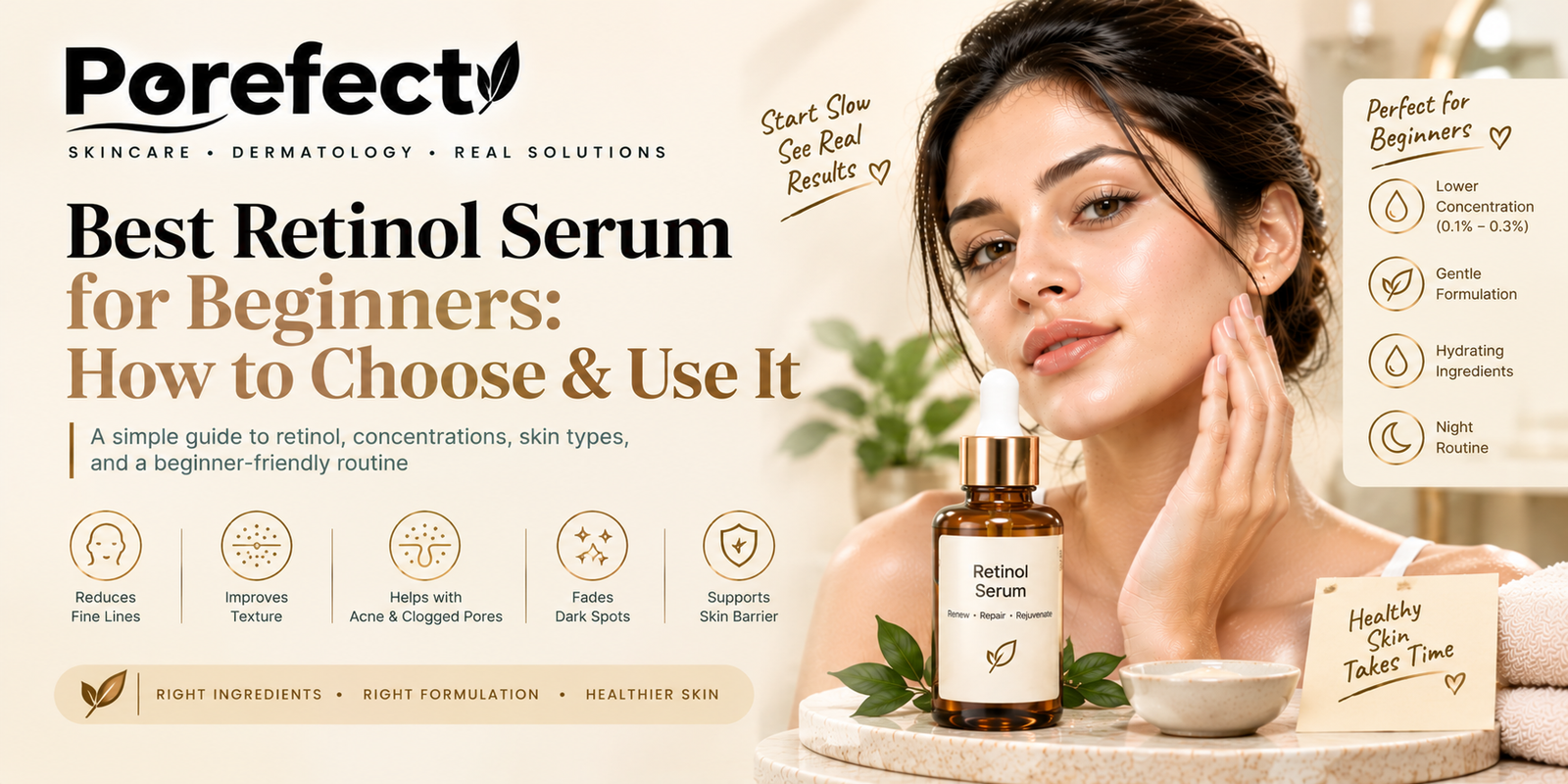
Best Retinol Serum for Beginners: How to Choose & Use It
The best retinol serum for beginners is a gentle, well-formulated product that helps improve the appearance of fine lines, uneven skin texture, and blemishes without overwhelming the skin. If you have never used retinol before, choosing the best retinol serum for beginners can feel confusing because products vary in concentration and formulation. Starting too aggressively may lead to dryness, redness, or peeling, so a gradual routine is essential.
Choose a suitable product, introduce it slowly, and support your skin with moisturizer and sunscreen. You do not need the strongest retinol serum to begin building a consistent skincare routine.
What Is Retinol and How Does It Work?
Retinol is a type of retinoid derived from vitamin A. In the skin, it is converted into active forms that influence skin cell turnover and other processes involved in skin renewal.
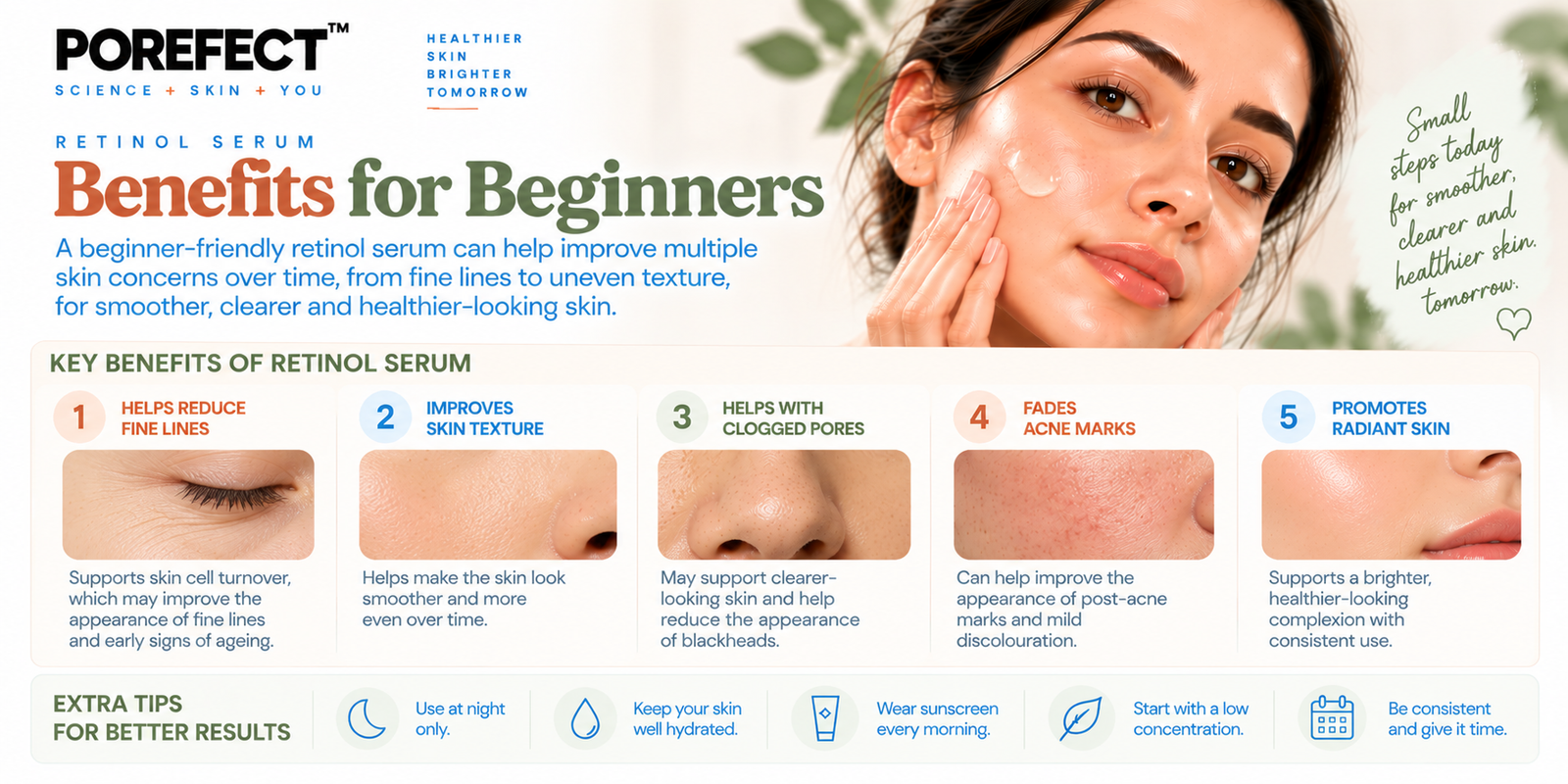
With consistent use, retinol may help improve the appearance of:
- Fine lines and early signs of ageing.
- Uneven skin texture.
- Some forms of acne and clogged pores.
- Mild discoloration and post-acne marks.
Results vary depending on the formulation, frequency of use, and individual skin response. Retinol is not an overnight treatment, and using more product will not necessarily produce better results.
How to Choose a Retinol Serum for Beginners
When choosing the best retinol serum for beginners, prioritize tolerability, clear product instructions, and a formula that suits your skin type.
1. Start With a Low Concentration
If you are new to retinol, a lower concentration is generally a sensible starting point. Some beginner products contain around 0.1% to 0.3% retinol, although product formulations and recommendations vary.
There is no universal percentage that suits everyone. A well-formulated, lower-strength product used consistently may be more practical than a stronger serum that causes irritation.
2. Choose a Well-Formulated Product
Retinol can degrade when exposed to light and air. Consider products in opaque, airtight packaging and follow the manufacturer's storage instructions.
Avoid choosing a product based only on marketing terms such as “professional strength” or “maximum potency.” The overall formulation and your skin's tolerance matter more.
3. Look for Moisturizing Ingredients
A gentle retinol serum for beginners may be easier to incorporate when the rest of your routine supports the skin barrier.
- Glycerin: Helps attract and retain moisture.
- Ceramides: Support the skin barrier and help reduce moisture loss.
- Hyaluronic acid: Helps maintain hydration.
- Panthenol: Helps support skin comfort and hydration.
These ingredients do not eliminate the possibility of retinol irritation, but they can complement a balanced skincare routine.
What Percentage of Retinol Is Good for Beginners?
If you are wondering what percentage of retinol is good for beginners, start by checking the product's stated concentration and usage directions.
A product containing approximately 0.1%–0.3% retinol is often considered a lower-strength starting option. However, percentages cannot be compared perfectly across different formulations, and some products use retinol derivatives rather than pure retinol.
Choose a product intended for cosmetic use, introduce it slowly, and avoid increasing the strength until you know how your skin responds. If you have persistent acne, significant pigmentation, or a skin condition, seek professional advice before starting a retinoid.
Best Retinol Serum for Beginners Based on Skin Type
The best retinol serum for beginners depends on your skin's needs and tolerance.
For Dry Skin
Choose a formula that can be paired with a nourishing moisturizer. Avoid introducing other potentially drying active ingredients at the same time.
For Oily Skin
A lightweight, non-comedogenic formula may be more comfortable. A retinol routine for oily skin should still include moisturizer because oily skin can also become dehydrated or irritated.
For Sensitive Skin
If you are considering retinol for sensitive skin, be especially cautious. Start only when your skin barrier is comfortable, patch-test according to product directions, and use the serum infrequently at first. A lower concentration does not guarantee that irritation will not occur.
If your skin is currently red, peeling, inflamed, or affected by eczema or rosacea, consult a healthcare professional before using retinol.
For Acne-Prone Skin
Retinol may help with some acne-related concerns, but it can initially irritate the skin. Persistent or inflammatory acne may respond better to a treatment plan recommended by a healthcare professional rather than cosmetic retinol alone.
How to Use Retinol Serum: A Beginner's Routine
Knowing how to use the best retinol serum for beginners correctly is just as important as choosing the product. A gradual routine helps you assess tolerance.
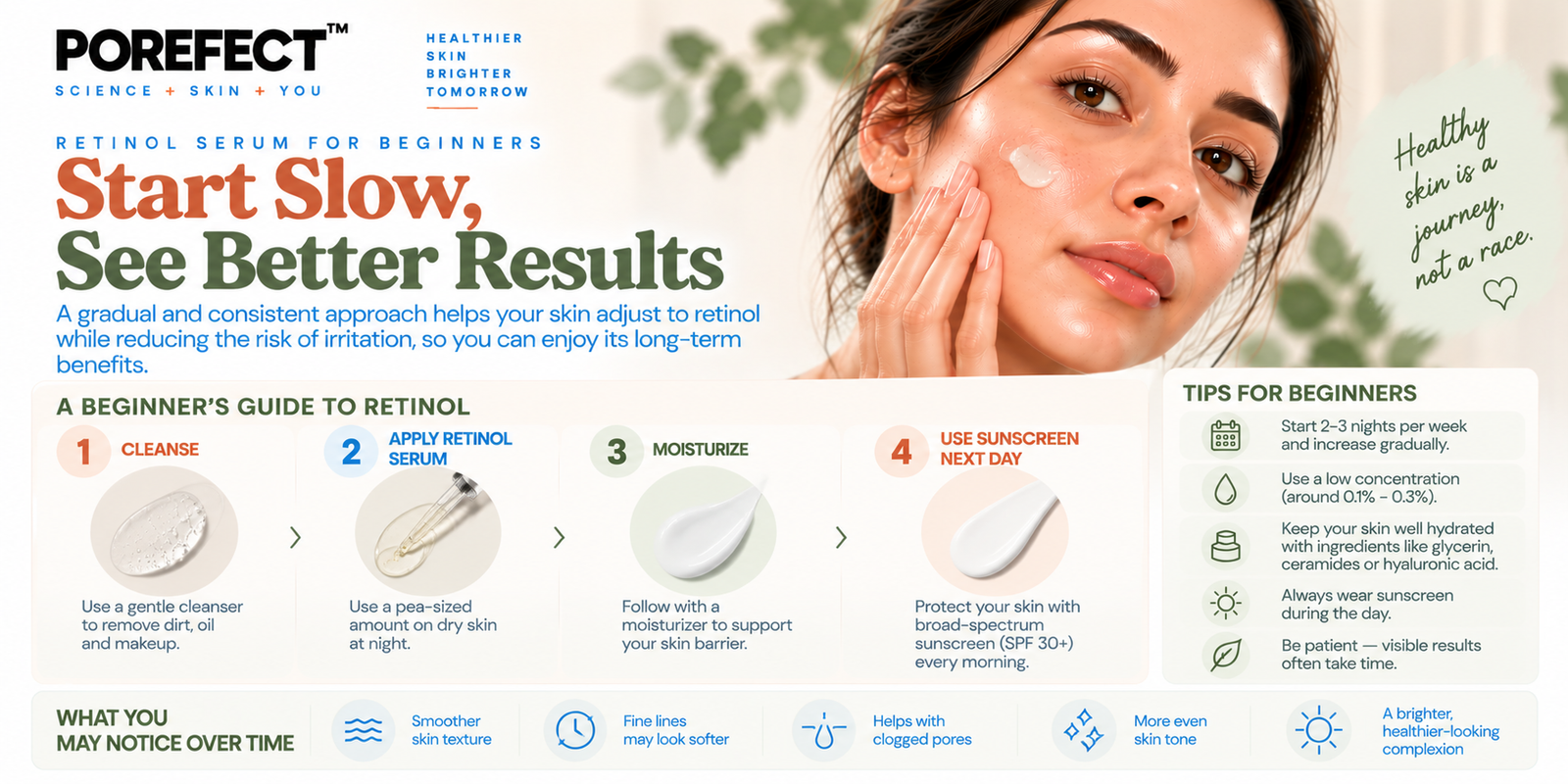
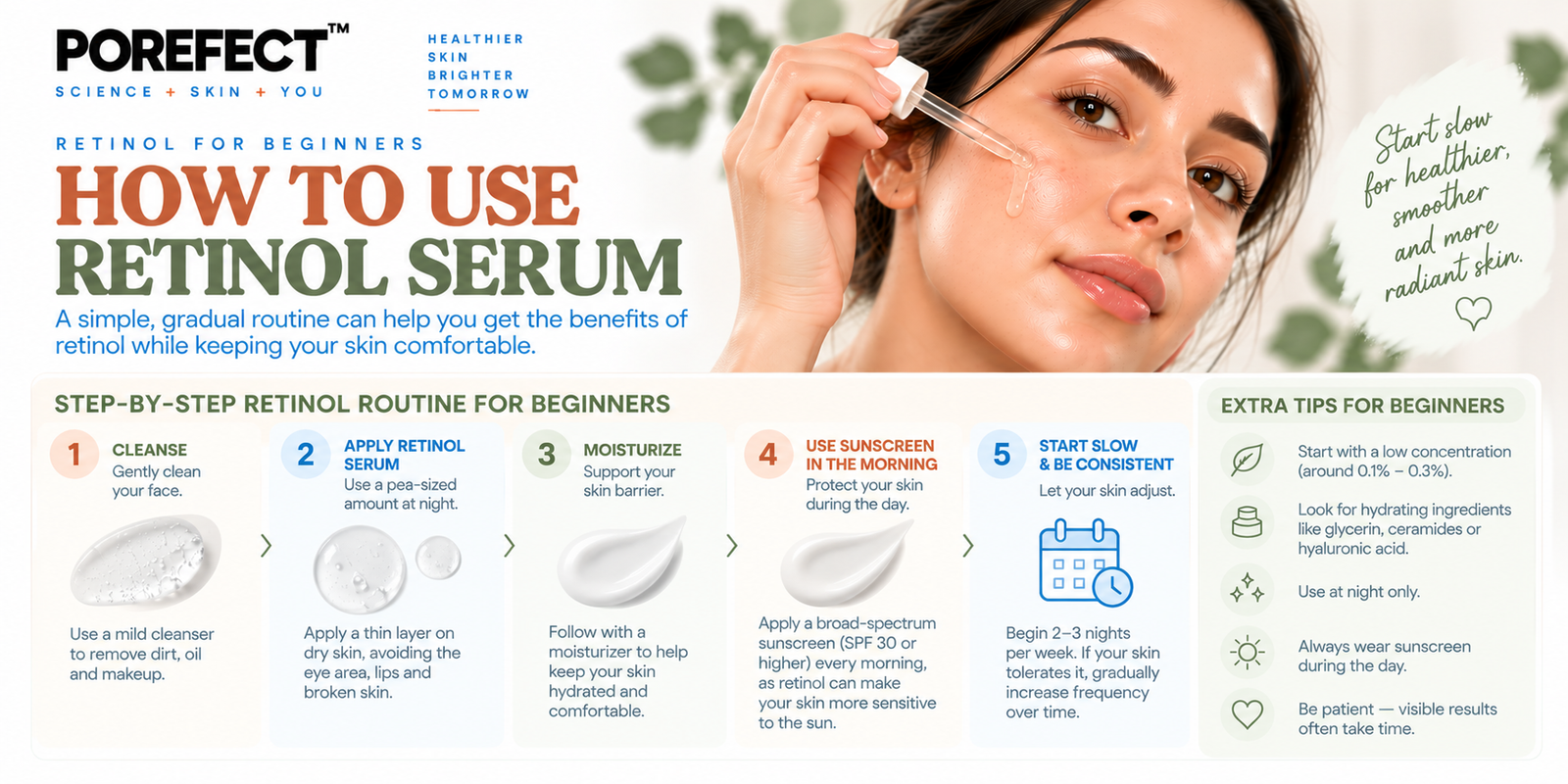
Step 1: Use It at Night
Apply retinol in the evening, following the product instructions. Cleanse with a gentle face wash and allow your skin to dry before applying the serum if directed by the manufacturer.
Step 2: Apply a Small Amount
Use only the amount specified on the label. For many facial retinol products, a pea-sized amount is sufficient for the entire face, but follow the instructions for your specific formula. Avoid the eyelids, corners of the nose, lips, and broken or irritated skin unless the product is specifically designed for those areas.
Step 3: Moisturize
Apply a suitable moisturizer after the serum. If your skin is prone to dryness, you may prefer applying moisturizer before and after retinol, provided this is compatible with the product instructions.
Step 4: Start Slowly
When learning how to start using retinol, begin with one or two evenings per week if consistent with the product's directions. Increase frequency gradually only if your skin tolerates it without persistent irritation.
Step 5: Wear Sunscreen Daily
Apply broad-spectrum sunscreen with SPF 30 or higher every morning. Retinol can make irritation more likely, and sun protection helps limit further UV-related damage.
How Often Should Beginners Use Retinol Serum?
There is no single schedule for every product or skin type. A cautious starting approach is to use retinol one or two nights per week, following the product label.
If your skin remains comfortable, you may gradually increase frequency over several weeks. Daily use is not a requirement for every beginner, and some people may need to use retinol less frequently.
Avoid increasing the amount or frequency simply because you want faster results. Persistent redness, burning, peeling, or discomfort indicates that you may need to reduce use or stop the product.
Retinol Serum Side Effects: What to Expect
Understanding retinol serum side effects helps you distinguish mild adjustment from irritation that needs attention.
Possible effects include:
- Dryness or tightness.
- Mild redness.
- Peeling or flaking.
- Temporary stinging or sensitivity.
These effects are not inevitable. Significant burning, swelling, cracking, or persistent redness should not be ignored. Stop using the product if these symptoms develop, and seek medical advice if they are severe or do not settle.
Retinol is generally avoided during pregnancy as a precaution. If you are pregnant, trying to conceive, or breastfeeding, ask your healthcare professional whether retinoid products are appropriate for you.
Can Beginners Use Retinol Serum Every Day?
Beginners should not assume that daily use is necessary. Although some people eventually tolerate frequent application, starting every day can increase the risk of irritation.
Build a routine around your skin's response, not a fixed promise of rapid results. If your skin becomes persistently dry or irritated, reduce frequency or discontinue use. A consistent, comfortable routine is more useful than forcing daily application.
Common Mistakes Beginners Should Avoid
When using the best retinol serum for beginners, avoid these common mistakes:
- Starting with a high concentration.
- Applying more product than directed.
- Using retinol every night from the beginning.
- Combining it immediately with multiple exfoliating acids or other strong active ingredients.
- Skipping moisturizer or sunscreen.
- Applying retinol to sunburned, broken, or irritated skin.
- Expecting visible results within a few days.
Retinol works gradually. Be patient, follow product instructions, and avoid changing several parts of your routine at once.
Frequently Asked Questions
What is the best retinol serum for beginners?
The best retinol serum for beginners is a well-formulated, lower-strength product with clear instructions and packaging that helps protect the formula. Choose according to your skin type and tolerance rather than marketing claims alone.
Is retinol serum suitable for first-time users?
A retinol serum for first-time users may be suitable for many adults when introduced carefully. Start with a lower-strength product, use it gradually, and moisturize consistently. People with sensitive or inflamed skin should seek professional guidance before starting.
Can beginners use retinol every day?
Daily use is not necessary at the beginning. Start infrequently according to the product directions and increase only if your skin tolerates it.
How long does retinol take to show results?
Results depend on the concern being treated and the formulation. Changes in texture or acne-related concerns may take several weeks, while improvements in fine lines or pigmentation can take longer. Consistent use and sun protection are important.
What are the best retinol products for beginners?
The best retinol products for beginners have a clearly stated retinol concentration, suitable packaging, straightforward instructions, and a formulation your skin can tolerate. No single product is best for everyone.
Conclusion
Choosing the best retinol serum for beginners means prioritizing a suitable concentration, a well-formulated product, and a gradual routine. Start slowly, use moisturizer, avoid layering multiple strong active ingredients, and apply broad-spectrum sunscreen every morning.
Retinol may help improve the appearance of fine lines, uneven texture, and certain blemish-related concerns over time, but irritation is not a sign that a product is working better. If you have sensitive or inflamed skin, are pregnant, or are unsure whether retinol is appropriate for you, seek advice from a qualified healthcare professional before starting.