Ingredients & Science
Learn how azelaic acid helps treat acne, reduce pigmentation and post-acne marks, calm redness, and improve uneven skin tone.
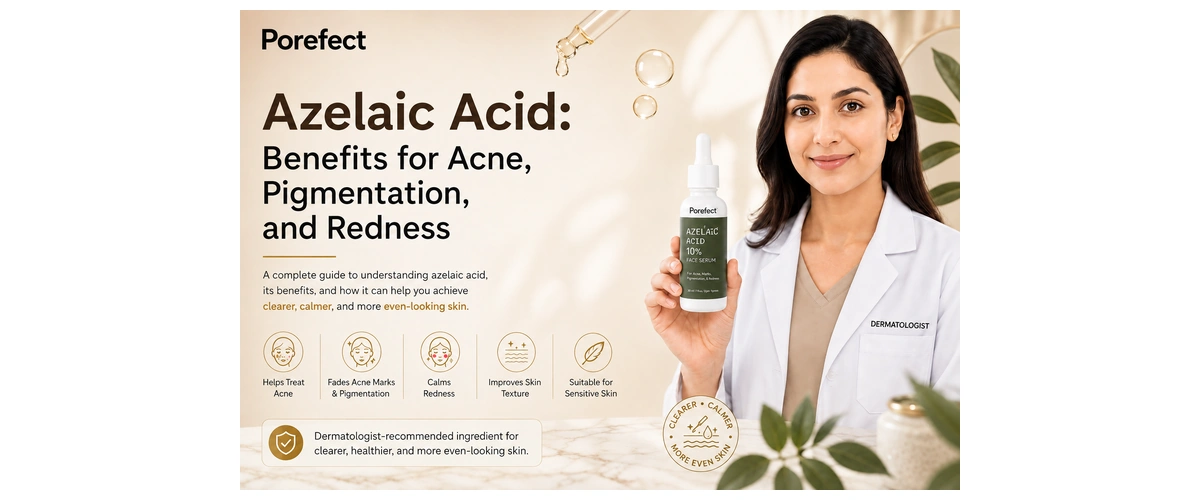
Azelaic Acid: Benefits for Acne, Pigmentation, and Redness
If you’ve ever dealt with acne, dark marks, or redness, you’ve probably come across azelaic acid. It’s one of those skincare ingredients that doesn’t always get as much attention as some of the trendier actives, but dermatologists have been using it for good reason.
What makes azelaic acid particularly useful is its ability to address several common skin concerns at once. It can help with acne, post-acne marks, pigmentation, redness, and uneven skin tone, while generally being gentle enough for many skin types, including sensitive skin.
It’s also important to set realistic expectations. Azelaic acid isn’t a quick fix, and you shouldn’t expect dramatic changes overnight. Like most effective skincare ingredients, it works gradually. With regular and appropriate use, however, it can become a useful part of a simple skincare routine.
In this guide, we’ll look at what azelaic acid is, what it can do for your skin, how to use it, and what to keep in mind when adding it to your routine.
What Is Azelaic Acid?
Azelaic acid is a naturally occurring acid found in grains such as wheat, barley, and rye. In skincare, it is formulated into products including creams, gels, and serums to help address several common skin concerns.
From a dermatology perspective, one of its biggest advantages is that it can work on more than one concern at the same time. It helps reduce acne-causing bacteria, calm inflammation, and improve uneven skin tone without being excessively harsh on the skin.
Quick Answer
Azelaic acid is a dermatologist-recommended skincare ingredient that can help reduce acne, fade post-acne marks, improve pigmentation, calm redness, and support a smoother, more even-looking complexion.
When used correctly, it can be suitable for most skin types, including sensitive skin.
Benefits of Azelaic Acid
1. Helps Treat Acne
If you’re struggling with regular breakouts, azelaic acid may be a useful ingredient to consider.
It helps keep pores clear and reduces the growth of acne-causing bacteria. At the same time, it can help calm inflammation, which may make pimples look less red and swollen.
Another reason many people like azelaic acid is that it tends to be easier to tolerate than some stronger acne treatments. This can make it easier to use consistently, which matters when you’re trying to manage acne.
2. Helps Reduce Acne Marks and Pigmentation
For many people, the frustrating part of acne doesn’t end when the breakout disappears.
The pimple may be gone, but the dark mark it leaves behind can remain for weeks or even longer.
This is where azelaic acid can be particularly helpful. It helps reduce excess melanin production, which can improve the appearance of post-inflammatory hyperpigmentation (PIH), sunspots, and uneven skin tone over time.
The key word here is time.
You shouldn’t expect pigmentation to disappear after a few applications. With regular use, the skin can gradually look clearer and brighter.
3. Helps Calm Redness
If your skin frequently looks red or feels irritated, azelaic acid may help calm it.
It has anti-inflammatory properties that can soothe the skin. Because of this, it is also used by people experiencing facial redness or mild rosacea under appropriate dermatological guidance.
If your redness is persistent, severe, or associated with other symptoms, it’s always better to have the underlying cause assessed by a dermatologist rather than treating it yourself.
4. Can Improve Skin Texture
When we talk about healthy-looking skin, it isn’t only about having fewer breakouts.
Texture matters too.
With consistent use, azelaic acid can help refine the appearance of the skin’s surface. Over time, the skin may feel softer and look more even.
5. Suitable for Sensitive Skin
Finding active ingredients that work well with sensitive skin can be challenging. Some products may deliver good results but cause excessive dryness, stinging, or irritation.
Azelaic acid is often considered a gentler active option and can be suitable for many people with sensitive skin.
If you’re using it for the first time, starting gradually can give your skin time to adjust. Beginning with a lower concentration may also be helpful, depending on the product and your dermatologist’s recommendation.
Who Can Use Azelaic Acid?
Azelaic acid may be useful for people dealing with:
- Mild to moderate acne
- Acne marks
- Uneven skin tone
- Hyperpigmentation
- Sunspots
- Redness
- Oily skin
- Combination skin
- Sensitive skin
If you have severe acne or a chronic skin condition, speak with a dermatologist before starting a new treatment.
How to Use Azelaic Acid
The way you introduce an active ingredient matters just as much as the ingredient itself.
If you’re new to azelaic acid, there’s no need to rush. Start slowly and allow your skin to adjust.
Morning Routine
- Cleanse your face with a gentle cleanser.
- Apply a thin layer of azelaic acid if the product is suitable for daytime use.
- Apply your moisturizer.
- Finish with a broad-spectrum sunscreen.
Evening Routine
- Cleanse your skin.
- Apply azelaic acid to clean, dry skin.
- Follow with a moisturizer to help maintain hydration.
When starting out, apply azelaic acid around two or three times a week. If your skin is comfortable with it, you can gradually increase how often you use it according to the product instructions or your dermatologist’s advice.
Can You Use Azelaic Acid with Other Skincare Ingredients?
Yes. Azelaic acid can be used alongside several commonly used skincare ingredients.
It is commonly paired with:
- Niacinamide
- Hyaluronic acid
- Ceramides
- Alpha arbutin
- Vitamin C, if your skin tolerates it
However, more skincare products don’t necessarily mean better skin.
If you’re already using several active ingredients, introduce them one at a time. This makes it easier to understand how your skin responds and can help reduce the chance of unnecessary irritation.
Common Mistakes to Avoid
Sometimes the problem isn’t the ingredient—it’s how it is being used.
Here are some common mistakes to avoid:
- Applying too much product
- Using azelaic acid on broken or irritated skin
- Skipping sunscreen during the day
- Expecting instant results
- Stopping treatment too soon
Skincare takes patience. Most improvements happen gradually over several weeks, so consistency is much more useful than applying the product occasionally.
How Long Does Azelaic Acid Take to Work?
This is probably one of the most common questions people have when starting a new skincare active.
Some people may notice early improvements in skin texture and redness within around four to six weeks.
Pigmentation and acne marks can take longer. They may require around eight to twelve weeks, depending on the severity of the concern.
Of course, everyone’s skin responds differently.
The important thing is to use the product consistently and give your skin enough time to respond rather than changing products every few days.
Are There Any Side Effects?
Most people tolerate azelaic acid well.
However, especially when you first introduce it, you may notice:
- Mild tingling
- Slight dryness
- Temporary itching
- Light redness
These effects are generally mild and may improve as your skin becomes accustomed to the ingredient.
If irritation becomes severe or continues for several days, stop using the product and consult a dermatologist.
Frequently Asked Questions
Can I Use Azelaic Acid Every Day?
Yes. Many people can eventually use azelaic acid once or twice daily, depending on the product and how well their skin tolerates it.
If you’re a beginner, start slowly rather than immediately applying it every day.
Is Azelaic Acid Good for Acne Scars?
Azelaic acid does not remove deep or textured acne scars.
However, it can help fade the dark marks left behind after acne and improve the appearance of uneven skin tone.
Can People with Sensitive Skin Use Azelaic Acid?
Yes. Azelaic acid is considered one of the gentler active skincare ingredients and can be suitable for sensitive skin.
Even so, a patch test is recommended before applying it more widely.
Do I Need Sunscreen While Using Azelaic Acid?
Absolutely.
Sunscreen is particularly important when you’re trying to manage pigmentation. It helps protect your skin and can prevent existing pigmentation from becoming darker.
Daily sun protection also supports better overall skincare results.
Final Thoughts
Good skincare isn’t necessarily about using the strongest active ingredients you can find.
It’s about choosing ingredients that address your concerns and using them consistently without unnecessarily irritating your skin.
That’s one of the reasons azelaic acid continues to be a useful ingredient in dermatology. It can help with acne, redness, post-acne marks, pigmentation, and uneven skin tone, while being gentle enough for many different skin types.
But remember—skin takes time.
A simple routine, consistent use of your skincare products, and daily sun protection can go a long way.
If your acne, pigmentation, or redness is severe or isn’t improving despite regular skincare, don’t keep experimenting with products indefinitely. A dermatologist can assess your skin and help you choose a treatment approach that is appropriate for you.
Looking for a Targeted Approach to Pigmentation?
Explore Porefect’s pigmentation-focused skincare range and build a routine around your skin’s specific needs.