Skin Care
Learn about acanthosis nigricans treatment cream, its causes, neck and underarm treatment, medicines, home care and when to see a dermatologist.

Acanthosis Nigricans Treatment Cream: Causes, Treatment & What Helps
Acanthosis nigricans treatment cream may help improve the appearance of dark, thick, and velvety-looking skin in selected cases. Acanthosis nigricans is a common skin change that usually affects skin folds such as the neck, underarms, and groin. It is not simply a cosmetic pigmentation problem. The most important part of acanthosis nigricans treatment is identifying and addressing any underlying cause.
Acanthosis nigricans is commonly associated with insulin resistance, prediabetes, type 2 diabetes, obesity, metabolic syndrome, and some hormonal conditions. In some cases, it may be related to medications or occur without an identifiable underlying condition. Therefore, an acanthosis nigricans treatment cream may improve the skin's appearance, but topical treatment alone may not address the reason the condition developed.
What Causes Acanthosis Nigricans?
Acanthosis nigricans is characterized by increased skin thickness and pigmentation, particularly in body folds. Insulin resistance and higher circulating insulin levels are commonly associated with the condition.
Common associations include:
- Insulin resistance
- Prediabetes and type 2 diabetes
- Obesity and metabolic syndrome
- Some hormonal conditions, including polycystic ovary syndrome
- Certain medications
- Rarely, underlying malignancy
Acanthosis nigricans can sometimes be mistaken for other causes of dark skin. A dermatologist can help confirm the diagnosis, particularly when the appearance is unusual.
What Does Acanthosis Nigricans Look Like?
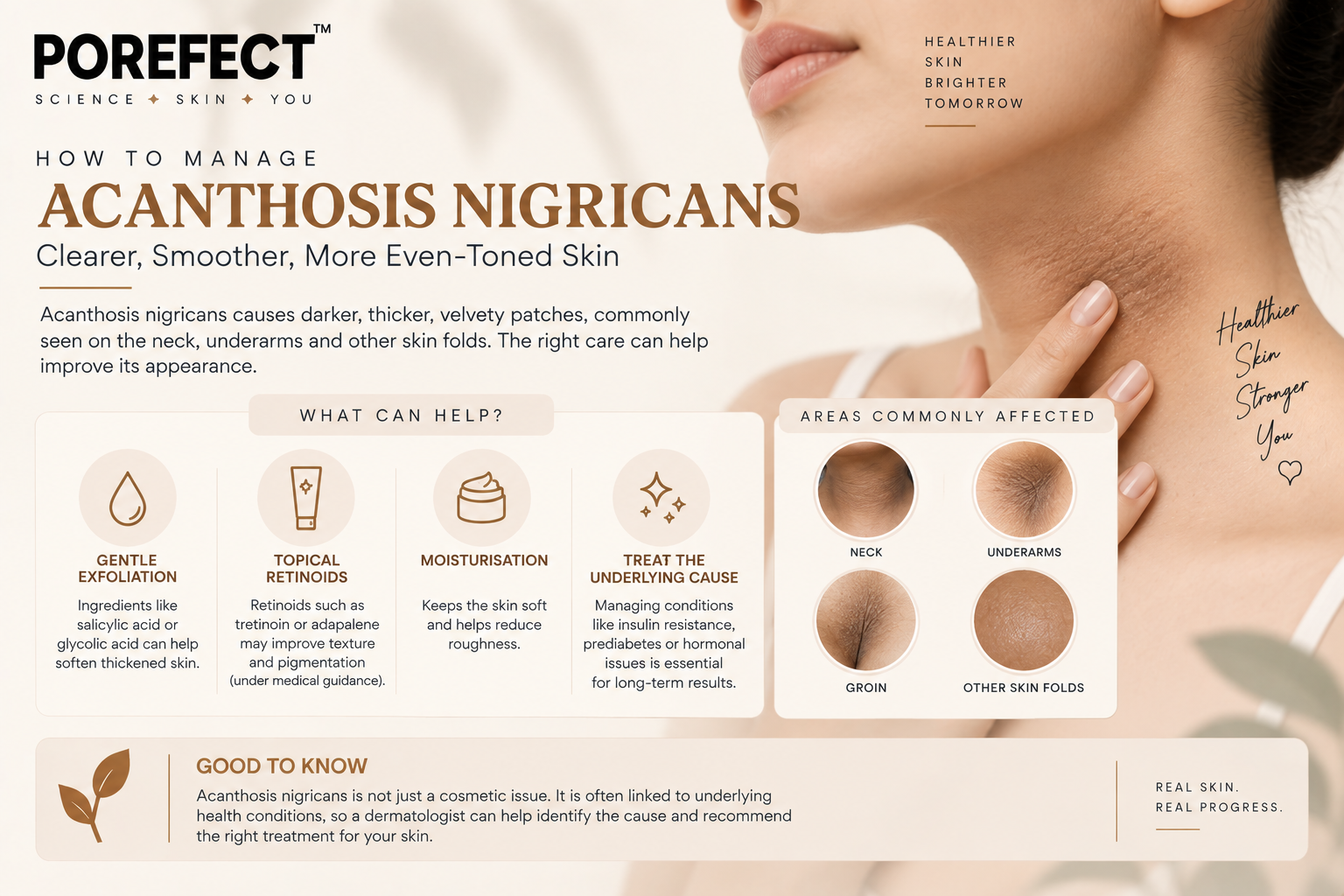
Typical acanthosis nigricans appears as darker, thicker, velvety skin. It most commonly affects the back and sides of the neck, underarms, groin, and other skin folds.
The skin may gradually become more noticeable. Some people may also have skin tags in the same areas.
If darkening develops suddenly or spreads rapidly, medical evaluation is important because uncommon forms can have an underlying medical cause.
Acanthosis Nigricans Treatment: Why the Underlying Cause Matters
The most important step in acanthosis nigricans treatment is finding out whether an underlying condition is contributing to the skin changes.
If insulin resistance, prediabetes, diabetes, or another metabolic or hormonal condition is present, managing that condition may help the skin become lighter and less thick over time. However, treating the underlying condition does not always completely clear the pigmentation.
A doctor may recommend blood tests or other evaluation depending on your age, symptoms, medical history, and risk factors. Simply searching for an acanthosis nigricans treatment cream may therefore not address the whole problem.
Acanthosis Nigricans Treatment Cream: What Can Help?
There is no single best treatment for acanthosis nigricans for everyone. Once the diagnosis and underlying cause have been assessed, a dermatologist may recommend topical treatment to improve the appearance of thickened or darkened skin.
Depending on the individual case, dermatologists may consider:
- Keratolytic ingredients such as salicylic acid or glycolic acid
- Topical retinoids such as tretinoin or adapalene
- Prescription creams, ointments, or gels
- Other dermatologist-selected treatments for persistent cases
These treatments are mainly used for cosmetic improvement and do not necessarily address the underlying metabolic cause. An acanthosis nigricans treatment cream or ointment should therefore be selected according to the person's skin condition rather than simply choosing the strongest pigmentation product available.
Acanthosis Nigricans Neck Treatment
The neck is one of the most common areas affected by acanthosis nigricans. Acanthosis nigricans neck treatment may involve treating the underlying metabolic issue alongside dermatologist-guided topical therapy.
Keratolytic moisturizers can sometimes help soften thickened skin. However, aggressive scrubbing, bleaching products, or harsh exfoliation can irritate the neck and potentially make pigmentation more noticeable.
If the neck becomes progressively darker, thicker, or velvety, it is worth having the skin assessed instead of assuming that it is simply dirt, tanning, or ordinary pigmentation.
Acanthosis Nigricans Underarms Treatment
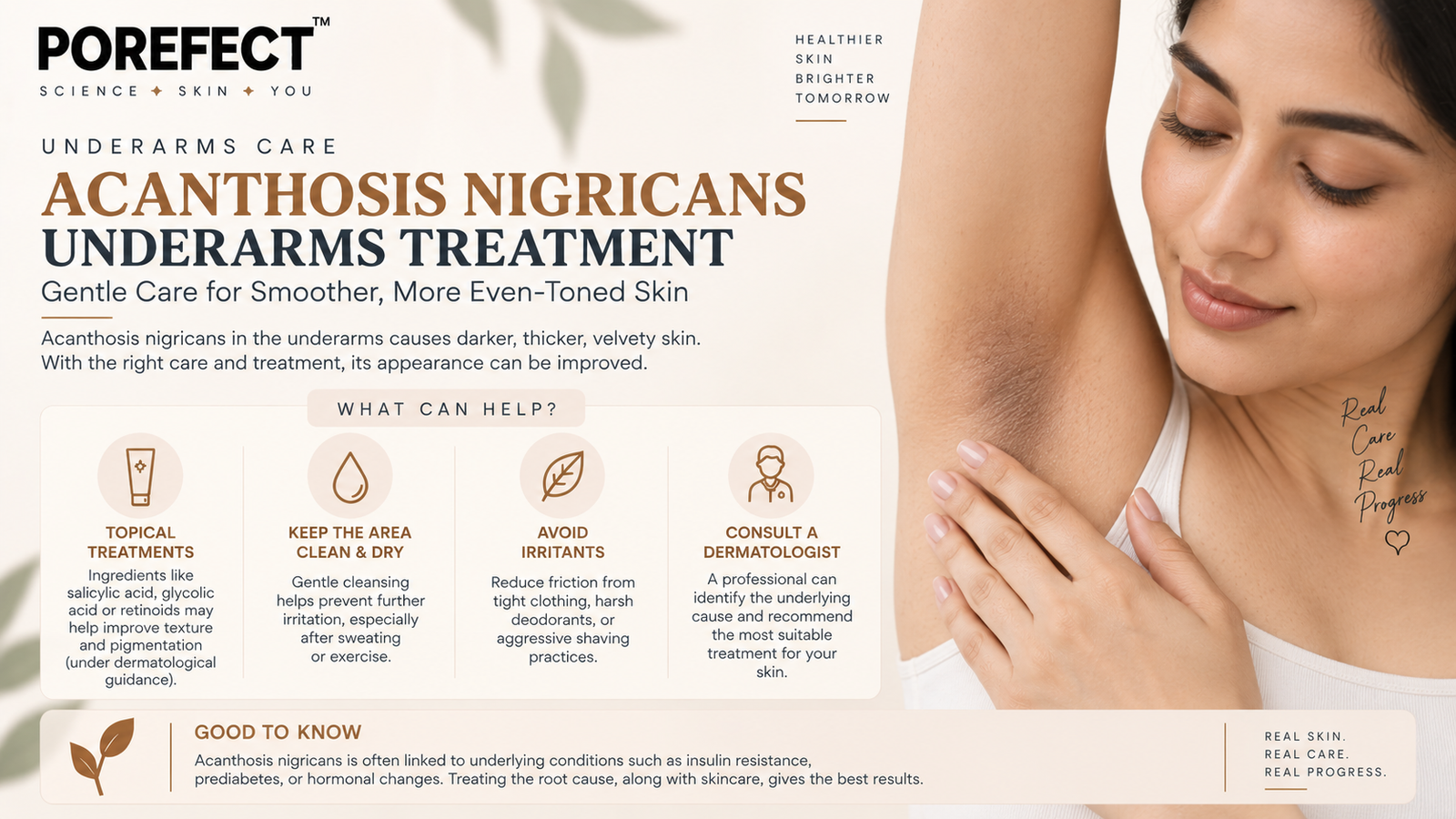
The underarms are another common site. Acanthosis nigricans underarms treatment should be gentle because this skin is sensitive and exposed to friction, shaving, deodorants, and other potential irritants.
Depending on the diagnosis, a dermatologist may recommend suitable topical treatment to reduce thickening or pigmentation. Avoiding unnecessary friction and irritating products can also help prevent additional inflammation.
If underarm darkening is accompanied by itching, scaling, odor, redness, or pain, another condition may be involved and should be evaluated.
Acanthosis Nigricans Medication and Medicine
Acanthosis nigricans medication depends largely on its underlying cause. There is no universal acanthosis nigricans medicine appropriate for everyone.
When insulin resistance or another metabolic condition is present, a doctor may prescribe medication to manage that condition when clinically appropriate. Treating the underlying problem can sometimes improve the skin.
For cosmetic skin changes, dermatologists may also use topical prescription treatments. These should be selected according to the diagnosis, skin type, and tolerance.
Do not start prescription medicines solely because they are marketed online as an acanthosis nigricans treatment.
Acanthosis Nigricans Treatment at Home
There are useful steps you can take at home, but acanthosis nigricans treatment at home should not mean aggressively scrubbing away the dark skin.
A simple approach includes:
- Use a gentle cleanser.
- Moisturize regularly.
- Avoid harsh scrubs and repeated friction.
- Avoid unregulated bleaching creams.
- Follow treatment prescribed by your dermatologist.
- If recommended by your doctor, address underlying metabolic or hormonal concerns.
Bleaching creams and strong exfoliating products can irritate the skin and may not effectively fade acanthosis nigricans.
What to Avoid When Treating Acanthosis Nigricans
When using an acanthosis nigricans treatment cream, avoid combining multiple strong exfoliating or bleaching products without professional guidance.
- Aggressive scrubbing
- Unregulated bleaching creams
- Repeated friction
- Harsh exfoliation
- Using prescription products without medical advice
- Trying multiple strong pigmentation products at the same time
Irritation can make dark patches appear more noticeable and may make the skin more sensitive.
When Should You See a Dermatologist?
Consider professional evaluation if you develop persistent dark, thick, velvety patches, particularly around the neck or underarms.
Medical assessment is especially important when:
- The pigmentation develops suddenly.
- Several areas become affected quickly.
- You have risk factors for diabetes or insulin resistance.
- The diagnosis is uncertain.
- The patches are itchy, painful, scaly, or inflamed.
- Home skincare has not helped.
A dermatologist can examine the skin and determine whether further medical evaluation or blood testing is appropriate. They can also decide whether an acanthosis nigricans treatment cream is suitable for your skin.
Frequently Asked Questions
What is the best treatment for acanthosis nigricans?
The best treatment depends on the underlying cause. Managing insulin resistance or another associated condition is often important, while dermatologist-selected creams or procedures may help improve the skin's appearance.
Does acanthosis nigricans treatment cream remove the dark skin?
An acanthosis nigricans treatment cream may help reduce thickening or pigmentation in some people, but it cannot be expected to completely remove acanthosis nigricans. Treating the underlying cause is also important.
Can acanthosis nigricans be treated at home?
Gentle skincare, moisturization, and avoiding friction or irritating products can support the skin. Persistent acanthosis nigricans should be medically assessed because it can be associated with underlying metabolic or hormonal conditions.
Is acanthosis nigricans a sign of diabetes?
Acanthosis nigricans can be associated with insulin resistance, prediabetes, and type 2 diabetes, but the skin changes do not automatically mean that someone has diabetes. Appropriate medical evaluation can help determine whether an underlying condition is present.
What cream is used for acanthosis nigricans?
Depending on the individual case, a dermatologist may recommend topical treatments containing keratolytic ingredients or prescription retinoids. The appropriate acanthosis nigricans treatment cream depends on the diagnosis, skin type, and tolerance.
Can dark neck from acanthosis nigricans go away?
The appearance may improve when an associated underlying condition is appropriately managed and when suitable topical treatment is used. However, improvement varies between individuals and complete clearing is not always achieved.
Conclusion
Acanthosis nigricans treatment is most effective when it addresses both the skin changes and any underlying cause. An acanthosis nigricans treatment cream may help improve thickened or darkened skin in selected cases, but topical treatment alone does not necessarily address insulin resistance or another medical condition.
If you notice persistent dark, velvety skin on your neck, underarms, or other folds, consider getting the condition assessed rather than relying only on pigmentation creams. A dermatologist can confirm the diagnosis and help determine whether topical treatment, medical evaluation, or both are appropriate.